
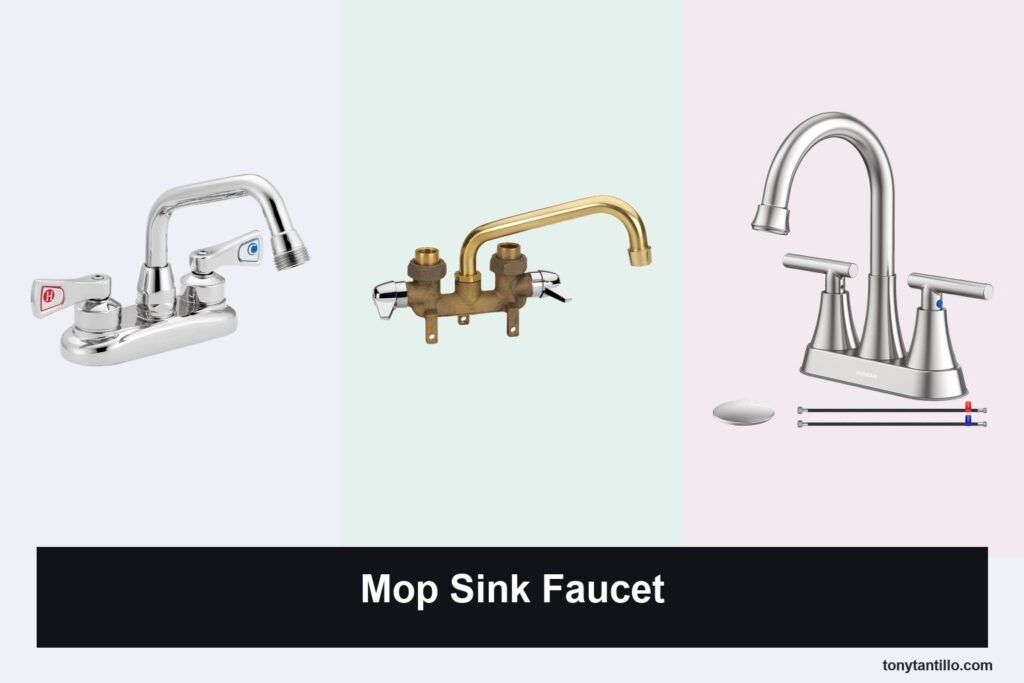
A mop sink faucet has to do more than deliver water. It needs to survive frequent use, connect cleanly to hoses or utility tasks, and fit the rough-and-ready spaces where cleaning actually happens. That means buyers usually care about handle feel, spout reach, mounting style, flow rate, and whether the faucet is built from materials that can stand up to daily abrasion and moisture. The right choice can make filling buckets faster, rinsing tools easier, and cleaning the sink less frustrating.
The six faucets below cover a useful spread of utility needs, from hose-ready threaded spouts to more compact deck-mounted designs and water-saving options. Some favor durability and commercial-grade construction. Others focus on easier installation, broader compatibility, or a lower price. The best pick depends on whether your sink sees hose hookups, heavy rinsing, frequent temperature changes, or just occasional cleanup duty. Each recommendation below is judged on verified construction, dimensions, installation fit, and the practical consequences of those details.
Top Mop Sink Faucet on the Market
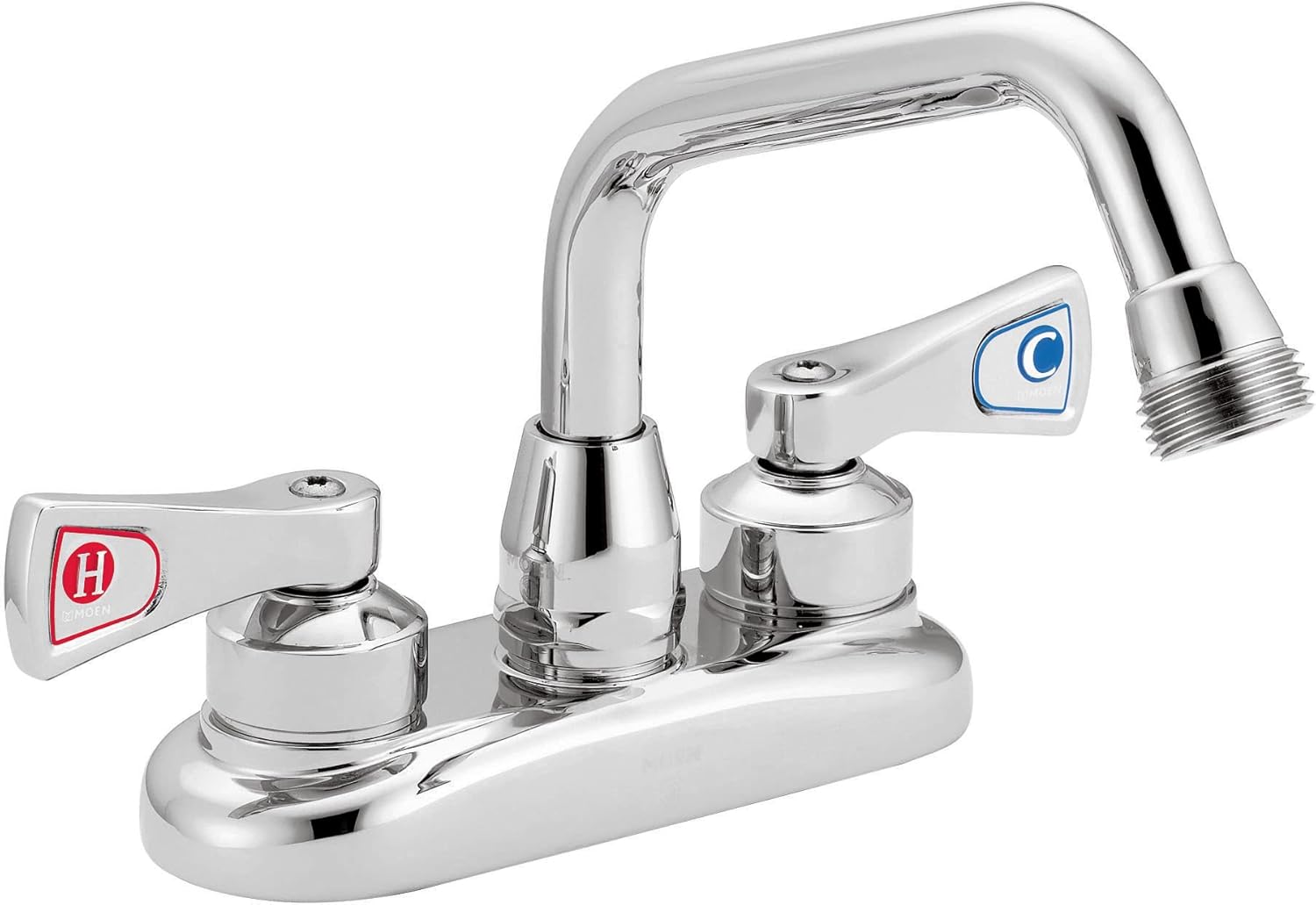
Moen M-DURA Utility Faucet
Best Commercial Build
- Chrome brass construction
- 4-inch centerset layout
- 6.5-inch reach
- Quarter-turn disc valve
- Limited lifetime warranty
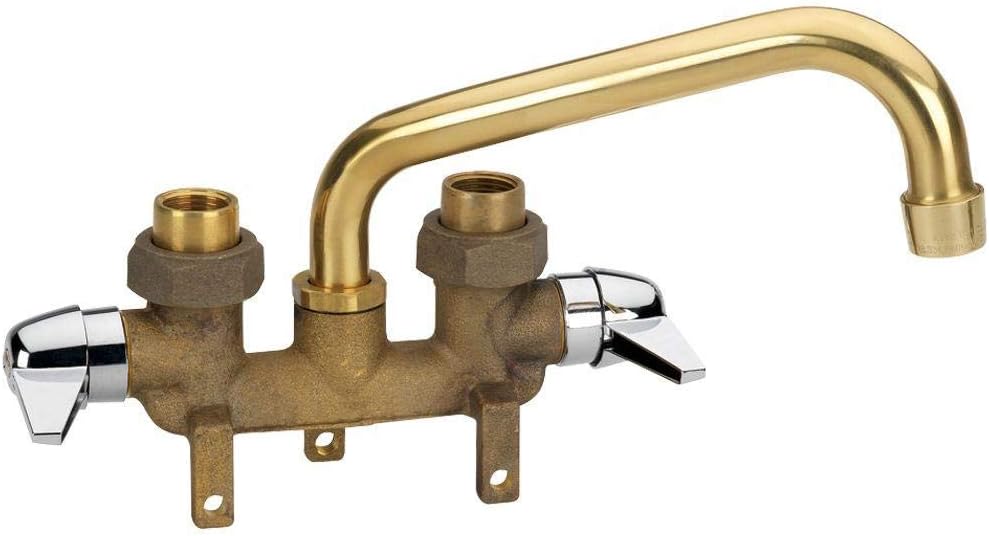
Homewerks Rough Brass Laundry Faucet
Best Hose Hookup
- Rough brass finish
- 7-inch swivel spout
- 2.2 GPM flow
- Garden hose adapter
- IAPMO certified

Hurran 4-Inch Centerset Faucet
Best Water Saver
- Stainless steel body
- 1.2 GPM water-saving flow
- Pop-up drain included
- 360-degree swivel spout
- 15-minute installation claim

Moen Brecklyn Pull-Out Faucet
Best Reach Control
- Pull-out spray wand
- 59-inch braided hose
- Power Clean spray
- Optional deckplate included
- 120-degree swivel spout

Peerless Centerset Utility Faucet
Best Budget Classic
- Threaded spout
- Centerset installation
- Brass construction
- 1.8 GPM flow
- Lifetime limited warranty

Aolemi Threaded Utility Faucet
Best Compact Utility
- 3/4-inch threaded spout
- SUS304 stainless steel
- 360-degree swivel
- 1.2 GPM flow
- 24-inch supply lines
Mop Sink Faucet Reviews
Moen M-DURA Utility Faucet
ADVANTAGES
LIMITATIONS
The Moen M-DURA makes sense for a utility sink that gets used like work equipment. Its brass construction and chrome finish point toward durability first, while the two-handle centerset layout gives you quick separation of hot and cold control. The 6.5-inch spout reach is long enough to make a mop sink or laundry tub more practical, especially when you need water farther from the backsplash. A quarter-turn disc valve also supports quick operation, which matters in spaces where hands are wet, dirty, or occupied with buckets and tools.
Installation details matter here because this faucet is built around a 4-inch centerset setup with two mounting holes and a 1-inch minimum hole diameter. That keeps it aligned with common utility sink cutouts, but it does mean you should verify the deck before buying. The deck-mounted format is simple, and the 1/2-inch IPS and garden-hose-thread connections give it a useful edge for utility jobs. A spout height of 6.5 inches also leaves enough working room without making the faucet feel oversized on a compact sink.
Compared with the more budget-focused options in this group, the Moen is the one that leans hardest into long-term abuse resistance and steady operation. It does not try to be the most specialized hose faucet or the lowest-flow water saver. Instead, it offers a durable, straightforward utility platform with a clear warranty advantage and commercial positioning. That makes it the right call for buyers who want a serious all-purpose mop sink faucet and are willing to pay more for a stronger build. It is the safest recommendation when longevity matters most.
Homewerks Rough Brass Laundry Faucet
ADVANTAGES
LIMITATIONS
This Homewerks faucet is built around utility versatility. The 7-inch brass swivel spout gives you broad reach across a wash tub, which is exactly what you want when filling buckets, rinsing mop heads, or redirecting flow into different parts of a deep sink. The included garden hose adapter adds another layer of usefulness because it turns the faucet into a more flexible point for watering, rinsing, or cleanup tasks outside the laundry room. A 2.2 GPM flow rate also means it can move water quickly when volume matters more than fine control.
The mounting setup is straightforward for a replacement job, but it is specific enough that you should check the spacing before you order. It is designed for a 2-hole arrangement with universal mounting holes at 3.37-inch center distances, and the deck-mount style keeps it in the standard utility category. The 1/4-turn drip-free cartridges are a meaningful detail because they reduce the kind of wear and minor leaks that become annoying in frequently used utility areas. The faucet also comes with illustrated installation instructions, which helps on a straightforward DIY swap.
Among the faucets here, this one is best if hose connection is a priority and you want a dependable utility layout without paying commercial-tier pricing. It gives up some refinement compared with the Moen, but it brings a more aggressive flow rate and a very practical hose-ready spout. Buyers who need a simple laundry or mop sink faucet for regular buckets, hose work, and general cleanup should look closely at it. It is not the most premium-feeling option, but it is one of the most directly functional.
Hurran 4-Inch Centerset Faucet
ADVANTAGES
LIMITATIONS
The Hurran faucet is the most water-conscious choice in this set, and that changes how it feels in everyday use. Its 1.2 GPM flow rate is much lower than the utility-heavy options, so it is a better fit when you want control and efficiency more than raw volume. The stainless steel body and lead-free design help it feel more suitable for a cleaner, modern utility area rather than a purely industrial sink. A pop-up drain and included supply lines also make the package more complete than many basic utility faucets.
Its size and mounting numbers are important because this design is aimed at standard 4-inch centerset installations with a 7/8 to 1 3/8 inch mounting hole diameter and a 1.2-inch maximum deck thickness. That gives it a clear installation envelope, which is useful if you are replacing an existing faucet rather than remodeling the sink. The 360-degree swivel high-arc spout and 5.2-inch spout height improve clearance for wash tasks, but the lower-flow aerator means it is more controlled than forceful. That makes sense in spaces where splashing is a concern.
Against the more rugged utility faucets in this roundup, Hurran stands out for efficiency, included components, and a cleaner finish. It is less about blasting water into a mop bucket and more about delivering a measured, comfortable stream with modern convenience. The lifetime warranty strengthens its appeal, especially for buyers who want a lower-cost replacement with a broad package. If your sink area doubles as a bathroom, RV, or light-duty utility zone, this is the most balanced choice. It is the least aggressive option, but also one of the most complete.
Moen Brecklyn Pull-Out Faucet
ADVANTAGES
LIMITATIONS
The Moen Brecklyn is the most maneuverable faucet in the group, and that flexibility is valuable for sink cleanup and bucket filling. The pull-out wand with a 59-inch braided hose gives you a wide working radius, which is useful if a mop sink needs occasional rinsing beyond the basin edge. Power Clean technology increases spray performance, so the faucet is not just about reach. It is built to help move grime and rinse surfaces more efficiently. The 1.5 GPM flow rate keeps it manageable without feeling underpowered for routine washing tasks.
Installation versatility is one of its strongest selling points. It is designed for single-hole mounting, but the included deckplate allows use on sinks with additional holes. That makes it easier to fit into an existing setup where the deck already has extra openings. The 7.8-inch spout height and 8.25-inch reach provide enough clearance for normal sink work, while the 120-degree swivel helps distribute coverage across the basin. The stainless steel construction and disc valve also point to smooth, durable operation over time.
This is not the most industrial faucet in the lineup, and that is the tradeoff. Compared with the threaded hose-ready utility models, it is less specialized for direct hose hookups, but it offers a better blend of reach, spray control, and mounting flexibility. That makes it a strong choice for buyers who want a mop sink faucet that can also function comfortably in a kitchen-like or mixed-use space. It is the best recommendation when you want one faucet that handles ordinary cleaning tasks with more range and less fuss.
Peerless Centerset Utility Faucet
ADVANTAGES
LIMITATIONS
The Peerless utility faucet is the value choice for buyers who need a simple, dependable replacement. Its brass construction and chrome finish give it a familiar, durable feel, while the two-handle centerset layout keeps temperature control separate and easy to understand. The threaded spout is the key utility feature because it makes hose attachment straightforward. That matters in a mop sink, laundry room, or general-purpose basin where you may want to direct water into a bucket or attach a hose for cleanup work.
Fit is predictable if your sink already uses a standard centerset layout. It is designed for 2-hole or 3-hole centerset configurations, and the deck-mount setup keeps installation familiar for common utility and bathroom-style sinks. The 1.8 GPM flow rate sits between the faster utility models and the more conservative water-savers, so it offers a middle ground that should feel practical in daily use. The 4.53-inch spout height is modest, which can be an advantage in tighter spaces where a taller faucet would be in the way.
Against the more specialized options here, Peerless stands out by keeping the formula simple and affordable. It does not have the extended hose reach of the Moen Brecklyn or the extra utility flow of the Homewerks model, but it covers the core job without overcomplicating the buy. The lifetime limited warranty adds confidence to a faucet that is clearly meant to be an honest workhorse. For buyers who want a classic mop sink faucet without paying for extra bells and whistles, this is the best value-minded recommendation.
Aolemi Threaded Utility Faucet
ADVANTAGES
LIMITATIONS
The Aolemi faucet is built for buyers who want a compact utility solution with hose compatibility. Its 3/4-inch threaded spout is the feature that gives it mop sink relevance, because it supports hose connection without extra fuss. The 360-degree swivel spout makes it easier to direct water into buckets, tubs, or different corners of a sink, which is especially useful in utility rooms where a fixed spout would feel restrictive. The 1.2 GPM flow rate keeps usage controlled, so it is more measured than high-output wash-down models.
The construction and install package are practical rather than flashy. SUS304 stainless steel and a ceramic cartridge are a strong combination for routine utility use because they suggest smoother handle action and a better chance of resisting daily wear. It uses a 4-inch centerset layout with two holes, so the sink must match that footprint. The included 24-inch supply lines and installation hardware make the setup more self-contained, and the aerator removal key is a small but useful maintenance detail for a faucet intended to live in a dirty working area.
Relative to the Peerless and Homewerks options, Aolemi is the more compact and controlled choice, while still preserving hose threading and a swivel design. It does not have the higher flow of the faster-fill models, but that restraint can be useful in spaces where splash control matters more than volume. Buyers who want a utility faucet for a mop sink, garage sink, or laundry basin with a cleaner modern look should consider it seriously. It is the right pick when you want utility function without a bulky profile.
How to Choose a Mop Sink Faucet
The best mop sink faucet is the one that matches how the sink will actually be used. Some utility spaces need fast filling and hose hookups. Others need a compact, easy-to-clean faucet that controls splash and fits an existing deck without modification. A few need a more polished option that can still handle laundry or general cleanup work. The right purchase comes down to mounting pattern, outlet style, flow rate, build material, and whether you need a simple faucet or a more flexible cleaning tool.
Mounting Fit
Start with the sink deck, because the wrong hole pattern is the fastest way to ruin an otherwise good purchase. A 4-inch centerset layout is common in utility spaces, but some faucets need two holes while others can adapt to different opening patterns. Measure the hole spacing, the hole diameter, and the deck thickness before you buy. Those numbers matter more than finish or handle style because they determine whether the faucet can be installed cleanly without extra drilling or adapters.
Spout Style
The spout should match the job. A threaded outlet is useful when you need hose attachment for filling buckets, rinsing tools, or directing water into larger containers. A swivel spout gives more freedom inside the basin, which helps when a fixed stream would leave awkward corners untouched. Pull-out designs add reach, but they are usually better when the sink also handles general cleaning or kitchen-style work. Choose the outlet style based on how often you need direct hose use versus simple basin washing.
Flow and Control
Flow rate changes the feel of the faucet more than many buyers expect. Higher output helps when speed matters and you want to fill a mop bucket quickly. Lower flow is easier to live with in smaller sinks because it reduces splash and makes control more deliberate. Handle design matters too. Two-handle faucets let you separate hot and cold with precision, while single-handle designs are faster to adjust when your hands are busy. Think about whether you value speed, temperature control, or water conservation most.
Materials and Finish
Utility faucets take abuse, so material choice affects how long the faucet keeps looking and working well. Brass and stainless steel are both practical picks because they are associated with durability and stable operation in wet spaces. Chrome and brushed finishes each have tradeoffs. Chrome can look brighter and is easier to match to traditional fixtures, while brushed finishes are often better at hiding fingerprints and water spots. In a mop sink area, that difference can determine how often the faucet needs wiping down.
Included Parts
A faucet can look complete and still require extra purchases to finish the install. Supply lines, deckplates, adapters, and installation hardware can save time and prevent a second trip to the store. This is especially important in utility spaces where the goal is usually to get the sink working quickly. If the faucet needs separate supply lines, build that cost into the decision. If a hose adapter or threaded spout is included, confirm that it matches the kind of cleaning tasks you actually plan to do.
Space and Clearance
Measure the sink area as a working zone, not just a plumbing location. Spout height affects how easily you can position buckets and rinse out tools. Reach determines whether the stream lands where you need it or falls short of the center of the basin. In a cramped utility room, a taller or longer faucet is not always better because it can crowd the workspace. The best fit is the one that gives enough clearance without becoming awkward for the sink size you already have.
Mop Sink Comparison Table
| Product | Best For | Flow Rate | Spout Reach | Mounting Type | Hole Count | Warranty |
|---|---|---|---|---|---|---|
| Moen M-DURA Utility Faucet | Best Commercial Build | Not Specified | 6.5 inches | single mount | 2 | 5 Year Limited |
| Homewerks Rough Brass Laundry Faucet | Best Hose Hookup | 2.2 gpm | 7 inches | Deck Mount | 2 | Warranty |
| Hurran 4-Inch Centerset Faucet | Best Water Saver | 1.2 gpm | 4.8 inches | Deck Mount | 2 | Not Specified |
| Moen Brecklyn Pull-Out Faucet | Best Reach Control | 1.5 gpm | 8.25 inches | Deck Mount | 1 holes | Limited Lifetime Warranty |
| Peerless Centerset Utility Faucet | Best Budget Classic | 1.8 gpm | Not Specified | Deck Mount | 3 | Lifetime Faucet and Finish Lifetime Limited Warranty |
| Aolemi Threaded Utility Faucet | Best Compact Utility | 1.2 gpm | 6.88 inches | Deck Mount | 2 | Not Specified |
How We Tested & Analyzed Mop Sink Faucet
This roundup was organized around category-level purchase factors that matter in utility settings. The main comparison points were mounting compatibility, outlet style, flow rate, material choice, and the practical extras that affect installation or daily use. Those criteria were chosen because mop sink faucets are judged less like decorative fixtures and more like working tools. A good option has to fit the deck, move water in the right way, and survive repeated use without becoming annoying to maintain.
Each product was weighed by the strength of its verified construction details and how directly those details support the faucet’s intended job. Hose threads, swivel range, deckplate inclusion, valve type, handle layout, and warranty coverage all matter because they change either the installation path or the way the faucet behaves in a real utility space. Products were compared on their tradeoffs as well as their strengths, since the best mop sink faucet for one reader may be the wrong choice for another.
Limitations were treated as part of the decision rather than as disqualifiers. A lower flow rate can be a benefit in a tight sink, while a higher-flow model may be better for fast filling. Likewise, a hose-ready spout helps some buyers and is unnecessary for others. The analysis therefore focused on fit, function, and consequence. That approach keeps the recommendations useful for buyers who need a practical faucet instead of a purely decorative upgrade.
Frequently Asked Questions
What matters most in a mop sink faucet?
The most important factors are mounting fit, spout style, and how much water you need to move. If you use hoses or fill buckets often, threaded outlets and longer reach become especially valuable. If the sink is smaller or shared with light-duty tasks, lower flow and easier control may be the better priority.
Is a threaded spout necessary?
Not always, but it is a major convenience if the faucet will be used for hose attachment or bucket filling. A threaded spout turns the faucet into a more flexible utility point. If you only need a basic sink stream, a non-threaded design may still be enough and can sometimes be simpler to live with.
Should I choose high flow or low flow?
Choose based on the sink’s role. Higher flow is useful when you want faster filling and more aggressive rinsing. Lower flow is better when splash control, water savings, or smaller basins matter more. In many utility spaces, the best choice is the one that matches the pace of the work rather than the maximum output available.
What installation details should I measure first?
Measure hole count, hole spacing, and deck thickness before buying. Those dimensions determine whether the faucet will fit cleanly. Also check spout height and reach so the stream lands where you need it without crowding the sink area. A few minutes of measuring usually prevents the most common installation mistakes.
Final Thoughts
A good mop sink faucet should make utility work easier, not more complicated. That means fitting the sink correctly, giving you the right outlet style for hoses or bucket filling, and delivering a flow rate that matches the pace of the space. The strongest options in this roundup separate clearly by use case. Some are built for durability and commercial-style service. Others are better for compact installs, water savings, or broader reach.
If you want the most balanced answer, choose the faucet that matches the way the sink is used day to day. Heavy-duty utility rooms benefit from stronger construction and hose-ready features. Smaller or mixed-use spaces often do better with a cleaner, more controlled design. Once you have the hole pattern and the task profile nailed down, the best choice becomes obvious. Pick for fit first, then for flow and durability, and the sink will be much easier to live with.