
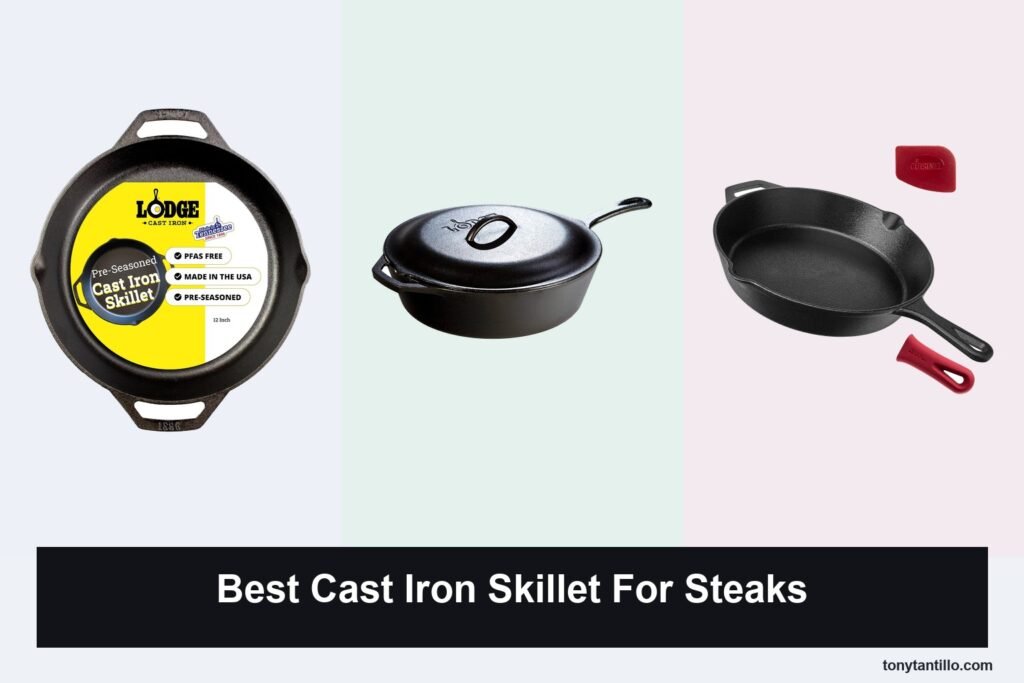
A great steak skillet has to do more than survive high heat. It needs to store enough energy to build a fast crust, stay stable when a cold steak hits the surface, and move cleanly from burner to oven when the finish requires it. Cast iron remains the standard because it combines retention, durability, and broad cooktop compatibility in a way few pans can match.
The three skillets below approach that job from different angles. One favors classic simplicity and dual handles for maneuvering a large pan. One adds depth and a lid for more flexible all-in-one cooking. The third trims weight while still keeping the essential cast iron traits that matter for searing. The best choice depends on how often you cook steaks, how much oven finishing you do, and whether you want a pan that can also handle everyday meals outside steak night.
Top Cast Iron Skillet For Steaks on the Market

Lodge 12-Inch Dual Handle Pan
Best Overall Pick
- 12-inch cast iron surface
- Dual assist handles
- PFAS-free seasoning
- Oven, grill, campfire safe

Lodge 5-Quart Covered Deep Skillet
Best For Batch Cooking
- 5-quart deep capacity
- Cast iron lid included
- Assist handle for lifting
- Oven, grill, campfire safe

Cuisinel 12-Inch Cast Iron Skillet
Best Lighter Option
- 12-inch round skillet
- Silicone handle holder included
- 500°F maximum temperature
- PFAS and PFOA-free
Cast Iron Skillet For Steaks Reviews
Lodge 12-Inch Dual Handle Pan
ADVANTAGES
LIMITATIONS
For steak cooks who want a straightforward cast iron pan with proven heat behavior, this Lodge pan hits the core requirements without unnecessary extras. The 12-inch size gives you room to sear one large steak or two smaller cuts without crowding the surface, which helps preserve browning instead of steaming. Its cast iron construction and even heat distribution are the qualities that matter most here because they support a steady crust once the meat lands. The pre-seasoned, natural oil finish also means you start with a usable cooking surface rather than a bare pan that needs immediate extra preparation.
The practical value of this model shows up when you move from stove to oven. It is compatible with gas, electric, induction, ovens, grills, and campfires, so the pan fits nearly any steak workflow you might use. The dual assist handles make that transition safer, especially when the pan is fully loaded and hot. At 3 kg, it has enough mass for serious heat retention, but that also means you should expect the familiar cast iron tradeoff of a heavier pan that rewards deliberate handling. Hand washing is the care requirement, so this is a buy for cooks who are comfortable with basic cast iron maintenance.
Among the three skillets here, this is the clearest all-around recommendation because it balances simplicity, versatility, and size without adding complexity you may not need. The Cuisinel is lighter, and the deep Lodge model adds a lid and greater capacity, but this one lands in the middle as the most focused steak pan. It is the best match for someone who wants a dependable daily searing surface first and a multipurpose skillet second. If you want one cast iron pan to anchor your kitchen, this is the safest place to start.
Lodge 5-Quart Covered Deep Skillet
ADVANTAGES
LIMITATIONS
This deep skillet is the right choice when steak night rarely happens in isolation. The 5-quart capacity gives you a much deeper cooking vessel than a standard skillet, which makes it more adaptable for braising, frying, and one-pan meals after the sear is done. That extra volume also helps when you want room for pan sauces, vegetables, or thicker cuts that benefit from a lid. The fitted cast iron cover is a meaningful advantage because it helps trap moisture and heat, extending what you can do in the same pan beyond a simple hard sear. The 5-quart capacity and included cast iron lid make it feel more like a small braiser than a conventional skillet.
For actual steak cooking, depth changes the workflow. You still get the thermal benefits of cast iron, but the taller sides give you more flexibility for finishing in sauce or moving straight into oven-based cooking. The pan is safe for all cooking surfaces, grills, and campfires, so it remains adaptable even though its shape is less specialized for fast, flat searing than a traditional skillet. At 14.4 pounds, it is substantially heavier than the other two picks, and that weight makes the assist handle more than a convenience. It becomes a functional necessity whenever the pan is full or hot. Hand washing is the care standard, which fits the category but reinforces that this is a serious long-term cookware piece.
Compared with the flatter pans in this roundup, this model is the most versatile for cooks who want steak capability without giving up braises, fried chicken, or bread baking. It is not the easiest pan to maneuver, and it is not the most economical option for someone who only wants a dedicated steak sear surface. Still, if your cast iron purchase needs to work harder across a week of cooking, this is the most complete choice. Choose it when capacity and lid-driven flexibility matter more than absolute simplicity.
Cuisinel 12-Inch Cast Iron Skillet
ADVANTAGES
LIMITATIONS
This Cuisinel skillet makes the most sense for cooks who want the basic steak-searing advantages of cast iron without the same heft as the heaviest Lodge option. At 8.4 pounds, it is still substantial, but it is far easier to move and reposition than a deep 14.4-pound skillet. The 12-inch surface keeps it within the correct size class for steaks, and the smooth finish is intended to support even heat distribution across the cooking area. That matters for browning because hot spots can create uneven crusts and force you to babysit the pan. The 8.4-pound weight and 500°F maximum temperature give it a clear identity as a more maneuverable searing tool with enough heat tolerance for standard high-heat steak cooking.
The included silicone handle holder changes the handling experience in a useful way. Cast iron handles get hot quickly, so the sleeve offers a layer of comfort when you are moving the skillet or adjusting it during cooking. Because the sleeve includes a hang hole, storage is simpler if you keep cookware within reach. The pan is oven safe and compatible with smooth surface induction, which keeps it useful in small kitchens and mixed-cooktop setups. Care is still classic cast iron care. It should be hand washed, dried thoroughly, and seasoned with natural oils rather than treated like nonstick cookware. That maintenance requirement is normal for the category, but it is worth noting for buyers who want low-effort cleanup.
Against the two Lodge pans, this model stands out on handling rather than sheer mass or depth. It gives up the deep skillet format and the built-in lid, but it keeps the key steak essentials while staying easier to manipulate around the kitchen. That makes it a smart fit for smaller households, frequent stovetop cooks, or anyone who wants a little less strain when lifting cast iron. If your main goal is dependable steak searing with a more manageable feel, this is the most approachable option in the group.
How to Choose a Cast Iron Skillet for Steaks
The right steak skillet is less about brand loyalty and more about matching the pan to your cooking style. For most buyers, the decision comes down to three practical questions: how much surface area you need, how much weight you are willing to handle, and whether the pan also needs to serve other jobs like oven finishing, braising, or table presentation. Cast iron can do all of that, but the best shape and size for a single thick steak is not always the best choice for family meals or kitchen mobility.
Size and Surface
A steak sears best when the meat has room to breathe. A larger flat surface helps reduce crowding, which matters because crowded pans shed heat and can soften the crust. For one or two steaks, a standard 12-inch skillet is usually enough. If you regularly cook for several people or want room for vegetables and finishing sauces, a deeper pan can be more useful even though it is less specialized for the initial sear.
Weight and Handling
Cast iron rewards mass, but mass also changes how you use the pan. Heavier skillets tend to hold temperature more steadily, which helps when a cold steak hits the surface. The tradeoff is handling. Once the pan is preheated and loaded, moving it requires more control, especially if you are transferring from stovetop to oven. Dual handles, assist handles, or a lighter build can make a meaningful difference in day-to-day usability.
Heat Retention
Steak cooking depends on maintaining strong surface heat. That is where cast iron earns its reputation. You want a skillet that can recover quickly after food is added and keep heat spread evenly enough to avoid a patchy crust. Heavier pans usually do this better, but a smoother cooking surface and even distribution matter too. If your stove runs unevenly, the pan’s ability to spread heat can be as important as raw thickness.
Oven and Finish
Many steak recipes start on the burner and end in the oven. That means you should check whether the skillet handles high oven temperatures and whether the handle design will stay manageable during that move. A lid is not necessary for a classic steak sear, but it becomes useful if you also want braises or thicker cuts that benefit from retained moisture. Think about the whole cooking sequence, not just the first flip.
Care and Coating
Seasoned cast iron needs a little maintenance, but it should still fit your tolerance for upkeep. Hand washing and drying are normal, and some pans ask for periodic oiling after use. In return, you get a durable cooking surface that improves with use. If you want a pan that stays simple and nonreactive, look for iron and oil seasoning without synthetic coatings. That matters for buyers who want to keep the skillet close to the traditional cast iron experience.
Cast Iron Skillet Comparison Table
| Product | Best For | Size | Weight | Handle | Cooktop Fit | Coating Description |
|---|---|---|---|---|---|---|
| Lodge 12-Inch Dual Handle Pan | Best Overall Pick | 2.1 liters | 3 kg | Cast Iron | Electric Coil, Gas, Smooth Surface Induction | Natural vegetable oil seasoning |
| Lodge 5-Quart Covered Deep Skillet | Best For Batch Cooking | 5 quarts | 14.4 pounds | Cast Iron | Smooth Surface Induction | Pre-seasoned with vegetable oil |
| Cuisinel 12-Inch Cast Iron Skillet | Best Lighter Option | 5 quarts | 8.4 pounds | Silicone | Smooth Surface Induction | Seasoned Cast Iron |
How We Tested & Analyzed Cast Iron Skillet for Steaks
This roundup focused on category decisions that affect steak performance in real kitchens: surface area, heat retention, handling weight, oven compatibility, care demands, and whether the skillet could also support related cooking jobs. Those factors matter more than cosmetic details because they shape crust quality, transfer safety, and how often the pan will actually get used. Where a skillet offered a meaningful functional advantage, such as dual handles, a lid, or a lower weight, that advantage was treated as part of the buying recommendation rather than a stand-alone feature.
Comparisons were made by looking at how each pan changes the searing process and the rest of the meal that follows. A deeper skillet can become a better all-purpose vessel even if it is less ideal for pure steak searing. A lighter pan may be easier to maneuver even if it gives up some thermal mass. The goal was not to crown a single universally best product, but to identify which cookware traits matter most for different steak-focused buyers and to explain the tradeoffs honestly.
Limits were respected throughout the analysis. When a product record did not provide a specific dimension, accessory, or performance figure, that detail was left out rather than inferred. No hands-on claims were added, and no user sentiment was substituted for verifiable product facts. The resulting guidance is meant to help a buyer choose with confidence based on the information that genuinely changes ownership, care, and cooking results.
Frequently Asked Questions
What makes a cast iron skillet good for steaks?
A good steak skillet holds heat well, spreads it evenly, and has enough flat cooking area to avoid crowding the meat. Those traits help build a fast crust and keep the pan from losing temperature when the steak goes in. Weight, handle design, and oven compatibility also matter because they affect how easily you can finish the steak after searing.
Do you need a very heavy skillet for steak?
Not necessarily. More weight usually means better heat retention, but it also makes the pan harder to lift and control. For many home cooks, a medium-weight skillet offers a better balance between searing performance and daily usability. The best choice is the one you can safely preheat, handle, and clean without dreading the process.
Is a lid useful for steak cooking?
A lid is not essential for a simple sear, but it becomes useful if you also cook thick cuts, finish in the oven, or want to trap moisture for other recipes. If your skillet is mainly for steaks, a lid is optional. If you want more flexible one-pan cooking, it can be a meaningful advantage.
How much maintenance does cast iron need?
Cast iron usually needs hand washing, thorough drying, and occasional seasoning with oil. That care routine helps protect the cooking surface and keeps rust from forming. It is not difficult, but it is different from nonstick cookware. Buyers who want low-maintenance cleanup should be comfortable with that basic routine before choosing cast iron.
Final Thoughts
For steak-focused cooking, the best cast iron skillet is the one that matches your workload as much as your recipe. A standard 12-inch skillet is the most direct path to a strong sear, while a deeper covered pan earns its place when you want more than steak alone. A lighter model can also be the smarter choice if handling comfort matters and you still want the core cast iron advantage of strong heat retention.
If you want the most balanced option, start with the pan that gives you enough cooking surface, manageable weight, and the simplest path from burner to oven. If your cast iron needs to handle sauces, braises, and family meals too, go deeper. If maneuverability is your biggest concern, trim the weight. Any of the three can cook a solid steak, but the best one is the skillet you will reach for often and control confidently every time.