
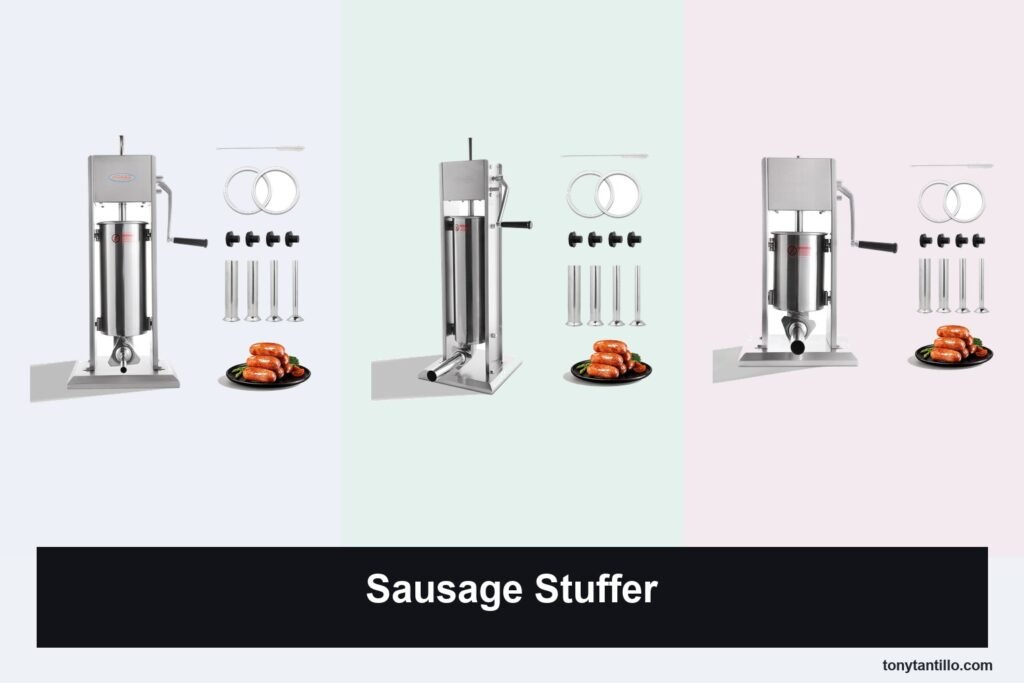
A good sausage stuffer changes the whole rhythm of a cook day. Instead of fighting uneven fills, air pockets, and messy refills, you get a cleaner workflow that makes casing size, batch volume, and build quality the real decision points. The best choice depends on how much meat you process at once, how much control you want while stuffing, and whether you care more about compact storage or a heavier, more efficient machine.
The six models below cover a wide spread of capacities and price levels, from small countertop units to larger vertical stuffers built for faster batch work. The strongest candidates share stainless steel construction and manual operation, but they differ in speed control, tube selection, footprint, and refinement. That means the right pick is less about chasing the biggest number and more about matching capacity and ergonomics to the way you actually make sausage.
Top Sausage Stuffer on the Market
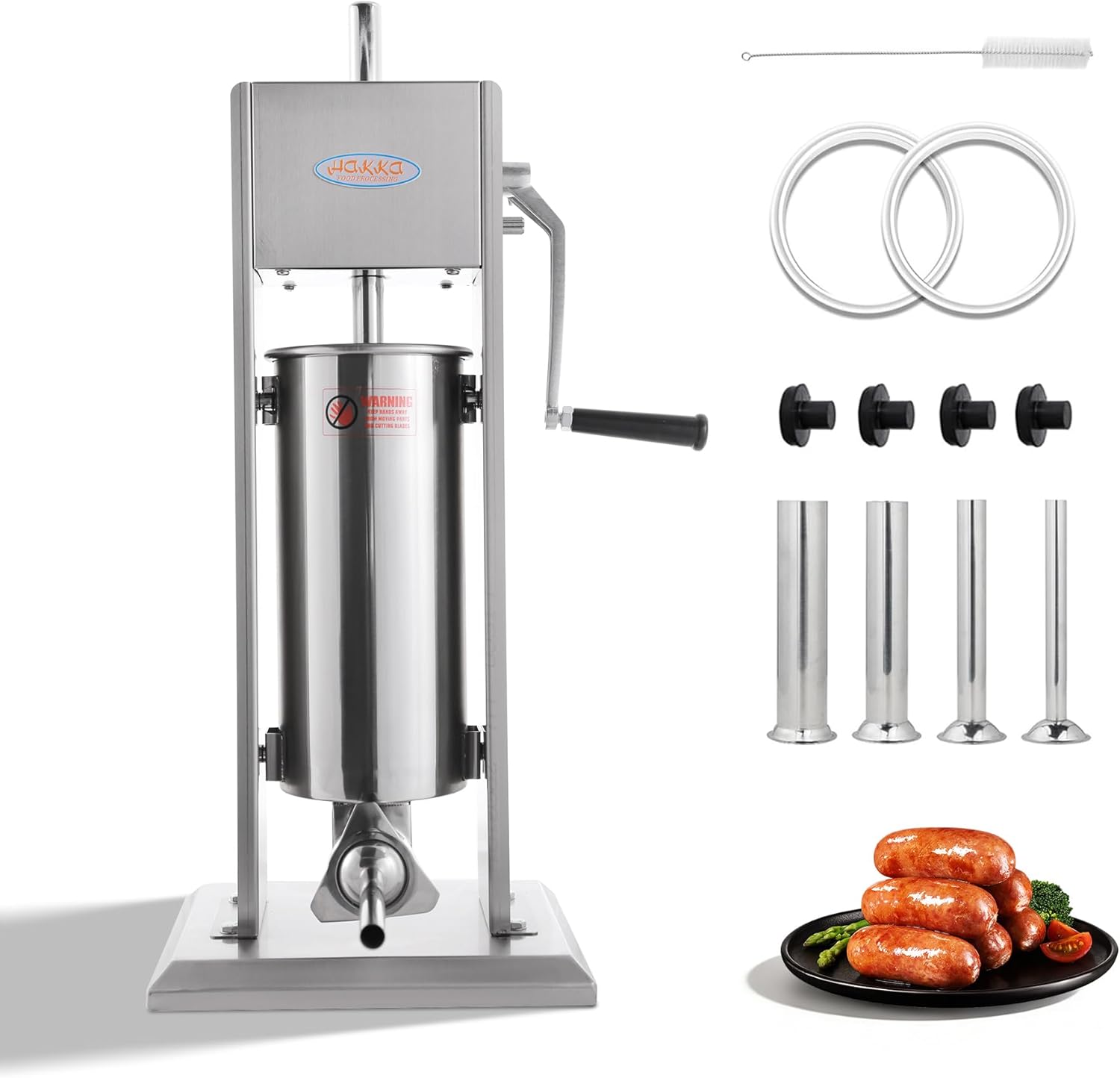
Hakka 11 Lb 2-Speed Stainless Stuffer
Best mid-size capacity
- 11 lb / 5 L capacity
- Two fill-rate system
- Four stainless steel tubes
- Air-release piston

Hakka 15 Lb 2-Speed Stuffer
Best for larger batches
- 15 lb / 7 L capacity
- Two fill-rate system
- Heavy 28 lb build
- Four stainless steel tubes

Hakka 7 Lb 2-Speed Stuffer
Best compact steel option
- 7 lb / 3 L capacity
- Two fill-rate system
- Food-hygiene standard parts
- Four stainless steel tubes

LEM MightyBite 5 lb Stuffer
Best compact premium pick
- 5 lb capacity
- Removable stainless cylinder
- Carbon steel gears
- Two-year warranty

CLIVIA 7 lb 2-Speed Stuffer
Best value steel model
- 3 L capacity
- Two-speed gearbox
- Four stainless steel tubes
- 1-year warranty

MASTER FENG 2.5 lb Stuffer
Best budget starter
- 2.5 lb capacity
- Eight stuffing tubes
- Stainless steel body
- Compact vertical design
Sausage Stuffer Reviews
Hakka 11 Lb 2-Speed Stainless Stuffer
ADVANTAGES
LIMITATIONS
The 11 lb / 5 L chamber puts this model in a very practical middle ground. It is large enough to reduce refill interruptions for family batches, yet it stays smaller than the 15 lb version in the same line. The two fill-rate system is the feature that matters most in use because it lets you move faster when the casing is ready and slow down when you need finer control. That combination makes the machine a strong fit for cooks who want more throughput without giving up accuracy at the nozzle.
Its stainless steel construction covers the base plate, cylinder, stuffing tubes, and canister, so the main food-contact and load-bearing parts are all made for easy cleaning and long-term resistance to wear. The piston includes an air release, which helps reduce trapped pockets that can leave gaps in the finished link. Four nozzle sizes give it useful range for everything from thinner breakfast-style casings to wider formats, and that flexibility matters more than sheer capacity when you are making different sausage styles across the season.
Against the smaller 3 L and 2.5 lb options, this one is the stronger pick when batch size is the priority. It is also easier to justify than the 15 lb model if you do not want a larger footprint sitting on the counter between uses. Buyers who want a balanced, all-stainless machine with faster filling control should look here first. The main tradeoff is simple: you are paying for a sturdier, more capable setup than a basic compact stuffer, so it makes the most sense when sausage making is more than an occasional experiment.
Hakka 15 Lb 2-Speed Stuffer
ADVANTAGES
LIMITATIONS
The 15 lb / 7 L size is the clear advantage here. It cuts down on reloads for larger sausage runs, which is exactly what matters when a project goes beyond a few quick links. The two-speed fill system gives the operator a way to balance output and control, so the stuffer can move quickly when the casing is open and then back off when detail matters. That makes the machine a better match for frequent use, bigger gatherings, or anyone who wants a more production-minded setup.
At 28 pounds and nearly 33 inches tall, this is not a casual grab-and-go appliance. The weight helps stability, but it also means you should expect a more permanent place for it in the kitchen or prep area. Stainless steel construction across the working parts is the right call for a tool in this class because it supports easier cleanup and better durability under regular loading. The included 16 mm, 22 mm, 32 mm, and 38 mm tubes also keep it versatile enough for both narrow and wide casings.
Compared with the 11 lb version, this one is the safer choice when you routinely process enough meat to justify the larger chamber. It is also the more committed purchase than the smaller 3 L and 2.5 lb machines, which are easier to store but less efficient for serious batch work. The buyer who should choose this model is the one who values fewer interruptions over a smaller footprint. If your priority is keeping a long stuffing session moving, this is the more decisive tool.
Hakka 7 Lb 2-Speed Stuffer
ADVANTAGES
LIMITATIONS
This 7 lb / 3 L stuffer sits in the middle of the compact category. It is smaller than the 11 lb and 15 lb machines, but it still gives you enough capacity to make the workflow feel serious rather than toy-like. The two fill-rate system is the standout feature because it helps you switch from quicker loading to controlled stuffing without changing equipment. That matters when you want one machine to handle several short batches instead of a single very large run.
The stainless steel build across the base plate, cylinder, stuffing tubes, and canister gives it the kind of construction that makes cleanup and durability easier to trust. The piston includes an air release, which is important in a compact stuffer because smaller batches can still suffer from uneven fill if air gets trapped in the tube. The listed food-contact parts meet SGS food hygiene standards, a detail that adds confidence for anyone focused on sanitation. Four nozzle sizes also make the machine flexible enough for different casing styles.
This model is a better fit than the 2.5 lb unit when you want more capacity without jumping to a much larger machine. It will also appeal to buyers who like the control benefits of the larger Hakka stuffers but do not need the extra bulk of the 11 lb or 15 lb versions. The tradeoff is obvious and sensible: you give up some throughput, but you gain a more manageable size for an everyday kitchen. For compact stainless steel performance with real range, this is an easy model to respect.
LEM MightyBite 5 lb Stuffer
ADVANTAGES
LIMITATIONS
The 5 lb capacity makes this stuffer a strong match for smaller but regular sausage sessions. It sits above the tiniest table units without drifting into bulky territory, and the 12-pound weight suggests a machine that is meant to stay planted while you work. The most important distinction here is the gear train. Precision-machined carbon steel gears are built to resist wear and slippage, which matters because smoother force transfer usually means a steadier stuffing feel and less frustration when the cylinder starts to empty.
The removable stainless steel cylinder is a real usability advantage because it simplifies filling and hand-cleaning after the job is done. An air-release valve in the piston helps prevent pockets from forming, which improves the look and density of the finished links. The included clamps matter too because they help keep the stuffer stable on a flat surface, and that stability is valuable when you are operating alone. The tubes are plastic rather than steel, and they cover 11/16 inch, 7/8 inch, and 1 inch outer diameters, which gives the machine a useful spread for common sausage styles.
Compared with the stainless-heavy Hakka units, this one leans more toward easy handling and support features than maximum chamber size. The two-year factory warranty and lifetime customer support are notable if you want backup beyond the box itself. It is the best option for a buyer who wants a compact manual stuffer with reassuring build quality, removable cleaning parts, and a more polished ownership experience. If you do not need the biggest barrel on the counter, this is one of the most balanced choices in the group.
CLIVIA 7 lb 2-Speed Stuffer
ADVANTAGES
LIMITATIONS
This 3 L / 7 lb class stuffer is positioned as a practical workhorse for buyers who want more than a tiny home unit. The two-speed gearbox is the central benefit because it lets you move quickly through bulk filling and then slow down for accuracy. That makes the machine easier to live with when you need both pace and control from the same tool. The all-stainless construction is also important because the cylinder, base plate, canister, and stuffing tubes are all built to handle regular cleaning and repeated use.
The air-release piston is a useful detail that improves texture by reducing trapped air, and that matters most when you want neat casings with a uniform finish. Four tubes in 16 mm, 22 mm, 32 mm, and 38 mm sizes give it the same practical spread as the larger Hakka units, so capacity is the main reason to step up or down, not nozzle versatility. At 19 pounds, it has enough weight to feel steady without becoming as demanding as the 28-pound machine. That balance makes the setup approachable for home users who still want a serious manual tool.
Against the smaller compact options, this stuffer offers a more confident feel and more output room. Against the 11 lb and 15 lb machines, it trades away capacity for a friendlier footprint and lower commitment. The one-year warranty is shorter than the longer support offered by some rivals, so that becomes part of the value calculation. It is the right choice for buyers who want a modern stainless build, useful speed control, and a size that still fits realistic home or light commercial use. In a crowded field, that combination keeps it highly relevant.
MASTER FENG 2.5 lb Stuffer
ADVANTAGES
LIMITATIONS
The 2.5 lb capacity puts this stuffer squarely in starter territory. That is not a weakness when the goal is to make smaller home batches without dedicating a lot of counter space or money. The compact vertical layout keeps the footprint narrow, which makes storage and setup easier than with the larger machines. For first-time sausage makers, that smaller scale can be a real benefit because it lowers the effort required to get through a batch and makes cleanup feel less overwhelming.
Eight stuffing tubes are the most striking practical feature because they give the machine a wide range of casing options for such an inexpensive unit. The stainless steel body helps with durability and cleaning, and the vertical design supports a straightforward stuffing motion. The listed dimensions show how small and low-profile it is, so this is the model to consider when kitchen space is tight. The 2.24 kg weight is light compared with the heavier stainless competitors, which can be helpful if you do not want a permanent fixture on the counter.
This machine is the easiest recommendation for someone testing the sausage-making hobby for the first time. It does not offer the bigger-capacity efficiency of the 7 L or 15 lb units, and it does not have the speed-control sophistication of the higher-end models. That is the tradeoff for the lower price and simpler footprint. Buyers who make occasional small batches or want the least intimidating manual entry point should start here. It is not built to compete with the larger workhorses, but it does make sense when cost and compactness matter most.
How to Choose a Sausage Stuffer
The right stuffer depends on how you make sausage more than how often you imagine using it. Capacity affects refill frequency, while the drive system and nozzle set affect how controlled the stuffing process feels. Size and weight also matter because a machine that is stable during use may be awkward to store, and a compact unit may save space at the cost of efficiency. The best choice is the one that fits your batch size, kitchen setup, and patience for cleanup.
Capacity & Batch Size
Capacity is the first decision point because it sets the pace of the entire process. Smaller units are easier to store and cheaper to buy, but they require more refills when you are making larger batches. Larger chambers reduce interruptions and make sense when you process meat in volume or work through several casings in one session. Think about the size of your typical batch, not the biggest project you might eventually try. A realistic fit is usually more valuable than extra headroom you rarely use.
Weight & Stability
A heavier manual stuffer usually feels more planted under load, and that stability matters when you are turning a handle and pushing dense meat through a tube. Light machines can be easier to move and store, but they may need more care to keep from creeping on the counter. This tradeoff becomes more noticeable as batch size grows. If your prep space is permanent, extra weight can be a feature. If you need to pack the machine away after each use, a lighter body may be worth the compromise.
Tube Variety
Tube selection determines how flexible the stuffer is across sausage styles. Narrow tubes suit breakfast links and other smaller casings, while wider tubes are more useful for bratwurst, salami, and similar formats. A broader tube set is better when you want one machine to handle different recipes without improvising. Look for the sizes you actually plan to use, not just the biggest number in the set. The right spread saves frustration later because casing fit has a direct effect on fill quality and speed.
Material & Cleaning
Stainless steel is valuable because it usually simplifies cleaning and supports better long-term durability in a wet, food-heavy environment. Pay attention to which parts are stainless, because a machine may use the material in the chamber while relying on different materials elsewhere. Removable cylinders make post-use cleaning easier, especially when you make fatty blends that leave residue behind. Smooth, accessible surfaces reduce the effort required after stuffing, which often matters as much as the stuffing itself if you want to use the machine regularly.
Speed Control
A two-speed mechanism gives you a practical advantage because stuffing does not require the same pace at every stage. Faster movement helps when the casing is ready and the flow is stable. Slower movement helps when you need to manage pressure, avoid overfilling, or keep the casing evenly packed. If you make sausage often, that control can make the work feel smoother and reduce wasted motion. For casual users, it is still a useful refinement because it lowers the learning curve and makes the machine more forgiving.
Warranty & Support
Warranty coverage is worth reading closely because manual machines are often purchased for long-term use rather than one-off projects. A longer warranty can make a higher-priced stuffer easier to justify, especially if you expect regular use and want peace of mind around moving parts. Support and parts availability matter too, since wear items and accessories can shape the useful life of the machine. The best value is not always the lowest price. It is the product that balances build quality, service coverage, and the amount of work you expect it to handle.
Sausage Stuffer Comparison Table
| Product | Best For | Capacity | Weight | Material | Color | Number of Items |
|---|---|---|---|---|---|---|
| Hakka 11 Lb 2-Speed Stainless Stuffer | Best mid-size capacity | Not Specified | 0.01 ounces | Not Specified | Not Specified | Not Specified |
| Hakka 15 Lb 2-Speed Stuffer | Best for larger batches | Not Specified | 28 pounds | Not Specified | Not Specified | Not Specified |
| Hakka 7 Lb 2-Speed Stuffer | Best compact steel option | Not Specified | 19.8 pounds | Not Specified | Not Specified | Not Specified |
| LEM MightyBite 5 lb Stuffer | Best compact premium pick | 5 pounds | 12 pounds | Stainless Steel | Silver | 1 |
| CLIVIA 7 lb 2-Speed Stuffer | Best value steel model | 3 liters | 19 pounds | Plastic, Stainless Steel | Sliver | 1 |
| MASTER FENG 2.5 lb Stuffer | Best budget starter | 2.5 pounds | 2.24 kg | Stainless Steel | Silver | 1 |
How We Tested & Analyzed Sausage Stuffer
The analysis focused on the decision factors that most strongly shape real-world sausage stuffing. Capacity, material construction, tube variety, speed control, weight, and warranty coverage were used to separate machines that look similar on paper but behave very differently in use. That approach keeps the recommendations grounded in operational consequences rather than decorative features. A larger chamber only mattered when it clearly reduced refills, and a heavier body only mattered when it improved stability enough to justify the bulk.
Each product was compared as a manual food-preparation tool, not as a generic kitchen appliance. That means the review emphasis stayed on what changes workflow, cleanup, and control. Stainless steel content was weighed for durability and sanitation. Removable parts were valued for maintenance. Multi-size tube sets were evaluated for flexibility across casing types. Where a product had a notable limitation, such as smaller capacity or a shorter warranty, that tradeoff was treated as part of the recommendation rather than a flaw to ignore.
The goal was to guide a buyer toward the right level of machine, not simply the most expensive one. Compact models were judged on whether they saved space without becoming too limited. Mid-size and larger models were judged on whether they earned their footprint through better efficiency and control. Differences in price were considered alongside build, convenience, and support so the final advice reflects value as well as capability. That balance matters because the best choice in this category is usually the one that best matches batch size and usage pattern.
Frequently Asked Questions
How much capacity do I really need?
Choose capacity based on the batch size you make most often. Small batches are easier with compact stuffers, while larger chambers save time when you process enough meat to refill repeatedly. If you only make sausage occasionally, smaller is usually fine. If you work through long sessions or multiple recipes, extra capacity quickly becomes a convenience worth paying for.
Is stainless steel worth it?
Usually yes, especially if you plan to clean the machine often or use it regularly. Stainless steel tends to hold up well in a wet kitchen environment and is easier to trust for food-contact parts. The practical question is not whether any metal is better, but whether the machine uses stainless in the chamber, tubes, and other high-contact areas that matter most.
Do I need multiple tube sizes?
Multiple tube sizes are useful if you make different sausage styles. Smaller tubes suit tighter casings and thinner links, while larger tubes work better for wider formats. A broader set gives you more flexibility and reduces the chance that one machine will feel too limited. If you only make one style, you may not need a large tube assortment, but it still adds convenience.
What matters more, weight or portability?
Weight matters most for stability during stuffing, while portability matters most for storage and convenience. A heavier machine usually feels steadier when you are pushing dense meat, which can make operation smoother. A lighter unit is easier to move and put away, but it may need more attention to keep it from shifting. The better choice depends on whether the machine will live on the counter or come out only occasionally.
Final Thoughts
The best sausage stuffer is the one that matches your real batch size, your available space, and how much control you want during filling. Bigger chambers save time, two-speed systems improve pacing, and stainless construction usually makes long-term ownership easier. Once you know how often you make sausage and how much you value stability versus storage convenience, the field gets much easier to narrow.
For most buyers, the smartest move is to choose the smallest machine that still comfortably handles your normal workload. That keeps the workflow efficient without forcing you into a bigger, heavier tool than you need. If you make sausage regularly, invest in capacity and build quality. If you are just getting started, a compact model can be the most practical way to learn the process and decide how far you want to take it.