
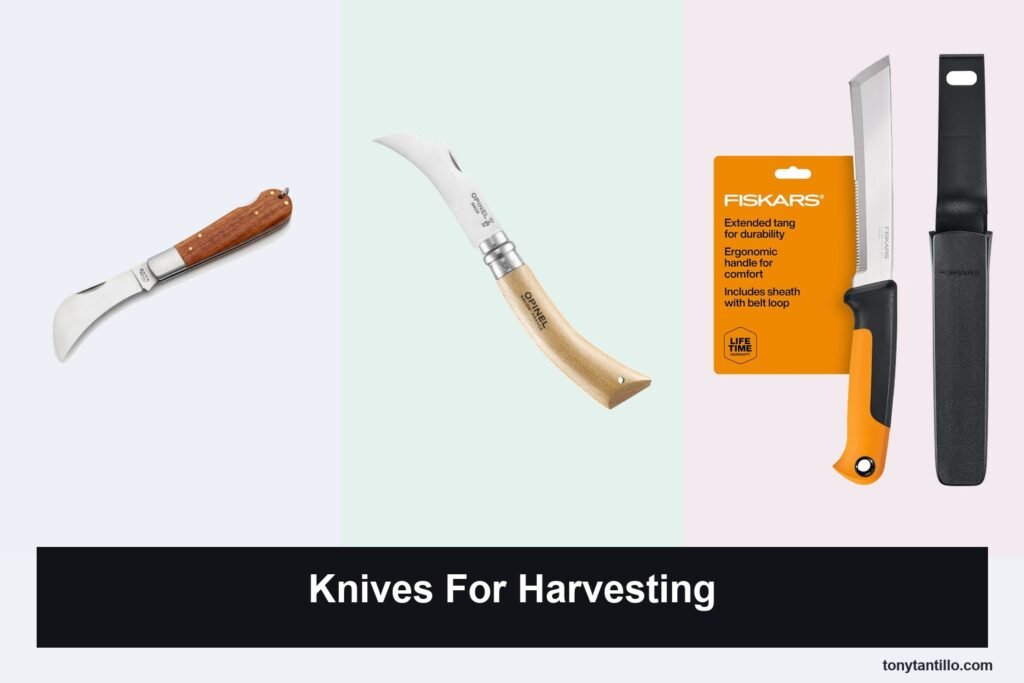
Harvesting knives sit in a narrow but important space between a general pocket knife and a full pruning tool. The right blade has to cut cleanly, stay manageable in the hand, and suit the kind of plants you actually gather, whether that means stems, vines, produce, flowers, or mushrooms. Shape matters here. So does how safely the blade opens, how well it carries in the field, and whether the edge is built for repeated use rather than occasional trimming.
This roundup focuses on practical differences that affect daily work: blade geometry, handle comfort, portability, storage, and how each tool handles a specific harvest style. Some options favor speed and sturdiness. Others are better for delicate picking, safer folding use, or field carry. The best choice depends less on general knife hype and more on how you harvest, what you cut, and whether you want a compact pocket tool, a sheath-carry knife, or a specialized field sickle.
Top Knives For Harvesting on the Market

SZCO Rite Edge Hawkbill Pruning Knife
Best Compact Folding Knife
- 4-inch blade
- Lockback mechanism
- Wood handle
- Hawkbill shape
- Stainless steel blade

Opinel No. 8 Pruning Folding Knife
Best Classic Pruning Folder
- 3.2-inch blade
- Beechwood handle
- Yatagan blade shape
- Ambidextrous design
- Stainless steel blade

Fiskars Harvesting Knife With Sheath
Best Overall Harvest Knife
- 6-inch blade
- Serrated edge
- SoftGrip handle
- Hard plastic sheath
- Lifetime warranty

Clauss Straight Floral Knives
Best Bulk Value Pack
- Box of 10
- Straight stainless blade
- 11.5-inch full length
- Ambidextrous design
- Lifetime warranty

CABUGE Mushroom Harvesting Knife
Best Foraging Knife
- No-lock folding design
- Two-hand opening
- Brush included
- Wood handle
- Stainless steel blade

HOUNEN Japanese Harvest Sickle
Best Pull-Cut Sickle
- 5.9-inch blade
- Serrated saw teeth
- High carbon steel
- Very lightweight
- Wood handle
Knives For Harvesting Reviews
SZCO Rite Edge Hawkbill Pruning Knife
ADVANTAGES
LIMITATIONS
The SZCO Rite Edge Hawkbill Pruning Knife is a straightforward field tool for gardeners who want a compact blade that can move from harvesting to light pruning without feeling oversized. Its 4-inch blade keeps it small enough for pocket carry, while the hawkbill shape encourages controlled slicing on vines, stems, and other plant material that benefits from a hooked cutting path. That geometry is useful when you want the blade to pull through a cut instead of pushing straight across it. The stainless steel construction also matters for a work knife that may see wet leaves, sap, and repeated outdoor use.
The folding format and lockback design shape how this knife fits into real harvesting routines. A lockback adds security once the blade is open, which is important when your hands are moving between plants, baskets, and tools. The wooden handle gives it a more traditional feel than a molded grip, and that can be appealing if you prefer a warmer, less slippery handle profile. At 7 inches overall, it is still short enough to keep on a belt or in a pocket, so it suits growers who want one knife close at hand rather than a larger sheath-carry tool.
Compared with the more specialized harvest knives in this group, this one is the most general-purpose and the easiest to carry every day. It does not bring the broad cutting surface of a sickle or the dedicated produce features of a harvesting knife with sheath, but it is more versatile than those tools when you also need a light trimming knife. Buyers who want a simple folding blade for mixed garden work should look hard at it. For compactness, price, and all-around utility, it is an easy recommendation.
Opinel No. 8 Pruning Folding Knife
ADVANTAGES
LIMITATIONS
The Opinel No. 8 Pruning Folding Knife is a good fit for gardeners who value a classic folding knife shape and a blade made for controlled plant work. Its 3.2-inch blade is shorter than some of the other options here, and that makes it easy to handle for lighter pruning, grafting, and harvesting tasks. The Yatagan blade gives it a distinct curved profile that suits deliberate cuts on stems and ties. That shape is also a reminder that this is a precision tool, not a brute-force cutter. It is the sort of knife you choose when control matters more than reach.
The beechwood handle gives the knife a traditional feel and a harder, more durable character than softer woods. Because the blade is stainless steel, it is easier to manage after a day in the garden, especially if you want a tool that can be wiped down without much fuss. The ambidextrous orientation broadens its appeal, and the folding format keeps it practical for pocket carry or apron use. Since it is a pruning folder rather than a dedicated harvest knife, it works best on clean plant material and lighter cutting jobs where precision is more important than power.
Against the other folding options in this set, the Opinel stands out for its classic design and its compact, easy-to-carry scale. It is less aggressive than the hawkbill knife and less specialized than the produce-focused harvesting knife, but that restraint is part of the appeal. Gardeners who want a refined, lightweight folder for pruning and occasional harvest work will appreciate it most. If you prefer a proven shape and do not need extra blade length, this is one of the most sensible picks.
Fiskars Harvesting Knife With Sheath
ADVANTAGES
LIMITATIONS
The Fiskars Harvesting Knife is built for gardeners who want one knife that can handle a broader range of produce work without feeling delicate. Its 6-inch blade gives it more reach than the folding options, and the serrated edge helps it engage fibrous stems that can resist a smooth blade. That matters when you are cutting broccoli, cabbage, or similar crops with dense plant structure. The flat tip also broadens its usefulness for quick push cuts, so the blade is not limited to a single cutting motion. It is a purposeful tool for harvest days where speed and consistency matter.
The sheath and belt loop are just as important as the blade because this is a field tool, not a casual kitchen knife. Safe carry reduces the chance of damage to the edge and makes it easier to move through rows without juggling loose tools. The SoftGrip handle adds control during longer sessions, and the extended tang construction increases confidence when the knife is used repeatedly through a season. With a manual power source and a full lifetime warranty, it also signals that the tool is meant for repeated use rather than short-term replacement.
Among the knives here, this one sits closest to the center of the category. It is more specialized than the general folding knives and more convenient for bulk harvest work than the small mushroom tool. At the same time, it is not as compact as a pocket folder and not as specialized as a sickle for pull-cut harvesting. That balance makes it the strongest all-around recommendation for gardeners who cut a wide range of vegetables and want a durable, field-ready knife with serious practical advantages.
Clauss Straight Floral Knives
ADVANTAGES
LIMITATIONS
The Clauss fixed blade straight floral knives are aimed at buyers who need multiple knives on hand rather than a single premium carry tool. The box of 10 changes the value equation immediately for farms, floral operations, or households that want enough knives for several workstations. The stainless steel blade is the key practical feature because it resists corrosion and keeps the tool suitable for repeated cutting tasks. With a straight edge instead of a hooked or serrated form, this knife is built for clean slicing rather than pulling or sawing through fibrous plant material.
Its long overall format and lightweight feel make it a different kind of harvesting tool from the folding knives in this roundup. This is not the kind of knife you pocket for quick field use. It is better suited to stations, workbenches, baskets, or places where the knife can stay within reach during repetitive cutting. The ambidextrous orientation helps when multiple people may use the same knife style. A lifetime warranty also adds reassurance for buyers who want a tool that can be issued, replaced, or kept in circulation without a lot of friction.
Compared with the single-knife options, the Clauss package stands apart because the real advantage is quantity as much as design. It is not the most specialized harvest knife for thick stems, and it is not the most refined carry option for daily gardening, but it is an efficient answer for buyers who want a durable supply of straight knives with a predictable cutting feel. For flowers, general cutting, and bulk utility, it is the most practical budget-friendly group purchase in this set.
CABUGE Mushroom Harvesting Knife
ADVANTAGES
LIMITATIONS
The CABUGE Mushroom Harvesting Knife is the most specialized option in this roundup for delicate foraging work. Its no-lock folding design and two-hand opening format reduce the chance of accidental deployment, which is a meaningful safety advantage when you are carrying it around damp ground, baskets, or other tools. The brush included with the tool is especially useful because mushroom harvesting often calls for immediate cleaning in the field. That combination turns the knife into a small working kit rather than just a blade, which is exactly what many foragers want when they are moving quickly between finds.
The wood handle gives it a natural grip that suits close, careful work, and the stainless steel blade is appropriate for clean cuts on mushrooms and similar delicate harvests. Because it folds and does not lock, it is intentionally different from more aggressive pruning folders. That makes it less suited to jobs that demand one-handed opening or stronger cutting leverage, but safer and more deliberate for picking and cleaning. The compact 8-inch overall length keeps it manageable in a pocket or bag without feeling bulky. Hand wash care also suggests that this is a tool to keep clean and dry after each outing.
In direct comparison with the broader harvesting knives, this one wins on specialization and safety discipline rather than raw cutting reach. It does not replace a sheath knife for thick stems or a sickle for field cutting, but it does a better job than general-purpose folders when the harvest itself is fragile. For mushroom hunters, foragers, and gardeners who want an integrated cleaning tool with a controlled opening method, this is the clearest niche recommendation in the set.
HOUNEN Japanese Harvest Sickle
ADVANTAGES
LIMITATIONS
The HOUNEN Japanese Harvest Sickle is built for a very specific kind of harvesting motion, and that specialization is what makes it valuable. Its 5.9-inch blade gives it a substantial cutting surface, while the serrated saw teeth help grip slippery stalks during a pull cut. That is a meaningful advantage in crops, flowers, and herbs where a straight blade can slide before it bites. The high carbon steel construction reinforces its identity as a working field tool, not a decorative knife. It is designed to move through plant material with control rather than to behave like an all-purpose folder.
The low weight is another important part of the equation. At 3.52 ounces, it stays light enough to carry through rows without becoming annoying, and that matters when harvesting is repetitive. The wood handle keeps the tool simple and traditional, while the sickle form naturally favors a pulling motion over a push cut. That means the knife is not the right choice for chopping or heavy branch work, but it is highly relevant when the harvest involves delicate stems, rope, or cut-and-gather motions. The compact 13.7 by 3 by 0.7 inch dimensions also support that field-oriented use.
Compared with the other knives here, this one is the least like a pocket knife and the most like a specialized agricultural tool. That is its strength. It will not replace the convenience of a folding pruning knife, but it can outperform one when the work is row-based and repetitive. Gardeners who harvest herbs, flowers, or crop stems and prefer a traditional pull-cut motion should take it seriously. For that use case, it is one of the most efficient tools in the group and a strong final recommendation.
How to Choose Harvesting Knives
The right harvesting knife depends on how your plants grow and how you prefer to cut them. A blade that feels perfect for stems and vines may be awkward for flowers, mushrooms, or thick produce. The practical question is not whether a knife looks sharp enough. It is whether the edge, handle, carry method, and blade shape match the harvest you do most often. Once you narrow the tool to the work, the rest of the decision becomes much easier.
Blade Shape
Blade geometry is the first decision because it determines how the knife enters plant material. Curved and hooked blades can pull through vines, stems, and flexible growth with less slipping. Straight blades are better when you want a clean slice or a more universal cutting feel. Serrated edges help with fibrous stalks and plant material that resists a smooth edge. Think about your most common crop or task first, then choose the blade path that matches it.
Carry Style
Harvesting work often happens while you are moving, crouching, or reaching into rows. That means portability matters as much as sharpness. Folding knives are easier to pocket and keep close for quick use. Sheath-carry knives are better when you want faster access and safer storage during heavier work. Field tools with open carrying systems or longer handles make more sense when the knife stays in use for a full session instead of being taken out only occasionally.
Handle Comfort
A handle should help you stay precise when your hands are wet, tired, or busy. Wood handles usually feel warmer and more traditional, while molded or textured grips can improve hold during longer sessions. What matters most is whether the knife stays secure during repeated cuts. If you harvest for long stretches, comfort becomes a real productivity factor. A handle that reduces pressure and slipping is often worth more than a slightly fancier blade finish.
Safety and Locking
Safety features deserve close attention because harvesting often happens around sharp stems, baskets, and uneven ground. Locking folding knives add confidence when you are cutting with one hand or carrying the knife in a pocket. Non-locking tools can still be useful, but they demand more deliberate handling. If you prefer a knife for field carry, opening method and blade retention should be considered alongside edge shape. A secure tool is easier to trust when the work gets repetitive.
Material and Maintenance
Steel type changes how much care the knife will need after use. Stainless steel is easier for wet gardens and routine clean-up because it resists corrosion better. High carbon steel can be excellent for field cutting, but it usually rewards more attentive drying and care. The best choice depends on whether you want low-maintenance convenience or a more traditional working edge. Matching the steel to your cleaning habits helps the knife stay useful long after the first harvest.
Task Specificity
The best value often comes from choosing a knife that is more specialized than a generic utility blade. For example, a mushroom tool with cleaning features is useful when your harvest is delicate. A pull-cut sickle is better when the work is repetitive and row-based. A straight floral knife is practical when multiple users or workstations need a simple cutting tool. Specialization is not a weakness in this category. It usually means the knife solves a real harvest problem more cleanly.
Harvesting Knife Comparison Table
| Product | Best For | Blade Length | Blade Shape | Handle Material | Blade Material | Warranty |
|---|---|---|---|---|---|---|
| SZCO Rite Edge Hawkbill Pruning Knife | Best Compact Folding Knife | 4 inches | Hawkbill | Wood | Stainless Steel | Manufacturer Warranty |
| Opinel No. 8 Pruning Folding Knife | Best Classic Pruning Folder | 3.2 inches | Yatagan | Beechwood | Stainless Steel | Limited |
| Fiskars Harvesting Knife With Sheath | Best Overall Harvest Knife | 6 inches | Sheepsfoot | Plastic | Stainless Steel | Full lifetime warranty |
| Clauss Straight Floral Knives | Best Bulk Value Pack | 11.5 inches | Not Specified | Stainless Steel | Stainless Steel | Not Specified |
| CABUGE Mushroom Harvesting Knife | Best Foraging Knife | Not Specified | Clip Point | Wood | Stainless Steel | Not Specified |
| HOUNEN Japanese Harvest Sickle | Best Pull-Cut Sickle | 17 centimeters | Not Specified | Wood | High Carbon Steel | Not Specified |
How We Tested & Analyzed Knives for Harvesting
This roundup was built around the buying decisions that matter most in harvesting tools: blade shape, blade length, carry style, handle material, edge type, and maintenance burden. Those factors tell you far more about real-world usefulness than broad product claims do. A harvesting knife is a task tool, so the analysis focused on what kind of cut each blade is designed to make, how it would be carried or stored, and whether the construction supports repeated use in the field or garden.
The comparisons also weighed how each knife fits a different harvesting style. Some tools are clearly better for pull cuts through stems and stalks. Others are better for precise pruning, mushroom cleaning, or general carry. Because that variety matters, the evaluation separated general versatility from specialization rather than treating every knife as if it solved the same problem. When a product had a clear limitation, that limitation was considered part of the value equation instead of a flaw to ignore.
Availability, price, and warranty were treated as secondary decision factors that still matter to a buyer. Lower cost can be attractive, but only when the tool type matches the intended job. A warranty matters more when the knife is meant for frequent use. At the same time, the analysis avoided unsupported assumptions about durability, field performance, or user satisfaction. Only the grounded facts that shape buying confidence were used to build the recommendations.
Frequently Asked Questions
What blade shape is best for harvesting?
It depends on the crop. Curved or hooked blades are useful for pull cuts on vines and stems. Straight blades are better for clean slicing and more general cutting. Serrated edges help when stems are fibrous or slippery. The best blade is the one that matches the way your plants actually resist the cut.
Do I need a folding harvesting knife?
Not always. Folding knives are convenient when you want pocket carry and quick access. Fixed or sheath-carry tools can be better when you need a longer blade, more immediate deployment, or safer storage during field work. Choose folding if portability matters most. Choose a non-folding tool if your harvest sessions are longer and more work-focused.
Is stainless steel enough for outdoor harvesting?
For many buyers, yes. Stainless steel is easier to maintain after wet garden use and is a practical choice if you want less upkeep. High carbon steel can still be excellent, but it usually asks for more drying and care. The better option depends on whether you value low-maintenance convenience or a more traditional working edge.
When is a specialized knife better than a general one?
Specialized tools are often better when your harvest has a clear pattern. A mushroom knife, for example, helps with delicate picking and cleaning. A serrated harvesting knife is more useful for thick stalks. A sickle works well for repetitive pull cuts. If your work is varied, a versatile folder may be enough. If your harvest is repetitive, specialization usually pays off.
Final Thoughts
Harvesting knives are small tools with very different jobs, and that is why the best choice depends on your crops more than on the label. A compact folder works well when you want something easy to carry. A sheath knife suits broader vegetable work. A specialized foraging or sickle-style tool makes more sense when the harvest itself demands it. Once you match blade shape and carry style to the task, the category becomes much easier to shop.
The safest way to choose well is to start with your cutting motion, then think about portability, maintenance, and comfort. If you harvest in short bursts, a foldable knife may be enough. If you work longer sessions or cut fibrous stems, a more specialized tool can save effort and improve control. Any of the knives in this roundup can make sense for the right buyer, but the best purchase is the one that matches your field, your crop, and the way you actually work.