
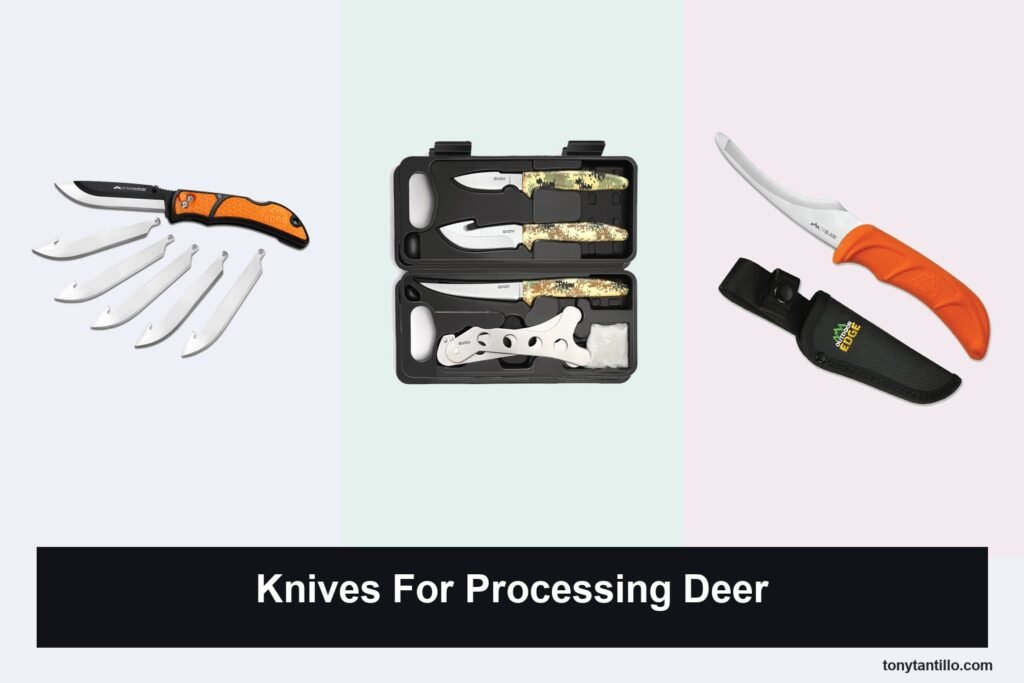
Processing deer cleanly is less about raw cutting power and more about choosing the right geometry for each stage of the job. Skinning, gutting, caping, and trimming all reward different blade shapes, handle textures, and carry formats. A good deer knife should stay controlled when wet, stay visible in the field, and match the amount of work you expect to do before cleanup.
That is why this roundup focuses on practical field use instead of broad outdoor appeal. The strongest options here balance sharpness, corrosion resistance, grip security, and portability in different ways. Some are single-purpose blades that prioritize control. Others are compact kits that cover a full field-dressing workflow. The best choice depends on how much processing you do, how much gear you want to carry, and whether you value a dedicated blade or an all-in-one set.
Top Knives For Processing Deer on the Market

Outdoor Edge RazorLite 3.5-Inch Pocket Knife
Best Replaceable Blade Knife
- Replaceable stainless blades
- 3.5-inch blade length
- Blaze orange visibility
- Pocket clip carry
- Includes 6 blades

GVDV 6-Piece Hunting Processing Kit
Best Compact Kit
- Six-piece field kit
- Caping, gut-hook, boning knives
- Includes ribcage spreader
- Hard-side storage case
- Grooved polypropylene handles
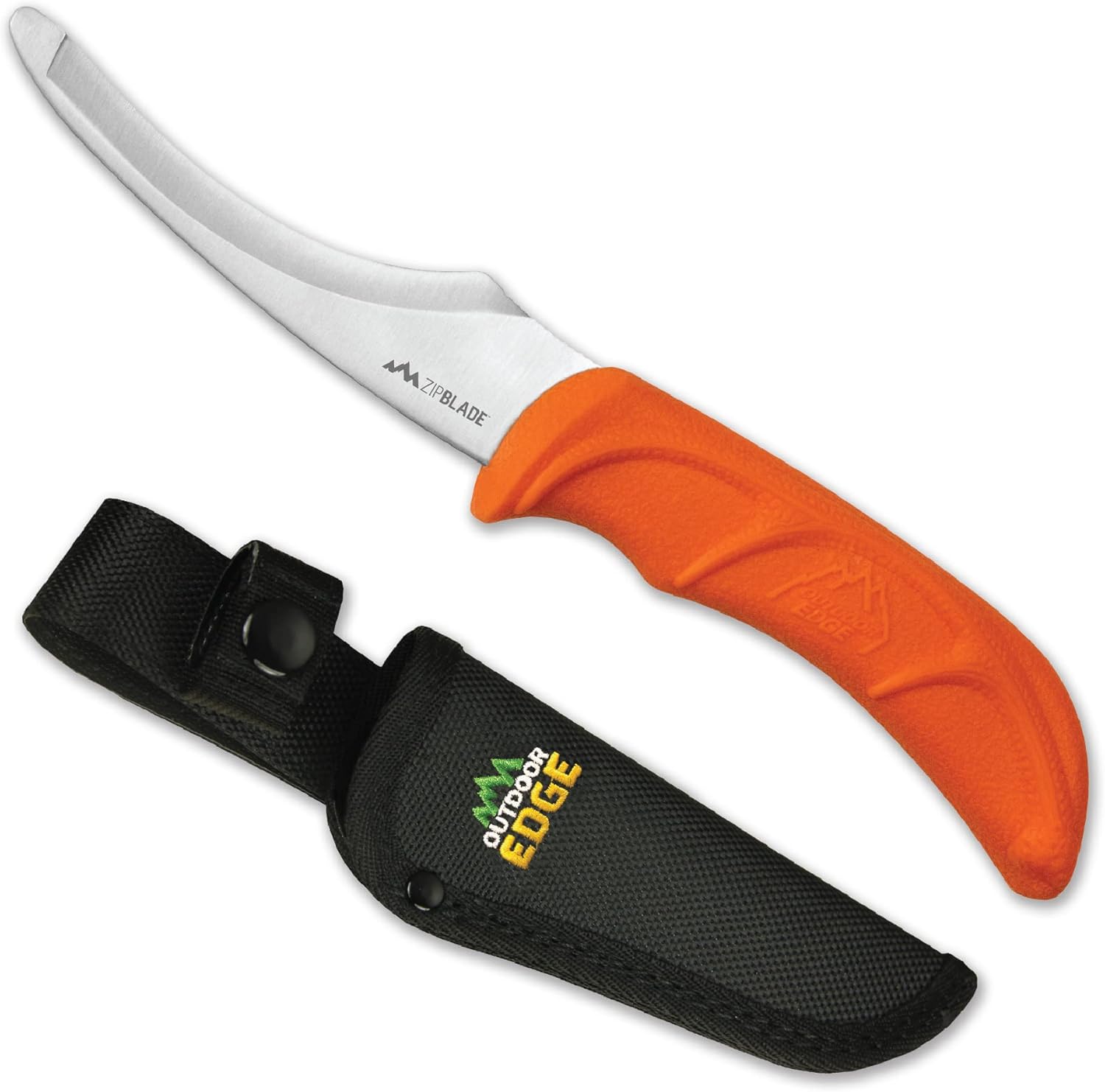
Outdoor Edge Zip Blade Fixed Gutting Knife
Best Gutting Knife
- 4-inch fixed blade
- Blaze orange TPR handle
- Black nylon sheath
- Gut-hook style blade
- Hand-finished stainless steel

GVDV 14-Piece Hunting Processing Kit
Best Full Processing Kit
- Fourteen-piece field kit
- Axe, saw, and knives
- Includes cutting board
- Large carry case
- Carbide sharpener included
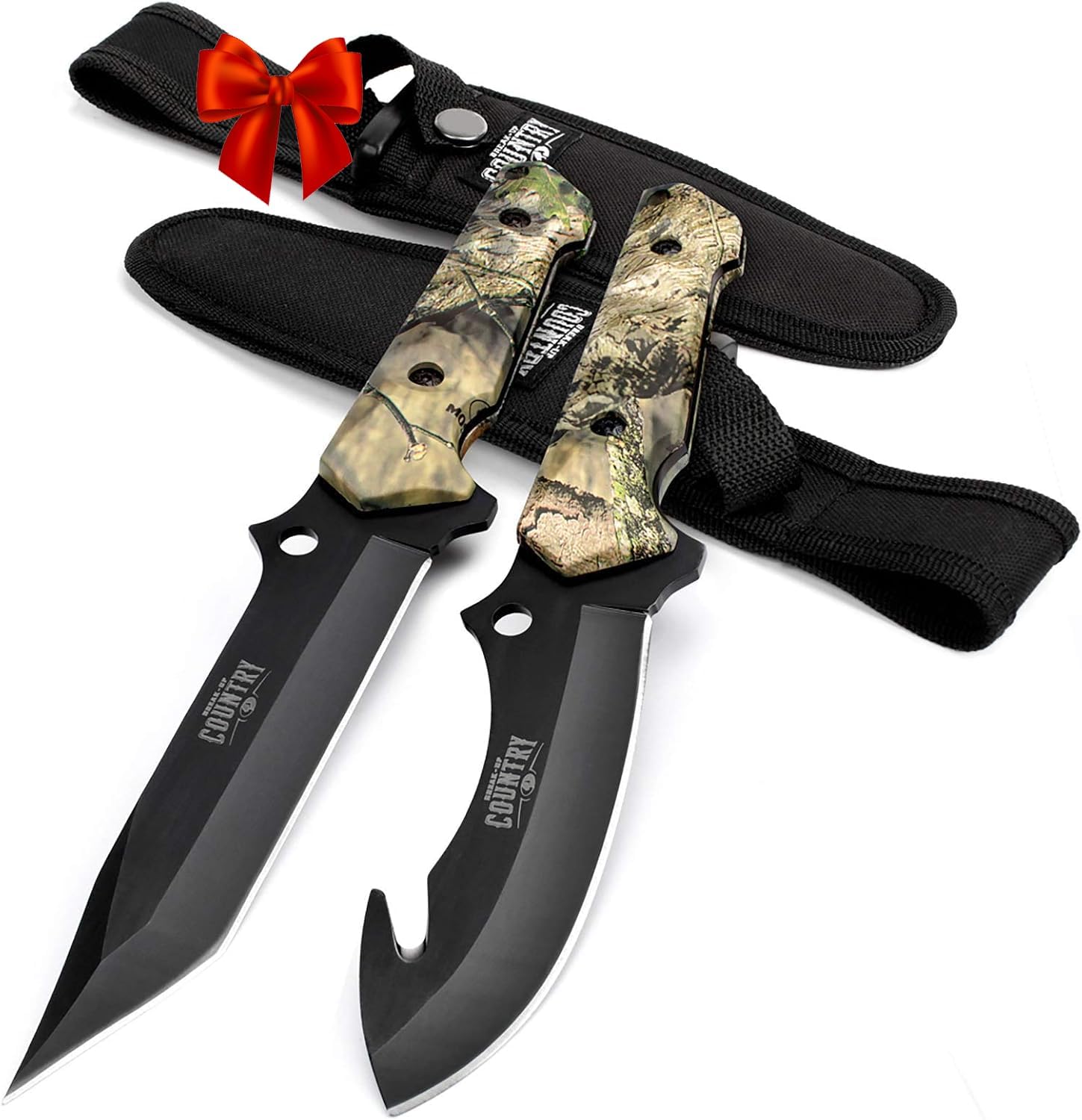
Mossy Oak 2-Piece Fixed Blade Set
Best Value Fixed Blades
- Two fixed blades
- 5.13-inch straight blade
- 4.25-inch gut hook
- Full-tang construction
- Dual-carry sheath
Knives For Processing Deer Reviews
Outdoor Edge RazorLite 3.5-Inch Pocket Knife
ADVANTAGES
LIMITATIONS
The RazorLite is the most straightforward choice for buyers who want a compact deer knife that stays sharp without sharpening downtime. Its 3.5-inch blade length keeps the tool nimble for skinning and detail work, while the replaceable-blade design shifts the maintenance burden from sharpening to swapping. That matters when you want consistent cutting performance through a long hunt or a multi-animal processing session. The included six blades also make the knife feel ready for use out of the box instead of immediately sending you toward backup edges.
The construction supports that field-ready role. The blade holder uses 420J2 stainless steel, and the blade material is stainless steel, which is a sensible match for outdoor use where moisture and blood are part of the job. The Grivory frame with TPR inserts adds grip security without turning the knife into a heavy carry piece, and the stainless-steel pocket clip keeps it close at hand. At 4.8 ounces, it is light enough to live in a pocket or pack without becoming an annoyance on the walk in.
This knife sits at the practical end of the spectrum. It is not trying to replace a full processing kit, and it will not give you the leverage of a larger fixed blade for heavy splitting or long utility cuts. What it does better than most traditional knives is reduce the friction of blade maintenance. That makes it the best pick for hunters who prioritize convenience, visibility, and a clean cutting edge over the feel of a permanent fixed blade. For a compact skinning knife, it is the most efficient recommendation in the group.
GVDV 6-Piece Hunting Processing Kit
ADVANTAGES
LIMITATIONS
This 6-piece kit is built for the buyer who wants a complete but still manageable deer-processing setup. The set includes a caping knife, a gut-hook hunting knife, a boning or fillet knife, plus a ribcage spreader, gloves, and a hard-side case. That spread matters because it covers the stages that usually slow field dressing down. Instead of trying to do every cut with one blade, you can move to the right tool and keep the workflow cleaner and more controlled. The overall package is compact enough to carry without feeling like overkill.
The knife materials and handle design are aimed at field use rather than kitchen-style refinement. The blades are 5Cr15 stainless steel, and the handles use grooved polypropylene with a printed cover for grip. Those details matter when conditions get slick or cold, because the knife has to stay controllable while you work around joints and membranes. The camouflage finish also improves field visibility, which is useful when tools are set down in grass, dirt, or low light. The kit weight stays under 24 ounces, so it remains relatively easy to pack for a long walk-in.
Against the other options here, this set stands out for giving you multiple blade profiles at a low entry cost. It is less specialized than a dedicated single knife, but it also solves more of the processing sequence on its own. That tradeoff suits new hunters, budget-conscious buyers, and anyone who wants one case with the main tools already organized. If you want a small all-in-one kit rather than a premium standalone blade, this is the most balanced low-cost recommendation.
Outdoor Edge Zip Blade Fixed Gutting Knife
ADVANTAGES
LIMITATIONS
The Zip Blade is the most clearly purpose-built option in this group for opening deer cleanly. Its 4-inch fixed blade and gut-hook shape are designed for controlled cuts under the hide, which is exactly the kind of job that benefits from a dedicated gutting knife. The short blade length keeps the knife manageable, and the orange handle improves visibility when you set it down near the work area. For hunters who already own a general-purpose blade, this one fills the specific role that many multipurpose knives only approximate.
The rest of the design supports that narrow mission. The 420J2 stainless blade is heat treated and hand finished, so the knife is built for a sharp working edge rather than a bulky all-purpose profile. The rubberized blaze-orange TPR handle improves grip security, which matters when your hands are wet or gloved. It also comes with a black nylon sheath, so storage and belt carry are already solved. At 0.15 kg, it stays easy to handle through repeated cuts without feeling cumbersome.
Compared with the replaceable-blade knife and the larger sets, this model is the most focused cutter in the lineup. It will not replace a full kit, and it does not give you extra accessories, but that simplicity is part of the appeal. Buyers who want one dependable gutting knife for the hardest part of field dressing should look here first. It is the best recommendation for those who want a dedicated, compact, and very visible fixed blade for deer work.
GVDV 14-Piece Hunting Processing Kit
ADVANTAGES
LIMITATIONS
This is the broadest processing solution in the roundup. The 14-piece package includes an axe, caping knife, butcher knife, gut-hook skinner, bone saw, ribcage spreader, cutting board, gloves, rope, ties, ribbon, sharpener, and carry case. That breadth changes the use case completely. Instead of only covering the knife work, it handles splitting, sawing, trimming, sharpening, and organization. For hunters who field dress in remote conditions or like to work through the entire breakdown in one organized set, that level of completeness is hard to ignore.
The material and tool choices show a stronger emphasis on workflow than on minimalism. The knives use 5Cr15mov high carbon stainless steel with heat treatment and taper grinding, which is meant to support edge retention and rust resistance. The handle design adds finger contouring and a grooved surface, so control remains a priority even though the kit is large. The wood and bone saw includes a blunt hooked tip, and the ribcage spreader and cutting board make sanitation and cooling easier. At less than 6 pounds, it is not ultralight, but it is still a transportable field system.
This kit outclasses the smaller packages when you want maximum capability in one case. It is not the first pick for someone who only needs a knife to skin one deer, and it is more than casual users need. But that depth is exactly why it wins for serious processors, camp crews, and hunters who want fewer missing pieces on busy days. If you are choosing based on completeness and not just knife count, this is the strongest all-in-one recommendation.
Mossy Oak 2-Piece Fixed Blade Set
ADVANTAGES
LIMITATIONS
This two-knife set is the cleanest value play for hunters who want fixed blades without buying a large kit. The straight-edge knife and gut-hook knife cover the two most important cuts in deer processing, and the overall lengths are sized for field work rather than kitchen tasks. The full-tang construction is the main structural advantage here. It gives the set a more durable feel and better balance than lighter pocket options, which is especially useful when you want a knife that stays planted in the hand during longer cuts.
The blade dimensions are worth attention because they signal how the set will behave in use. The straight-edge knife has a 5-1/8-inch blade, while the gut-hook knife uses a 4-1/4-inch blade. That combination is practical because it separates general cutting from opening work, so you do not have to force one blade to do both jobs. The stainless steel blades are paired with a camouflage handle surface and an ergonomic groove, and the dual-carry sheath helps keep both knives secure and ready instead of loose in a pack.
Against the rest of the field, this set is the best middle ground between specialization and simplicity. It does not offer the breadth of the large processing kits, and it does not have the replace-and-go convenience of a disposable-blade system. What it does offer is two sturdy fixed blades at a very approachable price. That makes it the best recommendation for buyers who want a dependable deer-processing pair without paying for extra tools they may never use.
How to Choose Deer Processing Knives
Choosing a knife for deer work starts with the cuts you actually need to make. Skinning, gutting, caping, and boning reward different blade lengths and shapes, so the best option is rarely the most aggressive-looking one. A buyer who wants one quick field tool has different needs than someone building a full processing setup. The useful differences come from control, visibility, grip, corrosion resistance, and how much gear you want to carry.
Blade Shape
Blade geometry does most of the work in deer processing. A short straight blade is easier to control for detail cuts and trimming around joints. A gut hook or dedicated opening blade can help when you want to start the hide cleanly without pushing too deep. Longer blades can be useful for boning or larger cuts, but they are less nimble in tight spaces. Choose the shape that matches your most common step, not the one that sounds most versatile on paper.
Grip and Control
A secure handle matters more than many buyers expect. Deer processing often happens when hands are wet, cold, or wearing gloves, so a slick handle quickly becomes a liability. Rubberized inserts, grooved polymer, and ergonomic contouring all reduce the chance that the knife shifts during a cut. That does not just improve comfort. It also improves precision, which matters when you are working near skin or connective tissue. If the knife feels uncertain in the hand, it will slow you down every time you pick it up.
Fixed Blade or Replaceable
A fixed blade usually gives you stronger balance and a more traditional feel in the hand. It is a good fit when you want a tool that can handle repeated field use without any blade swap process. Replaceable-blade systems change the equation by reducing sharpening hassle. That can be a real advantage when you want consistent sharpness across a long day or do not want to maintain an edge in camp. The right choice depends on whether you prefer permanence and stability or speed and low maintenance.
Kit Size
Some buyers only need one dependable knife. Others want a complete field-dressing system that includes saws, spreaders, gloves, a board, or a sharpener. Bigger kits solve more of the workflow, but they also take more space and usually add weight. That tradeoff matters most if you hike in, process at camp, or keep your gear in a truck where organization matters. Smaller sets are easier to carry and faster to grab. Larger sets are better when you value readiness over simplicity.
Visibility and Carry
Bright colors are not cosmetic in the field. Orange handles are easier to find in grass, leaves, and low light, which can prevent wasted time during cleanup. Sheaths, clips, and secure cases also affect how smoothly the knife fits into your routine. A knife that carries safely is more likely to stay accessible, and accessible gear gets used the way it was intended. If you process deer away from a bench or tailgate, visible tools and secure carry should rank near the top of your list.
Deer Knife Comparison Table
| Product | Best For | Blade Length | Weight | Blade Type | Construction | Items |
|---|---|---|---|---|---|---|
| Outdoor Edge RazorLite 3.5-Inch Pocket Knife | Best Replaceable Blade Knife | 3.5 inches | 4.8 ounces | disposable | Lightweight,Pocket Clip | 1 |
| GVDV 6-Piece Hunting Processing Kit | Best Compact Kit | 4.7 inches | 600 g | Clip | Rust Resistant, Stain Resistant | 6 |
| Outdoor Edge Zip Blade Fixed Gutting Knife | Best Gutting Knife | 4 inches | 0.15 kg | straight edge | Stainless | 1 |
| GVDV 14-Piece Hunting Processing Kit | Best Full Processing Kit | 4.3 inches | Not Specified | Clip | Ergonomic Handle, Fixed Blade, Rust Resistant, Stain Resistant | Not Specified |
| Mossy Oak 2-Piece Fixed Blade Set | Best Value Fixed Blades | 5.13 inches | 1.1 pounds | Gut Hook, Straight Edge | Full Tang | 2 |
How We Tested & Analyzed Knives for Processing Deer
This roundup was organized around the tasks deer processors actually perform, not around general outdoor knife marketing. The evaluation focused on blade length, blade shape, handle security, carry method, corrosion-related materials, and whether each product solved a narrow cutting role or a broader field-dressing workflow. Those are the differences that change how a knife behaves when the work is wet, repetitive, and time-sensitive. Decorative styling and vague claims mattered less than whether the design matched practical use.
Comparison also weighed how much gear each product bundled around the knife itself. A standalone gutting blade and a compact replaceable-blade knife answer different needs than a multi-piece kit with saws, spreaders, gloves, or a case. That distinction matters because buyers are not only choosing sharpness. They are choosing how much of the processing sequence they want covered in one purchase. The strongest recommendations came from products that solved a clear use case cleanly, with tradeoffs that were easy to explain.
Limitations were handled by staying inside the evidence available for each product and by avoiding inflated claims about performance that were not grounded in the saved record. When a knife had a narrow purpose, that narrow purpose was treated as a strength rather than a flaw. When a kit added size and weight, that was framed as the cost of completeness. The result is a practical buying guide that compares real tradeoffs instead of trying to force every option into the same role.
Frequently Asked Questions
What blade shape is best for deer processing?
A shorter blade is usually easier to control for skinning and trimming, while a gut-hook or dedicated opening shape can help start the hide more cleanly. If you process deer often, many buyers prefer pairing a general cutter with a specialized opening blade instead of relying on one knife for everything.
Do I need a full kit or just one knife?
That depends on how much of the workflow you want covered. One good knife is enough for simple field work. A full kit makes more sense when you want tools for opening, splitting, trimming, and organizing meat all in one case. More tools can save time, but they also add weight and bulk.
Why does handle grip matter so much?
Deer processing often happens with wet hands, gloves, or cold weather. A handle with texture, contouring, or rubberized inserts is easier to control under those conditions. Better grip improves precision and reduces fatigue, which is important when you are making repeated cuts close to the hide or tissue.
Are replaceable blades a good idea for hunting knives?
They can be very convenient if you want consistent sharpness without sharpening in camp or at home. The tradeoff is that they feel different from a fixed blade and are better suited to lighter, controlled work. Buyers who value convenience and quick edge changes often like them most.
Final Thoughts
The right deer-processing knife is the one that matches your workflow. If you want a single compact cutter, choose a focused blade with strong grip and good visibility. If you want a cleaner maintenance routine, a replaceable-blade knife can simplify the job. If you want a complete field system, a larger kit can cover more of the process in one organized purchase. The best choice is not the most complicated one. It is the one that removes friction during the cuts you make most often.
For most buyers, the smartest way to shop is to decide whether you need a specialist blade or a broader kit before looking at price. Then compare handle security, carry method, blade shape, and how much weight you are willing to carry into the field. That order keeps the decision practical and prevents overbuying. With the right knife in hand, deer processing becomes less about improvisation and more about control, speed, and a cleaner result.