
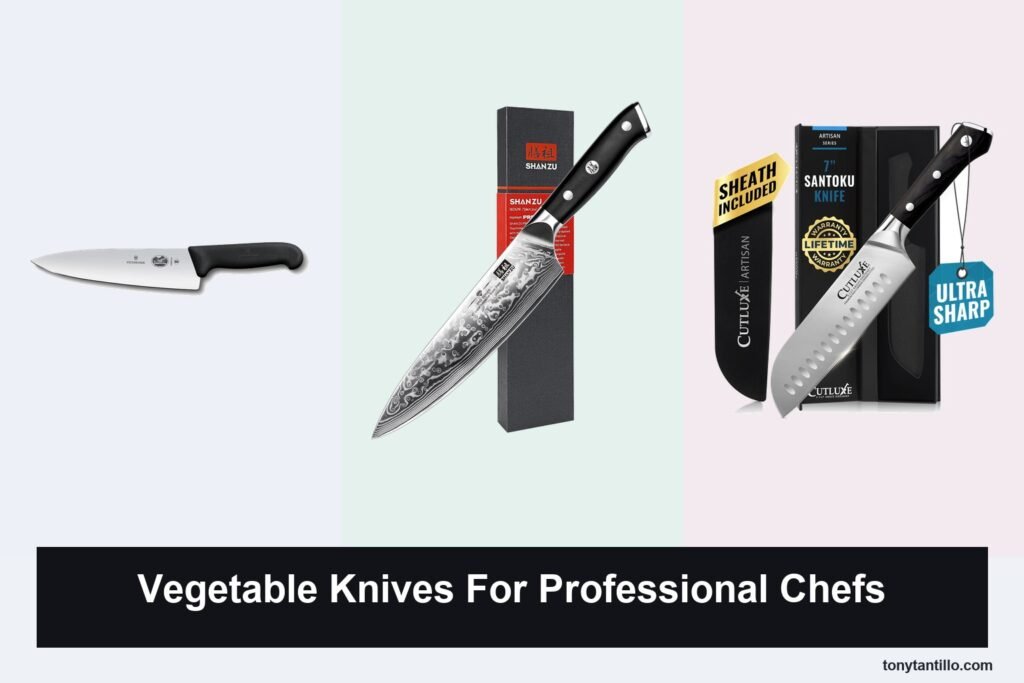
Vegetable prep rewards the knife that stays controlled through long sessions, clean push cuts, and repeated contact with dense produce. For professional kitchens, that usually means choosing between a Western chef’s knife that can do more than vegetables, and a Nakiri or santoku-style blade that narrows the mission to speed, precision, and cleaner board work. The right pick depends on how much leverage you want, how often you cut delicate herbs versus hard squash, and whether you prefer a generalist tool or a specialist.
This roundup focuses on that tradeoff. The strongest options here pair sharp geometry with handles that stay secure under pressure, and the better knives add durability details that matter in service, such as forged construction, hard steel, or easy-clean materials. Some lean toward balance and all-purpose utility, while others are built to excel at the vertical chopping motion many chefs prefer for vegetables. The comparison below highlights which knives are the most versatile, which are the most specialized, and which are worth the higher price when precision and finish matter most.
Top Vegetable Knives For Professional Chefs on the Market

Victorinox Fibrox Pro 8-Inch Chef’s Knife
Best all-purpose blade
- 8-inch stainless steel blade
- TPE non-slip handle
- Dishwasher safe materials
- Lifetime defect warranty

SHAN ZU 8-Inch Damascus Chef Knife
Best sharpness value
- 10Cr15Mov steel core
- 67 layers of steel
- 15-degree cutting angle
- G10 glass fiber handle

Cutluxe 7-Inch Santoku Knife
Best santoku pick
- 7-inch high-carbon German steel
- 14-16 degree edge
- Pakkawood handle
- Sheath included
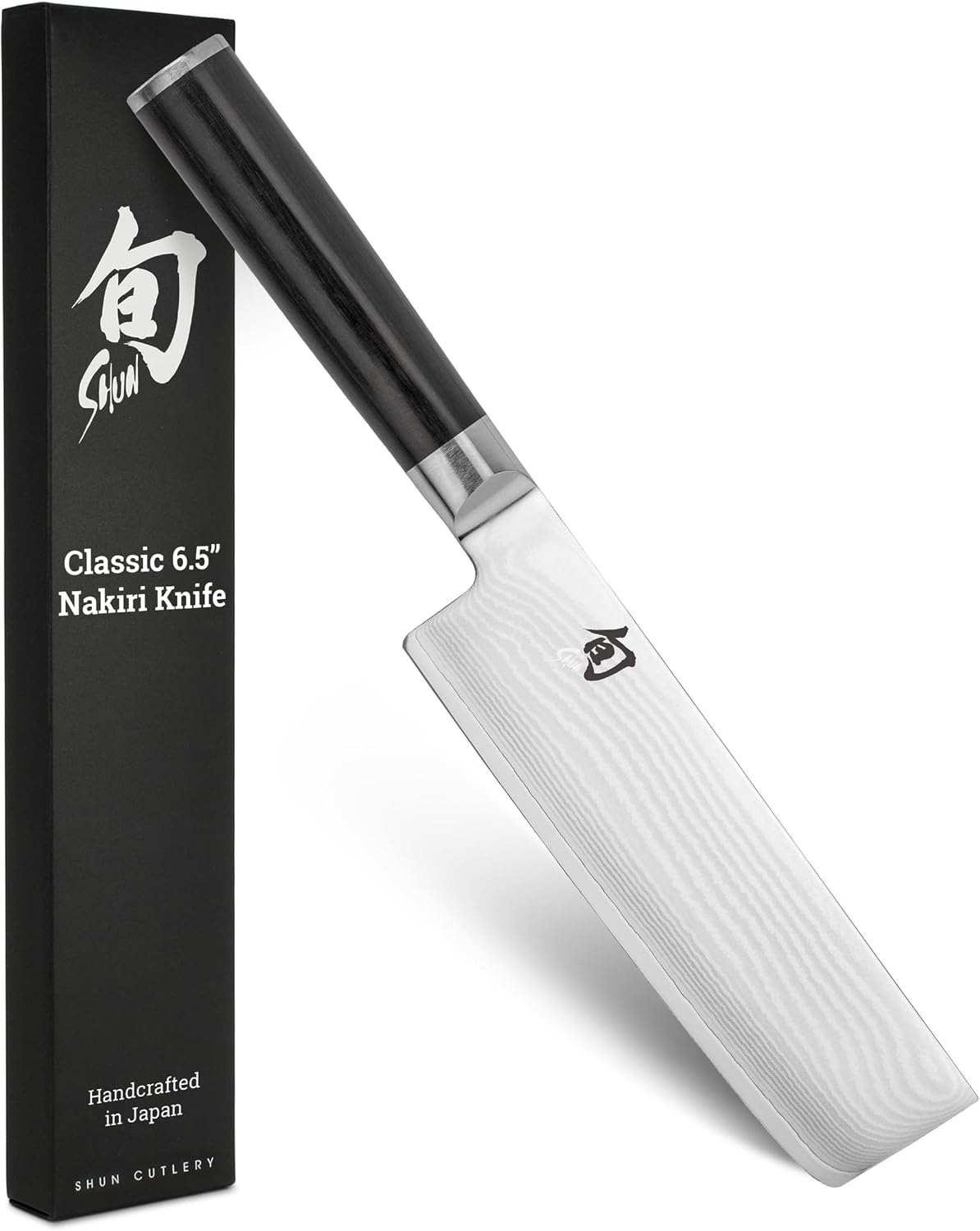
Shun Classic 6.5-Inch Nakiri Knife
Best premium Nakiri
- VG-MAX steel core
- 68-layer Damascus cladding
- 16-degree edge
- D-shaped Pakkawood handle
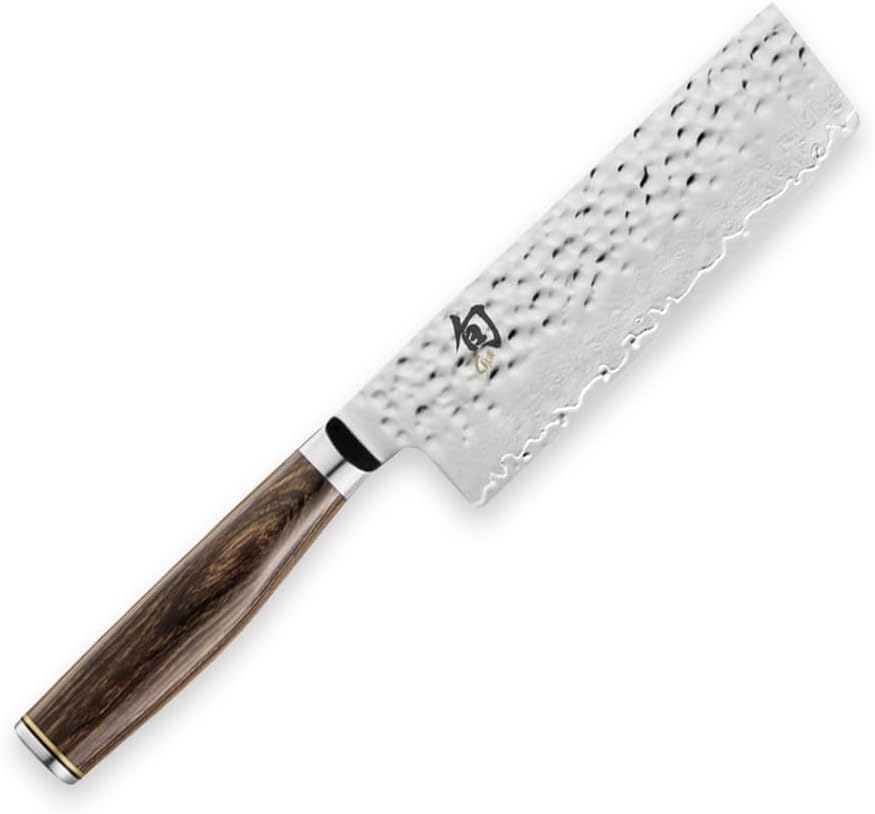
Shun Premier 5.5-Inch Nakiri Knife
Best premium compact
- 5.5-inch Nakiri blade
- Hammered tsuchime finish
- VG-MAX steel core
- Contoured Pakkawood handle

Mercer Genesis 7-Inch Nakiri Knife
Best budget Nakiri
- 7-inch forged blade
- High-carbon German steel
- Santoprene non-slip handle
- Lifetime warranty
Vegetable Knives For Professional Chefs Reviews
Victorinox Fibrox Pro 8-Inch Chef’s Knife
ADVANTAGES
LIMITATIONS
The Victorinox Fibrox Pro is the most straightforward choice for chefs who want one knife to cover vegetables and everything else on the board. Its 8-inch blade gives it enough reach for herbs, onions, and larger produce, while the stainless steel edge is built for chopping, mincing, slicing, and dicing without forcing a specialty technique. The stamped construction keeps the profile simple, and that usually translates into an easy-to-manage feel for long prep sessions. For kitchens that value utility over showmanship, this is the practical workhorse in the group.
Handling is where this knife separates itself from more decorative options. The thermoplastic elastomer handle is meant to stay non-slip even when wet, which matters when a service line gets busy and your grip changes from dry to damp in seconds. The knife is also dishwasher safe, so cleanup is less fussy than with many premium Japanese-style blades, although hand washing still generally makes more sense if you want to preserve the edge. Its lifetime warranty against original defects adds another layer of confidence for chefs who treat knives as daily equipment, not display pieces.
Compared with the other knives here, the Victorinox gives up some blade artistry and specialist vegetable geometry in exchange for simpler ownership and broader usefulness. It will not deliver the same narrow, vegetable-only feel as a Nakiri, and it does not bring the layered steel or premium handle feel of the higher-end Japanese options. What it does bring is a strong balance of control, size, and maintenance ease at a moderate price. Choose it if you want the most flexible professional knife in the roundup and do not need your vegetable knife to be a dedicated specialty tool.
SHAN ZU 8-Inch Damascus Chef Knife
ADVANTAGES
LIMITATIONS
The SHAN ZU chef knife sits in the space between a classic Western chef’s knife and a more refined Japanese-inspired cutter. Its 10Cr15Mov Damascus steel core and 67-layer construction are aimed at buyers who want a harder, more wear-resistant blade with a visibly layered finish. The 8-inch blade is still versatile enough for everyday prep, but the 15-degree edge and forged build make the knife feel more tuned to fine slicing than brute-force chopping. For chefs who want a sharper-feeling blade without jumping to the highest price tier, the value proposition is strong.
The 2.2 mm thickness and 270 g weight tell you this is not a featherlight slicer. It has enough substance to feel stable through dense vegetables, yet the G10 handle adds a secure, solid grip that suits long prep sessions. The steel is described as rust-proof and wear-resistant, which matters in a professional kitchen where a knife may see repeated use and imperfect handling between tasks. The 12-month warranty is shorter than the lifetime coverage found on some rivals, so the ownership tradeoff is clear: more edge refinement and hardness, but less long-term protection.
Against the other knives in this roundup, the SHAN ZU is the strongest pick for chefs who want a sharper, more technical cutting feel at a mid-range price. It is less specialized for vegetable-only work than the Nakiri options, but more affordable than the premium Japanese models with similar steel pedigree. That makes it a smart middle ground for cooks who need one knife to handle produce and general prep, while still wanting a blade that feels more performance-oriented than the basic workhorse choices. I would put it near the top of the list for sharpness-first buyers.
Cutluxe 7-Inch Santoku Knife
ADVANTAGES
LIMITATIONS
Cutluxe aims this santoku at cooks who want a compact knife that stays controlled on vegetables without giving up some general-purpose usefulness. The 7-inch blade is shorter than the standard chef’s knife, which can make it easier to manage in tighter prep spaces or for users who prefer a more compact swing. Its high-carbon German steel and forged build push it toward long-term durability, and the 14 to 16 degree hand-sharpened edge supports clean slicing when precision matters. For vegetable work, that narrower profile can feel nimble without being overly specialized.
The triple-riveted Pakkawood handle is one of the more reassuring details in this group because it balances comfort with stability. That matters when you are moving quickly between herbs, aromatics, and firmer produce and want the knife to track predictably. The sheath is another practical advantage for storage and transport, especially in professional settings where knives may travel between stations or need safer drawer storage. The laminated, polished handle surface is also meant to be sanitary, which is useful in busy kitchens where maintenance time is limited.
This knife competes most directly with the Mercer and Victorinox options on utility, but it feels a little more refined and a little more storage-friendly. It does not have the dedicated vegetable geometry of a Nakiri, and it is not as premium in steel profile as the Shun knives, but it threads the middle well. Choose it if you want one knife that stays versatile, comfortable, and easy to store, while still offering enough sharpness and stability for serious vegetable prep. It is a dependable compromise rather than a dramatic specialist.
Shun Classic 6.5-Inch Nakiri Knife
ADVANTAGES
LIMITATIONS
The Shun Classic Nakiri is built for chefs who want vegetable prep to feel precise, fast, and controlled. Its 6.5-inch blade is shorter than a standard chef’s knife, but that size works in the Nakiri format because the flat profile is made for straight-down slicing and dicing. The VG-MAX core and 68-layer Damascus cladding place it in premium territory, and the 16-degree edge supports fine, clean cuts through produce. This is the knife that speaks most clearly to cooks who already know they want a dedicated vegetable tool rather than a generalist blade.
The D-shaped Pakkawood handle is a meaningful design detail because it aims for stability without forcing the grip into a generic block shape. The knife is described as comfortable and secure for both left- and right-handed users, which is unusually helpful in professional kitchens where multiple cooks may share tools. Handcrafted construction in Japan and the limited lifetime warranty reinforce the premium positioning. There is also the practical benefit of free sharpening and honing support, which matters for a knife that is supposed to stay at the center of vegetable work for years.
Relative to the rest of this roundup, the Shun Classic is where refinement starts to matter as much as pure usefulness. It is more specialized and more expensive than the Victorinox, Mercer, or Cutluxe options, but the cutting feel and premium steel make sense for chefs who work vegetables heavily every day. It is also less flashy than the Premier version, which means it delivers the essential Shun experience without the higher price attached to decorative finishing. I would recommend it for professionals who want a true vegetable knife and are willing to pay for a refined edge and build quality.
Shun Premier 5.5-Inch Nakiri Knife
ADVANTAGES
LIMITATIONS
The Shun Premier Nakiri is the most compact dedicated vegetable knife in this group, and that short format changes the way it moves on the board. Its 5.5-inch blade is easier to place precisely for push cuts, especially when you are working quickly through herbs, scallions, or smaller vegetables. The VG-MAX core and 68-layer Damascus cladding give it the same premium steel story as the Classic model, but the hammered tsuchime finish adds another operational benefit by helping reduce drag and food sticking. That makes it especially appealing to chefs who value clean release as much as sharpness.
At 174 g, the knife has enough presence to feel controlled without becoming cumbersome. The contoured Pakkawood handle supports a secure hold, and the design is shaped to suit both left- and right-handed users. In practice, that combination matters when you want a nimble knife that still feels settled during repeated chopping motions. Like the other premium Shun knives, it is handcrafted in Japan and supported by free sharpening and honing, so the purchase includes service support that can help maintain its edge over time.
Compared with the Shun Classic Nakiri, the Premier trades a little blade length for a more compact feel and the hammered finish that helps with release. Compared with the other knives in the roundup, it is the most clearly tuned to vegetable-specific efficiency and the least interested in being a do-everything tool. That focus is exactly why it earns a place here. Choose it if you want a premium Nakiri that feels lighter, more agile, and better suited to repetitive produce work than to mixed chopping duties. It is the specialist’s specialist.
Mercer Genesis 7-Inch Nakiri Knife
ADVANTAGES
LIMITATIONS
The Mercer Genesis Nakiri is aimed at chefs who want a vegetable-focused blade without paying premium Japanese prices. Its 7-inch forged blade gives it enough span for efficient board work, and the rectangular Nakiri profile is well suited to thin slices and precise control over vegetables. High-carbon German steel and taper-ground edges are the core performance story here. That combination is built for durability and long-lasting sharpness, which makes the knife appealing for kitchens that need dependable daily use more than collector-grade finish.
The Santoprene handle is a major practical advantage because it stays secure even when wet. In professional prep, that matters more than a flashy surface finish, since grip safety often decides how comfortable a knife feels after an hour of repetitive chopping. The knife is described as hand-wash only, which is a reasonable tradeoff for preserving edge life and finish. At 4 ounces, it is also notably lighter than some of the premium steel-heavy options, so chefs who prefer a quick, responsive knife may find it easier to maneuver for extended prep.
This Mercer is the best value alternative to the more expensive Shun Nakiri knives. It lacks the refined edge geometry, service extras, and premium aesthetics of those models, but it delivers the basic Nakiri advantages in a straightforward professional package. It is also more vegetable-specific than the chef’s knives in the set, which gives it a clearer purpose for board-heavy kitchens. Choose it if you want a serious Nakiri with strong grip security, low weight, and a long warranty, while keeping the budget far below premium territory. It is the sensible workhorse of the Nakiri segment.
How to Choose a Vegetable Knife
A great vegetable knife should make repetitive prep feel cleaner, safer, and less tiring. The best choice depends on whether you want a broad utility knife or a blade that is optimized for produce work alone. In professional kitchens, that decision affects speed, board control, edge retention, and how often you need to pause for maintenance. The right geometry can be as important as the steel itself.
Blade Shape
Vegetable knives usually fall into two camps. A Nakiri-style blade is flat and rectangular, which supports straight push cuts and helps keep contact with the board. That makes it easier to move through herbs, scallions, and diced vegetables with a consistent motion. A chef’s knife is more versatile, but it asks for a different cutting rhythm. If your prep is vegetable-heavy, a flatter blade often feels more efficient and less fatiguing over time.
Blade Length
Length changes control as much as reach. Shorter blades can feel quicker when you are trimming, coring, or working in tight prep areas, while longer blades are better when you need to move through larger batches without resetting your grip as often. For most professionals, the best length is the one that matches the size of the produce and the space at the station. If the knife feels oversized, it slows fine work. If it feels too short, it can limit rhythm on bigger cuts.
Steel and Edge
Steel choice affects more than sharpness. Harder, higher-end steels can hold a fine edge longer, but they often demand more careful handling and maintenance. Softer or simpler steels may be easier to live with in a busy kitchen, even if they need sharpening sooner. Edge angle matters too. A narrower angle tends to feel more acute and precise on vegetables. When you are comparing options, think about whether you want maximum refinement or a more forgiving edge that tolerates rougher daily use.
Handle Control
Handle shape influences safety and endurance during long prep sessions. A secure grip matters when your hands are wet, your station is crowded, or you are working quickly through repetitive cuts. Textured synthetic handles can be easier to manage in those conditions, while wood-based handles often bring a more traditional feel and a warmer in-hand balance. Choose based on how the knife will actually be used. In a high-output kitchen, grip security often matters more than appearance.
Maintenance Needs
Some vegetable knives are built for easier cleaning, while others expect more careful upkeep. Dishwasher-safe materials can simplify cleanup, but many serious knives still perform better with hand washing and prompt drying. Premium blades and specialty finishes may also benefit from honing or professional sharpening support. If a knife will be used constantly, maintenance burden is not a minor detail. It changes whether the knife stays in rotation comfortably or becomes a tool that people avoid because it is too fussy to care for.
Value Tradeoffs
Price should reflect how specialized you want the knife to be. A generalist chef’s knife can cover vegetables and a wider range of prep tasks, which may be the best value if you want one blade to do most things. A dedicated Nakiri often costs more because it is optimized for a narrower job, but that specialization can pay off in speed and consistency. The right question is not simply which knife is cheaper. It is which knife saves the most time and effort in the work you actually do every day.
Vegetable Knife Comparison Table
| Product | Best For | Blade Length | Blade Material | Handle Material | Construction | Warranty |
|---|---|---|---|---|---|---|
| Victorinox Fibrox Pro 8-Inch Chef’s Knife | Best all-purpose blade | 8 inches | Stainless Steel | Fibrox or Pro | Stamped | Lifetime warranty against original manufacturer’s defects |
| SHAN ZU 8-Inch Damascus Chef Knife | Best sharpness value | 8 inches | Alloy Steel | G10 Glass Fiber Handle | Forged | Not Specified |
| Cutluxe 7-Inch Santoku Knife | Best santoku pick | 7 inches | High Carbon Stainless Steel | Pakkawood | Forged | Not Specified |
| Shun Classic 6.5-Inch Nakiri Knife | Best premium Nakiri | 6.5 inches | VG-MAX Core, Damascus Steel Cladding | Pakkawood | Forged | Limited Lifetime Warranty |
| Shun Premier 5.5-Inch Nakiri Knife | Best premium compact | 5.5 inches | Alloy Steel | Walnut color PakkaWood® | Forged | Not Specified |
| Mercer Genesis 7-Inch Nakiri Knife | Best budget Nakiri | 7 inches | High Carbon Steel | Santoprene | Forged | Lifetime warranty |
How We Tested & Analyzed Vegetable Knives for Professional Chefs
This roundup was built around category-specific criteria that matter in professional kitchen use. Blade geometry, length, steel type, handle security, construction, and warranty coverage were weighed for their real-world effect on control, durability, and upkeep. The goal was not to rank knives by style alone, but to separate broad utility blades from true vegetable specialists and then evaluate which design choices improve performance on the board.
Comparisons focused on practical tradeoffs rather than abstract superiority. Premium Japanese-style knives were judged on edge refinement, finish, and service support. Western and hybrid knives were judged on versatility, handling, and maintenance convenience. When a product had a stronger niche role, that specialty was treated as an advantage only if it clearly translated into better vegetable prep. When a product carried a simpler build, the analysis emphasized whether that simplicity helped or limited daily use.
Because kitchen knives can look similar on paper, the analysis also gave weight to limitations that affect ownership. Shorter warranties, hand-wash requirements, and heavier or more delicate constructions all change how the knife fits into a professional workflow. Where a knife offered multiple strengths, the most important question was whether those strengths aligned with a cook’s actual prep style. That is why the final recommendations favor different buyers rather than forcing one universal winner.
Frequently Asked Questions
Is a Nakiri better than a chef’s knife for vegetables?
For pure vegetable prep, often yes. A Nakiri’s flat edge is built for push cuts and straight board contact, so it can feel faster and more precise on produce. A chef’s knife is more versatile and usually better if you want one knife for many tasks. The better choice depends on whether vegetables are the focus or just part of a broader prep rotation.
What blade length works best for professional vegetable prep?
Most professionals land somewhere between compact and mid-length blades because that range balances control and reach. Shorter knives can be easier to place accurately on herbs and small vegetables. Longer blades help when you are processing larger volumes or bigger produce. The right length is the one that matches your station space, hand size, and the scale of your prep work.
How important is handle material?
Very important in a busy kitchen. Handle material affects grip security, comfort, and how the knife behaves when your hands are wet or moving quickly. Synthetic handles often prioritize traction and easy cleaning. Wood-based handles can feel warmer and more refined, but they usually ask for a little more care. If you prep all day, secure control matters more than visual style.
Does a higher price always mean a better vegetable knife?
Not necessarily. Higher prices often buy better steel, more refined finishing, and extra service support, but those upgrades only matter if they match your workflow. A premium Nakiri can be worth it for heavy vegetable prep. A simpler chef’s knife can be the smarter purchase if you need one blade for many jobs. Value comes from fit, not price alone.
Final Thoughts
The best vegetable knife is the one that matches your cutting style, not just your budget. If you want one blade that can step outside produce work, a capable chef’s knife remains the safest all-around purchase. If vegetables dominate your prep, a Nakiri will usually feel faster, flatter, and more efficient at the board. The difference shows up in how naturally the knife moves, how cleanly it releases food, and how tired your hand feels after a long shift.
For professional chefs, that tradeoff is usually worth taking seriously. Premium Japanese options reward regular vegetable work with sharper geometry and better finishing, while simpler forged or stamped knives can deliver stronger value and easier upkeep. Choose the knife that supports your actual workflow, not the one that merely sounds impressive on paper. The right blade will disappear into the rhythm of prep, which is exactly what a good vegetable knife should do.