
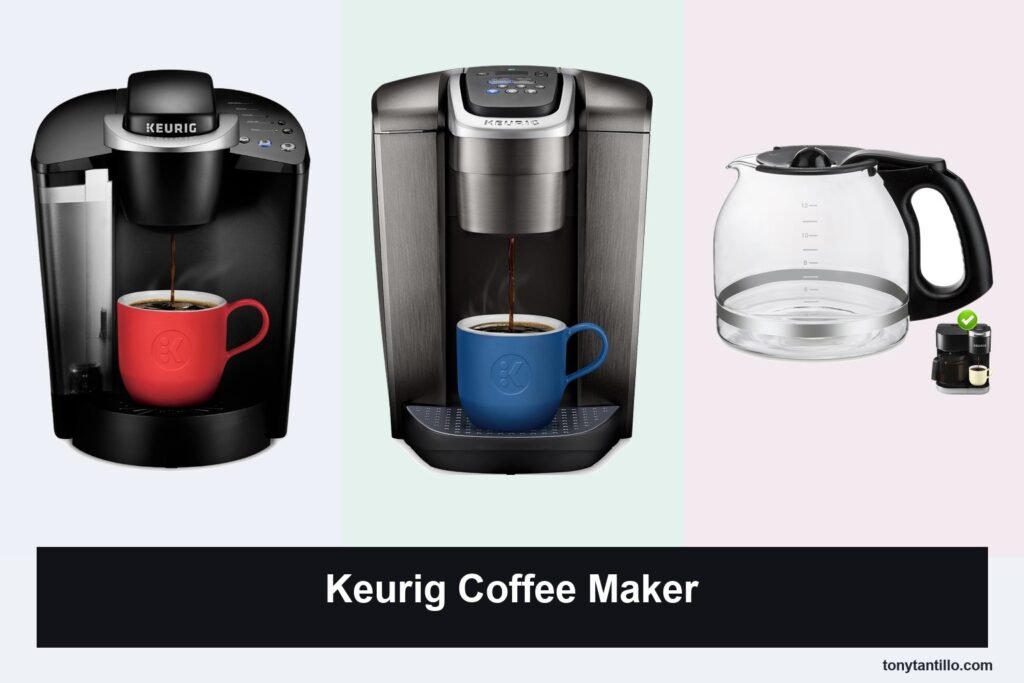
A Keurig coffee maker usually earns its place by solving one simple problem: you want a fast cup without turning the counter into a ritual station. The right model should fit your routine, match the drinks you actually make, and avoid creating extra cleanup before work. That is why the best choices are not only about brew speed. They are about reservoir capacity, cup-size control, maintenance reminders, and whether you want a bare-bones brewer or one with more customization.
This roundup focuses on three very different buying scenarios. One brewer keeps the formula simple and predictable. Another adds stronger control over taste and temperature for people who want more from a single-serve machine. The third is not a brewer at all, but a compatible carafe alternative for a different type of Keurig setup. Together they show the tradeoffs that matter most: convenience versus control, compact simplicity versus expanded features, and replacement value versus full-machine ownership.
Top Keurig Coffee Maker on the Market

Keurig K-Classic Single Serve Brewer
Best Simple Keurig Pick
- 3 brew sizes
- 48 oz removable reservoir
- Simple button controls
- Auto-off after 2 hours
- Includes water filter kit

Keurig K-Elite Single Serve Brewer
Best Premium Keurig Option
- 5 brew sizes
- Strong Brew and Iced settings
- 75 oz removable reservoir
- Temperature control
- Travel mug friendly

Sendextra 12-Cup Glass Carafe
Best Alternative to Keurig K-Classic Serve K-Cup
- 12-cup capacity
- Compatible with K-Duo brewer
- Borosilicate glass
- Dishwasher safe
- Dripless spout
Keurig Coffee Maker Reviews
Keurig K-Classic Single Serve Brewer
ADVANTAGES
LIMITATIONS
The K-Classic is the cleanest fit for buyers who want the familiar Keurig experience without extra decision fatigue. Its 3 brew sizes cover 6, 8, and 10 ounces, so you can bias either toward a stronger short cup or a lighter everyday mug. The 48-ounce reservoir is the bigger practical advantage. It means fewer refills across the morning and less interruption when several people want coffee back to back. The simple button control layout keeps the routine fast and intuitive, which is exactly what many single-serve buyers are after.
That simplicity also shapes how the machine works day to day. The removable reservoir makes refill and cleaning easier than a fixed tank, and the auto-off function after two hours adds a small but useful energy-saving layer. Hot water can be dispensed without a pod, so the brewer can do more than coffee when you need it. The removable drip tray is another small convenience that matters in real kitchens, especially if you are cleaning up after a crowded breakfast counter or using shorter cups that splash easily.
Against the other two choices here, this model is the most straightforward and the least specialized. It does not chase stronger beverage customization, and it is not trying to solve a carafe compatibility problem. Instead, it focuses on reliable single-serve brewing at a manageable price point. That makes it the best recommendation for first-time Keurig buyers, secondary kitchens, or anyone who values predictable operation over extra settings. If you want the most uncomplicated path to a daily cup, this is the one to start with.
Keurig K-Elite Single Serve Brewer
ADVANTAGES
LIMITATIONS
The K-Elite is the better choice for buyers who know they want more than basic pod brewing. Its 5 brew sizes run from 4 to 12 ounces, which gives you more room to tune each cup than the simpler machines in this group. Strong Brew matters when you want a fuller cup without changing pods. The Iced setting is equally useful because it creates a cold drink from hot brewing, which is a more controlled approach than simply pouring coffee over ice and hoping the flavor holds up. The brushed finish and metal details also give it a more finished look on the counter.
It is also the most feature-rich brewer here for routine convenience. The 75-ounce removable reservoir cuts down on refill frequency, and the removable drip tray can accommodate travel mugs up to 7.2 inches tall. That matters if your coffee leaves the kitchen with you. The hot water on demand button expands the machine beyond coffee, while the brewer maintenance reminder is a genuinely practical addition because descaling is one of the few maintenance tasks that directly affects taste and longevity. Quiet Brew Technology further softens the daily experience in shared spaces.
Compared with the K-Classic, this machine is for people who will actually use the extra controls rather than just admire them. It costs more, but it returns that difference in flexibility, larger capacity, and more polished day-to-day behavior. It is also a better fit than the replacement carafe because it is a complete brewer, not a component. For anyone who wants a premium single-serve setup with stronger tuning and fewer compromises, this is the most compelling pick in the group.
Sendextra 12-Cup Glass Carafe
ADVANTAGES
LIMITATIONS
This carafe is for a very different buyer than the two brewers above. It is a replacement part, not a coffee maker, and its value depends entirely on whether you need a compatible glass pot for a K-Duo single serve and carafe machine. The 12-cup capacity is the headline feature because it supports family-style brewing when one mug is not enough. Borosilicate glass and a BPA-free build also matter because they are aimed at heat resistance and everyday durability rather than decorative styling. The result is a practical fix when the original carafe is no longer usable.
The design details are the difference between a decent substitute and a frustrating one. The wide mouth and detachable lid make cleaning easier, and the dishwasher-safe material feature reduces the effort of upkeep. The comfort-grip handle and dripless spout are the kinds of details that affect daily use more than most people expect, especially when you are pouring a full pot quickly in the morning. The compatibility warning is important too. It is intended for the K-Duo single serve and carafe coffee maker, and it does not fit the K-Duo Essentials model.
This is not a competitor to the K-Classic or K-Elite in the usual sense. It serves a repair-and-replace role for an owner who already has the right brewer platform. That makes its best comparison point value, not feature count. If you need a replacement carafe that keeps a K-Duo setup working without buying an entirely new machine, this is the most direct option in the roundup. For everyone else, a full brewer will be the more relevant purchase.
How to Choose a Keurig Coffee Maker
Choosing a Keurig coffee maker is mostly about matching the machine to the way you actually drink coffee. The simplest brewers are excellent when you want speed and consistency with very little setup. More advanced models justify themselves when you care about stronger coffee, iced drinks, bigger reservoirs, or more control over cup size. Replacement parts live in a separate category entirely, where compatibility matters more than feature count. The right decision comes from separating those use cases before you compare price or appearance.
Cup Size Range
Cup-size control is one of the first things to evaluate because it determines how much flexibility you will have from one machine. A brewer with only a few sizes is easier to use, but it may force you to compromise between strength and volume. More size options can be useful if one person wants a short, intense cup and another wants a larger morning mug. The right range depends on whether the brewer serves one routine or several.
Reservoir Capacity
A larger water reservoir reduces interruption, which matters more than many shoppers expect. If you make several cups in a row, a small tank can turn convenience into repeated refilling. A removable reservoir adds another advantage because it is easier to carry to the sink and refill cleanly. For households with multiple coffee drinkers, reservoir size often decides whether the brewer feels effortless or slightly annoying by the third cup.
Controls and Convenience
The control system should match how much attention you want to give the machine. Basic button layouts are fast and low-friction, while programmable options suit buyers who want more tuning. Special settings such as strength, iced brewing, or hot water change the machine from a simple coffee source into a more adaptable countertop tool. Choose the least complicated control set that still covers the drinks you actually make, because unused features only add cost and complexity.
Maintenance Needs
Single-serve brewers are easiest to enjoy when upkeep stays simple. Features like removable drip trays, removable tanks, water filters, and descaling reminders all reduce friction over time. These are not glamorous details, but they influence taste, cleanliness, and how often you postpone cleaning. If you want a machine that stays pleasant to use for years, pick one with maintenance support that fits your patience level and your kitchen routine.
Compatibility Matters
Compatibility becomes especially important when you are not buying a full brewer. Replacement carafes, reusable filters, and pod systems all depend on the right model family or pod format. A part that looks close can still be unusable if the fit is wrong. Before you buy, verify the machine family, the pod type, and any size limits such as travel mug clearance or reservoir access. This is the fastest way to avoid a return that could have been prevented.
Keurig Comparison Table
| Product | Best For | Brew Sizes | Reservoir | Weight | Color | Number of Items |
|---|---|---|---|---|---|---|
| Keurig K-Classic Single Serve Brewer | Best Simple Keurig Pick | K-Cup Pod | 8 ounces | 9 pounds | Black | 1 |
| Keurig K-Elite Single Serve Brewer | Best Premium Keurig Option | K-Cup Pods | 4.7 pounds | 6.6 pounds | Brushed Slate | 1 |
| Sendextra 12-Cup Glass Carafe | Best Alternative to Keurig K-Classic Serve K-Cup | Not Specified | 1.42 liters | 15.84 ounces | Glass | 1 |
How We Tested & Analyzed Keurig Coffee Maker
The evaluation focused on the factors that matter most in this category: brewing flexibility, capacity, control layout, maintenance support, and physical convenience. Those are the details that change how a coffee maker feels after a week of use, not just how it looks in a product photo. For a pod brewer, the difference between adequate and satisfying usually comes down to whether the machine speeds up the morning or creates minor friction with refilling, cleaning, or cup-size compromises.
Each recommendation was weighed by how well its verified features matched a clear buyer need. Simple machines were favored when they delivered the essentials cleanly and without clutter. More advanced brewers were favored when their extra controls solved real use cases such as stronger coffee, iced drinks, or larger reservoirs. Replacement accessories were judged separately because their value depends on compatibility and durability rather than beverage customization. That separation keeps the roundup useful to both first-time buyers and people replacing an existing part.
The analysis also accounted for tradeoffs that buyers should understand before choosing. Bigger reservoirs usually increase convenience but also enlarge the machine. More control can improve drink quality, but only if you will use it regularly. Replacement parts can be excellent values, but only within a narrow compatibility window. Those tensions are what make the final decision personal, so the recommendations emphasize practical fit over generic feature count.
Frequently Asked Questions
What size Keurig should most households buy?
Most households do well with a mid-sized single-serve brewer that has a reservoir large enough to cover several cups without constant refilling. If only one person drinks coffee, a smaller and simpler machine can be enough. If two or more people use it daily, reservoir capacity becomes more important than a slight savings in size.
Do extra brew settings really matter?
They matter if you use them. Strength control is useful when you want a bolder cup without changing pods, and iced settings are helpful if you drink cold coffee often. If you only make one standard cup each morning, extra settings may not add enough value to justify a higher price.
How important is a removable reservoir?
Very important for convenience. A removable reservoir is easier to carry, fill, and clean than a fixed tank. That matters most in busy kitchens or when the machine sits in a tight spot under cabinets. It is one of the most practical features to look for because it affects everyday use directly.
When is a replacement carafe the right purchase?
A replacement carafe makes sense when the brewer itself still works and the original glass pot is broken or missing. It is a good value only if you have the correct compatible machine. If you want a fresh brewing system or more features, a full coffee maker is the better investment.
Final Thoughts
The best Keurig coffee maker is the one that matches your routine instead of tempting you with features you will never touch. A simple brewer is often the smartest choice for fast, consistent coffee. A premium model earns its keep when you want more control, a larger reservoir, or specialty drink settings. Replacement accessories belong in a separate lane and should be judged by compatibility first, then durability and convenience.
Once you decide which lane you are in, the choice gets much easier. Focus on the details that affect your morning every day: cup sizes, reservoir size, cleaning effort, and whether the machine can handle the drinks and mug sizes you actually use. That is the clearest path to a purchase that feels useful long after the first week.