
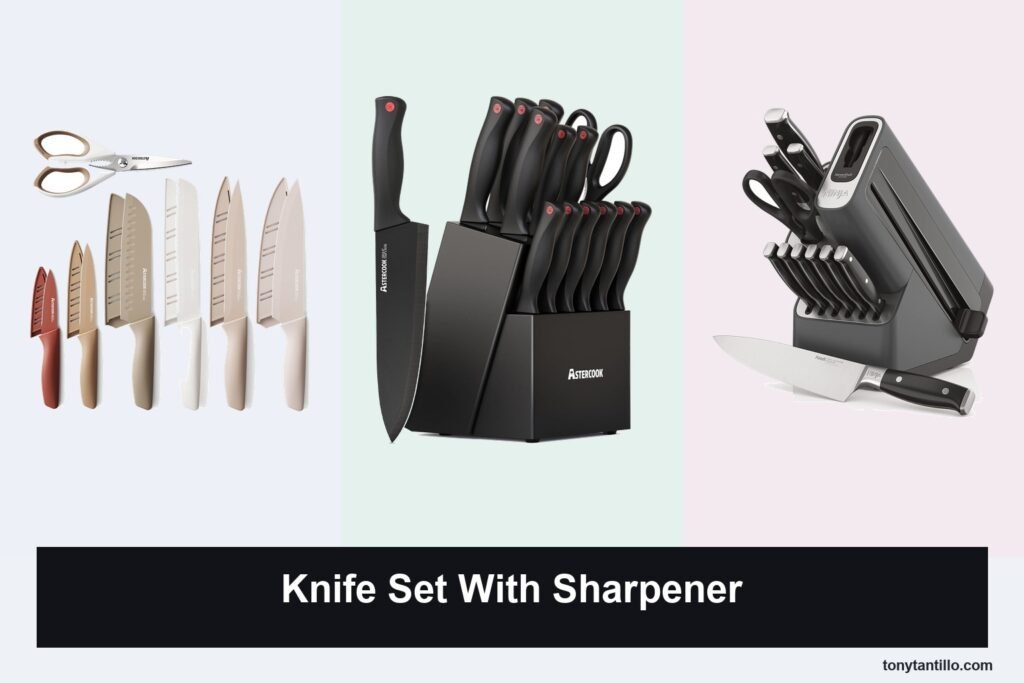
A knife set with sharpener solves a very practical kitchen problem. Most home cooks do not need more blades as much as they need blades that stay ready for real work. A good block set can handle prep variety, while the sharpening system keeps the edge useful without adding another tool to the counter. That combination matters because dull knives slow you down, create more pressure at the board, and make even simple meals feel like a chore.
The right set depends on how much cutting range you want, how often you plan to sharpen, and whether you prefer a block, blade guards, or an included steel. Some buyers want a compact value set that stores easily and travels well. Others want a larger block with steak knives and a built-in sharpener that keeps maintenance simple. The six sets below cover those different priorities, with emphasis on blade materials, storage design, comfort, and the sharpening approach each one brings to daily use.
Top Knife Set With Sharpener on the Market

Astercook 13-Piece Kitchen Knife Set
Best Budget Guard Set
- 13 pieces total
- 6 blade guards
- Dishwasher safe
- Anti-rust coating

Astercook 15-Piece Block Set
Best Value Block Set
- 15 pieces total
- Built-in sharpener
- German stainless steel
- Hardwood knife block

Ninja Foodi NeverDull 12-Piece Set
Best Premium Compact Set
- Built-in sharpener
- German stainless steel
- 10-year sharpening claim
- 10-year limited warranty

Ninja NeverDull 17-Piece Block Set
Best Large Family Set
- 17 pieces total
- Built-in sharpener
- Eight steak knives
- German stainless steel

Amorston 21-Piece Knife Block Set
Best Feature-Rich Set
- 21 pieces total
- Built-in sharpener
- 15-degree edge
- Dishwasher safe

Cuisinart 15-Piece Hollow Handle Set
Best Traditional Choice
- 15 pieces total
- 8-inch sharpening steel
- High-carbon stainless steel
- Lifetime warranty
Knife Set With Sharpener Reviews
Astercook 13-Piece Kitchen Knife Set
ADVANTAGES
LIMITATIONS
This set suits buyers who want a simple starter kit without committing to a full block on the counter. The lineup covers the basic prep jobs with an 8-inch chef knife, slicing knife, santoku, bread knife, utility knife, paring knife, and kitchen shears. The six blade guards matter just as much as the knives themselves because they let the set live in a drawer, cupboard, or travel bag without exposing edges. The overall package feels geared toward practical household use rather than display, which is exactly why it is easy to recommend for smaller kitchens and occasional cooks.
The anti-rust coating is the detail that carries the most day-to-day value here. It reduces the chance of oxidation and the dishwasher-safe claim lowers cleaning friction for busy routines. That said, the storage approach shifts the burden away from a block and onto the user, so the guards need to be kept together if you want the set to stay organized. With a 1.7-pound weight and plastic handles, it should feel lighter and less substantial than heavier block systems, but that also makes it easier to move, pack, or tuck away.
Compared with the larger block sets in this roundup, this is the least complicated path into a knife set with sharpener alternatives, even though it does not include a built-in sharpening station. Its value comes from coverage, portability, and low ownership friction. Buyers who want a compact, budget-friendly set for everyday cooking should look here first. If countertop storage and self-sharpening matter more than price, one of the block systems below is the better long-term choice.
Astercook 15-Piece Block Set
ADVANTAGES
LIMITATIONS
This is the practical middle ground in the lineup. The set adds steak knives and a hardwood block with a built-in sharpener, so it does more than supply the basic prep blades. That matters if you want one purchase to cover weeknight cooking, serving, and storage in a single footprint. The 15-piece count is broad enough to feel complete without becoming unwieldy, and the inclusion of both a block and a sharpener makes it easier to keep the set organized and in working shape over time.
The forged 1.4116 German stainless steel and non-stick, anti-rust coating are the two features that shape maintenance and cutting feel. The sharpening story is especially useful because the block integrates the sharpener, so upkeep does not require a separate tool or a separate habit. The set is also dishwasher safe, which lowers cleanup effort. At 3.3 kg, it is much heavier than a guard-based kit, so it is better suited to a fixed countertop location than to storage in a cabinet or travel use.
Against the more expensive premium block systems, this set wins on price-to-coverage rather than refinement. It is not the lightest or most minimalist option, but it gives a stronger sense of completeness than the budget guard set and asks for far less money than the high-end alternatives. Buyers who want a self-contained block set with a built-in sharpener and enough variety for everyday family cooking should consider it one of the most balanced choices here.
Ninja Foodi NeverDull 12-Piece Set
ADVANTAGES
LIMITATIONS
This set is aimed at buyers who want a premium block without moving up to a very large knife count. The 12-piece format keeps the footprint focused, but the system is built around NeverDull Technology, which is the key differentiator. The included chef knife, santoku, utility knife, paring knife, six steak knives, shears, and block cover most daily cooking needs while still feeling curated rather than crowded. That balance will appeal to cooks who care more about blade quality and maintenance convenience than about collecting every possible specialty knife.
Operation is where the design gets interesting. The built-in sharpener uses a lever on the block, and the ceramic wheel engages the blade at the correct angle. That removes much of the guesswork from sharpening, which is useful for households that do not want to learn manual sharpening techniques. The forged construction, stainless steel blades, and stainless steel handles point to a more substantial feel than the budget sets. At 6.9 pounds and 14.37 x 7.45 x 12.63 inches, this is a deliberate countertop piece, not a lightweight storage solution.
Compared with the two Astercook block sets, this one is the more polished choice for buyers who want a premium experience and a stronger sharpening system. It costs much more, so the decision comes down to whether you value the ease of the NeverDull block enough to justify the jump. For smaller households, design-conscious kitchens, or anyone who wants a compact set with a built-in sharpener and a long warranty, this is the clearest upscale recommendation in the group.
Ninja NeverDull 17-Piece Block Set
ADVANTAGES
LIMITATIONS
This is the biggest and most complete set in the roundup, and that matters if you want one block to cover both prep work and entertaining. The 17-piece count brings in eight steak knives, a boning knife, bread knife, slicing knife, santoku, chef knife, utility knife, paring knife, shears, and the NeverDull block. That broad mix makes the set especially strong for homes that cook frequently and serve guests often. It is the kind of purchase that reduces the need to fill in gaps later.
The self-sharpening system is the same core advantage that defines the smaller premium set, but here it is paired with more knife categories. The forged construction and German stainless steel blades should support a more durable, stable feel in daily use. The downside is size and weight. At 8.7 pounds, this is the heaviest set in the roundup, so it is best treated as a permanent countertop system. That extra mass is not a flaw if you want a stable block, but it does limit flexibility in smaller kitchens.
Relative to the 12-piece premium set, this version is the better fit when coverage matters more than compactness. Compared with the value block sets, it also brings a more sophisticated sharpening experience and a fuller entertaining lineup. Buyers who want the broadest family-friendly knife block with built-in sharpening should put this at the top of the list. It is the strongest choice when you want one set to handle almost every cutting task without compromise.
Amorston 21-Piece Knife Block Set
ADVANTAGES
LIMITATIONS
This set targets buyers who want breadth above all else. The 21-piece count is the largest in the roundup and includes multiple prep knives, eight serrated steak knives, poultry shears, kitchen shears, and a hardwood block with built-in sharpener. That spread gives it unusually broad coverage for home use. The extra utility is especially clear for households that cook often and want both serving knives and specialty blades without needing add-ons later. It is the most feature-dense option in the group.
The high-carbon German stainless steel, 15-degree edge, and anti-rust coating work together to shape the cutting experience and upkeep. The dishwasher-safe claim simplifies cleaning, although the recommendation to dry thoroughly afterward shows that care still matters. Ergonomic plastic handles and the lightweight feel can make long prep sessions less tiring, but they may not deliver the same premium hand feel as heavier steel-handled systems. The built-in sharpener is a major convenience because it keeps maintenance inside the block rather than turning sharpening into a separate task.
Against the smaller Astercook block set, this one offers much more variety and a more complete serving package. Against the Ninja premium blocks, it competes on total included tools and broad household utility rather than on brand refinement or the same polished system feel. It is the best match for cooks who want the largest assortment and easy day-to-day upkeep in one purchase. If maximum tool count matters, this is the most expansive answer in the roundup.
Cuisinart 15-Piece Hollow Handle Set
ADVANTAGES
LIMITATIONS
This set stands apart because it uses a sharpening steel instead of a built-in block sharpener. That makes it a better fit for buyers who prefer a more traditional maintenance routine and are comfortable doing the sharpening work themselves. The 15-piece layout is still substantial, with a chef knife, slicing knife, santoku, serrated utility knife, two paring knives, six steak knives, shears, the sharpening steel, and the wooden block. It is a classic all-in-one kitchen kit with strong coverage for everyday cooking and serving.
The high-carbon stainless steel blades, precision-tapered ground edges, and strong bolster are the practical features that matter most in use. They point to control, stability, and a finer cutting edge than you would expect from a basic starter set. The stainless steel handles and 4 kg weight give it a sturdier, more conventional feel than lighter budget options. The tradeoff is maintenance style. Because the sharpening tool is separate from the block, you need to be more involved in keeping the blades ready.
Compared with the self-sharpening systems in this roundup, this is the least automatic option. That is not necessarily a weakness if you want a straightforward steel and block arrangement, a lifetime warranty, and a familiar knife-set structure. It is the right recommendation for cooks who value traditional cutlery design and do not mind a more hands-on approach to edge maintenance. If you want built-in sharpening convenience, one of the Ninja or Astercook block sets is the easier path.
How to Choose a Knife Set with Sharpener
The best knife set with sharpener is not simply the one with the most pieces. You are choosing a system that affects how often you need to maintain the edge, how much counter space you give up, and whether the set feels convenient enough to use every day. The right answer depends on the balance between blade count, storage style, sharpening method, and the level of commitment you want from your kitchen gear.
Sharpening Method
A built-in sharpener is the easiest path for most households because it keeps maintenance in the same place as storage. That reduces the chance of letting edges go dull for too long. A separate sharpening steel or loose sharpener still works well, but it asks more from the user. If you already know you will not maintain a knife manually, the integrated option is usually the safer buy.
Piece Count
More pieces can be useful, but only when the extra knives match how you cook. A larger block often adds steak knives, boning knives, or specialty blades that save time when you need them. If you mostly cook simple meals, a smaller set may be enough and will waste less space. The goal is useful coverage, not the biggest number on the box.
Storage Style
Block sets are convenient when you want everything within reach on the counter. They also tend to pair naturally with built-in sharpeners. Guard-based storage is better when you want flexibility, portability, or a cleaner countertop. That approach works well in smaller kitchens and for people who store knives in drawers. Choose the storage method first if your space is already tight, because that choice affects daily usability more than one extra blade does.
Blade Material
Stainless and high-carbon stainless steel are the most relevant material cues in this category because they affect corrosion resistance, maintenance, and edge retention. A coating can further reduce sticking and oxidation, but it should not replace basic care. If you cook often and want lower upkeep, material quality matters more than decorative design. Look for the blade material that matches how much cleaning and sharpening effort you are willing to manage.
Handle Feel
Handle material and balance influence comfort more than many buyers expect. Lightweight handles may be easier for long prep sessions, while steel handles often feel more substantial and premium. The right choice depends on whether you prioritize fatigue reduction or a heavier, more solid hand feel. If you cook for long stretches or prepare dense ingredients regularly, grip comfort should sit near the top of your list.
Size and Counter Space
A knife block is only a good deal if you actually have room for it. Larger sets can be attractive because they cover more tasks, but they also demand more permanent space and usually more weight. Compact sets are easier to move and store, though they may leave out specialty knives. Measure the space where the block will live before you decide, especially if your kitchen already carries small appliances and prep tools.
Knife Set Comparison Table
| Product | Best For | Pieces | Blade Material | Handle Material | Weight | Blade Edge |
|---|---|---|---|---|---|---|
| Astercook 13-Piece Kitchen Knife Set | Best Budget Guard Set | 13 | Carbon Steel | Plastic | 1.7 pounds | Serrated |
| Astercook 15-Piece Block Set | Best Value Block Set | 15 | Stainless Steel | Polypropylene | 3.3 kg | Serrated |
| Ninja Foodi NeverDull 12-Piece Set | Best Premium Compact Set | 1 | Stainless Steel | Stainless Steel | 6.9 pounds | Fine |
| Ninja NeverDull 17-Piece Block Set | Best Large Family Set | 1 | Stainless Steel | Stainless Steel | 8.7 pounds | Plain |
| Amorston 21-Piece Knife Block Set | Best Feature-Rich Set | 1 | High Carbon Stainless Steel | Polypropylene | Not Specified | Plain, Serrated |
| Cuisinart 15-Piece Hollow Handle Set | Best Traditional Choice | 1 | Stainless Steel | Stainless Steel | 4 kg | Chef’s knife |
How We Tested & Analyzed Knife Set with Sharpener
This roundup was organized around the decisions that matter most in a real kitchen: how a set stores, how it sharpens, what blades it includes, and how the materials affect long-term use. The goal was not to reward the longest feature list, but to identify which combinations reduce maintenance friction and which ones ask for more involvement from the buyer. That is why sharpening design and storage style carry so much weight in the analysis.
Each recommendation was compared on practical usability rather than abstract prestige. Piece count mattered only when it translated into coverage for daily prep or entertaining. Weight, handle material, and block format were weighed because they affect whether a set feels stable, easy to reach, or awkward to keep on the counter. When a product had a clear tradeoff, such as a lighter portable design or a heavier premium block, that tradeoff was treated as part of the recommendation rather than a flaw to ignore.
Limitations were also part of the evaluation. A buyer who wants the easiest upkeep may prefer a built-in sharpener, while someone who already knows how to maintain a blade may be comfortable with a sharpening steel. Likewise, a compact set can be the right answer for a small kitchen even if it includes fewer pieces than a larger competitor. The comparison therefore focuses on fit, convenience, and ownership burden, not on forcing every set into the same mold.
Frequently Asked Questions
Is a built-in sharpener better than a separate sharpening steel?
A built-in sharpener is usually easier because it keeps maintenance attached to the block. That helps if you want a low-effort routine and are less likely to sharpen on your own. A separate steel can still work well, but it requires more attention and a little more confidence. The better choice depends on whether convenience or manual control matters more to you.
How many knives do most home cooks actually need?
Most cooks need a useful core set rather than a huge collection. A chef knife, utility knife, paring knife, bread knife, and a few extras usually cover most household tasks. Steak knives add value if you serve meat often. Beyond that, extra specialty knives are helpful only when they match the way you cook. Coverage matters more than sheer count.
Does blade material really affect maintenance?
Yes. Stainless and high-carbon stainless steel are commonly chosen because they resist corrosion better than many lower-grade materials. That does not mean they never need care, but it usually means less worry about rust and easier long-term ownership. Coatings can further reduce sticking and visible wear, though they still depend on proper cleaning and storage habits.
What should I prioritize in a knife block set?
Start with the storage style, sharpening method, and blade coverage. If your counter space is limited, the block has to earn its footprint. If you dislike sharpening, an integrated system is worth paying for. After that, check whether the included knives actually match your cooking habits. A well-matched smaller set is usually better than a crowded block with tools you rarely touch.
Final Thoughts
A strong knife set with sharpener should make cooking easier, not create another maintenance project. The best choice depends on whether you want a compact starter kit, a balanced block set, or a premium system that handles sharpening for you. Once you decide how much counter space you can spare and how hands-on you want to be, the category becomes much easier to narrow.
For most buyers, the smartest purchase is the set that matches daily habits instead of future aspirations. If you want portability and a low price, choose the guarded kit. If you want a block with built-in maintenance, step up to one of the self-sharpening systems. If you prefer a traditional approach, the steel-and-block option still has a place. Match the tool to the routine, and the right set will stay useful for years.