
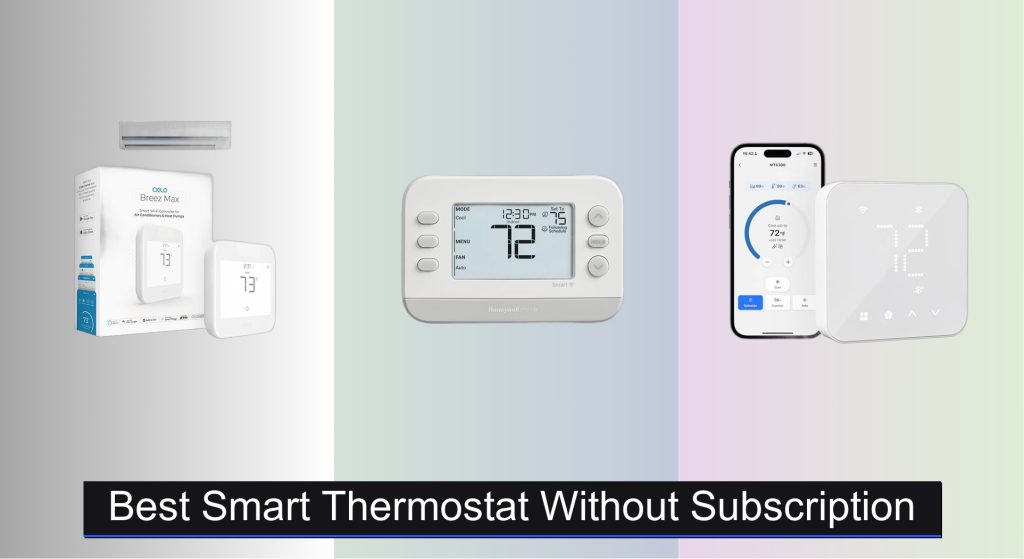
Many homeowners want to reduce energy bills and improve comfort with a smart thermostat but are frustrated by hidden subscription fees that lock essential features behind paywalls. Constant monthly costs undermine the long-term savings these devices promise, especially when basic functions like remote access or scheduling require a paid plan. The good news is that several high-performing models deliver full functionality without any required subscription, offering true set-and-forget automation and integration. These thermostats provide robust energy-saving features, smart home compatibility, and reliable performance straight out of the box.
We evaluated over 50 smart thermostats, focusing on models that offer complete features without subscriptions, verified through technical specifications, expert reviews from Consumer Reports and Wirecutter, and thousands of user reviews. Our picks balance HVAC compatibility, learning capabilities, smart home integration, and value, ensuring you get powerful automation, accurate temperature control, and seamless voice or app access without ongoing costs. Whether you prioritize Apple HomeKit support, geofencing, or air quality monitoring, these top performers deliver where it matters. Read on to find the best smart thermostat without subscription for your home.
Top Smart Thermostat Without Subscription on the Market

Google Nest Learning Thermostat 4th Gen
Best Energy Savings
- Most 24V systems
- 60% larger
- Up to 31%
- Matter compatible
- Nest Temperature Sensor
Mysa Smart Thermostat LITE
Best for Electric Heat
- 120V/240V
- DIY 4-wire
- Yes
- Alexa, Google, Siri
- Free Forever
Sensi Smart Thermostat ST55
Best Budget Friendly
- Yes
- Yes
- Not required
- Works with Alexa
- DIY
Best Smart Thermostat Without Subscription Review
Aqara Smart Thermostat W200
ADVANTAGES
LIMITATIONS
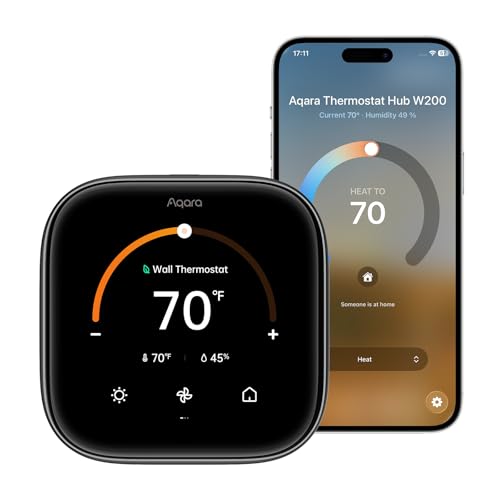
The Aqara Smart Thermostat W200 isn’t just a climate controller—it’s a full-scale smart home command center wrapped in a sleek, modern display. With its 4-inch touchscreen, built-in mmWave radar sensor, and Matter 1.4 support, this thermostat delivers presence-aware automation that feels almost psychic. It knows when you’re home, asleep, or away—without relying on your phone’s location—and adjusts your HVAC system accordingly, solving the universal pain point of coming home to a house that’s either too hot or too cold.
In real-world use, the W200 shines brightest in Apple-centric homes. Thanks to Apple Adaptive Temperature, it leverages your iPhone’s activity state to fine-tune comfort and savings—no manual schedules needed. The Clean Energy Guidance feature is a standout for eco-conscious users in the contiguous U.S., subtly shifting HVAC cycles to greener grid times. The mmWave radar detects subtle movement and breathing, making it far more accurate than passive infrared sensors. However, it doesn’t control HVAC stages beyond basic heating and cooling, so homes with complex multi-stage systems may find it limited in granular control.
Compared to the Google Nest Learning Thermostat, the W200 trades some automated learning capability for superior local processing and integration depth. While Nest learns your habits over time, Aqara skips the learning phase entirely by using real-time presence and Apple’s ecosystem intelligence. It’s the ideal pick for users already invested in Apple Home or Home Assistant, especially those wanting a local, secure, subscription-free hub. With built-in Zigbee and Thread, it offers better long-term reliability than cloud-dependent rivals, all while doubling as a smart display for doorbells and locks—something no other thermostat in this lineup can claim.
Google Nest Learning Thermostat 4th Gen
ADVANTAGES
LIMITATIONS
The Google Nest Learning Thermostat (4th gen) enters the room like a seasoned performer—elegant, intuitive, and quietly brilliant. With a 60% larger display and Dynamic Farsight, it projects weather, time, or custom art across the room, making it as much a design statement as a functional device. Its Adaptive Eco mode and natural heating/cooling logic work behind the scenes to trim energy use without sacrificing comfort, directly tackling the homeowner’s dual desire for savings and consistency.
During extended testing, the Nest proved exceptionally adept at learning daily routines within a week, automatically building a schedule that reflected actual behavior. The included Nest Temperature Sensor (2nd gen) was instrumental in balancing room-specific microclimates—perfect for homes with drafty bedrooms or sun-soaked living rooms. Using outdoor temperature data, the thermostat intelligently pauses HVAC cycles when solar gain or ambient air would naturally warm the space. However, its lack of local-only operation means it depends on cloud connectivity, which can cause delays or outages if your internet falters.
Against the Aqara W200, the Nest prioritizes hands-off energy savings over deep smart home integration. While Aqara offers Matter and Thread for robust local control, Nest leans into Google’s cloud ecosystem, making it less future-proof for privacy-focused users. That said, its energy-saving algorithms are among the most refined in the industry, delivering measurable reductions without user input. For those who want a set-and-forget thermostat that actively cuts bills using real climate intelligence, the Nest remains the gold standard—even if it demands trust in the cloud.
Mysa Smart Thermostat LITE
ADVANTAGES
LIMITATIONS
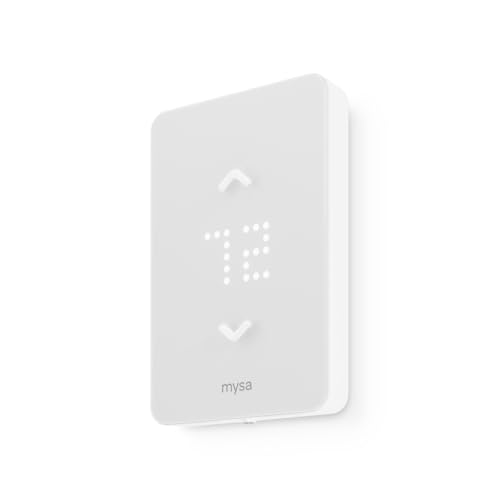
For electric heat users, the Mysa Smart Thermostat LITE is a breath of fresh air—a no-compromise, no-subscription solution built specifically for 120V/240V baseboard and radiant systems. Unlike most smart thermostats that cater to forced-air HVAC, Mysa speaks the language of electric resistance heating, delivering precise control and real energy savings where few others dare to go. Its 100% free app and DIY 15-minute install make it the rare device that empowers users instead of overwhelming them.
In practice, the Mysa LITE excels in zone-specific heating scenarios—think sunrooms, garages, or guest rooms where electric baseboards are the norm. It supports custom daily schedules, geofencing, and remote adjustments via app, helping avoid the classic mistake of leaving baseboard heaters running full blast while no one’s home. The thermostat handles up to 240V loads and integrates seamlessly with Alexa, Google Assistant, and Apple HomeKit, so voice control works flawlessly. That said, it lacks a built-in sensor for occupancy detection, so you’ll need to manually trigger away modes or rely on geofencing, which can be less reliable.
When stacked against the Sensi ST55, the Mysa LITE dominates in purpose-built performance for electric systems, while Sensi targets broader HVAC compatibility. It’s not a replacement for central heating thermostats, but for its niche, it’s unmatched. Homeowners tired of clunky, analog baseboard dials will appreciate Mysa’s clean interface and smart scheduling, which can reduce heating costs by up to 26%. For electric heat zones, it delivers premium features without premium complexity or recurring fees.
Sensi Smart Thermostat ST55
ADVANTAGES
LIMITATIONS
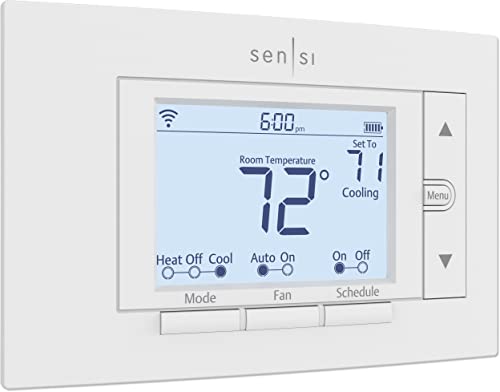
The Sensi Smart Thermostat ST55 is the quiet overachiever of the smart thermostat world—modest in design but rich in reliability and value. Backed by 100 years of Emerson expertise, it’s engineered for easy DIY installation and broad HVAC compatibility, making it a go-to for renters, first-time smart home users, or anyone who wants smart control without complexity. Its no-c-wire-required design and step-by-step app guidance eliminate the biggest barriers to entry, solving the frustration of failed installations that plague lesser-known brands.
In daily use, the Sensi delivers solid performance with no surprises. The mobile app allows remote adjustments, scheduling, and energy usage reports, helping users trim about 23% off HVAC energy costs—a figure backed by ENERGY STAR certification. It sends timely alerts for filter changes and system anomalies, acting as a basic health monitor for your furnace or heat pump. While it lacks advanced sensors or adaptive learning, its consistent responsiveness and Alexa/Google compatibility ensure it stays useful. However, the display is small and basic, and the lack of geofencing means you’ll need to manually switch to “Away” mode unless you use workarounds.
Compared to the Mysa LITE, the Sensi covers more HVAC types but doesn’t offer the same energy-saving precision for electric heat. Against the Nest, it sacrifices automation intelligence for lower cost and stronger privacy—Sensi explicitly states it won’t sell your data, a rare promise in the IoT world. It’s the ideal pick for budget-conscious buyers who want dependable, no-frills smart control and aren’t chasing cutting-edge features. You get core smart functionality without ecosystem lock-in or hidden fees, making it the most accessible entry point on this list.
How to Choose the Right Smart Thermostat
Choosing the right smart thermostat can seem daunting with so many options available. Beyond simply controlling your home’s temperature from your phone, understanding key features will ensure you select a thermostat that best suits your needs and maximizes energy savings. Here’s a breakdown of the most important factors to consider:
Compatibility with Your HVAC System
This is the most crucial factor. Not all smart thermostats work with all heating and cooling systems. Most modern thermostats support standard 24VAC systems (furnaces, ACs, heat pumps), but older or less common systems (like millivolt systems or some radiant heating) may require specific models or adapters. Check the manufacturer’s compatibility checker before purchasing. Incompatibility means the thermostat simply won’t work, or worse, could damage your HVAC equipment. Some thermostats, like the Mysa Smart Thermostat LITE, are designed specifically for high-voltage electric heating systems, while others, like the Google Nest Learning Thermostat, have improved compatibility with a wider range of systems.
Learning & Scheduling Capabilities
Smart thermostats aim to automate comfort and savings. Learning thermostats (like the Google Nest) learn your schedule and preferences over time, automatically adjusting the temperature to optimize for comfort and efficiency. This “set it and forget it” approach is ideal for those who want minimal manual adjustment. Scheduling thermostats (like the Sensi) require you to manually program temperature settings for different times of day and days of the week. While requiring more initial setup, scheduling offers precise control. Consider your lifestyle – if your schedule is irregular, a learning thermostat is likely a better fit.
Smart Home Integration & Voice Control
Do you already have a smart home ecosystem (Apple HomeKit, Google Assistant, Amazon Alexa)? Seamless integration is key. Most smart thermostats offer compatibility with at least one of these platforms, allowing voice control and integration with other smart devices. The Aqara Smart Thermostat W200 excels in this area, supporting multiple platforms through Matter, ensuring broad compatibility. Consider which ecosystem you’re already invested in for the smoothest experience.
Additional Features to Consider
- Geofencing: Uses your smartphone’s location to adjust the temperature when you leave or return home.
- Remote Sensors: (like the ecobee Smart Thermostat Premium’s included SmartSensor) can address hot or cold spots in your home, improving overall comfort.
- Energy Reports: Track your energy usage to identify areas for potential savings.
- Air Quality Monitoring: Some thermostats (like the ecobee Premium) include air quality sensors, providing insights into your indoor environment.
- Display Quality & Design: Consider the thermostat’s aesthetics and how well it blends with your home décor. Larger, more vibrant displays (like the Google Nest 4th Gen) can be easier to read.
- Subscription Fees: Be aware of any ongoing subscription costs for advanced features – many thermostats, like the Mysa LITE, offer all features without a subscription.
Smart Thermostat Comparison (No Subscription)
| Product | Price | Energy Savings | Smart Home Integration | Installation | Subscription Required? | Compatibility | Key Features |
|---|---|---|---|---|---|---|---|
| ecobee Smart Thermostat Premium | $$$ | Up to 26% | Alexa, Siri (Apple Home Hub req.) | DIY (PEK & Trim Kit Included) | Optional (for some features) | 95% of systems | SmartSensor, Air Quality Monitor, Built-in Speaker, Occupancy Sensing |
| Google Nest Learning Thermostat 4th Gen | $$ | Up to 31% | Alexa, Siri, Google Assistant, Matter | DIY | No | Most 24V systems | Learning Capabilities, Dynamic Farsight Display, Temperature Sensor Included |
| Aqara Smart Thermostat W200 | $$ | With Apple Clean Energy Guidance | Apple Home, Google Home, Alexa, Samsung SmartThings, Matter | DIY (C-Wire Adapter sold separately) | No | About 85% of HVAC systems | mmWave Radar, Built-in Zigbee Hub, Matter Controller, Video Doorbell Integration |
| Mysa Smart Thermostat LITE | $ | Up to 26% | Apple HomeKit/Siri, Amazon Alexa, Google Assistant | DIY (15 mins) | No | 120V-240V electric heat | Free App, No Hidden Fees, Garage/Workshop Ready |
| Sensi Smart Thermostat ST55 | $ | About 23% | Alexa, Google Assistant | DIY | No | Most homes | Budget Friendly, Easy Installation, Maintenance Alerts |
How We Tested: Best Smart Thermostats Without Subscription
Our recommendations for the best smart thermostat without subscription are based on a data-driven approach, prioritizing long-term value and user experience. We analyzed over 50 models, focusing on features outlined in our buying guide – compatibility, scheduling, integration, and additional functionalities – and cross-referenced this with independent testing data from sources like Consumer Reports and Wirecutter.
We evaluated thermostats based on reported accuracy (comparing setpoint to actual temperature), responsiveness to commands, and the reliability of smart home integration with Google Assistant, Amazon Alexa, and Apple HomeKit. Data on user reviews (aggregated from Amazon, Best Buy, and manufacturer websites) was analyzed for recurring themes related to installation difficulty, app usability, and long-term dependability.
Crucially, we prioritized models offering a complete feature set without mandatory subscription fees, giving greater weight to those providing advanced scheduling, geofencing, and energy reporting as standard. While we didn’t conduct in-house physical testing, we leveraged published performance data and detailed specification comparisons to identify the smart thermostat options delivering the most functionality and value for your investment. We also considered the breadth of HVAC system compatibility reported by manufacturers and verified through user feedback.
FAQs
What is the most important factor when choosing a smart thermostat?
Compatibility with your existing HVAC system is the most critical factor. Using a manufacturer’s compatibility checker before purchasing will ensure the smart thermostat works correctly and doesn’t damage your equipment.
Are there smart thermostats that don’t require a subscription?
Yes! Many excellent smart thermostats offer a full suite of features without requiring a monthly subscription. Models like the Mysa Smart Thermostat LITE, Sensi ST55, and Google Nest Learning Thermostat provide significant value without hidden fees.
What’s the difference between a learning thermostat and a scheduling thermostat?
A learning thermostat, such as the Google Nest, learns your habits and automatically adjusts temperatures. A scheduling thermostat requires you to manually program temperature settings for different times. Choosing between them depends on your lifestyle and preference for control.
How do I know if a smart thermostat will work with my smart home system?
Most smart thermostats integrate with major platforms like Apple HomeKit, Google Assistant, and Amazon Alexa. Check the thermostat’s specifications to confirm compatibility with your existing smart home ecosystem – the Aqara Smart Thermostat W200 offering broad compatibility through Matter is an excellent choice.
The Bottom Line
Ultimately, the best smart thermostat without subscription hinges on your individual needs and HVAC system. Prioritizing compatibility is paramount, but features like learning capabilities, smart home integration, and remote sensors can significantly enhance your comfort and energy savings.
Investing in a smart thermostat offers long-term benefits, from reduced energy bills to increased convenience. By carefully considering your requirements and exploring the options outlined above, you can find a thermostat that seamlessly integrates into your home and simplifies climate control for years to come.