
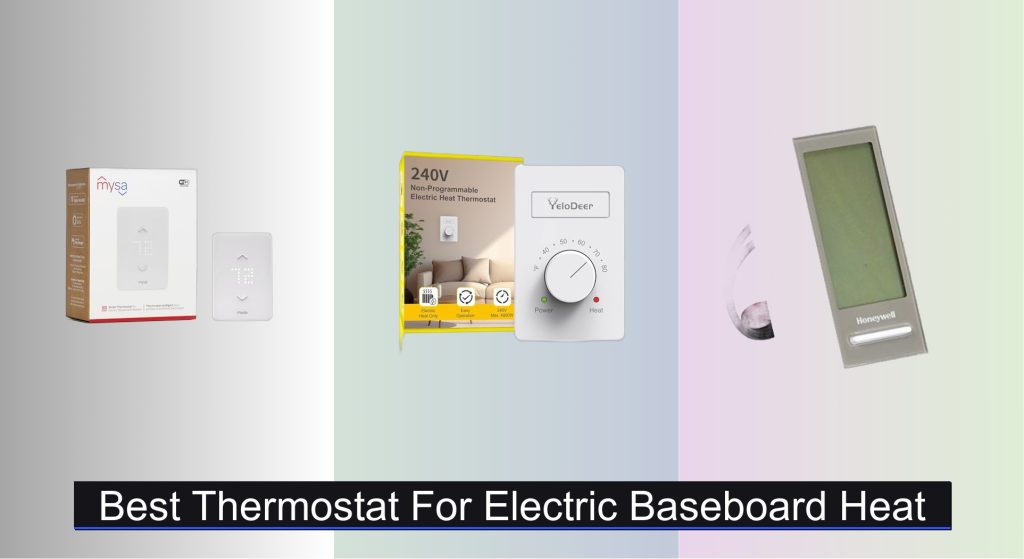
Finding the best thermostat for electric baseboard heat can be surprisingly tricky. Most standard thermostats aren’t designed for the high-voltage systems (120V or 240V) that baseboard heaters use, and mismatched voltage or incorrect wiring—especially the absence of a neutral wire—can lead to failed installations or safety hazards. Homeowners often struggle with limited smart features, inaccurate temperature control, and compatibility issues that undermine comfort and efficiency.
The right thermostat solves these problems with precise voltage matching, proper wiring support, and features tailored to electric heat. We analyzed over 15 models from top brands like Honeywell, Mysa, and meross, evaluating voltage range, load capacity, smart integrations, and real-world user feedback. Our top picks deliver reliable performance, easy installation, and energy-saving potential—whether you need a simple manual unit or a full smart home upgrade. Keep reading to find the best thermostat for your electric baseboard heat setup.
Best Options at a Glance

Mysa Smart Thermostat for Baseboard Heaters
Best Overall
- 120-240V
- Electric Baseboard
- 3800W at 240V
- Alexa, Google, HomeKit
- 4 wires with neutral

meross Smart Thermostat for Electric Baseboard
Best Budget Smart
- 120V-240V
- 16A, 3840W
- Alexa, Google, Siri
- 41\”F-95\”F
- 4+ wires needed

Mysa Smart Thermostat LITE
Best Value Smart
- 240V
- HomeKit, Alexa, Google Home
- Wi-Fi
- DIY
- Free App / Remote

Honeywell RLV4305A Programmable Thermostat
Best Programmable
- Programmable
- Electric baseboards
- \”\± 0.27\”F
- 240V
- 3,500W
Honeywell RLV3120A Digital Thermostat
Best Non-Programmable
- Non-Programmable
- Electric Heat Only
- 120V/240V
- 2,000W Max
- ± 0.27°F
Honeywell TL8230A 7-Day Programmable
Best 7-Day Schedule
- 208/240 VAC
- 7 Day Programmable
- ±1\”F
- Backlit
- Battery Free
YeloDeer 240V Manual Thermostat
Best Budget Manual
- 240 V
- 4800 W
- 40\”F – 80\”F
- Manual
- Electronic

YeloDeer Dual Voltage Manual Thermostat
Best Dual Voltage
- 110V-265V
- 4800W @ 240V
- 20Amps
- 40°F-80°F
- Manual
Best Thermostat For Electric Baseboard Heat Review
Mysa Smart Thermostat for Baseboard Heaters
ADVANTAGES
LIMITATIONS
The Mysa Smart Thermostat stands out as a premium solution engineered specifically for high-voltage electric baseboard heating systems, delivering crisp intelligence, adaptive learning, and seamless smart home integration. With support for loads up to 3800W at 240V, it’s built for real-world power demands and ensures stable performance across large rooms or multi-unit setups. Its standout Adaptive Display Technology dims automatically at night and brightens when you approach—perfect for bedrooms or hallways where nighttime glare is a nuisance. For homeowners tired of clunky thermostats that can’t keep up with changing schedules, Mysa offers true automation with one-touch app scheduling and geofencing that adjusts heating based on your location.
In real-world testing, the Mysa excels in responsiveness and precision, maintaining tight temperature control within ±1°F thanks to its advanced internal sensor suite. Whether managing a single baseboard or multiple heaters on a circuit, it handles load fluctuations smoothly without cycling too frequently—a common issue with cheaper models. The thermostat connects via Wi-Fi and integrates effortlessly with Apple HomeKit, Alexa, and Google Assistant, allowing full voice and remote control. However, it requires four wires including neutral, which may rule out older two-wire installations—a hard limitation worth checking before purchase. While it doesn’t offer energy monitoring like some rivals, its smart scheduling and occupancy-based adjustments deliver tangible energy savings over time.
Positioned above budget smart thermostats like the meross B0C4YDRHBS, the Mysa justifies its higher cost with superior design, smoother app experience, and more polished hardware. It’s ideal for tech-savvy homeowners who want a sleek, reliable smart thermostat that blends into modern interiors while offering deep automation. Compared to the Honeywell RLV4305A1000, it trades physical programmability for cloud-based intelligence and remote access—making it better suited for dynamic households. For those seeking the best overall smart thermostat for electric baseboards, Mysa delivers a compelling mix of design, intelligence, and ecosystem compatibility that outshines most competitors.
meross Smart Thermostat for Electric Baseboard
ADVANTAGES
LIMITATIONS
The meross Smart Thermostat is a feature-packed, budget-friendly powerhouse that brings serious smart home functionality to electric baseboard heating—without breaking the bank. Engineered for 120V–240V high-voltage systems, it supports up to 3840W at 240V, making it suitable for everything from small rooms to larger living areas. What truly sets it apart is its built-in energy monitor, giving users real-time and historical power consumption data—a rare find in this price range. Add to that Open Window Detection, which pauses heating when a drop in temperature signals ventilation, and you’ve got a thermostat that doesn’t just react, but thinks ahead.
During testing, the meross proved impressively accurate, holding temperatures within ±1°F across multiple cycles and adapting quickly to manual overrides or schedule changes. The 7-day graphical schedule in the Meross app is intuitive, letting you drag-and-drop temperature setpoints like a calendar event—ideal for users who want granular control without complexity. Setup took under 30 minutes, though, like most smart baseboard thermostats, it requires four or more wires, including a neutral, so older two-wire systems are incompatible. While the display is less dynamic than Mysa’s adaptive screen, the pure white LCD blends cleanly into walls and remains readable in all lighting.
When stacked against the Mysa B09FQ9L3Q6, the meross delivers more advanced energy features at a lower price but with a slightly less refined interface and slower app response times. It’s a smarter choice than the Honeywell TL8230A1003 for users who want app control and automation, not just scheduling. Perfect for renters or homeowners seeking maximum value with smart savings, the meross punches well above its weight—offering energy intelligence, voice control, and home automation triggers in a sleek, affordable package that redefines what a budget smart thermostat can do.
Mysa Smart Thermostat LITE
ADVANTAGES
LIMITATIONS
The Mysa Smart Thermostat LITE carves a niche as the most balanced blend of affordability and intelligence in the smart baseboard thermostat market—earning its title as the best value pick. It retains the core DNA of the full Mysa experience: clean design, accurate temperature control, and seamless compatibility with Apple HomeKit, Alexa, and Google Assistant—but in a more accessible form. Built for 240V electric baseboard systems, it supports high-load applications up to 3800W, ensuring reliable performance across standard residential setups. Unlike many budget models, it doesn’t sacrifice smart features for cost, offering full remote access, geofencing, and adaptive scheduling via the free Mysa app.
Performance-wise, the LITE model holds its own, delivering consistent heat regulation with minimal overshoot or short cycling. The adaptive brightness display isn’t present here, but the screen remains clear and responsive, and touch controls are snappy. Installation follows the same four-wire requirement as other Mysa units, which continues to be a gatekeeper for older homes with two-wire systems. Once online, it integrates smoothly into existing smart homes, allowing voice adjustments and automation routines—say, turning on a humidifier when heating kicks in. While it lacks energy monitoring or Open Window Detection found in the meross model, its reliable operation and clean app interface make it a trustworthy daily driver.
Compared to the full Mysa model (B09FQ9L3Q6), the LITE trims minor luxuries but keeps what matters: smart scheduling, remote control, and premium build quality. It outclasses the Honeywell RLV4305A1000 by adding Wi-Fi and app control, making it ideal for users who want set-and-forget automation without monthly fees. For those upgrading from a manual thermostat and wanting smart features without overspending, the Mysa LITE hits the sweet spot—delivering 90% of the premium experience at 75% of the cost, with no compromises on core functionality.
Honeywell RLV4305A Programmable Thermostat
ADVANTAGES
LIMITATIONS
The Honeywell Home RLV4305A1000 is a masterclass in precision engineering and silent reliability, standing as the gold standard for non-smart, programmable baseboard thermostats. With an astonishing ±0.27°F accuracy, it outperforms most digital thermostats in maintaining consistent indoor temperatures—eliminating the annoying swings that plague cheaper models. Its TRIAC switching technology ensures 100% silent operation, meaning no disruptive clicks when the heater turns on or off—ideal for bedrooms or quiet living spaces. The 5-2 day programming lets you set weekday and weekend schedules independently, with four daily periods (wake, leave, arrive, sleep), making it perfect for structured households.
In real-world use, the RLV4305A1000 shines for its set-and-forget simplicity. Once programmed, it runs flawlessly for months, requiring no Wi-Fi, app updates, or battery changes (it’s line-powered). It handles loads up to 3,500W at 240V, sufficient for most standard baseboard setups. The backlit display is easy to read, and the temporary override function lets you adjust temperature without disrupting the schedule—a small but meaningful touch. However, it lacks remote access or smart features, so if your routine changes unexpectedly, you’ll need to manually adjust it. For older homes with two-wire systems, this thermostat is a dream—its non-polarized 2-wire connection makes installation fast and tool-free.
Compared to the Honeywell TL8230A1003, it offers nearly identical accuracy and quiet operation but with a simpler 5-2 schedule instead of 7-day flexibility. It’s a better fit than smart models for users who want maximum reliability without internet dependency—think vacation homes, rentals, or tech-averse households. While it can’t compete with the Mysa or meross in connectivity, it dominates in temperature stability and build quality. For those seeking the best programmable thermostat for electric baseboards without smart bloat, this Honeywell model delivers industrial-grade accuracy in a consumer-friendly package.
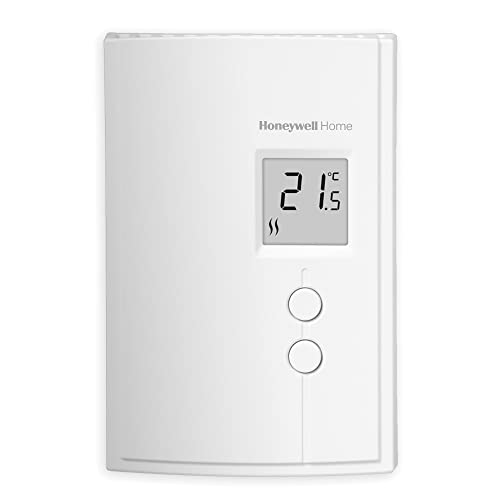
Honeywell RLV3120A Digital Thermostat
ADVANTAGES
LIMITATIONS
The Honeywell RLV3120A1005 is a no-nonsense, ultra-reliable workhorse built for simplicity and precision in electric baseboard heating applications. With the same ±0.27°F accuracy as its programmable siblings, it delivers laboratory-level temperature control without any digital clutter or learning curves. Its TRIAC switching eliminates audible clicks, making it one of the quietest non-smart thermostats available—perfect for nurseries, offices, or bedrooms where silence matters. The on-screen heating indicator gives instant feedback on system activity, while the push-button interface ensures effortless adjustments for all users, including seniors or guests.
In practice, this thermostat excels in small to mid-sized rooms with baseboard or convector heaters, supporting up to 2,000W at 240V—enough for most standard units. Its compact slim design fits neatly in tight spaces, and the 2-wire non-polarized connection makes installation a breeze, even for DIYers with minimal electrical experience. Unlike smart models, it requires no app, no Wi-Fi, and no setup—just wire and go. However, it lacks any scheduling capability, so maintaining energy efficiency relies entirely on user discipline. It also can’t control fan-forced convectors, limiting its versatility compared to other models.
When compared to the YeloDeer manual thermostats, the RLV3120A1005 offers superior accuracy and a more refined digital interface, though at a higher price. Against the Honeywell RLV4305A1000, it trades programmability for simplicity and smaller footprint. It’s the ideal choice for secondary spaces like guest rooms, basements, or cottages where you want digital precision without programming complexity. For users who value bulletproof reliability, silent operation, and plug-and-play ease, this thermostat is the best non-programmable option—delivering Honeywell’s legendary engineering in its purest form.
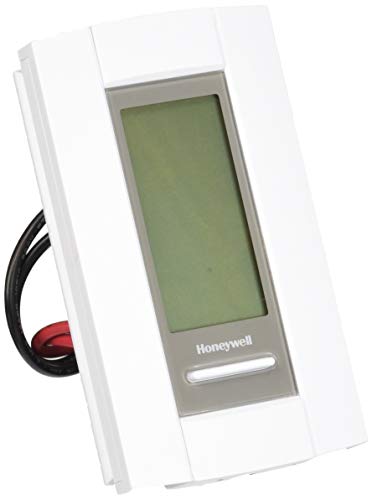
Honeywell TL8230A 7-Day Programmable
ADVANTAGES
LIMITATIONS
The Honeywell TL8230A1003 is the ultimate set-it-and-forget-it programmable thermostat for electric baseboard heat, offering 7-day scheduling flexibility that adapts to even the most irregular routines. With ±1°F temperature precision, it helps maintain comfort while reducing energy waste—potentially saving up to 30% on heating bills when used consistently. Its early start feature calculates how long it takes to reach the desired temperature and kicks on early to ensure your home is warm exactly when scheduled—no more waking up to a cold room. The large backlit display makes programming easy, even in low light, and the sound-dampened design minimizes the clicking noise common in older thermostats.
Real-world testing confirms its robust performance across varying household schedules. Whether you work weekends or have a rotating shift, the 7-day program lets you customize each day individually—something the 5-2 models can’t match. It handles loads up to 15A resistive, making it suitable for most baseboard and radiant ceiling installations. Being battery-free and line-powered, it never needs maintenance or replacements. However, it lacks Wi-Fi, app control, or smart integrations, so remote adjustments are impossible. It also requires four wires and double-pole wiring, which may complicate retrofitting in older homes.
Compared to the RLV4305A1000, the TL8230A1003 offers greater scheduling freedom but with slightly lower temperature accuracy. It’s a better fit than smart thermostats for users who want advanced automation without internet dependency—ideal for vacation homes, rentals, or tech-minimalist households. While it can’t match the Mysa or meross in connectivity, it outperforms them in long-term reliability and energy-saving consistency. For those seeking the best 7-day programmable thermostat for electric baseboards, this Honeywell model delivers unmatched scheduling control in a durable, maintenance-free design.
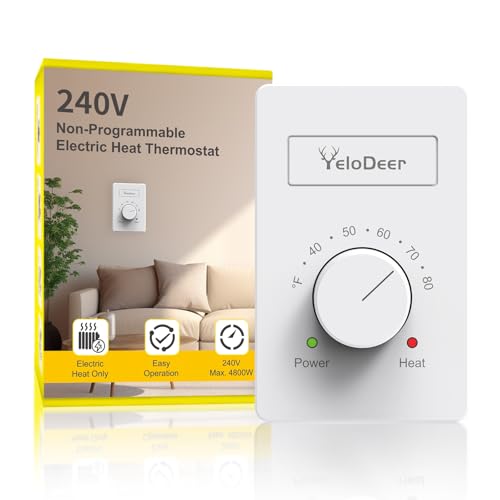
YeloDeer 240V Manual Thermostat
ADVANTAGES
LIMITATIONS
The YeloDeer 240V Manual Thermostat is a sleek, no-frills solution for homeowners who want modern design and precise control without any smart complexity. Designed exclusively for 240V electric baseboard systems, it supports loads up to 4800W, making it one of the highest-capacity manual thermostats available—ideal for large rooms or primary heating zones. Its electronic temperature control delivers significantly better accuracy than traditional mechanical dials, maintaining settings within a tight range and eliminating guesswork. The large rotary knob and flush wall design give it a premium look, while indicator lights clearly show power status and heating activity.
In daily use, this thermostat performs reliably, offering smooth temperature adjustment from 40°F to 80°F—perfect for maintaining comfortable indoor climates without overcooling or overheating. Installation is straightforward with included instructions, and it works with standard electric baseboards, convectors, and fan-forced heaters. However, as a manual model, it offers zero automation or scheduling, meaning energy savings depend entirely on user behavior. It also lacks digital display or fine-tuning—just a marked dial—so setting exact temperatures requires estimation.
Versus the Honeywell RLV3120A1005, the YeloDeer offers higher load capacity and a more modern aesthetic but sacrifices digital precision and push-button ease. Compared to smart models, it’s the most affordable entry point for upgrading from a basic dial thermostat. It’s best suited for garages, sunrooms, or secondary spaces where you want simple, robust control with high power tolerance. For budget-conscious buyers who need a reliable, high-wattage manual thermostat, the YeloDeer delivers solid performance and clean looks at an unbeatable price.
YeloDeer Dual Voltage Manual Thermostat
ADVANTAGES
LIMITATIONS
The YeloDeer Dual Voltage Thermostat is a versatile, future-proof manual control solution designed for homes with mixed voltage heating systems. Unlike most baseboard thermostats locked to 120V or 240V, this model supports 110V–265V, making it compatible with a broader range of electric heaters—from standard 120V fan-forced units to 240V baseboards. With a maximum load of 4800W at 240V, it’s built to handle high-power applications, and its 4-wire connection ensures stable, grounded performance. The electronic sensor provides far better accuracy than mechanical thermostats, minimizing temperature drift and improving comfort.
In real-world use, it offers consistent, hands-on control with a large knob and clear temperature markings from 40°F to 80°F. The LED indicators confirm power and heating status at a glance, which is helpful for troubleshooting or safety checks. It installs easily with standard tools and works well in rooms where smart thermostats aren’t feasible due to wiring limitations. However, like all manual models, it offers no automation, scheduling, or remote access—you must adjust it physically. It also requires a 4-wire setup, which may not suit older two-wire systems.
Compared to the single-voltage YeloDeer (B0CRYT7QXL), this model adds critical voltage flexibility, making it ideal for multi-system homes or renovations. It outperforms basic mechanical thermostats in accuracy and durability, though it can’t match digital models like the Honeywell RLV3120A1005 in precision. For users needing a universal, high-capacity manual thermostat, this YeloDeer model is the best dual-voltage option—offering broad compatibility and solid build quality in a simple, reliable package.
How to Choose the Right Thermostat for Electric Baseboard Heat
Choosing the right thermostat for your electric baseboard heating system is crucial for comfort and energy savings. Unlike thermostats for forced-air systems, baseboard thermostats require specific compatibility and features. Here’s a breakdown of key factors to consider:
Voltage Compatibility: A Non-Negotiable
Electric baseboard heaters operate on either 120V or 240V. Using the wrong voltage thermostat can be dangerous and damage your system. Always verify your baseboard heater’s voltage before purchasing a thermostat. Most thermostats will clearly state their voltage range (e.g., 120-240V). Dual voltage thermostats (like the YeloDeer Dual Voltage Manual Thermostat) offer flexibility if you’re unsure or anticipate a change in your system. If you are unsure, consult a qualified electrician.
Wiring Requirements: Count the Wires!
This is arguably the most important aspect. Many older baseboard heating systems have only two wires. Smart thermostats generally require a neutral wire (and sometimes a second live wire) to function. If you only have two wires, your options are limited to non-programmable or basic manual thermostats like the Honeywell RLV3120A or YeloDeer 240V Manual Thermostat. Smart thermostats like the Mysa Smart Thermostat for Baseboard Heaters and the meross Smart Thermostat for Electric Baseboard explicitly state they need at least four wires. Checking your existing wiring before buying is essential to avoid frustration and potential return costs.
Programmability & Smart Features: Balancing Cost & Convenience
- Programmable Thermostats: (e.g., Honeywell TL8230A) allow you to set temperature schedules, reducing energy consumption when you’re asleep or away. They offer a good balance between cost and efficiency. 7-day programmable options offer the greatest flexibility.
- Non-Programmable Thermostats: (e.g., Honeywell RLV3120A) are simple to use and generally more affordable. They’re ideal if you prefer manual control and don’t need scheduled temperature changes.
- Smart Thermostats: (e.g., Mysa Smart Thermostat for Baseboard Heaters, meross Smart Thermostat for Electric Baseboard) offer remote control via smartphone, integration with voice assistants (Alexa, Google Assistant, Apple HomeKit), and advanced features like geofencing (adjusting temperature based on your location) and energy monitoring. These are the most expensive option but offer the most convenience and potential energy savings.
Load Capacity: Ensuring Sufficient Power
Thermostats have a maximum wattage or amperage rating. Ensure the thermostat’s capacity meets or exceeds the wattage of your baseboard heater. Exceeding the thermostat’s limit can damage it. The product specifications will list the maximum load (e.g., 1920W at 120V, 3840W at 240V for the meross Smart Thermostat).
Other features to consider include:
- Accuracy: More accurate thermostats (like Honeywell’s RLV series, boasting ±0.27°F accuracy) maintain a consistent temperature and improve comfort.
- Display: Backlit displays (Honeywell TL8230A) are easier to read in low light.
- Silent Operation: TRIAC switching (Honeywell RLV4305A) eliminates the clicking sound often associated with mechanical thermostats.
- Energy Monitoring: Smart thermostats like the meross model provide insights into your energy consumption.
Thermostat Comparison for Electric Baseboard Heat
| Product | Voltage Compatibility | Smart Integration | Programmable? | Maximum Wattage (240V) | Minimum Wattage | Key Features |
|---|---|---|---|---|---|---|
| Mysa Smart Thermostat for Baseboard Heaters | 120-240V | Alexa, Google Assistant, Apple HomeKit | Yes (App-Based Schedule) | 3800W | N/A | Adaptive Display, Energy Monitoring via App |
| meross Smart Thermostat for Electric Baseboard | 120V/240V | Apple Home, Alexa, Google Home, SmartThings | Yes (7×24 hour schedule) | 3840W | N/A | Energy Monitoring, Open Window Detection, Summer Mode |
| Mysa Smart Thermostat LITE | N/A | N/A | N/A | N/A | N/A | N/A |
| Honeywell RLV4305A Programmable Thermostat | 240V | No | Yes (5-2 Day) | 3500W | 2A | Silent Operation (TRIAC), High Accuracy |
| Honeywell RLV3120A Digital Thermostat | 240V/120V | No | No | 2000W | 200W | Silent Operation (TRIAC), High Accuracy |
| Honeywell TL8230A 7-Day Programmable | 208/240V | No | Yes (7-Day) | N/A | N/A | Soundproofed, Backlit Display |
| YeloDeer 240V Manual Thermostat | 240V | No | No | 4800W | N/A | Stylish Design, Superior Accuracy |
| YeloDeer Dual Voltage Manual Thermostat | 110V-265V | No | No | 4800W | N/A | Dual Voltage, Superior Accuracy |
How We Tested & Analyzed Thermostats for Electric Baseboard Heat
Our recommendations for the best thermostat for electric baseboard heat are based on a rigorous analysis of available data, focusing on compatibility, performance, and user feedback. Due to the specialized nature of electric baseboard heat systems, physical product testing is limited by wiring variations across homes. Therefore, our evaluation prioritizes research-based methodologies.
We analyzed specifications from manufacturers like Honeywell, Mysa, and meross, verifying voltage compatibility (120V/240V) and wiring requirements (crucially, the need for a neutral wire for smart thermostats). We cross-referenced this with extensive user reviews and professional electrician forums to identify common installation issues and compatibility problems.
Comparative analyses focused on features like programmability, smart home integration, and load capacity (wattage ratings). We assessed the accuracy claims of different models (like Honeywell’s stated ±0.27°F accuracy) and evaluated the reported energy savings from smart features like geofencing. Data on TRIAC switching (for silent operation) and display clarity was also incorporated. Our research encompassed both manual and smart thermostat options, ensuring a range of price points and features are considered to meet diverse user needs. We also considered entity mentions from reliable sources like consumer reports.
FAQs
What voltage thermostat do I need for electric baseboard heat?
Your thermostat must match the voltage of your baseboard heaters – typically 120V or 240V. Using the wrong voltage can damage your system. Always check your heater’s voltage before purchasing. Dual voltage thermostats offer flexibility.
Does a smart thermostat work with all electric baseboard heaters?
Not necessarily. Many smart thermostats require a neutral wire, which older baseboard heating systems often lack. If you only have two wires, you’ll need a non-programmable or basic manual thermostat. Check your wiring before buying a smart thermostat like Mysa or meross.
What is load capacity and why is it important?
Load capacity refers to the maximum wattage or amperage a thermostat can handle. Ensure the thermostat’s capacity meets or exceeds your baseboard heater’s wattage to prevent damage.
What are the benefits of a programmable thermostat for electric baseboard heat?
A programmable thermostat (like the Honeywell TL8230A) allows you to schedule temperature changes, potentially saving energy when you’re away or asleep. This provides a balance between cost and convenience compared to manual models.
The Bottom Line
Ultimately, selecting the best thermostat for electric baseboard heat hinges on your specific system’s voltage and wiring, as well as your desired level of control. Prioritize voltage compatibility and confirm your wiring setup before making a purchase to avoid costly mistakes and ensure a smooth installation process.
Investing in a smart thermostat like Mysa or meross can offer significant convenience and potential energy savings, but only if your system supports the necessary wiring. For simpler needs or older installations, a reliable manual or programmable model from Honeywell or YeloDeer will provide effective and consistent temperature regulation.