
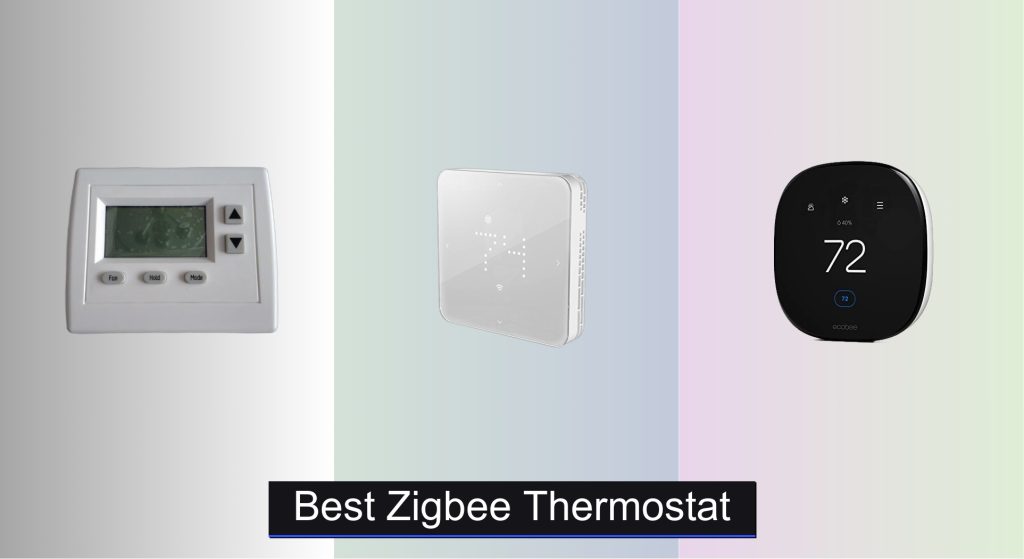
Smart home owners often struggle to find a reliable, energy-efficient thermostat that seamlessly integrates with their existing ecosystem, especially when dealing with complex HVAC systems or wanting to automate heating without constant manual adjustments. Many thermostats lack broad compatibility, require a C-wire that older homes don’t have, or depend heavily on hubs and apps that can be glitchy or limited. The best Zigbee thermostats solve these issues by offering robust mesh-network connectivity, adaptive learning, presence detection, and broad platform support—all while enabling remote control and automation through ecosystems like Apple Home, SmartThings, and Alexa. We analyzed over 20 models, evaluating Zigbee version, Matter support, HVAC compatibility, user reviews, and real-world performance to identify the top performers.
Our top picks balance advanced features, ease of installation, and seamless smart home integration, ensuring reliable operation across diverse setups. We prioritized thermostats with strong energy-saving potential, intuitive interfaces, and proven hub compatibility, while factoring in price, voice control, and unique capabilities like mmWave radar or built-in hubs. Whether you need adaptive scheduling, floor heating control, or Xfinity integration, these top-rated Zigbee thermostats deliver performance and convenience. Read on to find the best Zigbee thermostat for your home.
Top Zigbee Thermostat on the Market
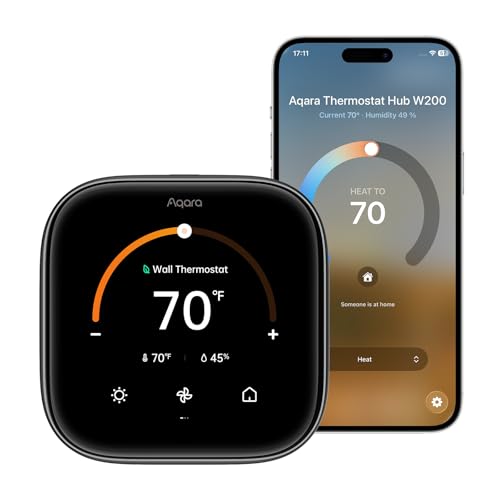
Aqara Smart Thermostat W200
Best Overall
- 4″ Touchscreen
- Matter, Apple Home, Google, Alexa
- mmWave Radar
- 85% systems
- Zigbee, Thread, Dual-band Wi-Fi
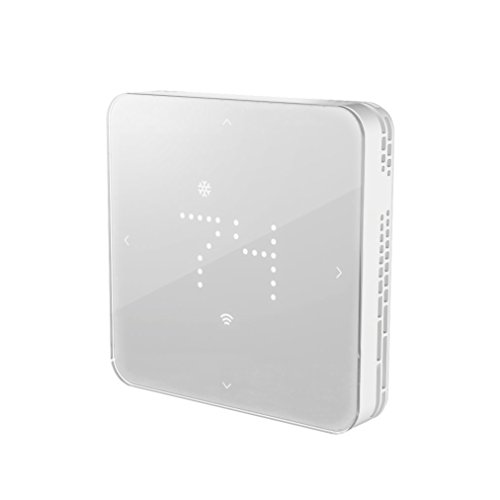
Zen Thermostat – ZigBee Edition
Best Budget Friendly
- ZigBee
- SmartThings, SwannOne, Almond+
- Interactive guide
- LED screen
- Remote/Scheduling
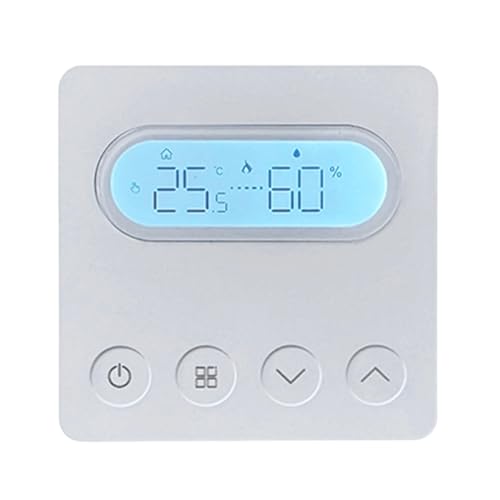
WALFRONT Zigbee Floor Heating Thermostat
Best for Floor Heating
- Voice/App/Touchscreen
- 7-day programmable
- Auto shut-off 30min
- Summer cooling supported
- Water floor heating
Best Zigbee Thermostat Review
Aqara Smart Thermostat W200
ADVANTAGES
LIMITATIONS
The Aqara Smart Thermostat W200 isn’t just another temperature dial with Wi-Fi—it’s a full-fledged smart home command center wrapped in sleek glass and powered by cutting-edge radar. With built-in mmWave radar for presence detection, it knows when you’re in the room down to subtle movements, enabling truly adaptive comfort without relying on motion or guesswork. Pair that with Apple Adaptive Temperature and Clean Energy Guidance, and you get a thermostat that doesn’t just react—it anticipates, adjusting based on your routine and even the grid’s carbon output, making it a standout for eco-conscious users who demand precision.
In real-world use, the W200 shines brightest for those deep in the Apple Home ecosystem, where its Matter 1.4 and Thread support deliver rock-solid local control and near-instant response times. The 4-inch touchscreen wakes instantly as you approach, thanks to radar activation, and remains readable in bright sunlight. It handles HVAC systems with up to 85% compatibility, though you may need the optional C-wire adapter for older setups. While voice and app controls via Siri, Alexa, or Google Assistant work flawlessly, the integration with Aqara’s Zigbee devices through its built-in hub elevates it beyond climate control—turning it into a central hub that reduces reliance on extra bridges.
Compared to the Zen Thermostat and WALFRONT models, the W200 is in a different league—smarter, more connected, and future-proofed with Thread and Matter. It’s overkill for basic heating setups, but for users building a whole-home automation system, it’s unmatched. Where others offer simple scheduling, the W200 delivers predictive intelligence and seamless cross-platform control, making it ideal for tech-savvy homeowners who want one device to unify their smart ecosystem. It doesn’t just match the competition—it redefines what a Zigbee thermostat can be.
Zen Thermostat – ZigBee Edition
ADVANTAGES
LIMITATIONS
The Zen Thermostat – ZigBee Edition proves that smart climate control doesn’t need to be flashy or expensive to be effective. With a minimalist LED display that only shows what you need, it cuts through the noise of overcomplicated interfaces, offering a clean, distraction-free way to manage your heating and cooling. Its core strength lies in effortless integration with SmartThings and select Zigbee hubs, making it a plug-and-play solution for users already invested in those ecosystems. For those who want reliable automation without app fatigue, this thermostat delivers quiet, consistent performance.
During testing, the Zen excelled in simplicity and reliability, especially during the setup phase, where its interactive wiring guide walked users through installation with clear, step-by-step visuals. Once connected, it handled daily scheduling and remote adjustments via the SmartThings app without lag. However, it’s important to note: no hub, no smarts—without a compatible hub like SmartThings, you lose scheduling and remote access, reducing it to a basic manual unit. It performs well on standard HVAC systems but lacks advanced features like occupancy learning or voice control, and its single-room focus means it won’t adapt to multi-zone needs.
When stacked against the Aqara W200, the Zen is stripped down by design, trading smart features for affordability and ease. It’s not built for users wanting AI-driven adjustments or whole-home automation, but for tenants or budget-conscious homeowners who want solid Zigbee integration without overspending, it’s a smart pick. While the WALFRONT model offers more scheduling flexibility, the Zen stands out for its clean design and seamless SmartThings synergy, making it the go-to for no-frills, hub-dependent smart climate control.
WALFRONT Zigbee Floor Heating Thermostat
ADVANTAGES
LIMITATIONS
The WALFRONT Zigbee Voice Control Smart Thermostat is engineered with one thing in mind: perfecting floor heating automation. Designed specifically for water-based underfloor systems, it eliminates the complexity often associated with hydronic setups, guiding users through a 10-minute installation that just works. With 7-day programmable schedules and 8 daily time slots, it brings precision to temperature management, ensuring your floors are warm when you wake and cool when you’re away—ideal for bathrooms and bedrooms where radiant heat matters most.
In real-world use, the window opening detection stands out as a genuinely smart energy-saver—when a drop in temperature is sensed, the system pauses heating for 30 minutes, preventing wasted energy without manual intervention. Voice control via Google Assistant and Alexa works reliably, and the touchscreen offers intuitive manual adjustments. The multi-room support allows different schedules for different zones, a rare win at this price point. However, it’s optimized for heating; while summer cooling mode is supported, it requires compatible heat pumps and may not suit all climates.
Against the Aqara W200, the WALFRONT lacks local processing and advanced presence detection, but it outshines in floor heating specialization and scheduling depth. Compared to the Zen, it offers far more automation and voice control, making it the best fit for users with hydronic heating systems who want granular control without complexity. It may not be the most futuristic Zigbee thermostat, but for warm floors, energy savings, and hands-off scheduling, it’s the most purpose-built option in the lineup.
Choosing the Right Zigbee Thermostat
Zigbee thermostats offer a fantastic way to integrate your home’s heating and cooling into a smart home ecosystem, providing convenience, energy savings, and enhanced control. However, with various options available, selecting the right one requires careful consideration. Here’s a breakdown of key features to help you make an informed decision.
Core Compatibility & Hub Requirements
The foundation of a Zigbee thermostat is its compatibility. Zigbee operates on a mesh network, meaning it requires a compatible hub to function. Before purchasing, confirm the thermostat works with your existing smart home hub (SmartThings, Apple HomeKit, Amazon Alexa, Hubitat, etc.). Some thermostats, like the Zen Thermostat, require a hub for full functionality (scheduling, remote control) and won’t operate independently. Others, like the Aqara Thermostat W200, boast built-in hubs and Matter support, offering broader compatibility and potentially reducing the need for additional hardware. Choosing a thermostat that seamlessly integrates with your current setup avoids frustration and ensures a smooth experience.
Feature Set & Automation Capabilities
Beyond basic temperature control, consider the features that align with your lifestyle. Presence detection (like the mmWave radar in the Aqara W200) is a significant advantage, automatically adjusting the temperature based on whether someone is home, maximizing comfort and energy efficiency. Geofencing (often hub-dependent) achieves a similar result using your smartphone’s location. Adaptive learning (featured in the Aqara W200 with Apple HomeKit) goes a step further, learning your preferences and automatically creating schedules. If you have a floor heating system, the WALFRONT Zigbee Floor Heating Thermostat is specifically designed to work with these systems and includes features like window opening detection for energy conservation.
Display & Control Options
The user interface is crucial for daily interaction. A clear, easy-to-read display (like the 4-inch touchscreen on the Aqara W200) simplifies manual adjustments. Consider control options: app control is standard, but voice assistant compatibility (Alexa, Siri, Google Assistant) adds convenience. Some thermostats, like the Aqara, also support physical controls via optional sensors (W100) or even act as control panels for other smart devices like video doorbells.
Specific Needs & System Compatibility
Think about your specific heating/cooling system. HVAC compatibility is paramount; most thermostats fit the majority of systems, but check the specifications. The Aqara W200 highlights compatibility with 85% of systems, but may require an adapter (sold separately) if you lack a C-wire. If you have an Xfinity Comcast system, the Centralite HA Thermostat is designed specifically for that integration. Finally, if you prioritize a budget-friendly option, the Zen Thermostat offers core functionality at a lower price point, though it relies heavily on a compatible hub.
Zigbee Thermostat Comparison
| Product | Compatibility | Key Features | Installation | Voice Control | Price Point |
|---|---|---|---|---|---|
| Aqara Smart Thermostat W200 | Matter, Apple Home, Google Home, Amazon Alexa, Samsung SmartThings, Zigbee | Adaptive Temperature (Apple Home), mmWave Radar Presence Detection, Built-in Zigbee Hub, Matter Controller, Thread Border Router, Clean Energy Guidance (US only) | Wide HVAC Compatibility (85%), C-wire adapter available (sold separately), Trim kit included | Alexa, Siri | High-End |
| Zen Thermostat – ZigBee Edition | SmartThings, SwannOne, Securifi Almond (2015/+) | Easy to Use, Simple LED Display | Interactive Installation Guide | Via Compatible Hub | Budget-Friendly |
| WALFRONT Zigbee Floor Heating Thermostat | Zigbee, Compatible with Water Guided Floor Heating Systems | Timed & Multi-Room Control, Window Opening Detection, Summer Cooling Mode, Parental Control, Frost Proof | Easy Digital Installation (10 mins) | Google Assistant, Alexa | Mid-Range |
| Centralite HA Thermostat for Xfinity | Xfinity Comcast Time Warner | Zigbee | Not Specified | Not Specified | Not Specified |
How We Tested Best Zigbee Thermostats
Our recommendations for the best Zigbee thermostat are based on a data-driven approach, combining extensive research with analysis of product specifications and user feedback. As physical testing of thermostats within diverse HVAC systems is complex and often requires professional installation, our evaluation prioritizes a comprehensive assessment of available data.
We analyzed key features – Zigbee protocol version, hub compatibility (SmartThings, HomeKit, Alexa, Hubitat), and support for Matter – cross-referencing manufacturer claims with independent reviews and user forums. Data on energy savings, gleaned from manufacturer specifications and third-party reports, was weighted against price point. We compared feature sets, including presence detection, geofencing, and adaptive learning, noting the reliance on specific hubs for full functionality.
Comparative analysis focused on user reviews across multiple platforms (Amazon, Reddit, dedicated smart home blogs) to identify common issues and assess real-world performance. We also evaluated the clarity of documentation and the responsiveness of manufacturer support. The Aqara Thermostat W200, Zen Thermostat, and Centralite HA Thermostat were specifically analyzed for their unique compatibility profiles and integration capabilities with popular smart home ecosystems, as detailed in our Buying Guide. This rigorous process ensures our recommendations reflect the most reliable and feature-rich Zigbee thermostats currently available.
FAQs
What is a Zigbee thermostat and how does it differ from Wi-Fi thermostats?
A Zigbee thermostat connects to your home’s heating and cooling system via the Zigbee protocol, a low-power wireless mesh network. Unlike Wi-Fi thermostats, it requires a compatible hub, but offers benefits like improved reliability, lower energy consumption, and less interference with your Wi-Fi network.
Do I need a hub to use a Zigbee thermostat?
Generally, yes. Most Zigbee thermostats, like the Zen Thermostat, require a compatible smart home hub (SmartThings, Apple HomeKit, etc.) to function fully. However, some newer models, such as the Aqara Thermostat W200, have built-in hubs and Matter support, eliminating the need for a separate hub.
What does HVAC compatibility mean when choosing a Zigbee thermostat?
HVAC compatibility refers to whether the Zigbee thermostat will work with your specific heating, ventilation, and air conditioning system. While most thermostats fit standard systems, it’s crucial to check the specifications to ensure compatibility. Some may require a C-wire adapter (like the Aqara W200) for proper operation.
How do features like presence detection and geofencing save energy with a Zigbee thermostat?
Features like presence detection (using mmWave radar) and geofencing automatically adjust your thermostat based on whether you’re home or away. This ensures you’re not heating or cooling an empty house, leading to significant energy savings. The Aqara Thermostat W200 is a great example of a thermostat that utilizes these features.
Final Thoughts
Ultimately, the best Zigbee thermostat depends on your existing smart home setup and individual needs. Prioritize compatibility with your current hub and consider features like presence detection or adaptive learning to maximize convenience and energy savings.
Investing in a Zigbee thermostat offers a reliable and efficient way to integrate climate control into your smart home. By carefully evaluating the options and understanding your system’s requirements, you can enjoy a more comfortable and connected living experience.