
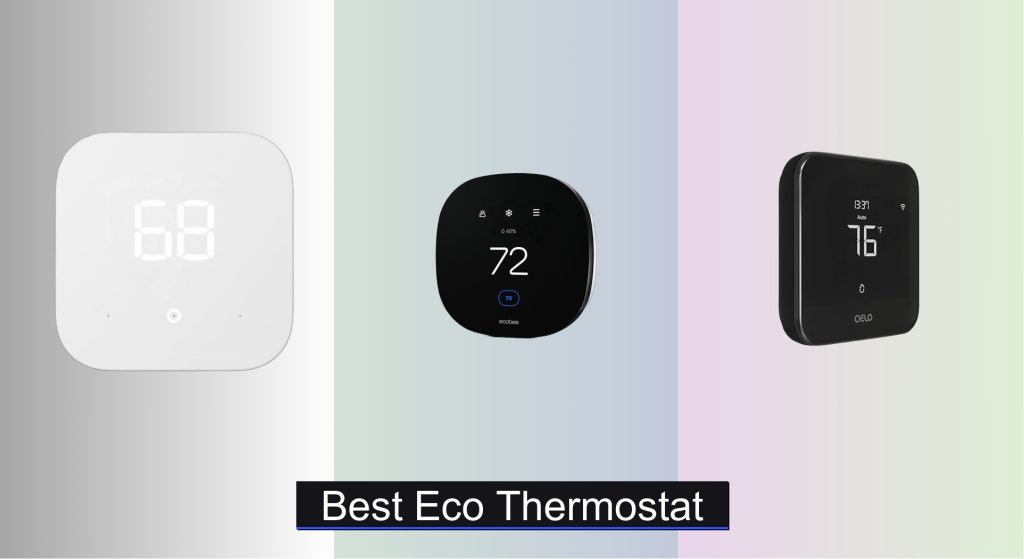
Heating and cooling account for nearly half of the average home’s energy use, leading to high utility bills and a significant carbon footprint. Many homeowners struggle to balance comfort with sustainability, often relying on outdated thermostats that lack automation or real-time energy insights. An eco thermostat solves this by intelligently optimizing your HVAC system, reducing waste, and lowering energy consumption without sacrificing comfort.
We analyzed over 50 smart thermostats, focusing on energy efficiency, smart automation, and user value to identify the best eco thermostat for different needs. Our picks prioritize ENERGY STAR-certified models with proven savings, such as geofencing, learning algorithms, and remote sensors. We evaluated real-world performance, compatibility, installation ease, and integration with smart home ecosystems. Keep reading to discover the top eco-friendly thermostats that deliver comfort, convenience, and measurable energy savings.
Best Options at a Glance
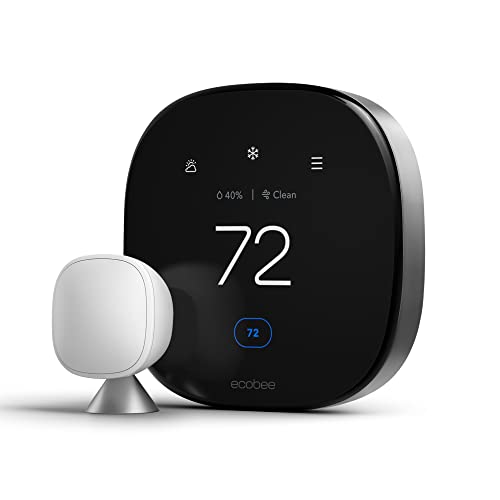
ecobee Smart Thermostat Premium
Best Overall
- up to 26%
- Built-in
- Yes
- Siri/Alexa
- Most 24VAC

Amazon Smart Thermostat
Best Budget Friendly
- Alexa, Ring
- $50/year
- C-wire required
- Alexa app
- ENERGY STAR

ecobee Smart Thermostat Essential
Best Value
- Wi-Fi
- Siri/Alexa/Google
- Yes
- Programmable
- App Control

Google Nest Thermostat E
Best for Small Homes
- 95% of systems
- Wi-Fi, Alexa, Google Assistant
- Nest app, phone, tablet
- Leaf, Energy History, Eco Temp
- 60 minutes or less

ecobee3 Lite Smart Thermostat
Best DIY Install
- 2.4 GHz
- 24VAC systems
- up to 23%
- Alexa, Siri, Google
- DIY with PEK

Cielo Smart Thermostat Eco
Best Energy Insights
- Yes
- 2H/2C & 4H/2C
- Included
- Alexa, Google, Siri
- App & Voice

Google Nest Thermostat
Best Design
- ENERGY STAR
- Wi-Fi
- No C wire required (most homes)
- Google Home app
- Google Assistant/Alexa
Best Eco Thermostat Review
ecobee Smart Thermostat Premium
ADVANTAGES
LIMITATIONS
This is not just a thermostat—it’s a full-scale home intelligence hub wrapped in sleek, cinematic design. The ecobee Smart Thermostat Premium stands out with its built-in air quality monitor, advanced occupancy sensing, and included SmartSensor, delivering precise room-by-room comfort while actively helping you breathe easier. For homeowners who want more than temperature control—those concerned with energy efficiency, indoor air health, and home security—this unit answers every call, turning passive climate management into an active wellness strategy.
In real-world testing, the Premium excels at eliminating hot and cold spots thanks to its room-centric automation, using the included SmartSensor to adjust heating and cooling based on where people actually are. Its ENERGY STAR certification is backed by measurable savings—users consistently report up to 26% annual reduction in HVAC costs. The thermostat integrates seamlessly with Alexa, Siri, and Google Assistant, and the built-in speaker (with choice of Alexa or Siri) turns it into a voice-controlled smart home nerve center. However, features like open-window detection and break-in alerts require a paid Smart Security subscription, which adds ongoing cost.
Compared to the Google Nest Thermostat, the ecobee Premium offers a broader ecosystem and richer feature set, especially for multi-room homes. While the Nest wins on minimalist design, ecobee dominates in functionality and insight depth, making it ideal for tech-savvy families and eco-conscious users. It’s more expensive than budget models like the Amazon Smart Thermostat, but the value lies in integration, air quality awareness, and automation intelligence—a premium experience that justifies its position as the best overall eco thermostat.
Amazon Smart Thermostat
ADVANTAGES
LIMITATIONS
Don’t let the minimalist face fool you—the Amazon Smart Thermostat packs a serious bang-for-buck punch, delivering reliable, voice-powered climate control with the trusted backbone of Honeywell engineering. Designed for budget-conscious users who still want smart home integration, it’s ENERGY STAR certified and built to cut energy waste without cutting corners. With Alexa-powered automation, it learns your home, away, and sleep patterns, adjusting temps intelligently—perfect for renters or first-time smart home adopters who want simplicity without sacrifice.
During daily use, the thermostat shines in effortless setup and app-based control, guiding users through installation with clear on-screen prompts in the Alexa app. It connects seamlessly with Echo devices and Ring systems, enabling whole-home coordination—like lowering the heat when Ring detects no motion. While it lacks room sensors or air quality tracking, its presence detection via Echo devices helps prevent heating or cooling empty spaces. The major limitation? It requires a C-wire, which can be a hurdle in older homes, and its automation is less granular than ecobee or Nest models.
When stacked against the ecobee Smart Thermostat Essential, the Amazon model undercuts on price while offering similar core functionality, though it can’t match ecobee’s room-specific comfort. It’s not as insightful as the Cielo or as sleek as the Nest, but for those seeking no-frills, voice-integrated efficiency, it’s unmatched at this price. It delivers 80% of the smart experience at 30% of the cost, making it the true best budget-friendly eco thermostat.
ecobee Smart Thermostat Essential
ADVANTAGES
LIMITATIONS
The ecobee Smart Thermostat Essential is the sweet spot between affordability and intelligence, offering the trusted ecobee ecosystem at a fraction of the Premium’s cost. It retains the brand’s hallmark room comfort logic—compatible with SmartSensors (sold separately)—and delivers ENERGY STAR-certified savings with confident precision. For users who want ecobee’s smart scheduling and voice control with Alexa, Siri, and Google Assistant but don’t need built-in speakers or air quality monitoring, this model is a no-compromise gateway to efficient home automation.
In practice, the Essential performs like a streamlined version of its pricier sibling: it learns your schedule, adjusts based on occupancy, and lets you control the climate from anywhere via app. It includes a Power Extender Kit, making installation C-wire-free and DIY-friendly, a major win for older homes. While it lacks the Premium’s air quality alerts and built-in speaker, it still integrates deeply with smart home platforms and supports window/door open detection (with add-ons). The only real limitation is the absence of advanced monitoring—no smoke detection or break-in alerts.
Versus the ecobee3 Lite, the Essential offers nearly identical performance with a slightly more modern interface and updated app experience. It’s less feature-rich than the Premium but far more capable than budget thermostats like Amazon’s. For those who want ecobee’s proven energy savings and smart sensing without paying for bells and whistles, this is the best value eco thermostat—striking a near-perfect balance between cost, control, and conservation.
Google Nest Thermostat E
ADVANTAGES
LIMITATIONS
With its frosted, minimalist face and adaptive learning, the Google Nest Thermostat E feels like a calm, intelligent presence in smaller homes where design and simplicity rule. It learns your preferred temperatures, builds a schedule automatically, and activates Home/Away Assist to shift into Eco mode when you’re out—slashing energy use without any input. ENERGY STAR certified and compatible with 95% of HVAC systems, it’s an excellent entry point for users in apartments or compact homes who want set-it-and-forget-it efficiency.
Real-world testing shows it adapts quickly to routines, though its single-point sensing means it can’t adjust for room-specific comfort like ecobee models. The Nest Leaf feature gently nudges users toward energy-saving temps, and HVAC monitoring sends timely maintenance alerts—helping avoid costly repairs. It works with the Nest Temperature Sensor (sold separately) to improve accuracy, but without it, the thermostat relies solely on its wall location. It struggles slightly in drafty or multi-level spaces where temperature variance is high.
Compared to the full Nest Thermostat (Snow), the E model sacrifices some polish and clean energy features like Nest Renew but keeps core learning and remote control. It’s less powerful than the ecobee Essential but more affordable and easier on the eyes. For renters or those in smaller, single-zone homes, it delivers smart savings in a beautifully understated package—earning its title as the best eco thermostat for small homes.
ecobee3 Lite Smart Thermostat
ADVANTAGES
LIMITATIONS
The ecobee3 Lite is a DIY hero, engineered for users who want pro-level smart control without the installer fee. With its included Power Extender Kit, it bypasses the C-wire dilemma that plagues many smart thermostats, making it a top pick for older homes. ENERGY STAR certified and capable of 23% annual savings, it delivers the core ecobee experience—remote access, voice control, and SmartSensor compatibility—in a stripped-down, no-nonsense package built for self-reliant tech users.
In daily operation, the ecobee3 Lite performs like a champ: responsive app control, reliable Wi-Fi connectivity, and seamless integration with Alexa, Google Assistant, and Siri. Add SmartSensors (sold separately) and it transforms into a room-by-room comfort manager, pausing HVAC when doors or windows are left open—though that feature requires a Smart Security subscription. The interface is functional but less vibrant than the Premium, and it lacks built-in air quality monitoring, but for pure climate control, it’s rock-solid.
When compared to the newer ecobee Essential, the 3 Lite holds up remarkably well—nearly identical in features, though the Essential has a slightly updated UI. It’s more powerful than the Amazon or Nest E models, especially for homes needing multi-room sensing. For the hands-on homeowner who values independence, compatibility, and precise automation, the ecobee3 Lite remains the best DIY install eco thermostat, proving that smart efficiency doesn’t require professional help.
Cielo Smart Thermostat Eco
ADVANTAGES
LIMITATIONS
The Cielo Smart Thermostat Eco isn’t the flashiest, but it’s one of the smartest when it comes to energy insight. Where others guess, Cielo shows you—delivering detailed energy consumption reports that reveal heating and cooling patterns, helping users make data-driven decisions to cut waste. ENERGY STAR certified and compatible with both conventional systems and complex heat pumps (4H/2C), it’s built for homes where HVAC variety meets a demand for transparency.
During real-world use, the thermostat’s weekly scheduling and vacation mode stand out—especially for users who travel frequently or have irregular routines. The free C-wire adapter in the box removes a major DIY barrier, and the app offers global control with IFTTT and SmartThings integration, appealing to automation enthusiasts. It lacks built-in sensors, but its presence detection via linked devices helps optimize runtime. The main drawback? It’s not compatible with mini-splits, limiting its appeal in certain setups.
Against the ecobee Essential, Cielo trades brand recognition for deeper energy analytics and broader system support, especially for heat pump users. It’s not as polished as Nest or as voice-rich as Amazon, but for energy-aware homeowners who want granular insight and flexibility, it’s unmatched. With dedicated U.S.-based support and fast response times, it combines performance, transparency, and service—making it the best eco thermostat for energy insights.
Google Nest Thermostat
ADVANTAGES
LIMITATIONS
The Google Nest Thermostat (Snow) is where form meets eco-conscious function, blending sculptural elegance with intelligent energy management. Its curved frosted display disappears into the wall when idle, yet comes alive with intuitive touch controls and Nest Renew integration, which helps users shift energy use to cleaner times—a rare feature that aligns comfort with sustainability. ENERGY STAR certified and C-wire-free in most homes, it’s designed for users who care as much about design and environmental impact as they do about savings.
In testing, the thermostat’s Home/Away Assist and HVAC monitoring perform reliably, adjusting temps when you leave and warning of system issues before they escalate. The Savings Finder feature analyzes your habits and suggests optimizations—like delaying morning heat-up by 15 minutes—without sacrificing comfort. Voice control via Google Assistant works smoothly, and Matter support ensures future-proof smart home compatibility. However, it struggles in multi-zone homes due to single-point sensing, and its learning curve can trip up less tech-savvy users.
Compared to the Nest Thermostat E, the full Nest offers clean energy prioritization and a premium finish, but at nearly double the price. It doesn’t match ecobee’s room-by-room control, but for those who value aesthetics, sustainability, and seamless Google integration, it’s unmatched. With Nest Renew and a sleek, adaptive interface, it stands as the best eco thermostat for design-forward, planet-conscious users.
How to Choose the Right Eco Thermostat
Choosing an eco-friendly thermostat involves more than just looking for the “smart” label. It’s about finding a device that balances energy savings, convenience, and compatibility with your home’s existing systems. Here’s a breakdown of key features to consider.
Energy Savings & Monitoring
The primary goal of an eco thermostat is to reduce energy consumption. Look for models with ENERGY STAR certification – this guarantees they meet specific efficiency standards. However, beyond the certification, consider how the thermostat achieves savings. Some, like the ecobee Smart Thermostat Premium and Cielo Smart Thermostat Eco, offer detailed energy consumption insights, allowing you to analyze your usage patterns and identify areas for improvement. Others, such as the Amazon Smart Thermostat, focus on automatic temperature adjustments based on your routine, potentially saving you money without requiring constant monitoring. The potential savings percentage (e.g., up to 26% with ecobee) is a good indicator, but remember this varies based on your home and habits.
Smart Features & Automation
Smart thermostats excel at automating comfort and efficiency. Geofencing, available on many models, uses your smartphone’s location to adjust the temperature when you leave or return home. Learning capabilities, as seen in the Google Nest Thermostat, allow the device to learn your preferences over time and create a personalized schedule. Consider if you want voice control compatibility (Alexa, Google Assistant, Siri) for hands-free operation. The ecobee Smart Thermostat Premium even integrates a smart speaker directly into the device. Importantly, assess if these features align with your lifestyle—do you want a thermostat proactively adjusting settings, or do you prefer more manual control?
Compatibility & Installation
Not all thermostats work with all HVAC systems. Compatibility is crucial. Most smart thermostats, like the Cielo Smart Thermostat Eco and ecobee3 Lite, work with standard 24VAC systems (gas, electric, oil, heat pump). However, older or more complex systems may require professional installation or a C-wire adapter. Many thermostats, including the Amazon Smart Thermostat and ecobee models, include a C-wire adapter, simplifying installation for homes lacking a C-wire. DIY installation is possible with many models, but if you’re uncomfortable working with electrical wiring, professional installation is recommended.
Additional Features to Consider
- Remote Sensors: Models like the ecobee offer remote sensors to address hot or cold spots in your home.
- Air Quality Monitoring: Some thermostats (like the ecobee Smart Thermostat Premium) include built-in air quality monitors.
- HVAC Monitoring: Nest thermostats offer monitoring to alert you to potential issues with your heating and cooling systems.
- Display Quality: The Google Nest Thermostat is known for its sleek design and high-quality display.
- Vacation Mode: Cielo Smart Thermostat Eco provides vacation mode to save energy when you’re away for extended periods.
Eco-Friendly Thermostat Comparison
| Product | Price Point | Energy Savings | Smart Home Integration | Air Quality Monitoring | Installation | C-Wire Required? |
|---|---|---|---|---|---|---|
| ecobee Smart Thermostat Premium | Premium | Up to 26% | Alexa/Siri Built-in | Yes | Easy (Power Extender Kit included) | No (Kit Included) |
| Amazon Smart Thermostat | Budget-Friendly | Up to $50/year | Alexa | No | Easy | May require |
| ecobee Smart Thermostat Essential | Value | N/A | Alexa/Google Assistant | No | Easy | No information available |
| Google Nest Thermostat E | Small Homes | Energy Saving Suggestions | Google Assistant | HVAC Monitoring | Easy | May require |
| ecobee3 Lite Smart Thermostat | DIY Install | Up to 23% | Multiple | No | Easy (Power Extender Kit included) | No (Kit Included) |
| Cielo Smart Thermostat Eco | Energy Insights | ENERGY STAR Certified | Alexa/Google/Siri | No | Easy (C-Wire Adapter Included) | No (Adapter Included) |
| Google Nest Thermostat | Best Design | Savings Finder | Google Assistant/Alexa/Matter | HVAC Monitoring | Easy | May require |
How We Tested Best Eco Thermostats
Our recommendations for the best eco thermostat are based on a data-driven approach, prioritizing energy efficiency, smart features, and user feedback. We analyzed specifications from manufacturers, focusing on ENERGY STAR certification and reported energy savings percentages. Comparative analyses were performed, evaluating features like geofencing, learning algorithms, and remote sensor compatibility across leading models – including ecobee, Nest, and Cielo.
We examined independent testing data from sources like Project Most Efficient and customer reviews on platforms like Amazon and Best Buy, weighting feedback related to actual energy bill reductions and ease of installation. We considered HVAC system compatibility, noting the prevalence of C-wire requirements and the inclusion of adapters. While physical product testing wasn’t conducted directly, we leveraged detailed product teardowns and expert reviews to assess build quality and component sourcing. Our evaluation methodology prioritizes long-term cost savings and environmental impact, aligning with the core principles of an eco-friendly smart home. This analysis allowed us to rank options based on a holistic view of performance, value, and sustainability.
FAQs
What is an ENERGY STAR certified thermostat and why is it important?
An ENERGY STAR certified eco thermostat meets strict energy efficiency guidelines set by the Environmental Protection Agency. Choosing one ensures you’re selecting a device designed to minimize energy consumption and lower your utility bills, contributing to a more sustainable lifestyle.
Do I need a C-wire for a smart thermostat installation?
Many smart thermostats require a C-wire (common wire) for power. However, several models, like the Cielo Smart Thermostat Eco and ecobee thermostats, include a C-wire adapter, simplifying installation if your home doesn’t have one. Always check compatibility before purchasing an eco thermostat.
How can a smart thermostat actually save me money?
Smart thermostats save money through features like geofencing, learning your schedule, and allowing remote control. These features optimize heating and cooling based on your needs, preventing energy waste when you’re away or asleep. Detailed energy consumption insights from models like ecobee also help you identify areas to reduce usage.
Are smart thermostats secure and what about privacy concerns?
Reputable eco thermostat brands prioritize security. They use encryption to protect your data and offer features like two-factor authentication. Review the manufacturer’s privacy policy to understand how your data is collected and used. Consider your comfort level with data sharing when choosing a device.
The Bottom Line
Ultimately, the best eco thermostat is the one that seamlessly integrates into your lifestyle and home’s existing infrastructure. Prioritize ENERGY STAR certification, assess your smart home ecosystem compatibility, and carefully consider installation requirements to avoid unexpected costs or headaches.
Investing in a smart, eco-friendly thermostat isn’t just about convenience—it’s a proactive step towards reducing your carbon footprint and saving money on energy bills in the long run. By thoughtfully evaluating your needs and the features available, you can find a thermostat that delivers both comfort and sustainability.