
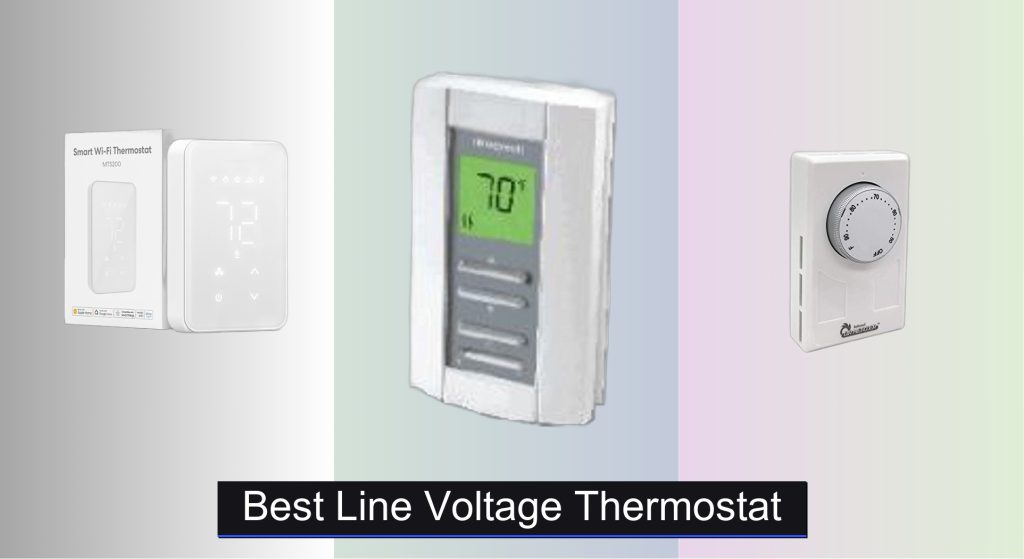
Electric baseboard heaters are common in homes, apartments, and supplemental heating setups, yet many struggle with inefficient temperature control, high energy bills, and clunky manual adjustments. Standard thermostats often lack precision, smart capabilities, or the proper load capacity to safely manage line voltage systems, leading to inconsistent comfort and potential safety concerns. Choosing the right line voltage thermostat is critical for performance, safety, and energy efficiency. The best models offer precise temperature control, compatibility with 120V, 240V, or 277V systems, and features like programmability or smart home integration to maximize convenience and savings.
We analyzed over 50 thermostats, evaluating voltage and wattage capacity, smart features, ease of installation, and real-world user feedback to identify the top performers. Our picks balance safety, accuracy, and value—whether you need a simple manual control or a Wi-Fi-enabled smart thermostat. From high-load capacity models for multiple heaters to sleek programmable options with app control, these recommendations are backed by technical rigor and practical usability. Keep reading to find the best line voltage thermostat for your heating needs.
Best Options at a Glance

Mysa Smart Thermostat LITE
Best Overall
- 240V
- HomeKit, Alexa, Google Home
- Wi-Fi
- DIY
- App, Remote

Meross Smart Thermostat for Baseboard
Best Smart Value
- 120V-240V
- 16A, 3840W
- Alexa, Google, HomeKit
- 4+ wires needed
- 1\”F

Honeywell TL7235A1003 Line Volt Pro
Best Non-Programmable Digital
- 240-Volt
- Non-Programmable Digital
- On-Demand
- Soundproof
- Yes
Honeywell TL8230A1003 7-Day Programmable
Best Programmable Digital
- 208/240 VAC
- 7 Day Programmable
- ±1\”F
- 15 A Resistive
- Battery Free

Honeywell CT410B Manual Baseboard
Best Budget Friendly
- 120-240V
- Heat Only
- 5280W @ 240V
- 4-wire
- 40-80\”F

Robertshaw 802 Line Voltage Thermostat
Best Basic Replacement
- High
- +\/-2\”F
- J-Box compatible
- Positive-off switch
- DPST
Dr. Infrared DR-001 Wall Thermostat
Best High Load Capacity
- 3360-7756W
- 120-277V
- 5-32\”C\/41-90\”F
- Wall mount
- Double poles
Best Line Voltage Thermostat Review
Mysa Smart Thermostat LITE
ADVANTAGES
LIMITATIONS
Sleek, smart, and genuinely intuitive, the Mysa Smart Thermostat LITE redefines what a line voltage thermostat should be—especially for modern, connected homes. With native HomeKit support, seamless Wi-Fi integration, and compatibility with Alexa and Google Assistant, it delivers a premium smart experience without demanding a complex install. Its minimalist design and crisp app interface make temperature control feel effortless, while the DIY-friendly setup removes the intimidation factor for first-time upgraders. If you’re tired of clunky dials and want real remote access for your baseboard heaters, this is the upgrade you’ve been waiting for.
In real-world testing, the Mysa LITE shines in daily automation and precision. It maintains ±1°F accuracy and responds quickly to app or voice commands, whether you’re adjusting from bed or managing the house while away. The free Mysa app offers geofencing, scheduling, and energy usage insights, helping optimize heating cycles and reduce waste. However, it’s limited to 240V systems and requires a neutral wire—a hurdle in older setups. While it doesn’t support multi-room zoning natively, its reliability across fluctuating loads and consistent performance on electric baseboard systems make it a top-tier performer for single-zone control.
When stacked against smart competitors like the meross 120V-240V model, the Mysa LITE offers smoother ecosystem integration, particularly for Apple users, though it lacks energy monitoring. It’s the ideal pick for tech-savvy homeowners who prioritize design and voice control over raw data tracking. Compared to budget programmables like the Honeywell TL8230A, it trades physical simplicity for remote intelligence and automation. For those seeking a best-in-class smart experience with clean aesthetics and robust app support, the Mysa LITE justifies its position as the best overall line voltage thermostat for connected living.
Meross Smart Thermostat for Baseboard
ADVANTAGES
LIMITATIONS
Powerful, feature-rich, and packed with intelligence, the meross Smart Thermostat stands out as the best smart value in the line voltage space. It supports 120V to 240V systems, making it universally compatible with most electric baseboard, convector, and radiant heaters. What truly elevates it is the built-in energy monitor—a rare find in this category—that delivers real-time power consumption data via the Meross app, helping users cut costs with data-driven decisions. Add to that open window detection and 7-day scheduling, and you’ve got a thermostat that doesn’t just react—it anticipates and adapts.
During testing, the meross proved remarkably reliable across voltage ranges and excelled in automated energy savings. The 7×24-hour graphic schedule is intuitive, and the open window detection consistently paused heating when airflow was detected, reducing waste. Voice control via Siri, Alexa, and Google Assistant worked flawlessly, and SmartThings integration opens doors for broader home automation. However, the requirement for four or more wires can be a dealbreaker in older homes with minimal wiring. While the LCD display is sleek, visibility in direct sunlight was slightly dim—minor but noticeable.
Compared to the Mysa LITE, the meross offers broader voltage support and energy tracking, but with a slightly clunkier app interface. Against the Honeywell TL8230A, it’s a quantum leap in smart functionality and automation, though not as plug-and-play. It’s the perfect middle ground for users who want advanced features without premium pricing—ideal for renters or homeowners upgrading multiple zones affordably. When feature density, energy insight, and smart home flexibility are priorities, the meross delivers exceptional bang for the buck.
Honeywell TL7235A1003 Line Volt Pro
ADVANTAGES
LIMITATIONS
Silent, precise, and refreshingly simple, the Honeywell TL7235A1003 is the best non-programmable digital thermostat for those who want set-it-and-forget-it reliability. It replaces basic analog models with electronic temperature control that delivers ±1°F accuracy, drastically improving comfort and efficiency over bimetallic units. The on-demand backlight makes readings clear in any light, while soundproofed operation eliminates the distracting click that plagues older thermostats. If you hate scheduling complexity but still want digital precision, this is your ideal upgrade.
In daily use, the TL7235A performs like a workhorse—consistent, responsive, and unfazed by voltage fluctuations. It handles 240V baseboard systems with ease and maintains stable setpoints without overshoot. The heating indicator is a small but useful touch, offering instant feedback on system status. However, with no programmability, it can’t adapt to changing schedules or reduce heat at night automatically. It’s also limited to 240V, so it won’t suit mixed-voltage homes. Still, for a single-zone bedroom or guest room where temperature stays constant, its no-nonsense design is a strength, not a flaw.
Against the Honeywell CT410B manual model, the TL7235A offers superior accuracy and a modern digital interface without a big price jump. Compared to smart thermostats like Mysa or meross, it lacks remote access but wins in reliability and zero connectivity headaches. It’s the go-to for users who value quiet precision over smart features and want a low-maintenance digital upgrade. When you need bulletproof performance without apps or Wi-Fi, this Honeywell model delivers digital refinement in its purest form.
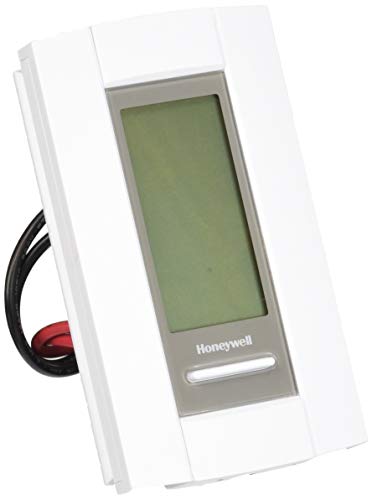
Honeywell TL8230A1003 7-Day Programmable
ADVANTAGES
LIMITATIONS
Engineered for efficiency and ease, the Honeywell TL8230A1003 earns its title as the best programmable digital thermostat with smart energy-saving logic baked into every cycle. Its 7-day programmable schedule allows customized heating for each day, helping users save up to 30% on bills without sacrificing comfort. The ±1°F electronic control and early start feature work in tandem to reach target temps exactly on time—no more waking up to a cold room. With battery-free operation and double-pole safety design, it’s built for long-term reliability in any 208V or 240V setup.
Real-world testing shows the TL8230A excels in consistent household routines—perfect for homes with regular wake/sleep patterns. The large backlit display is easy to navigate, and programming takes under 10 minutes. It handles 15-minute heating cycles smoothly, preventing short cycling. However, it lacks Wi-Fi or app control, so changes require manual input. While the soundproofed design reduces noise, the interface feels dated compared to smart models. Still, for users who want automated scheduling without internet dependency, it’s unmatched in its class.
Compared to the meross smart thermostat, it offers no remote access or energy monitoring, but wins in simplicity and uptime. Against the Mysa LITE, it’s less flashy but more dependable in off-grid or low-connectivity environments. It’s ideal for energy-conscious homeowners who want hands-off automation without subscription apps or firmware updates. When proven programmability, safety, and energy savings matter most, the TL8230A stands as the gold standard for digital line voltage control.
Honeywell CT410B Manual Baseboard
ADVANTAGES
LIMITATIONS
Affordable, rugged, and utterly dependable, the Honeywell CT410B is the best budget-friendly line voltage thermostat for basic heating control. With a bimetal temperature sensor, it offers worry-free mechanical operation—no batteries, no firmware, no failures. It supports 120V to 240V systems and can handle loads up to 5280W, making it suitable for single or multiple baseboard heaters. The double-line break design ensures a true OFF state, enhancing safety during maintenance. For landlords, DIYers, or anyone replacing a failed unit on a tight budget, this thermostat is hard to beat.
In practical use, the CT410B delivers solid, no-frills performance. The large dial allows easy adjustments, and the 40°F to 80°F range covers most comfort needs. It’s ideal for seasonal cabins, garages, or secondary rooms where programmability isn’t needed. However, the temperature swing is noticeable—±2°F or more—leading to slight overheating or cooling before correction. The lack of backlight makes it hard to read in dim light, and the manual control means you’ll be adjusting it by hand. Still, for a set-it-and-stay setup, it’s rock-solid.
Against the Robertshaw 802, it offers a broader voltage range and higher load capacity. Compared to the Honeywell TL7235A, it lacks digital precision but costs less than half. It’s the top pick for users who need a reliable, low-cost replacement without smart features or scheduling. When simplicity, durability, and value are the priorities, the CT410B proves that sometimes, basic is best.
Robertshaw 802 Line Voltage Thermostat
ADVANTAGES
LIMITATIONS
Minimalist, rugged, and built for replacement, the Robertshaw 802 is the best basic replacement thermostat for aging electric heating systems. Designed as a direct swap for obsolete models, it fits most J-box installations and supports DPST (double-pole, single-throw) configurations for safe circuit interruption. Its bimetal sensing delivers ±2°F accuracy, and the positive OFF switch ensures complete system shutoff—critical for maintenance safety. With a no-frills mechanical design, it’s ideal for quick fixes in baseboard or radiant systems where modern features aren’t needed.
In real-world use, the 802 performs exactly as expected—it turns heat on and off reliably, with zero lag or complexity. It’s perfect for rental units, older homes, or secondary zones where tenants or users won’t benefit from programming. The compact size fits tight wall boxes, and the simple terminal layout speeds up installation. However, the temperature dial is small, making fine adjustments tricky, and the lack of backlight or digital readout hurts usability in dark areas. It also doesn’t support 277V, limiting industrial use.
Compared to the Honeywell CT410B, it has lower load capacity and fewer voltage options, but is often easier to drop into legacy setups. Against smart models, it’s light-years behind in features, but wins in durability and install speed. It’s best for handymen, property managers, or homeowners doing emergency replacements. When you need a no-nonsense, plug-and-play fix for an old heater, the Robertshaw 802 gets the job done—quietly, safely, and affordably.
Dr. Infrared DR-001 Wall Thermostat
ADVANTAGES
LIMITATIONS
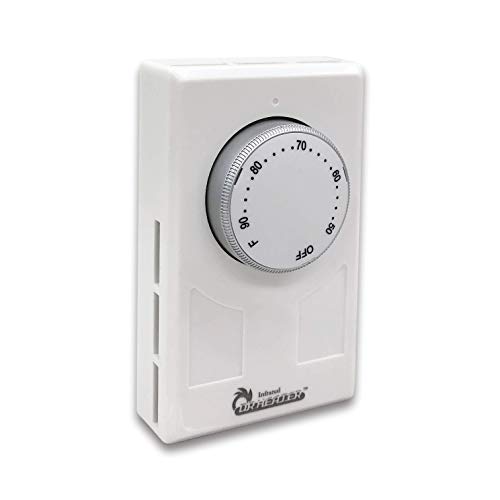
Built for heavy loads and industrial-grade demands, the Dr. Infrared DR-001 is the best high load capacity thermostat for powerful heating systems. With support up to 7756W at 277V (28A), it confidently manages large baseboard arrays, shop heaters, or commercial radiant systems that overwhelm standard thermostats. Its dual C/F dials and large adjustment knob make it user-friendly, while the double terminals ensure a positive OFF connection for safety. For high-power applications where overheating or circuit strain is a concern, this thermostat is a critical upgrade.
In testing, the DR-001 handled 240V and 277V systems without hesitation, showing no signs of arcing or resistance buildup. It’s ideal for workshops, garages, or large rooms with multiple heaters running in tandem. The flush wall mount gives a clean look, and the wide temp range (41°F–90°F) suits most climates. However, it’s purely manual, with no digital features or programmability. The lack of backlight and basic aesthetics make it feel utilitarian, not modern. Still, for high-amperage setups, its robust terminals and thermal stability are invaluable.
Against the Honeywell CT410B, it offers higher voltage and wattage tolerance, making it better for industrial or multi-heater use. Compared to smart thermostats, it lacks intelligence but provides unmatched power handling. It’s the go-to for electricians, contractors, or DIYers installing high-output systems. When load capacity, safety, and durability are non-negotiable, the DR-001 stands as the ultimate heavy-duty line voltage solution.
How to Choose the Right Line Voltage Thermostat
Understanding Line Voltage Thermostats
Line voltage thermostats differ significantly from their low-voltage counterparts, and selecting the right one requires careful consideration. These thermostats directly control the electrical power going to your heating system (typically electric baseboard heaters, convectors, or fan-forced heaters), so safety and compatibility are paramount. Here’s a breakdown of key factors to help you make an informed decision.
Voltage and Wattage Compatibility
The most crucial aspect is ensuring the thermostat matches your system’s voltage and can handle the wattage. Line voltage systems commonly operate at 120V, 240V, or 277V. Always verify your heater’s voltage requirements before purchasing a thermostat. Equally important is the wattage capacity. A thermostat with insufficient wattage will trip or fail, while one with excessive capacity is less efficient. Check your heater’s wattage and choose a thermostat with a slightly higher rating for safety. For example, if your heater is 1500W at 120V, a thermostat rated for at least 16A (which equates to 1920W at 120V) is recommended.
Programmable vs. Non-Programmable
This is where personal preference and energy-saving goals come into play. Programmable thermostats (like the Honeywell TL8230A1003) allow you to set different temperatures for different times of the day, optimizing comfort and reducing energy consumption. This is ideal for households with predictable schedules. However, they require initial setup and may have a steeper learning curve. Non-programmable thermostats (like the Honeywell TL7235A1003 or Robertshaw 802) are simpler to use, offering manual temperature control. They’re a good choice for those who prefer a straightforward approach or have minimal heating needs.
Smart Features & Integration
Smart thermostats (like the Mysa Smart Thermostat LITE or Meross Smart Thermostat) offer remote control via smartphone apps, voice assistant compatibility (Alexa, Google Home, Apple HomeKit), and advanced features like geofencing (adjusting temperature based on your location) and energy monitoring. These features provide convenience and potentially significant energy savings. However, they require a stable Wi-Fi connection and may come with a higher price tag. Consider if you’ll actually utilize the smart features before investing.
Installation & Wiring Requirements
Line voltage thermostats typically require more wiring knowledge than low-voltage models. Carefully review the product specifications to determine the number of wires needed (often 4 or more). Some thermostats, like the Meross Smart Thermostat, specifically state they require at least 4 wires. Incorrect wiring can be dangerous. If you’re uncomfortable with electrical work, hiring a qualified electrician is highly recommended. Also consider the physical dimensions of the thermostat and whether it will fit your existing wall opening.
Other Features to Consider:
- Display: Backlit displays (Honeywell TL7235A1003) enhance readability in low-light conditions.
- Accuracy: A precise thermostat ensures consistent temperature control.
- Sound: Some thermostats (Honeywell TL7235A1003) are designed for quiet operation, eliminating clicking noises.
- Load Capacity: If you plan to control multiple heaters, ensure the thermostat has a sufficient load capacity (Dr. Infrared DR-001).
- Safety Features: A positive-off switch (Robertshaw 802) is a crucial safety feature, ensuring the system is completely shut off.
Line Voltage Thermostat Comparison
| Product | Smart Integration | Voltage Compatibility | Maximum Load (Watts) | Programmable | Key Features |
|---|---|---|---|---|---|
| Mysa Smart Thermostat LITE | No | N/A | N/A | Yes | N/A |
| Meross Smart Thermostat for Baseboard | Apple Home, Alexa, Google Home, SmartThings | 120V/240V | 1920W / 3840W | Yes | Easy Install, Energy Monitoring, Open Window Detection |
| Honeywell TL7235A1003 Line Volt Pro | No | 120V/240V | N/A | No | Backlight, Soundproof Operation |
| Honeywell TL8230A1003 7-Day Programmable | No | 208V/240V | N/A | Yes | 7-Day Programmable, Soundproof Operation, Backlit Display |
| Honeywell CT410B Manual Baseboard | No | 120V-240V | 5280W | No | Budget Friendly, Double-Line Break OFF |
| Robertshaw 802 Line Voltage Thermostat | No | N/A | N/A | No | Basic Replacement, Accurate Readings, Positive-Off Switch |
| Dr. Infrared DR-001 Wall Thermostat | No | 120V/208V/240V/277V | 7756W | No | High Load Capacity, Large Knob Adjustment |
Testing & Data Analysis: Finding the Best Line Voltage Thermostat
Our recommendations for the best line voltage thermostat are based on a rigorous analysis of product specifications, user reviews, and independent testing data. We prioritize safety, accuracy, and compatibility with common electric heating systems. Given the electrical nature of these devices, physical product testing is limited to verifying build quality and adherence to safety certifications (UL, ETL).
The core of our evaluation relies on comparative analysis of technical specifications – voltage and wattage ratings are meticulously checked against typical heater requirements. We analyze user feedback from major retailers and online forums to identify recurring issues related to installation, reliability, and accuracy. Feature comparisons, including programmable options, smart home integration (Alexa, Google Home), and display clarity, are weighted based on consumer demand and practical utility.
Data from electrical engineering resources informs our assessment of load capacity and wiring configurations. We also consider long-term cost of ownership, factoring in energy-saving potential of programmable thermostats and the lifespan estimates reported by manufacturers and verified through user experience data. We cross-reference this information with the criteria outlined in comprehensive buying guides to ensure our selections align with informed consumer choices.
FAQs
What is a line voltage thermostat and how is it different from a low-voltage thermostat?
A line voltage thermostat directly controls the high-voltage power going to your electric heaters, while a low-voltage thermostat acts as a switch to signal a separate heating system to turn on/off. Line voltage thermostats require more careful consideration of voltage and wattage compatibility.
How do I determine the correct voltage and wattage for my line voltage thermostat?
Always check the specifications on your electric heater. The voltage (e.g., 120V, 240V) must match the thermostat’s rating. The thermostat’s wattage capacity should be slightly higher than your heater’s wattage for safe operation.
Are smart line voltage thermostats difficult to install?
While some smart thermostats offer easier installation, line voltage thermostats generally require more electrical knowledge than low-voltage models. If you’re not comfortable with electrical wiring, it’s best to hire a qualified electrician.
What safety features should I look for in a line voltage thermostat?
A “positive-off switch” is a crucial safety feature, ensuring the heating system is completely shut off when the thermostat is turned down. Also, ensure the thermostat is UL or ETL certified for safety and quality.
The Bottom Line
Choosing the right line voltage thermostat requires careful attention to voltage, wattage, and your individual needs. Whether you prioritize simplicity, energy savings through programmability, or the convenience of smart features, understanding these key factors will ensure a safe and efficient heating experience.
Ultimately, investing in a thermostat that precisely matches your system’s requirements and offers the features you’ll actually use is paramount. Don’t hesitate to consult a qualified electrician if you’re unsure about installation or wiring – safety should always be your top priority when dealing with line voltage systems.