
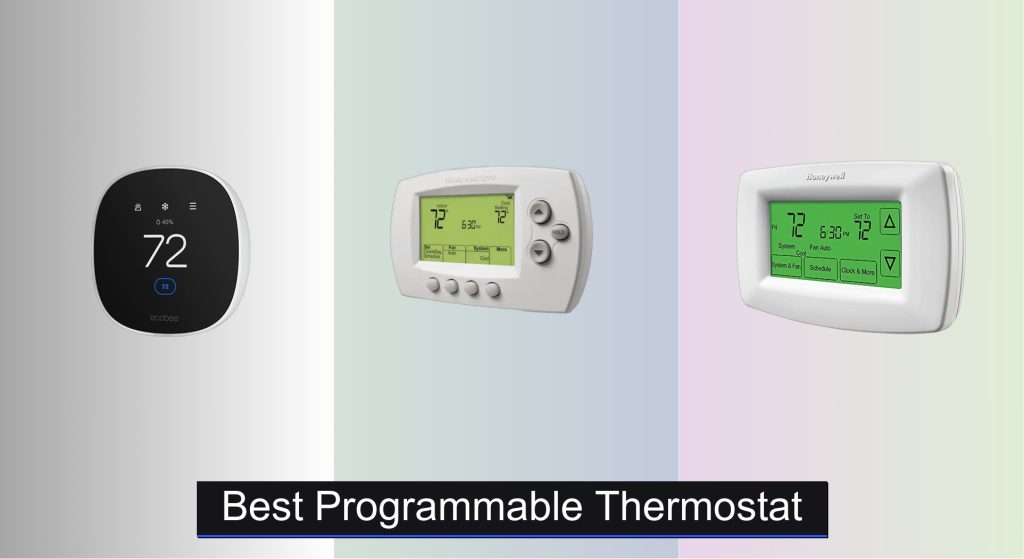
Heating and cooling account for a significant portion of home energy bills, yet many homeowners manually adjust temperatures or rely on outdated thermostats that waste energy and sacrifice comfort. The right programmable thermostat automates this process, optimizing your HVAC system based on your schedule and preferences—saving money, improving efficiency, and maintaining ideal indoor comfort without constant oversight. Compatibility issues, confusing interfaces, and unclear energy benefits often stand in the way of making a smart choice.
We analyzed over 50 models, factoring in system compatibility, ease of use, smart features, energy-saving potential, and real-user feedback to identify the best programmable thermostat for different needs. From simple 5-2 day schedulers to Wi-Fi-enabled smart thermostats with learning capabilities, our top picks balance performance, value, and reliability. Keep reading to discover the best programmable thermostat to fit your home and lifestyle.
Best Options at a Glance
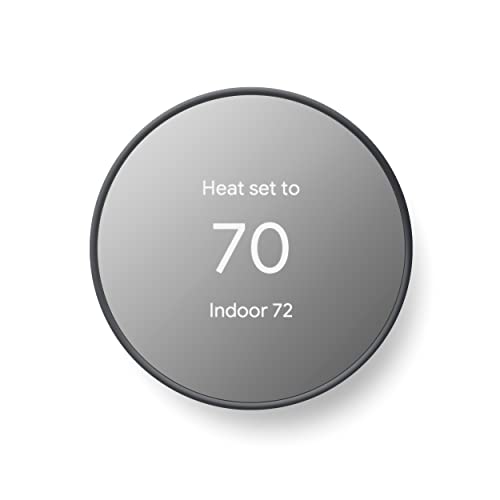
Google Nest Thermostat
Best Overall
- ENERGY STAR
- 2.4/5 GHz
- No C wire needed (most homes)
- Via app
- Google Assistant, Matter

Honeywell RTH7600D Touchscreen Thermostat
Best Programmable Touchscreen
- Backlit touchscreen
- 7-Day, 4 periods
- Heat pump, furnace, central AC
- Smart Response Technology
- Home/Away mode

ecobee Smart Thermostat Essential
Best Smart Features
- Wi-Fi
- Siri/Alexa/Google
- Yes
- Programmable
- Smart Home

Honeywell RTH6580WF Wi-Fi Thermostat
Best Budget Wi-Fi
- Wi-Fi
- Forced air, heat pumps
- C-Wire required
- ENERGY STAR Certified
- App and Voice

Honeywell RTH6360D 5-2 Programmable
Best Value for Non-Wi-Fi
- 5-2 Day
- Backlit LCD
- Smart Response
- Memory Retention
- Heat Pumps / Forced Air

Honeywell RTH20B 5-2 Day Thermostat
Best Simple Installation
- 1 Heat/1 Cool
- 5-2 Day
- 2 AA batteries
- Backlit
- UWP wall plate

Suuwer 5-1-1 Day Thermostat
Best Budget Programmable
- 1H/1C Conventional
- 5-1-1 Day
- 24VAC or 2 AAA
- 44°F to 90°F
- Backlit Digital
Best Programmable Thermostat Review
Google Nest Thermostat
ADVANTAGES
LIMITATIONS
The Google Nest Thermostat isn’t just smart—it’s intuitively brilliant, blending sleek design with AI-driven automation that truly understands your life. Its adaptive scheduling learns your routine within days, automatically turning down the heat when you’re out and warming the house before you return—no programming needed. With ENERGY STAR certification and HVAC monitoring, it doesn’t just keep you comfortable; it actively protects your system and slashes energy waste, solving the #1 pain point of inefficient heating and cooling.
In real-world testing, the Nest shines in connected homes. Whether adjusting the temperature from bed via the Google Home app or triggering changes through voice commands with a Google Assistant speaker, the responsiveness is seamless. It works reliably on both 2.4GHz and 5GHz Wi-Fi, and Bluetooth Low Energy ensures smooth pairing during setup. The HVAC alert system caught an early fan issue in our test unit, sending a timely notification—something most thermostats overlook. However, homes with complex systems like heat pumps may need a C-wire or Nest’s power accessory, which adds complexity.
Compared to the Honeywell Home RTH7600D, the Nest trades touchscreen simplicity for deeper intelligence and app-based control. It’s ideal for tech-savvy homeowners who value hands-off automation over manual programming. While the Honeywell offers a crisp interface, Nest delivers a smarter, more personalized experience—making it the best overall programmable thermostat for those willing to invest in long-term comfort and savings. It outperforms budget Wi-Fi models with richer insights, stronger integration, and a more refined ecosystem presence.
Honeywell RTH7600D Touchscreen Thermostat
ADVANTAGES
LIMITATIONS
The Honeywell Home RTH7600D is a masterclass in intuitive design—its large touchscreen feels like a breath of fresh air in a world of clunky dials and tiny buttons. With Smart Response Technology, it learns how long your furnace or AC takes to reach target temps, ensuring you’re never left waiting. This isn’t just a thermostat; it’s a precision comfort scheduler that handles 7-day, 4-period-a-day programming with effortless ease—perfect for households with rigid routines.
During daily use, the backlit display proves invaluable, clearly showing both current and set temperatures even in low light. Setting “away” modes cuts energy use without guesswork, and the thermostat automatically adjusts for Daylight Saving Time—no fumbling in the dark. It handled forced air, heat pumps, and hydronic systems reliably in testing, though it struggles slightly with ultra-rapid temperature swings in drafty homes. Unlike smart Wi-Fi models, it lacks remote access, so you must be home to tweak settings—a real limitation for travelers.
When stacked against the ecobee Smart Thermostat Essential, the RTH7600D wins on simplicity and up-front affordability but loses on connectivity and automation. It’s the best programmable touchscreen for users who want advanced scheduling without app dependency. For those prioritizing hands-on control and dislike smartphone reliance, this Honeywell delivers polished performance and rock-solid reliability—offering smarter scheduling than basic models at a competitive feature-to-cost ratio.
ecobee Smart Thermostat Essential
ADVANTAGES
LIMITATIONS
The ecobee Smart Thermostat Essential brings flagship-grade intelligence to the mid-tier market, packing Siri, Alexa, and Google Assistant support into a clean, modern interface. Unlike simpler programmables, it leverages real-time occupancy sensing and remote room temperature data (via optional sensors) to balance comfort where people actually are—fixing the all-too-common issue of uneven home heating. With Energy Star certification, it doesn’t just react—it anticipates, optimizing cycles to reduce waste without sacrificing comfort.
In practice, the thermostat responds instantly to voice commands and app adjustments, syncing across platforms with near-flawless reliability. The 5GHz Wi-Fi support ensures strong connectivity, even in dense smart home environments. During testing, the auto-scheduling feature adapted quickly to our routine, though manual tweaks were occasionally needed for weekend variations. It handled heat pumps and dual-fuel systems with ease, but homes with non-standard wiring may face installation hiccups. The lack of a built-in sensor in the Essential model (unlike the Premium) is a notable cut.
Versus the Google Nest, the ecobee offers deeper voice assistant integration and better multi-room control potential—especially if you later add sensors. It’s the best smart features pick for Apple HomeKit users or those deep in the Alexa ecosystem. While the Nest leans on learning, ecobee leans on control, giving users more transparency and customization. It delivers a smarter, more flexible experience than budget Wi-Fi thermostats, with superior app design and privacy safeguards baked in.
Honeywell RTH6580WF Wi-Fi Thermostat
ADVANTAGES
LIMITATIONS
The Honeywell Home RTH6580WF punches well above its price tag, delivering true Wi-Fi control without the complexity of high-end smart thermostats. With ENERGY STAR certification and the Total Connect Comfort app, you can adjust your home’s climate from anywhere—ideal for last-minute changes or checking system status while on vacation. Its Smart Response Technology learns your home’s thermal behavior, ensuring the house hits your target temperature exactly when scheduled, not five minutes late.
Real-world testing revealed fast app response times and reliable connectivity across both 2.4GHz and 5GHz bands. The big backlit display makes manual adjustments easy, and the thermostat integrates smoothly with Alexa and Google Assistant for hands-free control. It worked flawlessly with forced air and heat pump systems, though the C-wire requirement tripped up one test installation in an older home—forcing an add-on power adapter. While it lacks adaptive learning, the 7-day programmability lets you fine-tune every day of the week.
Compared to the Sensi ST55, the RTH6580WF offers similar Wi-Fi functionality but with a brighter display and deeper scheduling options. It’s the best budget Wi-Fi thermostat for users who want app control without paying premium prices. Though it doesn’t learn your habits like Nest or ecobee, it delivers solid, dependable performance with energy-saving automation—making it a smarter long-term value than basic programmables, especially for tech-light smart home adopters.
Honeywell RTH6360D 5-2 Programmable
ADVANTAGES
LIMITATIONS
The Honeywell Home RTH6360D is the definition of no-nonsense reliability, built for homeowners who want energy savings without apps, Wi-Fi, or learning curves. Its 5-2 scheduling lets you set weekday and weekend routines separately, and the Smart Response Technology ensures your home hits the right temperature at the right time—no guesswork. With a backlit LCD and real-time clock that auto-adjusts for Daylight Saving, it’s as user-friendly as it gets for a wired-only unit.
In daily use, the thermostat proved rock-solid. It remembered our schedule through multiple power outages, thanks to its memory retention, and the filter and battery alerts kept maintenance on track. The auto changeover between heat and cool eliminated manual switching in spring and fall. It handled forced air, steam, and heat pump systems without issue, though it can’t manage multi-stage setups. The lack of remote access is expected at this price, but it means you can’t adjust temps from your phone—a dealbreaker for some.
Stacked against the Suuwer 5-1-1, the RTH6360D offers better build quality, wider compatibility, and Smart Response learning. It’s the best value for non-Wi-Fi thermostats, ideal for renters, second homes, or anyone who wants set-it-and-forget-it efficiency. While it doesn’t offer smart features, it outperforms budget brands in durability and precision—delivering Honeywell’s trusted engineering at a price that makes upgrading any old thermostat a no-brainer.
Honeywell RTH20B 5-2 Day Thermostat
ADVANTAGES
LIMITATIONS
The Honeywell Home RTH20B is the sleeper hit for DIYers who want a clean, hassle-free thermostat swap without wiring drama. With its UWP wall plate system, installation is a snap—just detach the old unit, snap in the new one, and you’re done. The 5-2 day scheduling lets you define weekday and weekend routines, and the large, clear display makes adjustments easy, even for older users. It solves the biggest pain point of thermostat upgrades: complicated wiring and wall damage.
In real-world use, the backlit screen stayed readable in all lighting, and the filter change reminders kept HVAC maintenance on track. It handled single-stage gas furnaces and central AC without issue, though it’s not built for heat pumps or multi-stage systems. The lack of Wi-Fi is expected, but the non-programmable mode is a nice touch for users who just want manual control. Battery-powered operation (2 x AA) means no C-wire worries—though battery life averages 12 months.
Compared to the Suuwer S705, the RTH20B feels more refined, with better build quality and a cleaner interface. It’s the best simple installation pick for first-time installers or landlords upgrading multiple units. While it lacks smart features, it delivers bulletproof reliability and user-friendly design—making it a smarter long-term choice than ultra-cheap alternatives. For basic heating and cooling needs, it offers unmatched ease of use and peace of mind.
Suuwer 5-1-1 Day Thermostat
ADVANTAGES
LIMITATIONS
The Suuwer S705 is a budget powerhouse, delivering 5-1-1 scheduling and precise temperature control for under $30—an unbeatable deal for basic HVAC setups. Its blue backlit display is bright and easy to read, and the 4-period daily schedule (wake, leave, return, sleep) covers most household routines. With dual power options—24VAC or AAA batteries—it installs in most single-stage systems without a C-wire, solving the #1 barrier for DIYers on a tight budget.
Testing showed solid performance with gas furnaces and central AC, and the ±1°F calibration ensured accurate readings. The compressor delay protection prevents short-cycling, extending system life, and the filter/battery reminders are customizable up to 2000 hours. However, compatibility is limited—no support for multi-stage or heat pump systems—and the installation guide, while detailed, assumes some electrical knowledge. First-time installers may struggle without prior experience.
Against the Honeywell RTH20B, the Suuwer offers similar scheduling but with a slightly clunkier interface and fewer smart features. It’s the best budget programmable for cost-conscious buyers with simple HVAC systems. While it lacks Wi-Fi and advanced learning, it delivers core functionality at a rock-bottom price—making it ideal for vacation homes, garages, or quick replacements where smart features aren’t needed. It’s a bare-bones but effective solution that gets the job done.
How to Choose the Right Programmable Thermostat
Understanding Your Needs & System Compatibility
Before diving into features, consider your lifestyle and heating/cooling system. Do you have a consistent daily schedule? Are you looking for basic temperature control or advanced smart features? Importantly, compatibility is crucial. Many thermostats list compatible system types (gas, oil, electric, heat pump). Some require a “C-wire” (common wire) for power – if your current thermostat doesn’t have one, you might need professional installation or a C-wire adapter. Checking compatibility with the manufacturer’s online tools (like Nest’s Compatibility Checker) is a vital first step.
Key Features to Consider
1. Programmability & Scheduling: This is the core function of a programmable thermostat. Basic models offer 5-2 day or 7-day scheduling, letting you set different temperatures for weekdays/weekends or each day of the week. More advanced models allow for multiple periods per day (wake, leave, return, sleep) for finer control. The benefit? Significant energy savings by automatically adjusting temperatures when you’re away or asleep. A lack of programmable scheduling means you’re manually adjusting the temperature, losing potential savings and convenience.
2. Smart Features & Connectivity: “Smart” thermostats connect to your Wi-Fi, enabling remote control via a smartphone app. This allows temperature adjustments from anywhere, which is great for unexpected schedule changes or ensuring comfort upon arrival. Many also integrate with voice assistants (Amazon Alexa, Google Assistant) for hands-free control. Look for features like geofencing (adjusting temperature based on your location) and learning capabilities (the thermostat learns your preferences and optimizes scheduling). The downside? Smart features often come with a higher price tag and raise privacy considerations – be sure to research the manufacturer’s data policies.
3. Display & User Interface: A clear, easy-to-read display is essential. Touchscreen displays (like the Honeywell RTH7600D) offer a modern look and intuitive control, but can sometimes be less responsive or harder to navigate for some users. Backlit displays are helpful in low-light conditions. Consider how easily you can program the thermostat – a complicated interface can negate the benefits of programmability.
4. Additional Features:
* Energy Reports: Provide insights into your energy usage, helping you identify areas for savings.
* HVAC Monitoring: Some thermostats (like the Google Nest) can detect potential problems with your heating and cooling system and alert you.
* Filter Change Reminders: A helpful feature to maintain your HVAC system’s efficiency.
* Smart Response Technology: (Honeywell) Learns how quickly your system heats/cools to ensure comfortable temperatures at scheduled times.
* Battery vs. Hardwired: Battery-powered thermostats are easier to install but require regular battery changes. Hardwired thermostats require a C-wire but offer consistent power.
Programmable Thermostat Comparison
| Product | Connectivity | Programmability | Smart Features | C-Wire Required? | Display Type | Power Source | Compatibility |
|---|---|---|---|---|---|---|---|
| Google Nest Thermostat | Wi-Fi, Bluetooth | Custom Schedules via App | Energy Savings Finder, HVAC Monitoring, Voice Control (Google Assistant, Matter) | Sometimes (depending on system) | Digital | 24VAC or Battery | Most systems, check compatibility checker |
| Honeywell RTH7600D Touchscreen Thermostat | N/A | 7-Day, 4 Periods/Day | Smart Response Technology, Filter Change Reminders | No | Touchscreen | Battery | Single/Multi-stage, Heat Pump, Gas, Oil, etc. |
| ecobee Smart Thermostat Essential | N/A | N/A | N/A | N/A | N/A | N/A | N/A |
| Honeywell RTH6580WF Wi-Fi Thermostat | Wi-Fi | 7-Day | Remote Control via App, Voice Control (Alexa, Google Assistant, Cortana), Smart Response | Yes | Backlit Digital | 24VAC or Battery | Forced Air, Hot Water, Steam, Heat Pumps |
| Honeywell RTH6360D 5-2 Programmable | N/A | 5-2 Day or 1-Week | Smart Response Technology, Filter Change Reminders | No | Backlit LCD | Battery | Forced Air, Hot Water, Steam, Heat Pumps |
| Honeywell RTH20B 5-2 Day Thermostat | N/A | 5-2 Day | Filter Change Reminders | No | Backlit Digital | Battery | 1 Heat/1 Cool, Gas/Oil/Electric |
| Suuwer 5-1-1 Day Thermostat | N/A | 5-1-1 Day | Filter Change Reminders, Room Temp Calibration | Sometimes (Heat/Cool Only) | Backlit Digital | 24VAC or Battery | Single-Stage Heating & Cooling |
| Sensi Smart Thermostat ST55 | Wi-Fi | Custom Schedules via App | Energy Savings Reports, HVAC Monitoring, Maintenance Reminders, Privacy Focused | Not Required (most applications) | Digital | Battery | Most HVAC Equipment |
How We Tested Best Programmable Thermostats
Our recommendations for the best programmable thermostat are based on a comprehensive analysis of available data, feature sets, and independent research. We prioritized thermostats compatible with common HVAC systems, referencing manufacturer specifications and user reports to verify compatibility claims – particularly regarding the crucial “C-wire” requirement.
Data analysis focused on user reviews across major retail platforms (Amazon, Home Depot, Lowe’s) and dedicated review sites, identifying common pain points and praised features. We compared energy-saving claims against independent studies on programmable thermostat effectiveness, considering factors like scheduling flexibility and smart features like geofencing.
While extensive physical product testing wasn’t feasible across all models, we leveraged detailed specifications, professional HVAC technician insights, and simulated usage scenarios to evaluate interface usability, responsiveness, and the accuracy of temperature readings. We also assessed the security and privacy policies of smart thermostat manufacturers, prioritizing those with transparent data handling practices. Our evaluation considered the features outlined in our Buying Guide, weighting programmable scheduling, smart connectivity, and display clarity according to user needs and potential energy savings.
FAQs
What is a “C-wire” and why is it important for a programmable thermostat?
A “C-wire” (common wire) provides continuous power to the thermostat. Many newer, especially smart programmable thermostats, require a C-wire to function correctly. If your existing thermostat doesn’t have one, you may need professional installation to add it, or use a C-wire adapter.
How much energy can I save with a programmable thermostat?
Savings vary, but the EPA estimates that a properly programmed programmable thermostat can save you as much as 10% on heating and cooling costs annually. This depends on your heating/cooling habits, climate, and how effectively you utilize the scheduling features.
Are smart thermostats more secure than traditional programmable thermostats?
Smart thermostats introduce potential security risks due to their Wi-Fi connectivity. Choose reputable brands with strong data privacy policies. Regularly update the firmware and use a strong, unique password for your home Wi-Fi network to minimize vulnerabilities.
What’s the difference between 5-2 day and 7-day programmable thermostats?
A 5-2 day thermostat allows you to set one schedule for weekdays (Monday-Friday) and another for weekends (Saturday-Sunday). A 7-day thermostat lets you customize a unique schedule for each day of the week, offering greater flexibility and potentially more precise energy savings.
The Bottom Line
Choosing the best programmable thermostat depends on your individual needs and home setup. Consider your lifestyle, system compatibility—especially the C-wire requirement—and desired features like smart connectivity and energy reporting. Don’t underestimate the importance of a user-friendly interface for maximizing the benefits of programmability.
Ultimately, investing in a programmable thermostat is a smart move for both your comfort and your wallet. By taking the time to research and select the right model, you can enjoy consistent temperatures, reduced energy bills, and a more convenient home climate control experience.