

Having a Chefman espresso machine allows you to enjoy cafe-quality coffee from the comfort of your home. However, like all coffee machines, regular cleaning is essential to maintain its performance, prolong its lifespan, and ensure the best-tasting espresso. Neglecting cleaning can lead to a buildup of mineral deposits, stale coffee grounds, and oils, which can negatively affect the flavor of your coffee and even damage your machine.
Cleaning your Chefman espresso machine might seem daunting, but it’s a straightforward process when broken down into simple steps. This guide will walk you through cleaning the different components of your machine, from the removable parts to the internal mechanisms. We’ll cover everything from daily rinsing to monthly descaling, ensuring your machine stays in top condition.
By following this guide, you’ll not only keep your espresso machine clean but also improve its overall performance and the quality of your daily brew. Let’s get started!
1. Daily Cleaning: Rinsing and Wiping Down
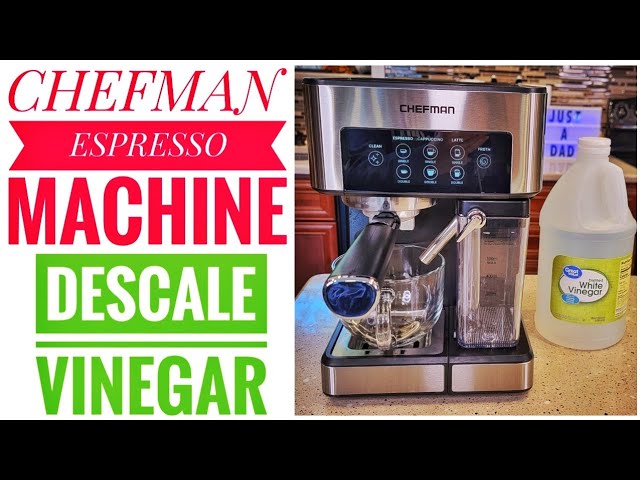
Daily cleaning is the most crucial step in maintaining your Chefman espresso machine. It prevents the buildup of coffee residue and oils that can affect the taste of your espresso.
-
Rinse the Portafilter and Filter Basket: After each use, remove the portafilter and filter basket. Rinse them thoroughly under warm water to remove any remaining coffee grounds. Use a soft sponge or cloth to wipe away any stubborn residue.
-
Wipe the Steam Wand: After frothing milk, immediately wipe the steam wand with a damp cloth. Purge the steam wand by briefly releasing steam to clear any milk residue from the inside.
-
Empty the Drip Tray: Regularly empty the drip tray to prevent overflowing and the growth of mold. Rinse the tray with warm, soapy water and dry it thoroughly before replacing it.
-
Wipe Down the Machine: Use a damp cloth to wipe down the exterior of the espresso machine. Pay attention to areas that may have coffee splatters or fingerprints.
2. Weekly Cleaning: Deep Cleaning Removable Parts
Weekly deep cleaning involves disassembling and thoroughly cleaning the removable parts of your Chefman espresso machine.
-
Disassemble the Portafilter: Remove the filter basket from the portafilter. Some models may require you to use a screwdriver or a specialized tool to remove the basket.
-
Soak the Parts: Fill a bowl with warm, soapy water. Soak the portafilter, filter basket, drip tray, and water reservoir in the soapy water for about 15-20 minutes.
-
Scrub and Rinse: Use a soft brush or sponge to scrub each part, removing any remaining coffee residue or mineral deposits. Rinse thoroughly under warm water until all soap residue is gone.
-
Clean the Water Reservoir: Empty and clean the water reservoir with warm, soapy water. Rinse thoroughly to remove any soap residue. Ensure there are no deposits or buildup inside the reservoir.
-
Dry and Reassemble: Allow all the parts to air dry completely before reassembling them. Use a clean, dry cloth to wipe down the exterior of the machine.
3. Monthly Cleaning: Descaling Your Espresso Machine
Descaling is an essential part of maintaining your Chefman espresso machine. It removes mineral buildup from the internal components, which can affect the machine’s performance and the taste of your espresso.
-
Prepare the Descaling Solution: You can use a commercial descaling solution or make your own by mixing equal parts of white vinegar and water. Typically, 1 cup of descaling solution to 1 cup of water is sufficient.
-
Fill the Water Reservoir: Pour the descaling solution into the water reservoir. Ensure that the reservoir is filled to the maximum level indicated.
-
Run the Descaling Cycle: Turn on the espresso machine and allow it to heat up. Run the solution through the machine as if you were brewing espresso. Do this in short bursts to allow the solution to work its way through the machine.
-
Rinse with Fresh Water: After running the descaling solution, rinse the machine by running fresh water through it. Fill the water reservoir with clean water and repeat the brewing process several times until the smell of vinegar (if used) is gone.
-
Clean the Steam Wand: Run steam through the steam wand for several seconds to ensure the descaling solution has cleaned it as well. Rinse by running steam again with fresh water in the reservoir.
4. Cleaning the Milk Frother
If your Chefman espresso machine has a milk frother, it’s important to keep it clean to prevent milk residue buildup, which can harbor bacteria and affect the taste of your milk.
-
Wipe After Each Use: After each use, wipe the milk frother wand with a damp cloth to remove any milk residue.
-
Purge the Wand: Briefly activate the steam function to purge any milk from inside the wand.
-
Deep Clean Weekly: Once a week, soak the frother attachment in warm, soapy water for about 15 minutes.
-
Scrub and Rinse: Use a small brush to scrub away any stubborn milk residue. Rinse thoroughly under warm water.
-
Reassemble and Test: Ensure all parts are completely dry before reassembling. Test the frother to ensure it’s working properly.
5. Tools and Materials
- Soft Sponge or Cloth
- Small Brush
- Descaling Solution (Commercial or White Vinegar)
- Warm Water
- Dish Soap
- Clean, Dry Cloth
6. Preparation Steps
Before you begin cleaning your Chefman espresso machine, make sure to:
- Unplug the Machine: Always unplug the machine from the power outlet before starting any cleaning procedure.
- Allow to Cool: Let the machine cool down completely to avoid any risk of burns.
- Gather Supplies: Have all your cleaning supplies ready and within reach.
7. Troubleshooting Guide
- Machine Not Brewing: Ensure the water reservoir is filled and properly seated. Check for any clogs in the filter basket.
- Weak Espresso: Clean the filter basket and portafilter to remove any buildup. Check your coffee grind size; it may be too coarse.
- Steam Wand Clogged: Soak the steam wand in warm, soapy water and use a small pin to clear any blockages.
- Descaling Light Stays On: Repeat the rinsing process several times to ensure all descaling solution is removed.
- Strange Taste: Ensure all parts are thoroughly rinsed after cleaning. Use fresh, filtered water.
8. Tips, Warnings, and Best Practices
- Use Filtered Water: Using filtered water can reduce mineral buildup in your machine.
- Regular Cleaning: Stick to a regular cleaning schedule to prevent buildup and maintain machine performance.
- Avoid Abrasive Cleaners: Do not use abrasive cleaners or scrub pads, as they can damage the machine’s surfaces.
- Check Water Hardness: If you live in an area with hard water, descale your machine more frequently.
- Read the Manual: Always refer to your Chefman espresso machine’s manual for specific cleaning instructions.
FAQ
How often should I descale my Chefman espresso machine?
You should descale your Chefman espresso machine approximately every 1-3 months, depending on how frequently you use it and the hardness of your water. If you notice a decrease in performance or a change in the taste of your espresso, it’s a good indication that descaling is needed.
Can I use citric acid instead of vinegar to descale my espresso machine?
Yes, citric acid can be used as a descaling agent. Mix 1-2 tablespoons of citric acid with 1 liter of water. Follow the same descaling process as you would with vinegar. Ensure you rinse the machine thoroughly afterward.
What do I do if my espresso machine is still clogged after descaling?
If your espresso machine remains clogged after descaling, try repeating the descaling process. You can also use a small needle or pin to manually clear any blockages in the portafilter or steam wand. If the problem persists, consult a professional repair service.
How can I prevent mineral buildup in my espresso machine?
To minimize mineral buildup, use filtered or bottled water in your espresso machine. Regular cleaning and descaling will also help prevent mineral accumulation. Additionally, consider using a water filter attachment if your machine supports it.
Is it safe to put the removable parts of my espresso machine in the dishwasher?
While some removable parts might be dishwasher-safe, it’s generally recommended to wash them by hand with warm, soapy water. Dishwasher detergents can be harsh and may damage certain components. Always check the manufacturer’s instructions before placing any parts in the dishwasher.
Why does my espresso taste bitter even after cleaning my machine?
If your espresso tastes bitter even after cleaning, it could be due to several factors. Check the quality of your coffee beans, ensure they are not stale, and adjust your grind size. A finer grind can sometimes cause bitterness. Also, make sure your water temperature is optimal, as excessively hot water can also lead to a bitter taste.
Conclusion
Keeping your Chefman espresso machine clean is essential for maintaining its performance, prolonging its lifespan, and ensuring the best-tasting espresso. By following this comprehensive guide, you can easily clean and maintain your machine, ensuring that every cup of coffee is as delicious as the first. Remember to perform daily rinsing, weekly deep cleaning, and monthly descaling to keep your espresso machine in top condition. Enjoy your freshly brewed espresso!