
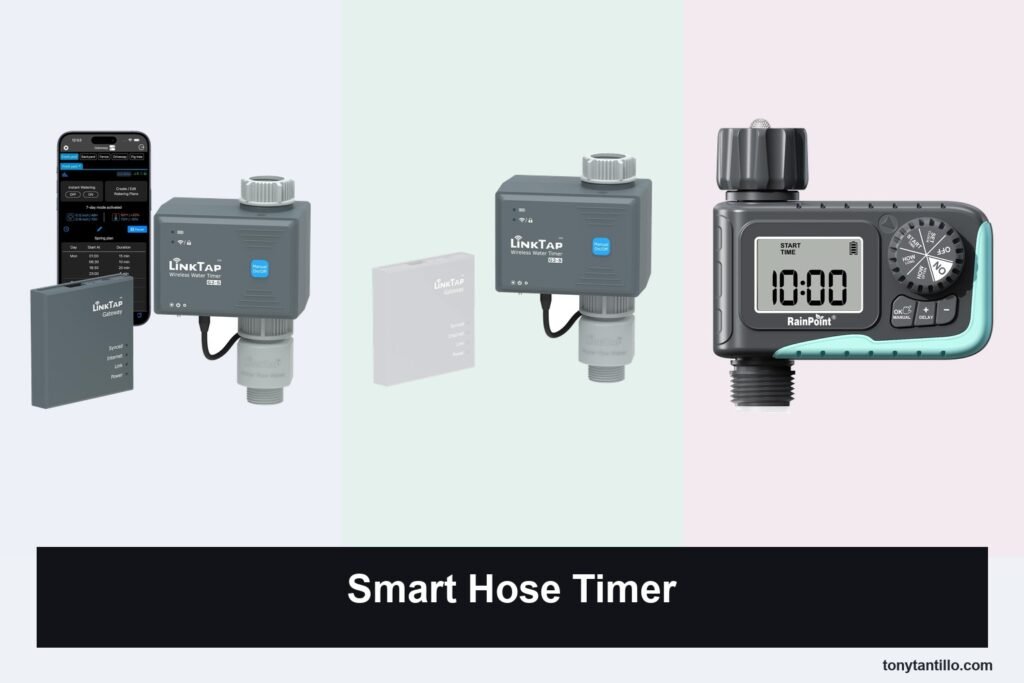
A smart hose timer earns its keep when watering needs to become predictable without becoming rigid. The best models let you control irrigation from a phone, automate schedules, and adapt to changing weather, but the real buying decision is more specific than that. You need to decide whether you want remote control, multi-zone flexibility, leak awareness, a simple programmable timer, or a setup that can scale beyond one faucet.
That is why the strongest options in this category do not all solve the same problem. Some are built around app control and fault detection for people managing a larger or more complex yard. Others focus on straightforward scheduling, rain delay, and easy day-to-day use. The right choice depends on how much oversight you want, how many watering zones you need, and whether you are optimizing for convenience, automation depth, or value.
Top Smart Hose Timer on the Market

LinkTap G2S Smart Hose Timer Kit
Best Smart System
- Gateway included
- 2-year battery life
- Weather-adaptive control
- Real-time fault alerts
- Up to 15 devices

LinkTap G2S Smart Water Timer
Best Advanced Timer
- Gateway required
- Weather-adaptive control
- Flow monitoring alerts
- 2-year battery life
- Mesh-network coverage

RAINPOINT Programmable Hose Timer
Best Budget Timer
- 1 outlet
- Rain delay mode
- Manual and automatic modes
- 1 min to 3h59m duration
- LCD screen

RAINPOINT 2-Zone Water Timer
Best Two-Zone Value
- Two programmable zones
- IP65 waterproof rating
- 20,000-cycle testing
- 3/4-inch interface
- Low-battery warning

Orbit 62067 2-Pack Timer
Best Two-Pack
- Two timers included
- 1 outlet each
- Rain delay feature
- Program memory retention
- LCD screen
Smart Hose Timer Reviews
LinkTap G2S Smart Hose Timer Kit
ADVANTAGES
LIMITATIONS
The LinkTap G2S Smart Garden Hose Timer & Gateway, 2-Year Battery Life is aimed at buyers who want a more complete irrigation platform rather than a single faucet controller. The bundled gateway matters because it removes a separate purchase from the first setup step, and the app-based control gives you remote oversight when watering decisions need to be made away from home. Its 2-year battery life reduces routine maintenance, while the weather-adaptive scheduling and volume-based programming expand the range of ways you can manage irrigation without standing at the spigot.
What separates this option from simpler timers is the monitoring layer. Real-time alerts for leaks, clogs, valve failures, and device disconnections turn the timer into an active safeguard instead of a passive switch. The proprietary Zigbee protocol and hardwired gateway are also important because they are designed for more stable long-range communication than a typical Wi-Fi-only timer. That matters on larger properties or irregular layouts where coverage is often the weak link, and the optional extender gives the system room to grow.
Compared with the more basic timers in this roundup, the LinkTap G2S asks for a higher upfront spend but returns more control, more visibility, and a much better foundation for expansion. It is the strongest match for buyers who want one interface for multiple watering devices and who value dependable alerts over the simplest possible installation. The composite inlet and anti-freeze protection add durability-minded reassurance, so this is the model to favor when a smarter, more scalable system is the priority.
LinkTap G2S Smart Water Timer
ADVANTAGES
LIMITATIONS
The LinkTap G2S Smart Water Timer (Requires Gateway), Weather Adaptive is the right starting point if you already have the gateway or plan to build a LinkTap system around one. Its value is in the same core automation stack as the bundled version, including app control, weather-aware irrigation, and flow monitoring. The difference is that this version lowers the entry price while keeping the advanced scheduling logic, so it suits buyers who want a sophisticated timer without paying again for hardware they may already own.
The tradeoff is straightforward: the gateway is mandatory, and this timer is not compatible with third-party Zigbee hubs. That constraint matters because it narrows the installation path, but it also keeps the ecosystem tightly controlled. The IP66 protection and anti-freeze behavior make it better suited to outdoor use across changing conditions, while the aerospace-grade composite inlet is a durability-minded choice that avoids the rust concerns associated with metal fittings.
Against the other smart options here, this model stands out as the most refined single-device choice for people committed to the LinkTap ecosystem. It gives up the simplicity of a standalone unit and the lower price of a basic digital timer, but it preserves the monitoring and automation depth that justify going smart in the first place. Choose it when you want advanced watering control, reliable alerts, and the flexibility to expand later without buying a different platform.
RAINPOINT Programmable Hose Timer
ADVANTAGES
LIMITATIONS
The RAINPOINT Sprinkler Timer, Programmable Water Timer for Garden Hose, Outdoor Soaker Hose Timed with Rain Delay/Manual/Automatic Watering System, Digital Irrigation for Yard, Lawn, 1 Outlet is the clearest choice for buyers who want dependable automation without app complexity. It focuses on core programming: start time, duration, and watering frequency. That structure is practical because it lets you set a routine once and leave it alone, which is exactly what many small gardens and single-zone hose setups need. The single outlet keeps the unit simple rather than trying to cover more than one job at once.
Its rain delay and manual mode add flexibility without making the interface harder to manage. Rain delay pauses the schedule for 24, 48, or 72 hours, which is useful when weather changes faster than your watering plan. Manual watering can run from 1 minute to 8 hours, so you can water on demand without rewriting the program. The large LCD screen also matters in real use because schedule details and power status are visible at a glance instead of buried in a complicated menu.
Compared with the smart LinkTap units, this timer gives up remote control, flow alerts, and ecosystem expansion. What it gains is affordability and a narrower learning curve, which is enough for many homeowners who simply need one hose to water reliably. The 1-year warranty is shorter than the premium alternatives, so this is best for buyers who care more about straightforward scheduling and less about whole-system oversight. It is the most economical recommendation here when uncomplicated hose automation is the goal.
RAINPOINT 2-Zone Water Timer
ADVANTAGES
LIMITATIONS
The RAINPOINT Water Timer for Garden Hose – 2 Zone Sprinkler Timer with Rain Delay/Manual Watering/Automatic Irrigation for Yard Lawn is the better fit when one hose line is no longer enough. The two separate programmable zones give it a real advantage over single-outlet timers because each area can receive its own start time and duration. That flexibility matters for yards with sun and shade differences, mixed plant types, or one section that needs heavier watering than the other. The broader duration and frequency range also helps you tune schedules instead of forcing both areas into the same routine.
Several hardware details make this timer feel more serious than a basic splitter-style controller. The IP65 waterproof rating is important for exposed outdoor placement, and the 20,000-cycle lab testing points to a durability focus that should appeal to buyers who want longer service life. The 360-degree rotating interface can make installation less awkward around tight faucets, while the clear display and large button layout reduce the friction of daily adjustments. The low-battery warning and automatic valve closure are especially useful because they reduce the risk of leaving irrigation in an uncertain state.
Against the simpler RAINPOINT single-outlet model, this timer costs more and asks you to manage two zones, but that extra effort pays off when a yard has uneven watering needs. It does not attempt the app-based visibility of the LinkTap options, so the tradeoff is still between convenience and control. Choose it when you want more flexibility than a basic timer provides, but do not need a full smart ecosystem. For two-zone hose irrigation, it is the strongest value in the group.
Orbit 62067 2-Pack Timer
ADVANTAGES
LIMITATIONS
The Orbit 62067 1-Outlet Programmable Digital Hose Watering Timer, 2-Pack is the most straightforward way to cover more than one hose location without stepping up to a networked smart system. The two-pack matters because it spreads basic programmable watering across multiple faucets at once, which can be better value than buying separate units one by one. Each timer turns a hose faucet into a simple automatic schedule, so the category appeal here is practicality rather than app features or ecosystem design.
Daily use is built around the essentials. You set the start time, duration, and frequency, then lean on the rain delay feature when weather changes. The large LCD screen makes programming easier, and program memory retention during battery changes is a useful convenience because it avoids rebuilding a schedule from scratch. That kind of continuity is especially helpful for seasonal gardeners who want a set-and-forget tool instead of a timer that demands attention every time the batteries are swapped.
Compared with the single-outlet RAINPOINT budget option, this Orbit package is less about a richer interface and more about broad coverage through quantity. It also gives up smart control, leak alerts, and advanced watering logic, so the recommendation hinges on how many hose points you need to automate. Buy it when you want two dependable digital timers and you prefer a familiar, no-frills approach over the extra features of a connected system.
How to Choose a Smart Hose Timer
The right timer is less about how many features it advertises and more about how it fits the way you actually water. A smart hose timer can be a remote-control convenience tool, a weather-aware automation hub, or simply a programmable replacement for manually turning the spigot on and off. Before you compare brands, decide how many zones you need, how much visibility you want into failures, and whether app control is a must or just a nice extra.
Control Style
Start with the kind of control you want to use most often. App-based timers matter when you travel, manage watering from indoors, or want to change schedules without walking to the faucet. A more basic digital timer can still handle day-to-day watering well if you are comfortable setting it once and letting it run. The best choice is the one that matches your routine, not the one with the longest feature list.
Zone Count
Think about how many separate watering areas you actually need to manage. One outlet is fine for a single hose line, a narrow bed, or a small yard. Two zones become useful when sun exposure, soil type, or plant needs differ across the property. More zones increase flexibility, but they also make setup more involved. If every area truly needs the same schedule, extra zones may add complexity without improving results.
Weather Response
Rain delay is the minimum weather feature worth having because it prevents unnecessary watering after a storm. More advanced systems go further by using weather data to adjust schedules automatically, which can reduce waste and make irrigation less hands-on. That extra intelligence is most valuable in climates with frequent weather swings. If your area is fairly stable, a simple rain delay may cover the practical need without adding app dependence or configuration overhead.
Reliability & Alerts
A smart timer is only useful if you trust it to keep working when conditions change. Leak detection, flow monitoring, and disconnection alerts matter because they turn a silent problem into a visible one before plants suffer or water is wasted. Those protections are especially important on larger systems, long hose runs, or setups that are left unattended for days at a time. If you do not want to babysit the irrigation, reliability features deserve real weight in the decision.
Durability & Exposure
Outdoor timers live in sun, moisture, and temperature swings, so construction is not a side issue. Look for water resistance, cold-weather protection, and fittings that resist corrosion or sticking. That matters most when the timer stays attached through a whole season instead of being stored after every use. If your faucet is in a harsh spot, durability can matter more than another scheduling mode or a fancier display. A tougher housing is often the difference between a dependable tool and a recurring hassle.
Setup Simplicity
Ease of setup is not just about convenience. A timer that pairs quickly, reads clearly, and uses straightforward controls is less likely to be misconfigured. That matters if several people may use the system, or if you only want to adjust watering occasionally. A clean interface and sensible button layout save time every season. When a timer becomes harder to understand than the watering problem it is meant to solve, the feature set has gone too far.
Smart Hose Timer Comparison Table
| Product | Best For | Settings | Warranty | Weight | Screen | Color |
|---|---|---|---|---|---|---|
| LinkTap G2S Smart Hose Timer Kit | Best Smart System | 5 | 2 year warranty. | 450 g | 5.08 centimeters | Black, Gray, Silver |
| LinkTap G2S Smart Water Timer | Best Advanced Timer | 7 | 2 year warranty. | 450 g | Not Specified | Gray, Off-white |
| RAINPOINT Programmable Hose Timer | Best Budget Timer | 1 | 1 year warranty. | 8 ounces | 0.75 inches | Gray, Green |
| RAINPOINT 2-Zone Water Timer | Best Two-Zone Value | 7 | Not Specified | 0.51 kg | 2.9 inches | Blue |
| Orbit 62067 2-Pack Timer | Best Two-Pack | 3 | Not Specified | 0.8 kg | Not Specified | Green |
How We Tested & Analyzed Smart Hose Timer
This roundup was built around the decisions that matter most when buying a hose timer: control method, zone count, scheduling flexibility, weather response, durability, and the amount of oversight a system can provide once installed. Products were compared on the strength and usefulness of their verified features, not on marketing language alone. That means the analysis emphasizes consequences in real use, such as whether a timer is best for a single faucet, a two-zone yard, or a more connected irrigation setup.
Meaningful differences were weighted according to the category’s most common failure points. Simple programmable timers were evaluated on how clearly they handle routine watering and weather interruptions. Smarter systems were judged by the depth of monitoring, the practicality of remote control, and the implications of ecosystem requirements. Construction details like waterproofing, battery life, and inlet materials were treated as important because outdoor irrigation equipment has to survive exposure as well as perform on schedule.
The goal was to distinguish genuine buyer tradeoffs rather than rank products by feature count. A higher-priced timer is not automatically better if the reader only needs one hose to run on a basic schedule. At the same time, a low-cost timer may be a poor fit if the yard needs multiple zones or active leak awareness. The recommendations therefore focus on fit, upkeep burden, and control depth, which are the factors most likely to determine long-term satisfaction.
Frequently Asked Questions
Do smart hose timers need Wi-Fi to work?
Not always. Some smart timers use a gateway or hub architecture, while basic programmable timers may need no network connection at all. The important question is whether you want local scheduling only or remote access from a phone. If remote changes, alerts, and weather-based automation matter, networked control becomes much more useful.
Is rain delay enough for weather adaptation?
For many households, yes. Rain delay is a simple and practical way to pause watering after precipitation without changing the full schedule. More advanced weather-adaptive systems can adjust automatically based on live conditions, which is helpful if you want less manual oversight. The better choice depends on how variable your local weather is and how much control you want to keep.
How many watering zones do I really need?
Only as many as your yard needs to treat differently. One zone is enough when the whole area can use the same schedule. Two or more zones matter when sun exposure, plant types, or soil conditions vary. Extra zones are useful only if they change how you water. Otherwise, they can add setup work without improving the result.
What durability features matter most outdoors?
Water resistance, freeze protection, and corrosion-resistant fittings are the big ones. A timer attached to an outdoor faucet is exposed to moisture and temperature swings, so the housing and inlet design matter more than many buyers expect. Durability features reduce maintenance and help the timer stay usable across seasons instead of becoming a recurring replacement item.
Final Thoughts
A smart hose timer is worth buying when it removes a job you do not want to keep doing manually. For some buyers, that means remote control and alerts. For others, it means a simple schedule that can run reliably all season. The best choice is the one that matches your yard’s complexity and your own tolerance for setup. Extra intelligence is valuable only when it meaningfully reduces effort or risk.
If you want the strongest combination of automation and oversight, prioritize a connected system with weather adaptation and fault monitoring. If you just need reliable watering on one or two hoses, a more traditional programmable timer can be the smarter spend. Either way, focus on zone needs, weather handling, and outdoor durability first. Those factors decide whether the timer feels like a convenience or another gadget to manage.