
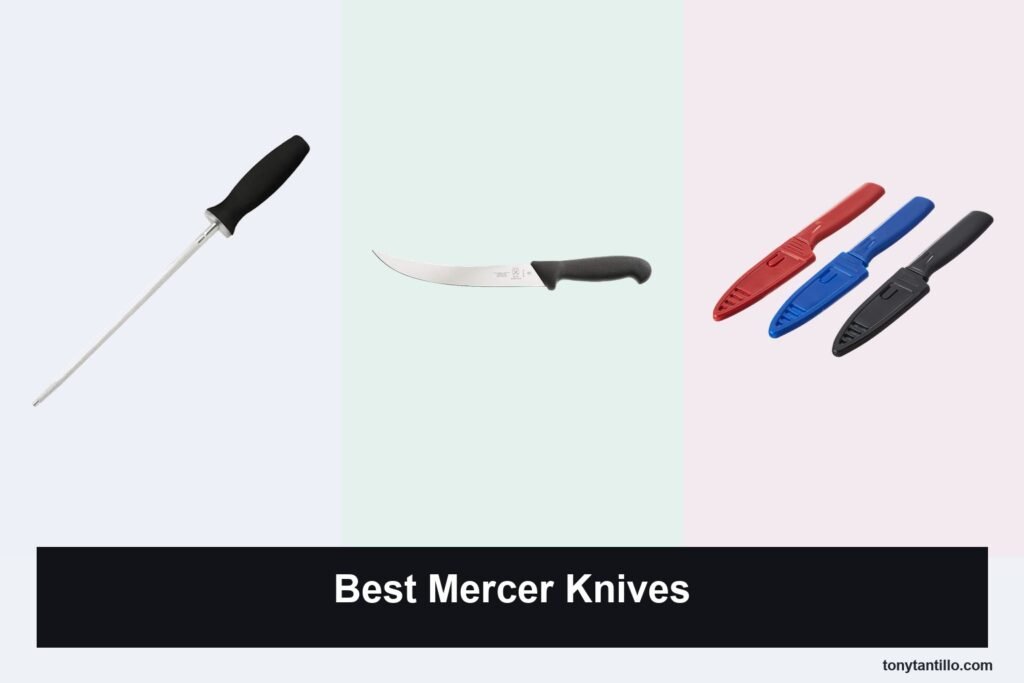
Mercer has built a reputation around knives that aim for practical, repeatable performance rather than flashy excess. That matters because most home cooks and working kitchens do not need a knife for one narrow trick. They need tools that stay usable, hold an edge sensibly, and feel secure when the pace picks up. In this category, the real question is not whether Mercer makes sharp knives. It is which Mercer knife type fits the job you actually do most often.
The five picks here cover very different needs, from keeping an existing edge aligned to breaking down meat, trimming fruit and vegetables, handling delicate prep, and assembling a fuller Asian knife set. The best choice depends on blade geometry, handle security, steel type, and how much specialization you want. A small paring knife can be the smartest buy for everyday kitchen detail work, while a larger specialty blade or honing steel solves a completely different problem. This roundup focuses on those distinctions so you can match the tool to the task without paying for overlap.
Top Mercer Knives on the Market

Mercer Genesis 10-Inch Sharpening Steel
Best for edge upkeep
- 10-inch honing surface
- High-carbon German steel
- Ergonomic non-slip handle
- Lifetime limited warranty

Mercer BPX 8-Inch Breaking Knife
Best for meat breakdown
- 8-inch blade length
- Ice-hardened German steel
- Glass reinforced nylon handle
- Forged construction

Mercer Non-Stick Paring Knife Trio
Best budget detail set
- Three 4-inch knives
- Non-stick coated steel
- ABS safety sheaths
- Color-coded handles

Mercer Millennia Serrated Paring Trio
Best for small intricate cuts
- Three 3-inch serrated knives
- One-piece high-carbon steel
- Textured Santoprene handles
- Compact prep control

Mercer Collection 5-Piece Asian Set
Best full knife set
- Five-piece knife assortment
- High-carbon stainless steel
- Wooden handles
- Single- and double-edged blades
Mercer Knives Reviews
Mercer Genesis 10-Inch Sharpening Steel
ADVANTAGES
LIMITATIONS
A honing steel like this belongs in a kitchen that already has decent knives and wants to keep them cutting cleanly. The 10-inch honing surface gives you enough working length to guide most chef’s knives and utility blades with confidence, rather than fighting for clearance on a shorter rod. Because it is built from high-carbon German steel, it is aimed at real edge maintenance rather than decorative storage, and that makes it a sensible companion to a knife set that gets used every day.
The handle design matters as much as the rod itself. The ergonomic grip is intended to stay secure even with wet hands, which is exactly what you want when you are drawing a blade across a steel at a controlled angle. The maintenance routine is straightforward too, since it calls for hand washing and complete drying. That means the tool is easy to live with, but it also asks for basic care. Buyers who want a low-effort kitchen object will need to accept that this is not a toss-in-the-dishwasher accessory.
Against the cutting tools in this roundup, this steel plays a different role. It does not replace a knife or sharpen damaged edges from scratch. Instead, it keeps good knives performing closer to their best between more serious sharpening sessions. That makes it the right companion piece for anyone already invested in Mercer blades and looking to extend their usable life. If your priority is preserving edge quality rather than buying another blade shape, this is the most practical support purchase in the group.
Mercer BPX 8-Inch Breaking Knife
ADVANTAGES
LIMITATIONS
This is the most specialized blade in the group, and that specialization is the point. The 8-inch blade length gives enough reach for larger cuts, while the ice-hardened German steel construction is aimed at strength and wear resistance when the knife is asked to split, trim, and portion meat repeatedly. The curved profile described for the blade adds leverage, so the knife is better suited to breaking down tougher pieces than a general kitchen slicer would be.
The handle is built from glass reinforced nylon, which is a useful detail for a knife that may see frequent, forceful use. A textured, ergonomic grip is valuable when your hands are slick and the cut needs control more than finesse. At 5.6 ounces, it is not an especially heavy knife for its job, so it should feel manageable during repeated work. Care is simple in the same way as the other Mercer knives here. Hand washing and immediate drying are expected, which protects the edge and the finish but means it is not a lazy cleanup tool.
Compared with the paring knives and the honing steel, this model is the obvious heavy-duty outlier. It is not the most versatile option in the lineup, and that is exactly why it earns a place for cooks who break down raw meat often enough to justify a dedicated blade. The forged build and plain edge make sense when precision and strength matter more than multipurpose use. For buyers who want one Mercer knife for serious meat prep, this is the clear recommendation.
Mercer Non-Stick Paring Knife Trio
ADVANTAGES
LIMITATIONS
For everyday kitchen detail work, this set is one of the most practical ways to buy into Mercer without spending much. The three 4-inch knives format gives you multiple backups or prep stations at a very low entry cost, and the non-stick coated steel helps reduce drag when you are working on sticky foods or thin cuts. That combination makes sense for cooks who want a small knife for peeling, trimming, or quick slicing and do not want to devote a premium blade to those jobs.
The included ABS sheaths are a meaningful safety feature because they let the knives be carried or stored without exposing the edge. That matters in a crowded drawer, a travel kit, or a bag where loose blades are a problem. The ABS handle material adds another practical advantage by keeping the knives simple and durable rather than delicate. Like the rest of this group, they should be washed by hand. That routine preserves the finish, but it also means these are best for cooks who accept a little extra care in exchange for value.
This set sits at the value end of the roundup, and the tradeoff is easy to understand. It gives you quantity, portability, and low cost rather than the more specialized cutting geometry of the breaking knife or the more refined feel of the Asian set. For many kitchens, that is exactly the right compromise because a paring knife gets used for so many small tasks that spares are useful. If you want the cheapest entry point with real utility, this is the strongest budget choice.
Mercer Millennia Serrated Paring Trio
ADVANTAGES
LIMITATIONS
This set is built for detail work that needs a little more bite than a straight paring knife provides. The 3-inch serrated blades are short, which makes them nimble for delicate cuts, and the one-piece high-carbon steel construction supports easy edge maintenance and long-lasting sharpness. That combination is well suited to garnish work, trimming beans, seeding peppers, or any task where control matters more than reach.
The Santoprene handle and textured finger points are important because a small knife can feel insecure if the grip is not shaped correctly. Here, the handle design aims to improve comfort, durability, and safety at the same time. The stamped construction keeps the set light and compact, which suits cooks who want a nimble tool rather than a heavy-duty prep knife. As with other Mercer knives here, hand washing is part of the maintenance equation. That is a fair trade if you want a low-profile utility set with a serrated edge that keeps its usefulness over time.
Compared with the non-stick paring trio, this set sacrifices the smoother release of a coated blade and instead leans into the cutting bite of serration. That makes it a stronger fit when you want precision on small ingredients that can slip under a plain edge. It is less about general kitchen multitasking and more about controlled, repetitive detail work. For buyers who know they rely on a small knife constantly, this is the more deliberate and technically focused pick.
Mercer Collection 5-Piece Asian Set
ADVANTAGES
LIMITATIONS
This is the broadest knife package in the roundup, and it is the right pick for someone building a more specialized prep lineup. The set includes five different blade types, from deba and sashimi shapes to santoku and nakiri profiles, and the high-carbon stainless steel construction gives the assortment a more serious edge than a casual novelty set. The presence of both single-edged blades and double-edged blades matters because it changes how the knives behave on fish, vegetables, and precise slicing tasks.
Wooden handles shift the feel toward a more traditional knife set. That can be appealing if you value a warmer grip and a classic aesthetic, but it also means the set is less about minimal maintenance and more about proper care. The blades are described as taper-ground with a fine stone finish, which points toward reduced snagging and smoother cuts through vegetables, meat, and fish. At 2 pounds, this is the heaviest group item here, so it is not a casual single-knife purchase. It is a coordinated tool set that asks for commitment.
Compared with the other Mercer options in this article, this set is the most specialized and the most expensive. It also carries the biggest learning curve because the blade shapes are more purpose-driven than a general chef’s knife or paring knife. That tradeoff pays off for cooks who already know they want an Asian-style lineup and will use the knives for their intended tasks. If you want the deepest Mercer assortment rather than the simplest one, this is the standout choice.
How to Choose Mercer Knives
Mercer covers several very different knife categories, so the best purchase depends on how you cook rather than on brand familiarity alone. A honing steel, a breaking knife, a pair of paring-knife sets, and an Asian knife set all solve separate problems. The right decision comes from matching blade shape, handle feel, maintenance habits, and specialization to the tasks that actually fill your prep time.
Blade Purpose
Start by identifying the main task you want the knife to perform. A honing steel supports edge maintenance, a breaking knife handles heavier meat work, and a paring knife is for detail tasks. Buying the wrong blade shape usually means carrying around a tool that feels awkward every time you use it. If your prep style includes a lot of trimming, peeling, or garnish work, a small blade will earn far more use than a larger all-purpose knife.
Steel and Edge
Steel type and edge geometry change both sharpness and upkeep. High-carbon steels are often chosen for better edge behavior, but they still need care and proper washing habits. Serrated edges are useful when you want bite on smaller or softer items, while plain edges are easier to control for clean slicing. Think about whether you prefer quick maintenance, longer cutting sessions between touch-ups, or a more specialized cutting feel.
Handle Comfort
Handle material matters because grip security affects precision and safety. Textured synthetic handles can be better when your hands are wet or you are working quickly. Wood handles can feel more traditional and substantial, but they usually ask for more careful maintenance. For repeated prep, the handle should feel stable without forcing your hand into an awkward position. Comfort is not a luxury in a knife, because fatigue changes control long before the blade itself wears out.
Set Versus Single Knife
A set makes sense when you want multiple tools for different jobs or when several people cook in the same kitchen. A single knife is better when you already know exactly which task needs solving. Sets can offer better value per piece, but they can also include blades you rarely use. Before you buy, ask whether you want a complete toolkit or just one dependable blade that will get used all the time.
Care and Maintenance
Every knife in this category benefits from simple, consistent care. Hand washing and complete drying help protect edges and finishes, especially on higher-performance steels and specialty blades. If you want the easiest possible cleanup routine, choose tools you are willing to wash right away after use. Good maintenance habits matter as much as the initial purchase, because even a strong blade will feel disappointing if it is stored wet or used past its edge condition.
Mercer Knives Comparison Table
| Product | Best For | Blade Length | Handle Material | Blade Edge | Construction | Color |
|---|---|---|---|---|---|---|
| Mercer Genesis 10-Inch Sharpening Steel | Best for edge upkeep | Not Specified | Not Specified | Not Specified | Not Specified | Multicolor |
| Mercer BPX 8-Inch Breaking Knife | Best for meat breakdown | 8 inches | Glass Filled Nylon | Plain | Forged | Multicolor |
| Mercer Non-Stick Paring Knife Trio | Best budget detail set | 4 inches | Abs,Steel | Plain | Forged | 3-Pack |
| Mercer Millennia Serrated Paring Trio | Best for small intricate cuts | 3 inches | Santoprene | Serrated | Stamped | Black |
| Mercer Collection 5-Piece Asian Set | Best full knife set | 9.4 inches | Wood | Plain | Forged | Wooden Handle |
How We Tested & Analyzed Mercer Knives
This category analysis focused on use case, blade geometry, steel type, handle design, maintenance demands, and whether each knife or set solved a distinct kitchen problem. The goal was not to rank products by raw popularity alone. Instead, each option was assessed for what it changes in day-to-day prep, how specialized it is, and what kind of buyer would actually benefit from it. That approach matters in knives because the best tool is often the one that matches the task most closely.
Differences were compared by looking at the consequences of each verified specification. Blade length, edge style, construction, handle material, and warranty information all affect how a knife feels, how it should be maintained, and where it fits in a kitchen lineup. A small serrated paring knife, for example, serves a very different role from a forged breaking knife or a honing steel. The comparison therefore emphasizes operational tradeoffs rather than superficial feature count.
The analysis also accounted for limitations that affect ownership satisfaction. Some knives require more maintenance than others. Some are specialized enough that they should not be treated as general-purpose kitchen tools. Some sets deliver value through quantity, while others justify their price through construction or blade type. Those tradeoffs are central to a real buying decision, so the article favors clarity about fit, upkeep, and long-term usefulness over broad, generic praise.
Frequently Asked Questions
Do I need a honing steel if I already own sharp knives?
Yes, if you want to keep an edge aligned between sharpenings. A honing steel does not replace sharpening, but it helps maintain cutting performance after regular use. It is most useful in kitchens where knives are used often and you want to delay the point at which the blade needs more aggressive sharpening.
Are serrated paring knives better than plain-edge paring knives?
Not universally. Serrated paring knives can grip slippery surfaces and handle small, controlled cuts well. Plain-edge paring knives usually feel smoother for peeling, trimming, and general precision work. The better choice depends on whether you want more bite or more slicing refinement in a compact blade.
What makes a breaking knife different from a chef’s knife?
A breaking knife is shaped for processing meat, especially larger cuts that need leverage and control. It is not a broad general-purpose knife. A chef’s knife is more versatile across many kitchen tasks, while a breaking knife becomes most useful when raw meat breakdown is a regular part of your workflow.
How important is handle material when choosing a knife?
Very important, because grip security affects both comfort and safety. Synthetic handles can feel more secure when wet and may be easier to keep consistent in daily use. Wood handles can feel traditional and comfortable, but they usually reward more careful upkeep. Choose the handle type that matches your cleaning habits and working style.
Final Thoughts
Mercer’s knife lineup works best when you buy with a specific job in mind. That is the main lesson from this roundup. The honing steel supports edges, the breaking knife handles serious meat work, the paring sets cover detail prep at different price and blade-style levels, and the Asian set serves cooks who want a more specialized collection. Once you separate those roles, the right choice becomes much easier to see.
For most buyers, the smartest move is to choose the knife that closes the biggest gap in the kitchen rather than the one that sounds most impressive on paper. If you need maintenance, buy the steel. If you break down meat often, buy the breaking knife. If you want compact daily utility, the paring sets are the most economical path. And if you are building a more focused prep arsenal, the Asian set is the most complete Mercer option here.