
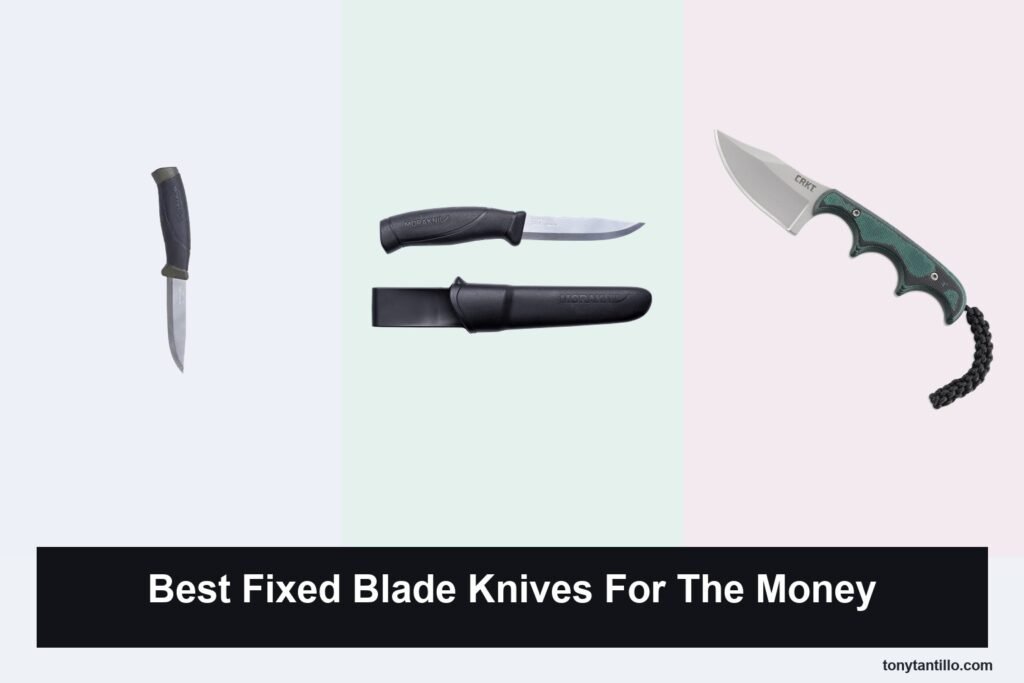
A good fixed blade earns its place by being simple, strong, and ready when folding knives start to feel fussy. For buyers trying to get the most value for the money, the real question is not which knife looks most aggressive. It is which one gives you the most usable blade, the most dependable carry, and the least compromise for the tasks you actually do. That means weighing steel type, blade length, handle security, sheath quality, and how much knife you are carrying for the price.
The six knives here cover a wide spread of use cases, from compact neck-carry designs to full-size tactical and camp blades. Some emphasize low cost and lightweight carry. Others justify a higher price with tougher steel, a more specialized blade shape, or a more secure sheath system. The best choice depends on whether you want a general outdoor companion, a compact everyday carry fixed blade, or a harder-use knife that favors power and control over portability.
Top Fixed Blade Knives For The Money on the Market

Morakniv Companion 4.1-Inch Outdoor Knife
Best Budget Outdoor Knife
- 4.1-inch stainless blade
- 2.0 mm thickness
- Polymer sheath with clip
- 3.9-ounce carried weight

Morakniv Companion Stainless Steel Knife
Best Warranty Value
- 4.1-inch stainless blade
- Thermoplastic elastomer handle
- Limited lifetime warranty
- Polymer sheath included

CRKT Minimalist Bowie Neck Knife
Best Compact Carry
- 2.13-inch Bowie blade
- 1.6-ounce knife weight
- Full-tang construction
- Polypropylene sheath

Cold Steel Recon Tanto 7-Inch Knife
Best Heavy-Duty Blade
- 7-inch SK-5 blade
- 5 mm thickness
- Kray-Ex handle
- Secure-Ex sheath

Cold Steel SRK Compact 5-Inch Knife
Best Tactical Balance
- 5-inch SK-5 blade
- 4 mm thickness
- 5.1-ounce weight
- Secure-Ex sheath

Smith & Wesson H.R.T Boot Knife
Best Boot Carry
- 4.7-inch double-edged blade
- 7.7-ounce weight
- Rubber-wrapped handle
- Belt or boot sheath
Fixed Blade Knives For The Money Reviews
Morakniv Companion 4.1-Inch Outdoor Knife
ADVANTAGES
LIMITATIONS
The Morakniv Companion stands out as the most approachable all-around choice in this group because it keeps the formula tight and the price low. Its 4.1-inch stainless steel blade gives you enough length for camp chores, food prep, and tinder work without turning the knife into a burden on the belt. The 2.0 mm blade thickness also matters because it keeps the knife light and quick in hand. That combination favors buyers who want a practical outdoor tool rather than a heavy pry-style blade.
The handle and sheath are a big part of the value proposition. The polymer handle uses a high-friction grip and finger guard, which is the kind of detail that matters when your hands are wet, cold, or dirty. The included polymer sheath with belt clip makes carry straightforward, and the knife’s 3.9-ounce weight with sheath keeps it from feeling overbuilt. One tradeoff is maintenance. The blade should be dried thoroughly after wet use, and it should be cleaned with care after acidic foods. That is a fair exchange for a blade that is less prone to rust than carbon steel.
Against the other knives here, this one wins on simplicity and cost efficiency rather than specialized performance. It is far easier to justify as a first fixed blade or a general camp knife than a more tactical model, and it is less intimidating to carry and use day to day. Buyers who want a dependable outdoor knife for the least money should start here, especially if they value light weight, easy sheath carry, and low-risk ownership. It is the most obvious value pick in the roundup.
Morakniv Companion Stainless Steel Knife
ADVANTAGES
LIMITATIONS
This Companion version pushes nearly the same everyday outdoor formula but adds a stronger buyer-signal for long-term ownership. The 4.1-inch blade keeps it versatile enough for camp tasks, while the stainless construction is a meaningful advantage if the knife is going to live in a pack, a truck, or a damp outdoor kit. The price is even lower than the other Morakniv option, so the value argument is easy to see. It is a plain, working knife that stays focused on utility rather than style.
The thermoplastic elastomer handle matters because it is built around grip rather than decoration. That gives you a more confident hold in wet conditions and makes the knife easier to control when carving or slicing food. The included polymer sheath keeps the carry package simple, and the limited lifetime warranty adds peace of mind that the knife is meant to be kept in service. As with other stainless fixed blades, regular drying and hand washing still matter if you use it around moisture or acidic foods.
Compared with the first Morakniv, this one is less about finish or presentation and more about lean value. It is a better match for the buyer who wants a low-cost knife with warranty support and does not need a tactical profile or a premium sheath system. It also undercuts the more specialized knives in this list by a wide margin. If your goal is to spend as little as possible while still getting a capable fixed blade with a real outdoor pedigree, this is one of the safest recommendations.
CRKT Minimalist Bowie Neck Knife
ADVANTAGES
LIMITATIONS
The CRKT Minimalist Bowie is the most carry-friendly option in the group, and its size changes how you think about a fixed blade. The 2.13-inch blade is short enough for close control, food prep, and small utility jobs, while the 1.6-ounce weight keeps it easy to forget until you need it. That is a very different proposition from the larger camp and tactical knives here. It is not trying to be the biggest cutter. It is trying to be the easiest fixed blade to have with you all day.
Its compact geometry brings real practical advantages. The full-tang construction gives the knife a more solid feel than its size suggests, and the resin-infused fiber handle is built around grip and control. The sheath is designed for versatile carry, and the manufacturer notes a positive detent for secure retention. That matters because a knife this small lives or dies on how safely and comfortably it can be carried. The tradeoff is obvious: short blade length limits reach and reduces the leverage you get on harder camp tasks.
Relative to the Morakniv options, this is the more specialized carry knife. It gives up blade length and general-purpose chopping ability in exchange for portability, control, and a much smaller footprint. Compared with the Cold Steel models, it is far less committed to heavy-duty work, but also much easier to carry discreetly. Buyers who want a fixed blade for daily cutting, lightweight woods use, or neck carry should consider it first. It is the strongest value play when compactness matters as much as price.
Cold Steel Recon Tanto 7-Inch Knife
ADVANTAGES
LIMITATIONS
The Recon Tanto is for buyers who want a fixed blade that feels purpose-built for hard use rather than casual carry. Its 7-inch blade is long enough to give serious reach, and the 5 mm blade thickness signals a tougher build than the lighter camp knives in this roundup. That extra mass and length matter when your priority is controlled piercing, utility leverage, and a blade that does not feel delicate. It is the most imposing knife here, and that is exactly the point.
The Kray-Ex handle is part of why the knife makes sense as a harder-use tool. A secure grip matters more as blade size and cutting force increase, especially in wet or demanding conditions. The Secure-Ex sheath adds safe storage and fast access, which is important for a knife that is likely to live on a belt or in a kit. The tradeoff is carry comfort. At 10 ounces, this is substantially heavier than the compact alternatives, so you are paying for capability rather than discreet portability.
Compared with the SRK Compact, the Recon Tanto gives you more blade and more reach, but it also asks for more space and more commitment on the belt. Against the Morakniv knives, it is much less of a general camp bargain and much more of a specialized power tool. Buyers who want a robust tactical or field blade and do not mind the extra weight should look here. It is not the cheapest route to fixed-blade ownership, but it is one of the clearest choices for serious hard-use intent.
Cold Steel SRK Compact 5-Inch Knife
ADVANTAGES
LIMITATIONS
The SRK Compact is the most balanced Cold Steel option in this roundup because it trims size without abandoning the tough-knife mission. The 5-inch SK-5 blade is long enough for utility work and survival chores, but the 5.1-ounce weight keeps it far easier to carry than the larger Recon Tanto. That balance is the entire appeal. You get enough blade to be useful in the field without dragging around a full-size tactical knife all day.
Its 4 mm blade thickness and Kray-Ex handle tell you exactly what kind of knife this is. It is built to stay controllable and durable in wet or rough conditions, and the Secure-Ex sheath keeps the carry system simple and secure. That makes it a strong fit for users who want a survival or rescue knife that is still practical for everyday belt use. The limitation is that the blade does not have the reach or dramatic cutting presence of the larger tactical option, so it is a compromise by design rather than a maximum-power solution.
Against the Recon Tanto, this is the easier knife to live with. Against the Morakniv models, it is much more specialized and more expensive, but also far more aggressive in construction. That positions it as the best pick for someone who wants a serious field blade without stepping all the way up to a large combat profile. If your priority is a capable hard-use fixed blade that stays portable, this is the smartest middle ground in the group.
Smith & Wesson H.R.T Boot Knife
ADVANTAGES
LIMITATIONS
The Smith & Wesson H.R.T. Is the most specialized carry knife in the roundup. Its 4.7-inch double-edged blade gives it a distinctly defensive or utility-forward profile, and the 7.7-ounce weight places it in a middle zone where it is still carryable without feeling ultralight. The boot-knife format changes the buying logic. You are not shopping for a general camp knife here. You are shopping for a compact fixed blade intended to ride close and stay accessible.
The black rubber-wrapped handle and hand guard are the key practical details. They point toward secure control rather than chopping strength, and the belt or boot sheath supports that role by keeping the knife close to the body. The lanyard hole adds another carry option, though this is still a more purpose-specific tool than the outdoor companions in this list. One limitation is inherent in the design. A double-edged boot knife is less versatile for broad camp chores than a single-edged outdoor blade.
Compared with the CRKT Minimalist, this knife is larger and more substantial, but also less subtle in use. Compared with the Morakniv and Cold Steel camp or survival models, it gives up general outdoor flexibility for a more compact defensive-carry profile. That makes it the right call only for buyers who specifically want boot or belt carry and appreciate a double-edged design. If that is your use case, it is one of the least expensive ways to get a purpose-built fixed blade.
How to Choose Fixed Blade Knives
A fixed blade is easiest to choose when you start with the job, not the styling. For value-minded buyers, the most important question is whether the knife is meant to be a light everyday carrier, a camp utility tool, or a harder-use field blade that trades comfort for strength. Blade length, weight, handle texture, and sheath quality all matter because they determine how the knife behaves on your belt and in your hand. Price only matters after those basics line up.
Blade Length
Blade length sets the ceiling for what a knife can do in one stroke. Shorter blades are easier to control and easier to carry, which is why compact fixed blades often feel so practical for daily tasks and light camp work. Longer blades give you more reach and more leverage, but they also increase bulk and make the knife less discreet. A buyer who wants food prep and general camp chores can live comfortably in the middle range, while someone expecting heavier utility work may prefer more blade.
Weight and Carry
Weight changes whether a fixed blade feels like a useful tool or extra baggage. A very light knife disappears on the belt or in a pack, which makes it easier to keep with you consistently. Heavier knives can feel more confidence-inspiring during hard use, but they are less appealing for all-day carry. That tradeoff matters most for buyers who hike, travel, or wear the knife for long periods. If the knife is going to be carried often, low weight usually beats impressive size on paper.
Steel and Maintenance
Steel choice affects sharpening, corrosion resistance, and how much care the knife needs after use. Stainless blades usually reduce maintenance and are more forgiving in wet environments, while high-carbon steels often reward owners with stronger edge behavior or easier sharpening depending on the specific alloy. The practical issue is not which steel sounds tougher. It is how often you are willing to clean and dry the knife. If the knife may see moisture, food prep, or outdoor storage, choose a steel you will actually maintain.
Handle Grip
A fixed blade is only as useful as your confidence in holding it. Textured polymer, Kray-Ex, rubber, and similar grippy materials matter because they reduce slippage when hands are wet or dirty. Handle shape matters too, especially if you expect extended carving or controlled cutting instead of only occasional use. The right handle should feel secure without requiring a death grip. Buyers who plan to use a knife in rain, cold, or field conditions should put grip and finger protection near the top of the list.
Sheath Quality
The sheath is part of the knife system, not an accessory. A secure sheath protects the edge, keeps the knife from shifting in carry, and determines how confidently you can wear the knife on a belt or pack. Belt clips, retention features, and sheath rigidity all affect day-to-day usability. A knife with a good blade but a weak sheath becomes annoying fast. If you expect to carry the knife regularly, give the sheath nearly as much attention as the blade itself.
Choose by Use
The best value knife is the one that matches your most common job. Camp and backpacking buyers usually do best with a balanced blade that is light enough to carry and strong enough for routine chores. Hunters and field users may prefer a more specialized shape, while tactical or rescue buyers often want a tougher handle and a more secure sheath. Avoid paying for capability you will never use. A simpler knife that fits your actual routine is usually the better purchase.
Fixed Blade Comparison Table
| Product | Best For | Blade Length | Weight | Handle Material | Warranty | Age Range Description |
|---|---|---|---|---|---|---|
| Morakniv Companion 4.1-Inch Outdoor Knife | Best Budget Outdoor Knife | 3.88 inches | 0.11 kg | Stainless Steel | Not Specified | Adult |
| Morakniv Companion Stainless Steel Knife | Best Warranty Value | 10.4 centimeters | Not Specified | Thermoplastic Elastomers (TPE) | limited lifetime | Adult |
| CRKT Minimalist Bowie Neck Knife | Best Compact Carry | 1.25 inches | 46 g | Resin Infused Fiber | Lifetime Warranty | Adult |
| Cold Steel Recon Tanto 7-Inch Knife | Best Heavy-Duty Blade | 7 inches | 10 ounces | Kray-Ex | Knives & Blades: We stand behind our products 100%. We subject them to the highest standards in the industry and strive to make each as perfect as possible. We warrant that this product is free of defects in workmanship and materials. This warranty does not cover normal wear and tear, resharpening, damage caused by misuse, lack of normal maintenance, or disassembly. Remember, anything can break or fail if subject to sufficient abuse. So please do not use this product inappropriately. No knife or sword should be used as an axe, hatchet, screwdriver or prybar. Non Blades: We stand behind our products 100%. We subject them to the highest standards in the industry and strive to make each as perfect as possible. We warrant that this product is free of defects in workmanship and materials. This warranty does not cover normal wear and tear, damage caused by misuse, lack of normal maintenance, or disassembly. Remember, anything can break or fail if subject to sufficient abuse. So please do not use this product inappropriately. | Adult |
| Cold Steel SRK Compact 5-Inch Knife | Best Tactical Balance | 5 inches | 0.22 kg | Kray-Ex | Manufacturer | Adult |
| Smith & Wesson H.R.T Boot Knife | Best Boot Carry | 4.7 inches | 0.17 kg | Rubber | Limited Lifetime, https://store.smith-wesson.com/warranty-info.html | Adult |
How We Tested & Analyzed Fixed Blade Knives for the Money
The comparison focused on category-level decision points that matter when you are buying a fixed blade for value. Blade length, blade thickness, carry weight, handle material, sheath system, steel type, and warranty coverage were the main filters because they shape real-world usefulness more than marketing language does. That approach rewards knives that are balanced and honest about their intended role instead of simply sounding more aggressive.
The analysis also weighed how each knife’s design influences ownership. A lightweight stainless camp knife asks for different maintenance than a heavier high-carbon tactical blade. A compact neck knife competes on portability, while a boot knife competes on carry style and access. Those distinctions matter because a fixed blade is often purchased to solve a specific carry or task problem. The strongest choices are the ones whose construction matches their role without unnecessary compromise.
Value was judged by how much practical function each knife appears to deliver for its price, not by price alone. Some knives justify a slightly higher cost with better sheath systems, tougher steel, or more specialized design. Others win by being simple and affordable enough to recommend without hesitation. The goal was to separate broad utility from niche capability so buyers can choose the knife that fits their use case and budget with the least regret.
Frequently Asked Questions
What makes a fixed blade a good value?
A good-value fixed blade gives you the right mix of steel, handle security, sheath quality, and carry comfort for the price. The cheapest knife is not always the best value if it is awkward to carry or hard to maintain. Look for a knife that matches your most common tasks instead of paying for features you will rarely use.
Is stainless steel always the better choice?
Not always, but it is often easier to live with. Stainless steel usually resists corrosion better and needs less immediate care after outdoor use or food prep. High-carbon steels can also be excellent, especially in harder-use designs, but they generally ask for more maintenance. Choose based on how much time you will spend cleaning and drying the knife.
How important is the sheath?
Very important. A fixed blade is only practical if the sheath carries securely and protects the edge. Good retention matters for safety, and a usable belt or pack attachment matters for convenience. A poor sheath can make an otherwise solid knife annoying to wear, while a well-designed sheath can make a modest knife far more usable.
What blade length is best for general use?
For general use, a mid-length blade is often the easiest place to start. It is long enough for camp chores, slicing, and light utility work, but not so large that it becomes awkward to carry. Shorter blades are better when portability is the main concern, while longer blades make sense if you want more reach and stronger leverage.
Final Thoughts
The best fixed blade for the money is not the same knife for every buyer. A low-cost outdoor companion can be the smartest purchase if you want a dependable camp knife that stays simple and easy to carry. A compact neck knife is better if portability matters most, and a heavier tactical blade makes sense only if you actually need that extra reach, thickness, and grip security. The right choice is the one that fits your routine without asking you to compromise on the details that matter most.
That is why the strongest value knives in this roundup are the ones with a clear identity. Some are built to be inexpensive and forgiving. Others are built to be compact, tough, or purpose-specific. Start with your use case, then compare blade size, carry weight, handle comfort, and sheath quality before looking at price. If those pieces line up, you will end up with a fixed blade that feels worth the money every time you carry it.