
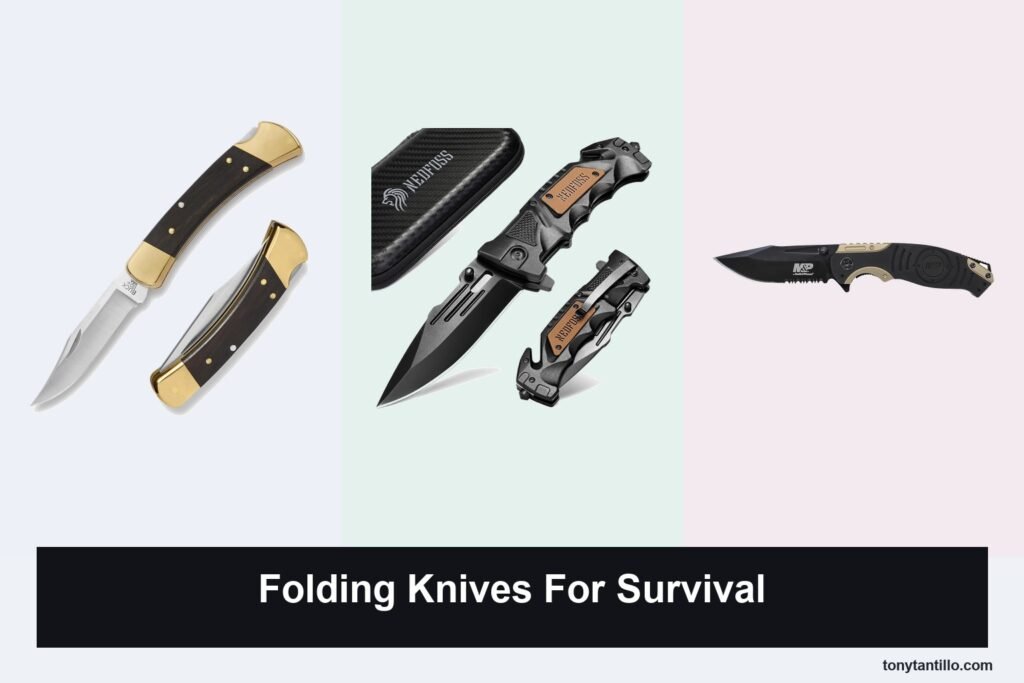
A folding knife for survival has to solve a harder problem than a casual pocket tool. It needs to stay compact enough to carry every day, open fast when a job turns urgent, and lock with enough confidence that the blade feels dependable under real pressure. The best choices also balance edge retention, corrosion resistance, handle security, and weight, because a survival knife that is awkward to carry often gets left behind when it matters most.
These three picks cover different priorities. One is a classic heavy-duty folder with a long track record and a sheath. One leans into emergency features and broader utility. One is the lightest and least expensive option, which matters when you want a capable blade without adding much to your load. The right answer depends on whether you value tradition and carry comfort, rescue-minded features, or straightforward utility at a lower price point.
Top Folding Knives For Survival on the Market

Buck Knives 110 Folding Hunter
Best Classic Survival Folder
- 3-3/4-inch 420HC blade
- Lock-back design
- Leather sheath included
- 7.2-ounce carry weight

NedFoss DA75 Folding Knife
Best Emergency Multi-Tool
- 3.9-inch drop point blade
- Seat belt cutter
- Glass breaker
- G10 and aluminum handle

Smith & Wesson SWMP13BS Knife
Best Budget Survival Folder
- 3.5-inch serrated blade
- Liner lock security
- Ambidextrous opening
- 4.9-ounce weight
Folding Knives For Survival Reviews
Buck Knives 110 Folding Hunter
ADVANTAGES
LIMITATIONS
The Buck 110 is the kind of survival folder that wins on confidence rather than novelty. Its 3-3/4″ 420HC blade gives you a usable cutting length without turning the knife into a bulky pocket burden, and the lock-back design is built around the sort of blade security that matters when you are cutting under stress. Brass bolsters and ebony handles give it a more traditional feel, but the real value is functional. It is a knife that can move from camp chores to field tasks without asking you to compromise on strength or carryability.
Several details make the carrying experience more practical than the knife’s heritage-first reputation might suggest. At 7.2 ounces, it is not the lightest option here, yet that weight is paired with a leather sheath and belt loop, which shifts the knife from pocket-only carry to more secure field carry. The closed length of 4-7/8 inches keeps it portable, but the bigger consequence is how the sheath changes the knife’s role. You can carry it in a pack, on a belt, or as a backup blade that is easy to reach without digging through gear.
Compared with the two more modern folders in this group, this Buck is the one that most clearly favors traditional reliability and a more deliberate carry style. It does not lean on emergency extras or aggressive tactical styling. Instead, it delivers a proven locking system, corrosion-resistant stainless steel, and a long warranty history that supports its place as a durable camp-and-field tool. Choose it if you want the most established survival-oriented folder in the group. It is the strongest recommendation for buyers who value classic construction and secure belt carry.
NedFoss DA75 Folding Knife
ADVANTAGES
LIMITATIONS
The NedFoss DA75 is the most purpose-built emergency option in this group. Its 3.9-inch blade is the longest of the three, which gives it extra reach for general cutting tasks, and the drop-point profile is a sensible shape for mixed outdoor and utility use. The blade uses stainless steel, while the handle combines G10 and aluminum for a grip-focused feel. That combination makes this knife more about practical control than style, and it is the one here that best supports buyers who want a survival folder with built-in rescue functions.
The added seat belt cutter and glass breaker change what this knife can do in a crisis. Those tools are not there for decoration. They make the knife relevant in vehicle emergencies and other situations where fast access matters more than a clean camp-craft profile. The pocket clip and thumb stud keep deployment straightforward, and the ambidextrous orientation broadens how comfortably it can be carried. At 7.76 ounces, it is a substantial knife, so it is less likely to disappear in a pocket than lighter models, but that extra mass comes with a more tool-like feel.
Against the Buck, this NedFoss gives up some of the heritage polish and sheath-based field carry appeal. Against the Smith & Wesson, it is more feature-heavy and more expensive, but also more versatile when emergency tools matter. That tradeoff makes it the best pick for someone who wants one folding knife to cover outdoor use and rescue-minded scenarios. The recommendation is clear for buyers who see survival through the lens of preparedness, not just cutting performance.
Smith & Wesson SWMP13BS Knife
ADVANTAGES
LIMITATIONS
This Smith & Wesson folder is the most practical low-cost entry in the set. Its 3.5-inch serrated blade is shorter than the other two blades, but the serrated edge can be useful when cutting fibrous material, rope, or packaging in rough conditions. The high carbon stainless steel blade and aluminum handle keep the knife focused on straightforward utility, while the overall 8.2-inch length gives it enough presence to feel like a serious tool without becoming unwieldy. For a budget-minded survival folder, that balance matters.
Ease of carry is one of its strongest selling points. At 4.9 ounces, it is the lightest knife here, so it is the easiest to keep on you all day. The pocket clip, finger flipper, and ambidextrous thumb knobs support quick access, and the liner lock adds a layer of security once the blade is open. The lanyard hole is a small but meaningful addition for users who want extra retention or attachment options. That mix of features makes it a sensible choice for everyday carry that can also serve in a survival role.
Relative to the Buck and the NedFoss, this model wins on price and carry convenience but gives up some blade length and the more premium feel of the other two. It is the least elaborate of the three, which is exactly why it makes sense for buyers who want a dependable folder without committing much money. The serrated edge, lighter weight, and ambidextrous opening make it the easiest recommendation for an affordable backup or an everyday knife that can handle emergency use when needed.
How to Choose a Survival Folding Knife
Choosing a survival folding knife is mostly about deciding what kind of emergency you are preparing for. Some buyers need a belt-carry field knife that feels secure and traditional. Others want a compact tool with rescue features that may matter around vehicles, camps, or job sites. A third group simply wants a lightweight folder that can stay clipped in a pocket every day and still handle unexpected cutting tasks. The right knife is the one you will actually carry, because survival gear that stays home cannot help you.
Blade Length
Blade length changes both usefulness and carry comfort. A longer blade can be more efficient for camp chores, food prep, and rough material cutting because you make fewer passes. It can also feel better for tasks where reach matters. The tradeoff is bulk, weight, and a larger folding frame in your pocket or on your belt. For many buyers, the sweet spot is a mid-length blade that still feels manageable in daily carry.
Locking Security
A survival folder should lock open with confidence. That matters because the point of a folding knife is not just convenience. It is controlled use under pressure. Strong locking systems reduce the chance that the blade closes unexpectedly during hard cutting. When you compare knives, pay attention to how the lock works and whether the opening action still feels stable and deliberate. A secure lock is one of the clearest signs that a folder is built for more than casual errands.
Carry Method
How the knife rides on your body can matter as much as the blade itself. Pocket clips favor speed and everyday convenience. Sheaths favor belt carry, better retention, and a more field-oriented setup. Rescue-minded tools may also add extras that make sense in a vehicle or pack. Think about where the knife will actually live on a normal day. If it is awkward to carry, it will not be available when conditions become difficult.
Handle Grip
The handle influences confidence during wet, cold, or gloved use. Materials such as aluminum, wood, or composite scales can feel very different in the hand, and shape matters as much as surface texture. A good survival knife should stay controllable when your grip is not perfect. That is why ergonomics are more than a comfort issue. They affect how safely you can work when fatigue, weather, or stress starts to reduce fine control.
Blade Style
Blade shape should match the kind of cutting you expect to do most often. Clip point shapes are versatile and common in survival folders because they offer useful precision and a strong general-purpose profile. Serrated edges can help on rope or fibrous material, while plain edges are often easier to sharpen consistently. There is no universal best shape. The better choice is the one that fits the jobs you are most likely to face, not the most dramatic-looking profile.
Weight and Portability
Weight becomes important fast when a knife is carried every day. A heavier folder can feel more substantial and secure, but it may be left behind more often. A lighter knife is easier to keep clipped on, especially for users who already carry other gear. The right balance depends on whether your knife is a dedicated belt tool, a pack backup, or a daily pocket companion. Portability is not a minor detail. It is a major part of real-world value.
Folding Knife Comparison Table
| Product | Best For | Blade Length | Weight | Handle Material | Blade Material | Warranty |
|---|---|---|---|---|---|---|
| Buck Knives 110 Folding Hunter | Best Classic Survival Folder | 3.75 inches | 7.2 ounces | Brass, Wood | High Carbon Stainless Steel | Warranty |
| NedFoss DA75 Folding Knife | Best Emergency Multi-Tool | 3.9 inches | 7.76 ounces | Aluminum+ G10 | Stainless Steel | Not Specified |
| Smith & Wesson SWMP13BS Knife | Best Budget Survival Folder | 3.5 inches | 5.12 ounces | Aluminum | High Carbon Stainless Steel | Limited Lifetime, https://store.smith-wesson.com/warranty-info.html |
How We Tested & Analyzed Folding Knives for Survival
This roundup focused on the practical traits that most affect survival use: blade length, blade material, locking system, carry method, handle construction, weight, and any extra emergency functions. Those are the details that change how a folding knife behaves in the hand, how comfortably it can be carried, and how well it suits different kinds of outdoor or emergency scenarios. Decorative styling and broad marketing language were set aside unless they connected to a real use consequence.
The comparison also weighed whether a knife’s design served a clear job. A field knife with a sheath occupies a different role than a compact EDC blade or a folder with rescue tools. That matters because buyers are not all looking for the same kind of preparedness. Some want a traditional camp companion, others want a vehicle-friendly emergency tool, and others want a low-cost pocket knife that stays on them every day. The analysis therefore emphasized tradeoffs rather than trying to force a single winner.
When differences were close, priority went to the features that influence reliability and carry reality. Weight, locking confidence, and carry method often decide whether a knife is truly practical over time. The limitations of the available product records also matter. Where a detail was not clearly specified, it was not treated as a selling point. That keeps the guidance grounded in what is verifiable and useful for a buyer making a real decision.
Frequently Asked Questions
What makes a folding knife suitable for survival use?
A survival folder should be secure, portable, and durable enough for repeated cutting tasks. Locking strength matters because the blade needs to stay open under pressure. Blade steel, handle grip, and carry comfort also matter because the best knife is the one you will actually keep with you.
Is a heavier knife always better for survival?
No. Heavier knives can feel more substantial and sometimes carry more presence, but they are also more likely to be left behind. A lighter knife is easier to keep clipped on every day. The better choice depends on whether you want a belt-carry tool or a pocket-friendly companion.
Should I choose a serrated or plain edge?
Choose based on the material you cut most often. Serrated edges can be useful on rope, webbing, and other fibrous material. Plain edges are usually easier to sharpen and can feel more versatile for general tasks. Many buyers do best by matching the edge to the most common job, not the most dramatic scenario.
Do extra rescue tools matter on a survival knife?
They can, but only if they match your environment. A seat belt cutter and glass breaker are highly relevant for vehicle emergencies. If you mainly want a camp knife, those extras may add bulk without helping daily use. Think about the likely emergency, not just the label.
Final Thoughts
The best folding knife for survival is the one that matches your carry habits and your likely use case. A traditional belt-carry knife, a rescue-focused multi-tool folder, and a lightweight budget option can all make sense, but they solve different problems. Blade length, weight, lock security, and carry method should lead the decision, because those are the factors that determine whether the knife stays with you and works when needed.
For most buyers, the safest way to choose is to start with portability, then narrow by the kind of cutting and emergency use you expect. If you want classic field reliability, the traditional lock-back style stands out. If preparedness around vehicles or mixed outdoor use matters more, the rescue-oriented folder is the smartest pick. If price and everyday carry are your main concerns, the lightest option is the easiest place to start.