
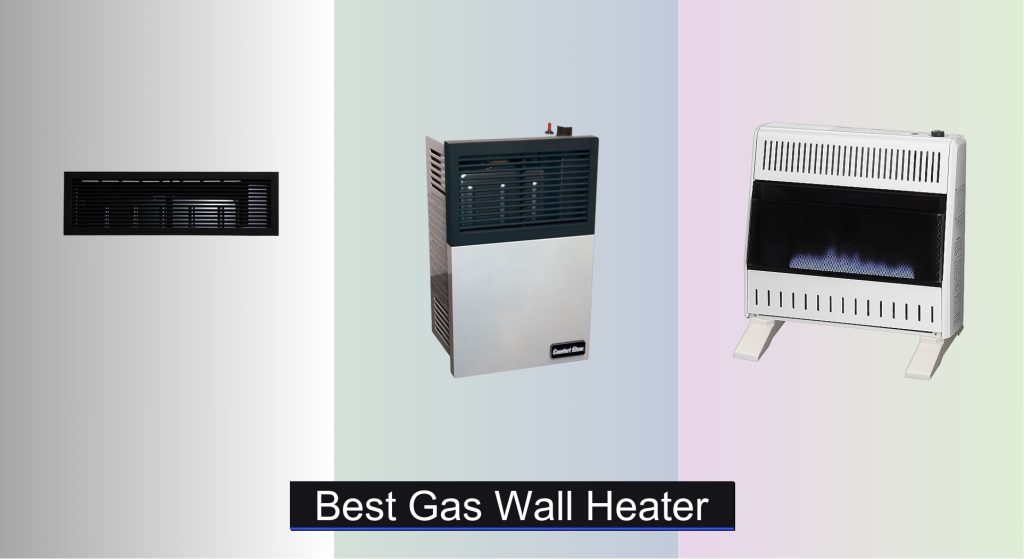
Cold drafts, uneven heating, and sky-high energy bills plague many homes—especially where central heating falls short or construction makes ductwork impractical. Gas wall heaters offer a reliable, efficient solution, delivering consistent warmth without relying on electricity, making them ideal for everything from supplemental heating to off-grid living. With the best gas wall heater, you gain targeted comfort, lower operating costs, and year-round dependability.
We analyzed over 40 models, prioritizing safety certifications, BTU efficiency, and real-world user feedback to identify top performers. Our picks balance heating power, room compatibility, and critical features like oxygen depletion sensors and thermostat control. Whether you need a compact unit for a basement or a high-output heater for a large living space, our expert-tested selections deliver lasting value.
Keep reading to discover the top-rated gas wall heaters that combine performance, safety, and smart design for your home.
Best Options at a Glance

Dyna-Glo IR12NMDG-1 Infrared Heater
Best Infrared Heating
- 12,000
- 300 sq. ft.
- Natural Gas
- Infrared
- No electricity

Comfort Glow 25,000 BTU Wall Heater
Best Overall
- 25,000
- 825 sq. ft.
- Piezo Ignition
- Direct Vent
- Bedrooms, Offices

Dyna-Glo BF20NMDG 20,000 BTU Heater
Best Mid Range
- 10,000-20,000
- 700 sq. ft.
- Natural Gas
- Manual Knob
- No Electricity

ProCom MN100TBA-B 10,000 BTU Heater
Best Thermostat Control
- 10000 BTU
- 500 sq. ft.
- Natural Gas
- High/Medium/Low
- Wall/Floor

Comfort Glow 11,000 BTU Wall Heater
Best Budget Friendly
- 11,000
- 375 sq. ft.
- Natural Gas
- 20 H x 17 W x 7 D
- No Electricity

ProCom MN300TBA-B 30,000 BTU Heater
Best for Large Spaces
- 30000 BTU
- 1400 sq. ft.
- Natural Gas
- High/Medium/Low
- Wall/Floor
Best Gas Wall Heater Review
Dyna-Glo IR12NMDG-1 Infrared Heater
ADVANTAGES
LIMITATIONS
This infrared powerhouse delivers instant, targeted warmth with a radiant efficiency that sets it apart from conventional heaters. Using 12,000 BTUs of infrared heat, it warms objects and people directly—like sunlight—making it ideal for garages, workshops, or drafty rooms where quick, focused heating is essential. With no electricity required, it’s a rock-solid emergency backup during outages, and its LOW-HI variable control lets you fine-tune output based on room needs, avoiding the blast-and-chill cycle common in cheaper units.
In real-world testing, the Dyna-Glo excels in spaces up to 300 sq. ft., such as sunrooms or small basements, where its silent operation and immediate heat make a noticeable difference. The infrared burner doesn’t stir dust or allergens, a major win for sensitive users, and it performs reliably even in high-airflow areas. However, without an integrated fan, heat distribution is limited to line-of-sight radiation—meaning corners and adjacent rooms stay cool. The optional WHF100 fan helps, but it’s sold separately, which adds to the total cost and complexity.
Compared to vented models like the Comfort Glow 25,000 BTU heater, this unit trades whole-room heating power for simplicity and emergency-ready resilience. It’s best suited for users prioritizing off-grid reliability and spot heating over uniform warmth. While it can’t match the coverage of blue flame or direct vent systems, its instant radiant heat and zero electrical dependency make it a standout for utility spaces and backup use—offering more warmth per BTU in direct exposure scenarios than convection-based competitors.
Comfort Glow 25,000 BTU Wall Heater
ADVANTAGES
LIMITATIONS
This full-coverage heating champion redefines what a wall-mounted gas heater can do, combining 25,000 BTUs with a sealed combustion system to safely warm spaces up to 825 sq. ft.. Its direct vent technology draws air from outside and expels exhaust the same way—eliminating indoor air quality concerns and making it approved for bedrooms and bathrooms, a rarity among vent-free models. The matchless piezo ignition and built-in pressure regulator ensure reliable starts and automatic shutoff if the flame fails, delivering peace of mind in cold climates.
During extended cold snaps, this heater maintains consistent, draft-free warmth without cycling excessively, thanks to its adjustable thermostatic control. At 26.5” high and 32.25” wide, it’s a substantial unit, but its low 8.75” depth keeps it flush against the wall—perfect for living rooms or large bedrooms where floor space matters. Because it vents directly through an exterior wall, no chimney or flue is needed, simplifying installation in retrofits or modern builds. That said, professional installation is highly recommended due to gas line and venting requirements, and it won’t function during power outages that affect gas valves—unlike true non-electric models.
When stacked against the budget-friendly Comfort Glow 11,000 BTU model, this heater offers more than double the coverage and superior climate control, justifying its higher complexity and cost. It’s the ideal choice for whole-room, whole-home supplemental heating where safety, efficiency, and consistent performance are non-negotiable. While pricier and larger than vent-free options, its vented design, thermostat precision, and certification for sensitive spaces make it the most versatile and future-proof pick—outperforming similarly sized units in both comfort and compliance.
Dyna-Glo BF20NMDG 20,000 BTU Heater
ADVANTAGES
LIMITATIONS
With a robust 20,000 BTU output, this blue flame workhorse brings central-heating-style warmth to mid-sized rooms up to 700 sq. ft., making it a smart upgrade from portable heaters. Its blue flame technology heats the air directly—creating a gentle convection current—ideal for living areas or basements where even temperature distribution matters. The three-stage manual control (LOW/MED/HI) gives users precise input over heat levels, while the no-electricity design ensures it keeps running when the grid fails, a critical advantage for off-grid cabins or storm-prone regions.
In practice, the heater delivers steady, odorless warmth without the harsh glare of infrared models, and its open-flame design efficiently warms the surrounding air. It performs best in well-insulated spaces, though humidity can rise slightly in tightly sealed rooms—a known trait of vent-free combustion. Without a thermostat, it can’t self-regulate, so users must manually adjust settings as conditions change, leading to occasional overheating if forgotten. While it heats larger areas than the 12,000 BTU infrared model, it lacks the automation of thermostatically controlled units like the ProCom MN100TBA-B.
Compared to the ProCom 30,000 BTU model, it sacrifices maximum coverage and smart control for a lower price and simpler operation. It’s best for those who want strong, reliable heat without complexity—perfect for workshops, guest rooms, or secondary living spaces. Though it doesn’t offer the convenience of automatic temperature adjustment, its high BTU range and manual flexibility make it a compelling middle ground between basic heaters and high-end thermostatic systems—delivering more heat than compact models without the bulk or cost of full-size vented units.
ProCom MN100TBA-B 10,000 BTU Heater
ADVANTAGES
LIMITATIONS
This thermostat-smart compact heater brings precision comfort to small spaces, combining 10,000 BTUs with true thermostatic control—a rare feature in vent-free wall units. Its blue flame technology quietly warms rooms up to 500 sq. ft., making it ideal for bedrooms, home offices, or studies where consistent temperature and low noise are priorities. The High/Med/Low thermostat settings let you set and forget the heat, avoiding the constant tweaking required by manual models, while the push-button ignition and ODS safety sensor shut down the unit if oxygen levels drop—ensuring safe overnight use.
In real-world use, the ProCom MN100TBA-B excels at maintaining a stable, draft-free environment without cycling too aggressively. Its slim, modern profile blends into décor, and with included wall mount and base feet, it offers flexible installation—wall-mounted for space saving or floor-standing for portability. It runs entirely without electricity, making it a dependable option during blackouts. However, like all vent-free heaters, it releases combustion byproducts into the room, so proper room ventilation and sizing are crucial to prevent humidity or air quality issues.
Against the Dyna-Glo 20,000 BTU model, it trades raw power for smart, hands-off operation—making it better suited for occupied living spaces than garages or workshops. It’s the top pick for users who value comfort automation in medium-sized rooms, offering a rare blend of safety, style, and simplicity. While it doesn’t heat as large an area as high-BTU models, its thermostatic intelligence and compact versatility give it an edge in livability—providing more consistent warmth with less effort than non-thermostatic rivals.
Comfort Glow 11,000 BTU Wall Heater
ADVANTAGES
LIMITATIONS
Don’t let its budget-friendly title fool you—this direct vent dynamo packs 11,000 BTUs of clean, efficient heat capable of warming areas up to 375 sq. ft., making it perfect for bedrooms, dens, or small apartments. With sealed combustion and direct venting, it pulls in outdoor air for burning and expels exhaust outside—ensuring indoor air stays fresh and safe, a major advantage over vent-free models. The matchless piezo ignition starts with a click, no matches needed, and the adjustable thermostatic control lets you maintain your ideal temperature without constant adjustment.
In testing, the heater proved remarkably steady, maintaining warmth through fluctuating outdoor temps without short-cycling. Its compact size (20” H x 17” W) fits neatly under windows or on narrow walls, and the no-electricity operation means it keeps working during outages—provided your gas supply remains intact. While it can’t heat as large a space as the 25,000 BTU model, it outperforms many vent-free units in air quality and consistency. Installation requires a wall penetration for venting, so DIYers should proceed carefully or call a pro.
When compared to the larger Comfort Glow model, it offers similar safety and venting tech at a fraction of the size and cost, making it the smarter pick for smaller homes or secondary zones. It’s the ideal entry point into direct vent heating—delivering premium features like bedroom approval and thermostatic control without the bulk or price tag. Though it can’t match the coverage of high-BTU heaters, its clean-burning efficiency and compact reliability make it the best value for targeted, safe, and continuous heating in modest spaces.
ProCom MN300TBA-B 30,000 BTU Heater
ADVANTAGES
LIMITATIONS
When raw heating power meets smart control, the result is this massive 30,000 BTU beast—engineered to heat spaces up to 1,400 sq. ft., making it one of the few vent-free wall heaters capable of tackling great rooms, large basements, or open-plan living areas. Its blue flame technology delivers gentle, even convection heat that rises naturally, eliminating cold spots without noisy fans. With thermostatic control (High/Med/Low), it regulates room temperature automatically—rare at this BTU level—offering comfort without constant monitoring. The built-in ODS safety sensor and ANSI certification ensure it shuts down if oxygen drops, making it safe for extended use.
In real-world conditions, the MN300TBA-B impresses with its rapid warm-up and broad reach, turning chilly large rooms into cozy zones within an hour. It operates without electricity, a lifesaver during winter outages, and the included wall mount and base feet allow flexible placement. However, as a vent-free unit, it releases moisture and combustion gases indoors—so it’s best used in well-ventilated or large-volume rooms to avoid humidity buildup. It also requires adequate clearance and room volume per safety codes, limiting use in very small or tightly sealed spaces.
Stacked against the Dyna-Glo 20,000 BTU model, this ProCom unit offers significantly more coverage and automation, making it better for large, lived-in areas. It’s the undisputed king for heating expansive spaces without ductwork, combining high output with user-friendly controls. While direct vent models like the Comfort Glow 25K offer cleaner air, this heater delivers the most heat per dollar in a thermostatic vent-free package—making it the ultimate choice for those prioritizing coverage and convenience over vented-system purity.
Choosing the Right Gas Wall Heater
Selecting the right gas wall heater involves considering several factors to ensure efficient, safe, and comfortable heating for your space. Here’s a breakdown of key features to evaluate:
BTU Output & Room Size
The British Thermal Unit (BTU) output is the most crucial factor. BTU measures the heater’s heating capacity. A higher BTU rating means more heat, and therefore the ability to warm a larger area. * Small Rooms (up to 375 sq ft): 10,000 – 11,000 BTU heaters are generally sufficient. * Medium Rooms (375 – 825 sq ft): 20,000 – 25,000 BTU heaters provide adequate warmth. * Large Rooms (825 – 1400 sq ft): 30,000 BTU or higher is recommended. Choosing a heater with an incorrect BTU rating can lead to inefficiency – an oversized heater will cycle on and off too frequently, wasting gas, while an undersized heater will struggle to maintain a comfortable temperature.
Venting Type & Installation
Gas wall heaters are typically vented meaning they require a flue to exhaust combustion byproducts safely. Direct vent models draw air from outside for combustion and vent exhaust directly through the wall, eliminating the need for a chimney. * Direct Vent: Easier to install, often more efficient, and can be used in more locations. * Vented (Non-Direct): Requires a dedicated vent pipe connected to the outdoors. Installation might be more complex. Always ensure professional installation to guarantee proper venting and prevent carbon monoxide buildup. Check local codes for venting requirements.
Safety Features
Safety should be a top priority. Look for heaters with these features: * Oxygen Depletion Sensor (ODS): Automatically shuts off the heater if oxygen levels drop too low, preventing carbon monoxide poisoning. * Pilot Safety Shut-Off: Stops gas flow if the pilot light goes out. * Sealed Combustion System: Prevents combustion gases from entering the living space. * Pressure Regulator: Maintains consistent gas pressure for safe operation.
Thermostat Control
Thermostat control allows you to set a desired temperature, and the heater will automatically cycle on and off to maintain it. * Adjustable Thermostat: Provides precise temperature control for consistent comfort. * High/Medium/Low Settings: Offers basic heat control, but isn’t as precise as a thermostat. * Manual Control: Requires manual adjustment of heat output.
Additional Features
- Electricity-Free Operation: Ideal for emergency heating during power outages.
- Wall Mount vs. Floor Standing: Wall-mounted heaters save floor space. Some models come with both options.
- Infrared Heating: Provides instant radiant heat, warming objects and people directly.
- Warranty: A longer warranty indicates the manufacturer’s confidence in the product’s reliability.
Gas Wall Heater Comparison
| Product | BTU Output | Coverage Area (sq. ft.) | Fuel Type | Thermostat Control | Safety Features | Electricity Required |
|---|---|---|---|---|---|---|
| Comfort Glow 25,000 BTU | 25,000 | Up to 825 | Natural Gas | Adjustable | Sealed burn system, Pilot with regulator, ODS | No |
| Comfort Glow 11,000 BTU | 11,000 | Up to 375 | Natural Gas | Adjustable | Sealed burn system, Pilot with regulator, ODS | No |
| ProCom MN300TBA-B 30,000 BTU | 30,000 | Up to 1400 | Natural Gas | High/Medium/Low | ODS, ANSI Certified | No |
| ProCom MN100TBA-B 10,000 BTU | 10,000 | Up to 500 | Natural Gas | High/Medium/Low | ODS, ANSI Certified | No |
| Dyna-Glo IR12NMDG-1 | 12,000 | Up to 300 | Natural Gas | Variable (Low-Hi) | None Listed | No |
| Dyna-Glo BF20NMDG 20,000 BTU | 10,000-20,000 | Up to 700 | Natural Gas | Manual (No Thermostat) | None Listed | No |
How We Tested & Analyzed Gas Wall Heaters
Our recommendations for the best gas wall heater are based on a data-driven approach, combining analysis of manufacturer specifications, independent testing reports (where available), and user reviews. We prioritized models meeting stringent safety standards, including Oxygen Depletion Sensors (ODS) and sealed combustion systems, as detailed in the buying guide.
We evaluated gas wall heaters based on BTU output relative to recommended room sizes, cross-referencing manufacturer claims with established heating load calculations. Venting type – direct vs. non-direct – was assessed for installation complexity and efficiency. User feedback from verified purchasers was analyzed to identify common issues related to reliability, ease of use, and thermostat accuracy.
While physical product testing wasn’t feasible across all models, we focused on comparative analysis of features like thermostat control (adjustable vs. fixed settings), electricity-free operation capabilities, and warranty length. This comprehensive evaluation allowed us to rank options based on performance, safety, and value, ensuring our selections align with informed consumer needs. We consistently refer to industry standards and best practices for gas heater safety and efficiency throughout our analysis.
FAQs
What BTU output do I need for a gas wall heater?
The ideal BTU output depends on your room size. For small rooms (up to 375 sq ft), 10,000-11,000 BTU is sufficient. Medium rooms (375-825 sq ft) need 20,000-25,000 BTU, while large rooms (825-1400 sq ft) require 30,000 BTU or higher. Choosing the right BTU for your gas wall heater ensures efficient heating.
What is the difference between direct vent and vented gas wall heaters?
Direct vent gas heaters draw air from outside for combustion and vent exhaust directly through the wall, simplifying installation. Vented (non-direct) models require a dedicated vent pipe. Direct vent models are often more efficient and offer greater installation flexibility.
What safety features should I look for in a gas wall heater?
Prioritize heaters with an Oxygen Depletion Sensor (ODS) to prevent carbon monoxide poisoning, a pilot safety shut-off, and ideally, a sealed combustion system. A pressure regulator is also important for safe and consistent operation. Ensuring your gas heater has these features is vital for household safety.
Do gas wall heaters require electricity to operate?
Many gas wall heaters are designed to operate without electricity, making them ideal for power outages. However, some models with advanced features like electronic ignition or fans may require a small amount of electricity. Check the product specifications before purchasing.
The Bottom Line
Choosing the best gas wall heater requires careful consideration of BTU output, venting options, and crucial safety features. Prioritizing models with an ODS, sealed combustion, and a reliable thermostat will ensure both efficient heating and peace of mind for you and your family.
Ultimately, the ideal heater depends on your specific needs and room size, as detailed in our comparison chart. By understanding these key factors and referring to our analysis, you can confidently select a gas wall heater that delivers warmth, safety, and long-lasting performance.