
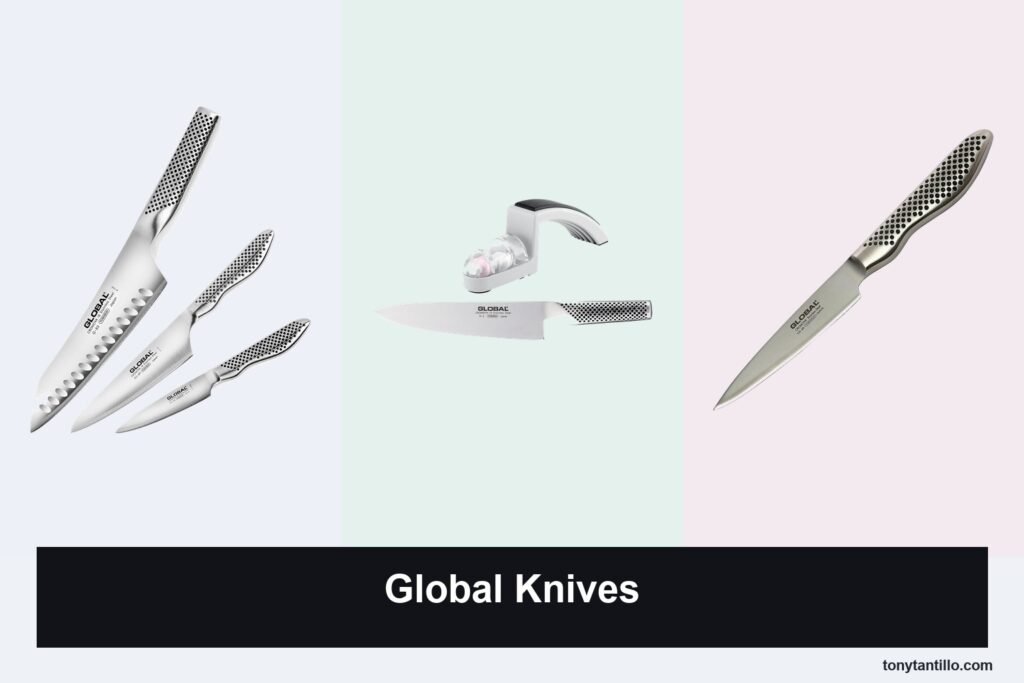
Choosing Global knives is usually about deciding how much of the line you want to commit to at once. The brand’s knives are known for a balanced stainless-steel build, a distinctive straight edge, and a lightweight feel that rewards controlled cutting rather than brute force. That matters because a kitchen knife is not just a sharp tool. It is a daily-use decision about comfort, maintenance, and how easily a blade moves from peeling herbs to slicing proteins to trimming produce.
This roundup focuses on three different entry points into the category. One option covers the basics with a compact three-piece set. Another centers on the brand’s 8-inch chef’s knife and includes a sharpener, which changes the ownership equation for buyers building a first serious setup. The third is a dedicated 4-inch paring knife for detailed prep. Together they show the strengths of the line and the tradeoffs between versatility, maintenance, and precision.
Top Global Knives on the Market

Global 3-Piece Asian Knife Set
Best starter set
- 3.5-inch paring knife
- 5-inch prep knife
- 7-inch hollow edge chef’s knife
- Cromova 18 steel
- Made in Japan

Global G-2 Chef Knife Set
Best for main prep
- 8-inch chef’s knife
- 220/GB sharpener included
- CROMOVA 18 steel
- Rust-resistant build

Global GS-40 Paring Knife
Best for detail work
- 4-inch paring blade
- Seamless construction
- Cromova 18 steel
- Limited lifetime guarantee
Global Knives Reviews
Global 3-Piece Asian Knife Set
ADVANTAGES
LIMITATIONS
This three-piece set is the broadest introduction here because it covers three very different cutting jobs in one purchase. The 3.5-inch paring knife handles small fruit and vegetable work, the 5-inch prep knife bridges the gap between a utility blade and a chef’s knife, and the 7-inch hollow edge Asian chef’s knife brings the set into everyday chopping and slicing. That range matters for a buyer who wants one matched group of knives rather than assembling a drawer piece by piece. The set also uses Cromova 18 steel and a 56-58 Rockwell rating, so the appeal is not only variety but a harder-working edge profile that is intended to stay sharp through regular kitchen use.
The construction details explain why this set feels more serious than a typical starter bundle. The stainless-steel molded handle is dimpled for grip, and the handle is filled with the right amount of sand to balance the knife. That combination points to control during longer prep sessions, especially when the blade is moving repeatedly across a board. The hollow edge on the Asian chef’s knife also helps food release more cleanly, which is useful when sliced vegetables or proteins tend to cling to the blade. Made in Japan, the set adds a lifetime warranty, so the ownership story leans toward long-term use rather than disposable convenience.
Against the other two Global options here, this set is the most complete but also the least specialized. It gives you the widest range of tasks covered immediately, while the chef’s knife and paring knife options concentrate on a single role. That makes this the best choice for a home cook who wants a coordinated core set and does not need to build around separate purchases. It is also the strongest recommendation if you value balance, edge retention, and a compact three-knife lineup that can handle most prep without forcing you to upgrade right away.
Global G-2 Chef Knife Set
ADVANTAGES
LIMITATIONS
This pairing is aimed at buyers who want a single primary knife and a simple way to maintain it. The 8-inch chef’s knife is the workhorse of most kitchens, so it covers the largest share of chopping, slicing, and rocking cuts. Including a sharpener changes the value proposition because it means the knife is not just ready to use, but also paired with the tool that keeps the edge serviceable over time. The blade uses CROMOVA 18 stainless steel, and the knife is carefully weighted for balance, which matters most when the blade is doing repetitive board work and you want steady control rather than tip-heavy fatigue.
The knife’s plain edge and stamped construction point to a straightforward, utilitarian setup. That is useful for buyers who care more about cutting feel and upkeep than about a highly decorative build. The sharpener broadens the practical appeal, especially if this is the first Global knife in a collection or if the goal is to reduce guesswork about maintenance. Because the product weighs 1.4 pounds as a set, it is not featherlight for a knife-and-accessory combination, but the balanced design is meant to offset that in hand. For everyday prep, the result is a setup that favors consistency over novelty.
Compared with the three-piece set, this option is more focused and less versatile. It does not replace a paring knife or a prep knife, but it does concentrate spending on the size most cooks reach for first. Against the standalone paring knife, it is the opposite end of the spectrum. It is the right call for someone who wants a main chef’s knife now and a maintenance path included from day one. If your kitchen needs one serious blade before anything else, this is the most direct recommendation in the group.
Global GS-40 Paring Knife
ADVANTAGES
LIMITATIONS
This paring knife is built for the tasks that are awkward with a larger blade. The 4-inch size suits peeling, trimming, garnish work, and other close-control jobs where a chef’s knife feels clumsy. At 3.2 ounces, it is also notably light, which can reduce hand strain during repetitive detail work. The knife uses Cromova 18 stainless steel and a plain edge, so the emphasis is on a sharp, precise cutting face rather than serration or specialty geometry. For buyers who already own a larger knife, this is the kind of piece that fills a real gap in daily prep.
The GS-40’s seamless construction is especially relevant in a paring knife because small blades often see the messiest jobs. Fewer seams mean easier cleaning and less chance for food to collect around the handle junction. The stainless-steel handle is molded for comfort and dimpled for a safer grip, which matters when you are working close to your fingers. The hollow handle is filled with sand to balance the knife, and that detail is not cosmetic. Small knives can feel twitchy if they are poorly weighted, so balance is one of the main reasons a premium paring knife feels better in use than a cheaper alternative.
Compared with the 8-inch chef’s knife and the three-piece set, this is the most specialized purchase but also the most precise. It does not try to cover a whole kitchen. It tries to do one job cleanly and with confidence. The limited lifetime guarantee also makes sense here because a paring knife often becomes the most frequently reached-for blade when fruit, herbs, and small vegetables need fast handling. Choose this if you already have your main knife covered and want a dedicated precision tool rather than a multi-knife entry point.
How to Choose Global Knives
Buying Global knives is less about chasing a large catalog and more about deciding which role matters most in your kitchen. The line tends to emphasize balance, stainless construction, and sharp edges that suit controlled slicing. That means the right choice depends on whether you need a starter group, a main chef’s knife, or a precision paring blade. Look first at how often you prep on a board, how much sharpening support you want built into the purchase, and whether you value a coordinated set or a single specialized knife.
Knife Type
Start with the job you actually need the knife to do most days. A chef’s knife covers broad prep, a paring knife handles close-up work, and a small set gives you coverage across both. The mistake many buyers make is choosing based on blade prestige instead of task mix. If you chop vegetables every night, the main blade matters most. If you trim fruit, peel, and garnish often, a smaller precision knife earns its place fast. Matching knife type to task is the quickest way to avoid paying for steel you rarely use.
Edge and Maintenance
Edge style affects both cutting feel and upkeep. A straighter, finer edge tends to feel sharper on first use and can reward careful technique, but it also asks for regular maintenance. That is why a sharpening accessory can change the value of a purchase even when the knife itself is the main attraction. Think about whether you want a knife that arrives as a complete maintenance package or whether you already own the tools to keep an edge in shape. Maintenance is part of ownership, not an afterthought.
Balance and Weight
Well-balanced knives feel easier to control, especially during repetitive chopping or detail work. Weight alone does not tell the whole story. A lighter blade can feel nimble, while a slightly heavier knife may feel steadier through dense ingredients. What matters is how the weight is distributed between handle and blade. If the knife feels neutral in the hand, you are less likely to fight the tool during longer prep sessions. Balance becomes even more important when you move from a chef’s knife to a paring knife.
Material and Hygiene
Stainless steel construction is attractive for buyers who want a durable, low-fuss knife surface. It is not just about shine. It can also support easier cleaning and more straightforward day-to-day care than some more reactive materials. Seamless construction adds another practical layer because fewer joints can mean fewer places for debris to gather. For a paring knife or any knife used on fruit and vegetables, that matters. Cleanability should be part of the decision because a kitchen knife spends its life between cutting board and sink.
Set or Single Blade
A set is often the better value when you are building a kitchen from scratch or replacing several weak knives at once. It gives you broader coverage and keeps the tools visually and functionally consistent. A single knife is better when you know exactly what role is missing and you want to invest in one core tool. There is no universal right answer here. The better choice depends on whether you are assembling a collection or upgrading one pressure point in your prep routine.
Global Knives Comparison Table
| Product | Best For | Blade Length | Weight | Construction | Edge Type | Blade Color |
|---|---|---|---|---|---|---|
| Global 3-Piece Asian Knife Set | Best starter set | 8 inches | 1.2 pounds | Forged | Hollow | Stainless Steel |
| Global G-2 Chef Knife Set | Best for main prep | 8 inches | 1.4 pounds | Stamped | Plain | Stainless |
| Global GS-40 Paring Knife | Best for detail work | 4 inches | 3.2 ounces | Stamped | Plain | Stainless Steel |
How We Tested & Analyzed Global Knives
This guide was built around category-level decisions that matter at the point of purchase: blade role, edge style, balance, construction, maintenance support, and how many tasks each knife can realistically cover. The comparison favors practical kitchen consequences over cosmetic details. A blade was treated as stronger evidence when its materials, weight, construction type, or warranty clarified what the buyer can expect during repeated use. That approach keeps the recommendations grounded in ownership value rather than surface impressions.
The product analysis also separated versatility from specialization. A multi-knife set can look appealing on paper, but it was evaluated on whether it truly covers distinct prep needs without forcing immediate upgrades. A chef’s knife was judged on its ability to anchor everyday chopping, while a paring knife was evaluated for precision, balance, and ease of handling in small tasks. That distinction matters because many kitchens do not need more knives. They need the right blade at the right size.
Limitations were weighed as buying factors rather than flaws for their own sake. A single knife is not a complete kitchen solution, and a set is not as focused as a standalone specialist blade. Included maintenance tools were considered a practical benefit because they reduce the friction of ownership. When a product record lacked a detail, that absence was treated conservatively and not filled in with assumptions. The result is a recommendation set built on clear tradeoffs, not invented certainty.
Frequently Asked Questions
Should I buy a knife set or one knife first?
Buy a set when you need coverage for multiple prep jobs and do not already own strong kitchen knives. Choose one knife when you know exactly which task is underserved, such as daily chopping or close-up trimming. The best answer depends on whether your current drawer is missing breadth or depth.
Why does balance matter in a kitchen knife?
Balance changes how a knife feels during repeated cuts. A well-balanced knife is easier to guide and usually feels less tiring during longer prep sessions. That is especially important for chefs’ knives and paring knives, where control matters more than raw size.
What does a sharpener add to a knife purchase?
A sharpener adds maintenance value because the knife and the upkeep tool arrive together. That can be useful for buyers who do not already own sharpening equipment or who want fewer extra purchases before putting the knife to work. It does not replace good technique, but it reduces the barrier to staying sharp.
Are smaller paring knives just backup knives?
No. A paring knife is the better tool for peeling, trimming, garnish work, and other close tasks where a larger blade is awkward. It becomes essential when precision matters more than board coverage. Many kitchens use a paring knife constantly, even if it never handles the headline chopping jobs.
Final Thoughts
Global knives stand out when you care about balance, control, and a clean stainless-steel build. The right choice in this group depends on how much of your kitchen you want to cover at once. A three-piece set gives you the widest spread of tasks. The 8-inch chef’s knife concentrates value in the main workhorse blade. The 4-inch paring knife focuses on precision. Each has a clear role, and that clarity is what makes the category worth considering.
The safest way to choose is to match the knife to the kind of prep you do most often, then decide whether you want a maintenance tool bundled in or a more complete multi-knife solution. If you need a first serious setup, the set is the most rounded option. If you want one anchor knife, the chef’s knife package is the most direct. If you already have a main blade and need detail control, the paring knife is the sharpest specialist pick.