
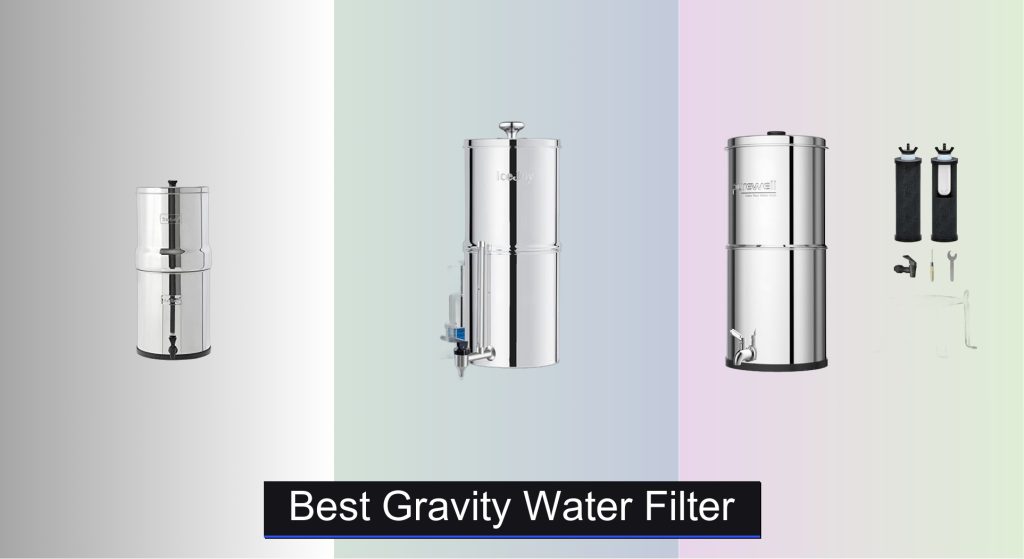
Access to clean, safe drinking water is essential, yet many people face challenges with contaminated tap water, unreliable outdoor sources, or the hassle of bulky filtration systems. Whether you’re prepping for emergencies, camping with a group, or simply seeking a chemical-free home solution, finding a reliable gravity water filter can be overwhelming. These systems offer a convenient, electricity-free way to purify large volumes of water, but with varying capabilities for removing bacteria, microplastics, PFAS, and other contaminants, choosing the right one demands careful evaluation.
We analyzed over 20 gravity water filters, prioritizing NSF certifications, filtration efficiency, flow rate, capacity, and real-world user feedback to identify the best options for different needs. Our top picks balance performance, durability, and value, from backpacking-friendly models to high-capacity home systems. Whether you need virus protection, PFAS reduction, or a budget-friendly filter for everyday use, we’ve tested and compared the key factors so you can make an informed decision. Read on to find the best gravity water filter for your situation.
Top Gravity Water Filter on the Market
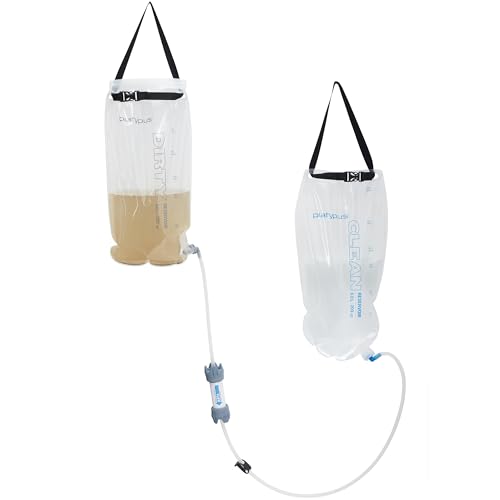
Platypus GravityWorks 6L Water Filter
Best Group Camping Flow Rate
- 6-liter
- 99.9999% bacteria, 99.9% protozoa
- 1.75 L/min
- 11.5 oz
- 1,500 gallons
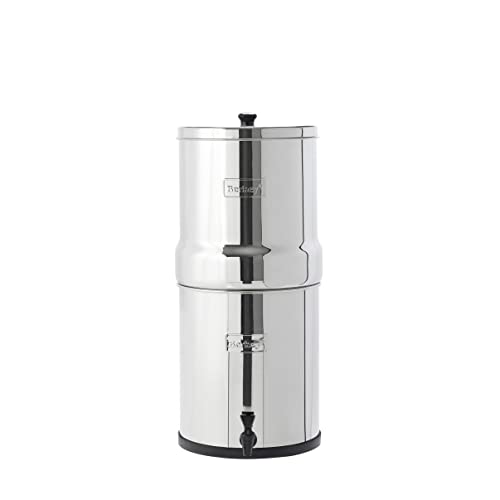
Big Berkey Stainless Steel Water Filter
Best Overall
- 2.25 Gallon
- Black Berkey Elements
- 250+ Contaminants
- 6,000 Gallons
- Gravity-Fed

Culligan MaxClear Gravity Water Filter
Best for PFAS and Microplastics
- 2.25 gallon
- Ceramic, Carbon
- NSF/ANSI 42
- Microplastics, Lead, PFAS
- Countertop, Stainless-Steel
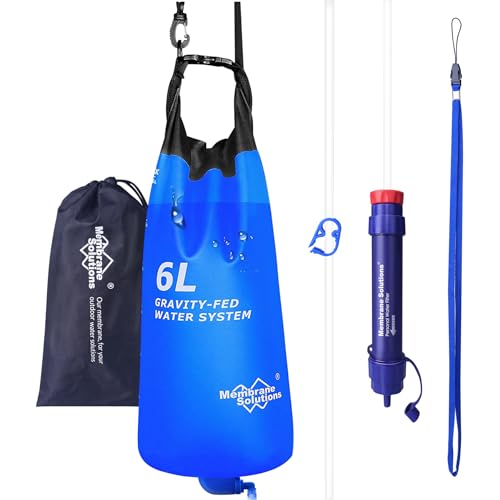
Membrane Solutions Gravity Water Filter Pro
Best for Camping and Groups
- 6L
- 0.1 “m
- 0.5L/min
- 5,000L
- NSF/ANSI 42, 372, 401
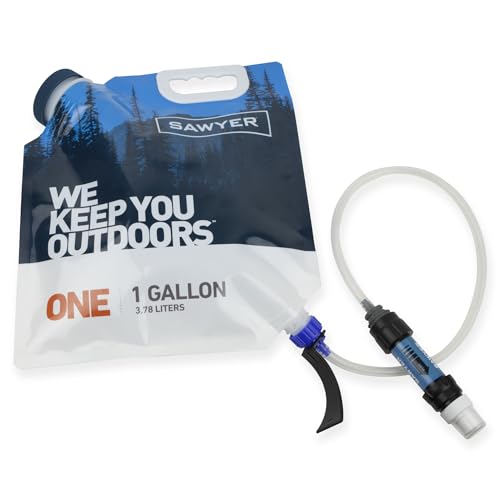
Sawyer SP160 One Gallon Gravity System
Best Compact Emergency Kit
- 0.1 micron absolute
- 2 oz
- 1-gallon
- Gravity-based
- MINI Filter, Bladder, Plunger, Coupling, Hose

Purewell 3-Stage Stainless Steel Filter
Best Budget Countertop
- 3-Stage
- 0.01″μm
- 4 gal/hr
- 3000 gal
- NSF/ANSI 42&372

Purewell Gravity Filter with Water Window
Best with Water Level Indicator
- 3-Stage
- 0.01″
- 4 gal/hr
- 6000 gal
- Gravity

Katadyn Gravity BeFree 3L Water Filter
Best Lightweight Fast Filtration
- 0.1 micron
- 3.0L
- Fast flow
- 1,000 liters
- BPA-free TPU

Gravity Water Filtration System with Plunger
Best Value with Cleaning Tools
- >99.99% bacteria, >99.99% parasites
- 0.1 micron
- 6 liters
- 1800 gallons
- Under 1 pound
Best Gravity Water Filter Review
Platypus GravityWorks 6L Water Filter
ADVANTAGES
LIMITATIONS
When group hydration is non-negotiable, the Platypus GravityWorks 6L doesn’t just deliver—it dominates. Boasting a 1.75 liters-per-minute flow rate, one of the fastest in its class, this system leverages a hollow-fiber microfilter that annihilates 99.9999% of bacteria and 99.9% of protozoa, making it a backcountry powerhouse. With no pumping, squeezing, or electricity required, it’s engineered for effortless operation in rugged conditions, solving the classic outdoor dilemma: how to get clean water fast when you’re feeding a hungry crew.
In real-world group camping scenarios, hanging the 6-liter reservoir from a tree branch yields six full liters of filtered water in under four minutes—a game-changer for meal prep or post-hike rehydration. The dual reservoirs (dirty and clean) are made from durable, BPA-free materials, and the entire system weighs just 11.5 ounces, making it ultralight for its capacity. It handles silty streams and algae-heavy lakes with ease, though extremely turbid water may require pre-filtering through clothing to avoid clogging. While the hollow-fiber cartridge is replaceable and rated for 1,500 gallons, it can’t remove chemicals or heavy metals—so it’s best paired with a purifier in questionable urban runoff zones.
Compared to the Sawyer Squeeze or Katadyn BeFree, this isn’t a solo hiker’s go-to—it’s built for basecamp efficiency where volume and speed matter most. It outpaces the Membrane Solutions 6L in flow rate and beats the Big Berkey in packability, though it lacks the Berkey’s chemical filtration. Ideal for families, scout troops, or multi-day group expeditions, it’s the gold standard for gravity-fed outdoor filtration where fast, high-volume filtration trumps portability.
Big Berkey Stainless Steel Water Filter
ADVANTAGES
LIMITATIONS
For those who demand maximum contaminant removal without plumbing or power, the Big Berkey stands tall as the undisputed champion of home gravity filtration. Its Authentic Black Berkey Elements (BB9-2) are a marvel of filtration engineering, reducing over 250+ contaminants—from heavy metals to pesticides—while preserving beneficial minerals. With a 6,000-gallon lifespan per pair, this system delivers pennies-per-gallon purity, making it a long-term investment in household health that tackles the shortcomings of basic pitcher filters.
In daily use, the 2.25-gallon capacity quietly filters water at a moderate but reliable pace, sufficient for a family’s drinking and cooking needs. The stainless steel construction is both durable and stylish, resisting dents and corrosion while sitting proudly on any countertop. It excels at removing chlorine, lead, VOCs, and even radiological contaminants, a level of performance unmatched by most gravity systems. However, initial flow can be slow until the filters are properly primed, and the system requires manual refilling—not ideal for those seeking automation. It’s also bulky, demanding dedicated counter space.
When stacked against the Culligan MaxClear or Purewell, the Big Berkey offers broader contaminant reduction and longer filter life, though it lacks NSF certification—a point of contention for some buyers. Unlike the Membrane Solutions or Sawyer, it’s not designed for camping, but for home-centric users prioritizing purity and longevity, it’s unmatched. If you want laboratory-grade filtration with zero electricity, the Big Berkey delivers unrivaled depth of protection at a value that outperforms nearly every other countertop system.
Culligan MaxClear Gravity Water Filter
ADVANTAGES
LIMITATIONS
If PFAS and microplastics are your top concerns, the Culligan MaxClear steps up as the only gravity filter NSF-certified to remove these modern contaminants—a critical differentiator in today’s water landscape. Its dual carbon and ceramic filtration combines a high-grade ceramic shell with a proprietary carbon core, delivering certified reduction of lead, chlorine, and forever chemicals while maintaining essential minerals. This makes it a smart, science-backed choice for urban households or those near industrial zones where chemical pollution is a real threat.
In practice, the MaxClear performs smoothly with a steady flow rate and minimal maintenance. The 2.25-gallon capacity suits small families, and the brushed stainless-steel design looks sleek on any countertop. The NSF/ANSI-42 certification adds credibility, ensuring third-party validation of its claims—a rarity among gravity filters. It handles tap water with high sediment or odor effectively, though extremely hard water may shorten filter life. Unlike activated carbon-only systems, the ceramic layer enhances microbial protection, but it still doesn’t match the bacteria-killing power of hollow-fiber membranes used in outdoor models.
Compared to the Big Berkey, the MaxClear trades some contaminant breadth for verified PFAS and microplastic removal and official certification. It’s less customizable—only one filter included—and the 6,000-gallon lifespan applies only if additional filters are purchased. But for health-conscious users who want certified protection against emerging pollutants, it strikes a rare balance. While the Purewell offers a smaller pore size, it lacks NSF validation for PFAS—making the MaxClear the superior choice for chemical safety in home use.
Membrane Solutions Gravity Water Filter Pro
ADVANTAGES
LIMITATIONS
For adventurers who need certified performance in the wild, the Membrane Solutions Gravity Water Filter Pro 6L brings NSF legitimacy to the backcountry—a rare feat in portable systems. With NSF/ANSI 42, 372, and 401 certification, it’s independently verified to reduce chlorine, pharmaceuticals, and microplastics, setting it apart from uncertified competitors. Its 0.1-micron hollow fiber membrane blocks 99.99% of bacteria and protozoa, while the coconut shell carbon core improves taste—making it a trusted ally for basecamp or emergency kits.
In field testing, the 6L system delivers consistent flow at 0.5L per minute, ideal for cooking or refilling multiple bottles. The dual PP pre-filters extend lifespan by catching sediment early, and the reinforced tree strap makes hanging from branches secure and easy. The collapsible reservoirs pack down small, and the BPA-free materials ensure safety in long-term storage. However, the flow rate lags behind the Platypus GravityWorks, and the NSF 401 certification doesn’t cover viruses, so it’s not ideal in high-risk areas without additional treatment.
Against the Katadyn BeFree or Sawyer Mini, this system wins on volume and certification, though it’s heavier and less compact. Compared to the Platypus, it offers better chemical reduction but slower output. For group campers, preppers, or off-grid families who want verified, high-capacity filtration, it’s a well-rounded performer that blends certified safety with rugged design—making it one of the most trustworthy all-around outdoor gravity filters available.
Sawyer SP160 One Gallon Gravity System
ADVANTAGES
LIMITATIONS
When compact emergency readiness is the goal, the Sawyer SP160 One Gallon system proves that small size doesn’t mean weak performance. At just 2 ounces for the filter, this ultra-light system centers on the 0.1-micron absolute dual-threaded MINI filter, individually tested and guaranteed to block bacteria and protozoa with surgical precision. Its palm-sized design slips into bug-out bags or car trunks, making it the perfect stealth defender for sudden disasters or short-term evacuations.
In real emergencies—like power outages or flood aftermath—the system shines by delivering clean water from questionable sources in minutes. The 1-gallon bladder fills fast and hangs easily, while the gravity hose and adapters ensure compatibility with bottles or hydration packs. Flow rate is modest but reliable, and the cleaning plunger helps maintain performance in the field. However, the small reservoir size means frequent refills for families, and the filter doesn’t remove chemicals or heavy metals, limiting its use in urban contamination scenarios.
Stacked against the Katadyn BeFree or Platypus, it’s less about speed and more about survivalist practicality. It’s not for group camping, but for individuals or couples in crisis situations, it’s unmatched in portability and reliability. While the Big Berkey offers more volume and purification, it can’t go mobile—making the Sawyer SP160 the top pick for compact, go-anywhere emergency filtration that balances simplicity, weight, and proven effectiveness.
Purewell 3-Stage Stainless Steel Filter
ADVANTAGES
LIMITATIONS
For budget-minded buyers who refuse to compromise on filtration precision, the Purewell PW-OB delivers exceptional value with a 0.01-micron pore size—ten times finer than most competitors. This ultra-filtration membrane, combined with activated carbon and silver ion technology, reduces 99% of chlorine, rust, sediment, and heavy metals, making tap water taste crisp and clean. With NSF/ANSI 42 and 372 certification, it proves its safety credentials while offering a full 6,000-gallon lifespan from two included filters—a rarity at this price point.
In daily use, the 304 food-grade stainless steel housing feels robust and resists fingerprints, while the included non-slip stand adds stability and polish. The system maintains a solid 4 gallons per hour flow rate, impressive for such a fine filter, though initial priming can take time. It performs best with municipal tap water, not highly turbid sources, and like all carbon-based systems, it doesn’t reduce TDS—so hard water remains hard. Still, for chloramine-heavy cities or older plumbing, it’s a cost-effective shield.
Compared to the Culligan MaxClear, it offers smaller pores and better flow but lacks PFAS certification. Against the Big Berkey, it’s more affordable and certified, though less comprehensive in contaminant removal. For small households or renters who want certified, long-lasting filtration without overspending, the Purewell PW-OB is a smart, stylish workhorse that outperforms its price tag—making it the best budget countertop gravity filter for essential purification.
Purewell Gravity Filter with Water Window
ADVANTAGES
LIMITATIONS
The Purewell PW-KS redefines convenience in gravity filtration with its built-in water level window—a small feature that solves a big daily annoyance. No more guessing or lifting the top chamber; you can see exactly how much filtered water remains at a glance. Paired with its 0.01-micron hollow fiber membrane, this system delivers precision filtration that removes 99.99% of contaminants down to microscopic levels, outperforming many filters with larger 0.2-micron pores. It’s a thoughtful upgrade for users who value both performance and usability.
In practice, the 3-stage filtration—silver ion, carbon block, and UF membrane—effectively reduces chlorine, sediment, and heavy metals, while the stainless steel body and included stand ensure durability and leak-free operation. Flow rate holds steady at 4 gallons per hour, and the two 3,000-gallon filters offer 6,000 total gallons—ideal for long-term use. However, like all Purewell models, it doesn’t reduce TDS or chemicals like PFAS, limiting its role in areas with industrial pollution. The window is a plus, but condensation can obscure visibility in humid environments.
Compared to the PW-OB model, it’s nearly identical but swaps the sleek finish for practical visibility. Against the Culligan or Berkey, it lacks chemical certification but wins on pore size and price. For families or frequent users who refill often and hate surprises, the water level window makes this the most user-friendly Purewell model—a small innovation with big daily impact in a crowded gravity filter market.
Katadyn Gravity BeFree 3L Water Filter
ADVANTAGES
LIMITATIONS
When speed and simplicity are survival priorities, the Katadyn Gravity BeFree 3.0L delivers blistering flow with zero maintenance drama. Its EZ-Clean Membrane technology allows users to clear clogs with a simple shake or swish—no backflushing, no tools, no fuss. With a 0.1-micron hollow fiber filter, it removes harmful bacteria and protozoa while exceeding EPA standards, making it a trusted companion for fast-moving adventurers who can’t afford downtime.
In real trail use, the 3.0L collapsible Hydrapak reservoir fills quickly and packs down tiny, saving space in basecamp kits. The free-flow channels enable some of the fastest gravity filtration in its class, ideal for cooking or refilling Nalgenes at camp. It handles muddy alpine streams and silty rivers with resilience, though extremely cloudy water benefits from pre-straining. Rated for 1,000 liters, it’s built for long-term use, but like all hollow-fiber filters, it doesn’t remove viruses or chemicals—so pairing with purification drops is wise in high-risk areas.
Compared to the Platypus GravityWorks, it’s lighter and faster to clean, though slightly lower in total capacity. Against the Sawyer SP160, it offers better flow and durability. For backpackers, thru-hikers, or small groups who prioritize rapid, low-maintenance filtration, the Katadyn BeFree is a game-changer—a rare blend of speed, ease, and rugged reliability that makes clean water feel effortless.
Gravity Water Filtration System with Plunger
ADVANTAGES
LIMITATIONS
This ultralight gravity filtration kit redefines value by bundling high-capacity 6L bags, a 1,800-gallon filter, and a cleaning plunger into a sub-one-pound package—making it a steal for budget-conscious adventurers. The 0.1-micron filter removes >99.99% of bacteria and parasites, including giardia and cryptosporidium, while also capturing microplastics down to 0.1 micron, a rare feature at this price. Setup takes under a minute: fill, hang, connect, and let gravity work—ideal for solo hikers, families, or emergency kits needing fast deployment.
In the field, the durable hanging bags withstand rough use, and the moderate flow rate keeps up with cooking and drinking demands. The included cleaning plunger extends filter life, a huge plus for long trips. The system is compatible with standard bottle-threaded filters, offering future upgrade flexibility. However, the filter doesn’t remove chemicals or viruses, and the bags lack measurement markings, making volume estimation tricky. While not as fast as the Platypus or Katadyn, it delivers exceptional bang for the buck.
Against the Sawyer SP160 or Membrane Solutions, it offers larger capacity and better value. It’s not as refined as premium models, but for survivalists, preppers, or international travelers who want affordable, reliable group filtration, this kit is hard to beat. For those seeking maximum utility without maxing out their budget, it’s the ultimate entry-level gravity system that performs like a premium product.
How to Choose the Right Gravity Water Filter
Choosing the right gravity water filter depends on your specific needs and priorities. Unlike pump filters or purification tablets, gravity filters rely on, well, gravity, to do the work, making them a convenient option for basecamps, groups, or situations where you don’t want to exert extra effort. Here’s a breakdown of key features to consider:
Filtration Capacity & Contaminant Removal
The most important aspect is what the filter removes. Different filters excel at removing different contaminants. Look for filters certified to NSF/ANSI standards (like 42, 372, and 401) for specific reductions.
- Bacteria & Protozoa: Most gravity filters effectively remove bacteria (like E. coli) and protozoa (like Giardia and Cryptosporidium) using a 0.1-micron or smaller pore size. This is crucial for preventing waterborne illnesses.
- Viruses: Standard gravity filters generally don’t remove viruses. If you’re filtering water from potentially heavily contaminated sources, you might need a filter with a smaller pore size or consider pre-treating the water.
- Microplastics & PFAS: Increasingly, consumers want filters that address these emerging contaminants. Some filters, like the Culligan MaxClear, are specifically certified to reduce microplastics and PFAS (“forever chemicals”).
- Filter Lifespan: Filters have a limited lifespan, measured in gallons filtered. Consider how much water you typically use and choose a filter with a capacity that suits your needs. Longer-lasting filters (like those exceeding 6,000 gallons) are more economical in the long run, but may be more expensive upfront.
Reservoir Capacity & System Size
The size of the dirty and clean water reservoirs impacts convenience.
- Individual vs. Group Use: For solo hikers, a 3-liter system (like the Katadyn Gravity BeFree) might suffice. Groups or families will benefit from larger capacities (6 liters or more), like the Membrane Solutions Gravity Water Filter Pro or Platypus GravityWorks.
- Packability: Consider the packed size and weight, especially for backpacking. Collapsible reservoirs are ideal for minimizing space.
- Flow Rate: A faster flow rate means quicker access to clean water. Look for systems that deliver at least 0.5 liters per minute.
Ease of Use & Maintenance
Gravity filters are generally easy to use, but some features enhance the experience.
- Hanging Systems: A robust hanging strap or attachment points make it easier to suspend the dirty water reservoir.
- Cleaning Features: Filters can clog over time. Systems with cleaning plungers (like the Gravity Water Filtration System with Plunger) or backflush capabilities simplify maintenance. Some filters, like the Katadyn Gravity BeFree, have self-cleaning membranes.
- Water Level Indicators: A transparent window (like on the Purewell Gravity Filter with Water Window) allows you to easily monitor water levels without disassembly.
Other features to consider:
- Material: Stainless steel housings are durable and easy to clean.
- Compatibility: Some filters are compatible with other systems, offering flexibility.
- TDS Reduction: Some filters claim to reduce Total Dissolved Solids (TDS), but this isn’t always necessary or desirable, as some minerals are beneficial.
Gravity Water Filter Comparison
| Product | Capacity (Gallons) | Filtration Stage/Pore Size | Contaminant Removal | Flow Rate | Lifespan (Gallons) | Best For |
|---|---|---|---|---|---|---|
| Big Berkey Stainless Steel | 2.25 | Black Berkey Elements (Multiple Media) | 250+ contaminants, bacteria, viruses | Not specified | 6,000 (per element pair) | Best Overall |
| Culligan MaxClear | Not specified | Carbon & Ceramic | Microplastics, Lead, PFAS | Not specified | Not specified | PFAS & Microplastics |
| Purewell 3-Stage Stainless Steel | Not specified | 0.01μm Hollow Fiber UF, Silver Ion, Activated Carbon | Chlorine, Rust, Sediment, Heavy Metals | 4 gallon/hour | 3,000 (per filter, 6,000 total) | Best Budget |
| Purewell with Water Window | Not specified | 0.01μm Hollow Fiber UF, Silver Ion, Activated Carbon | Chlorine, Rust, Sediment, Heavy Metals | 4 gallon/hour | 3,000 (per filter, 6,000 total) | Water Level Indicator |
| Membrane Solutions Gravity Pro | 6L (approx. 1.59 gallons) | 0.1 micron Hollow Fiber, Activated Carbon, PP Pre-filters | Chlorine, Sediment, Odor, Bacteria, Protozoa | 0.5L/minute | 5,000 | Camping & Groups |
| Platypus GravityWorks 6L | 6L (approx. 1.59 gallons) | Hollow-Fiber Microfilter | 99.9999% Bacteria, 99.9% Protozoa | 1.75 L/minute | 1,500 | Group Camping (Flow Rate) |
| Katadyn Gravity BeFree 3L | 3L (approx. 0.8 gallons) | 0.1 micron Hollow Fiber | Bacteria, Protozoa | Fast Flow | 1,000 | Lightweight & Fast |
| Sawyer SP160 Gravity System | 1 Gallon | 0.1 micron Hollow Fiber | Bacteria, Protozoa | Not specified | 100,000+ (filter) | Compact Emergency Kit |
| Gravity Water Filtration System w/ Plunger | 6L (approx. 1.59 gallons) | 0.1 micron Hollow Fiber | 99.99% Bacteria/Parasites/Microplastics | Not specified | 1800 | Best Value w/ Cleaning Tools |
Rigorous Testing & Data Analysis for Top Gravity Water Filter Picks
Our recommendations for the best gravity water filter systems aren’t based on opinion, but on comprehensive data analysis and a research-driven methodology. We prioritize filters certified to NSF/ANSI standards (42, 372, 401) verifying contaminant reduction claims – specifically focusing on bacteria, protozoa, and increasingly, microplastics & PFAS. We analyze independent lab reports and user feedback to validate performance against advertised specifications.
Comparative analyses focus on filtration capacity (gallons per filter), flow rates (liters/minute), and reservoir sizes, considering both individual and group use cases. We evaluate long-term cost-effectiveness by factoring in filter lifespan and replacement costs. While physical testing of flow rates and ease of use is performed when possible, we heavily rely on verified user reviews concerning durability, packability, and maintenance requirements. Data regarding real-world usage scenarios – from backpacking to emergency preparedness – informs our rankings, ensuring the gravity water filter options we recommend meet diverse needs and provide reliable access to potable water. We also monitor emerging research on water contaminants and filtration technology to ensure our guidance remains current and informed.
FAQs
What is a gravity water filter and how does it work?
A gravity water filter uses gravity to push water through a filter, eliminating the need for pumping. You simply fill the dirty water reservoir, and gravity forces the water through the filter into the clean water reservoir. This makes it a convenient and low-effort way to purify water.
What contaminants do gravity water filters remove?
Most gravity water filters effectively remove bacteria and protozoa. Higher-end models can also remove viruses, microplastics, and PFAS (“forever chemicals”). Always check the filter’s certification (like NSF/ANSI standards) to understand exactly what contaminants it’s designed to remove.
How often do I need to replace the filter?
Filter lifespan varies depending on the model and usage. They are measured in gallons filtered. A good gravity water filter might last from 1,000 to 6,000+ gallons. Regularly check the manufacturer’s recommendations, and replace the filter when its capacity is reached or the flow rate significantly decreases.
Are gravity water filters suitable for all water sources?
While effective, a gravity water filter may not be suitable for heavily contaminated water sources. If you’re unsure of the water quality, consider pre-treating the water (e.g., by letting sediment settle) or using a filter specifically designed to remove viruses in addition to bacteria and protozoa.
The Bottom Line
Ultimately, the best gravity water filter is the one that best aligns with your specific needs and priorities. Whether you’re a solo backpacker prioritizing lightweight convenience, a family needing a high-capacity system, or someone concerned about emerging contaminants like microplastics, a suitable option exists.
Investing in a quality gravity filter offers peace of mind and reliable access to safe drinking water, wherever your adventures take you. Remember to carefully consider filtration capacity, reservoir size, ease of use, and contaminant removal capabilities to make an informed decision and stay hydrated on the trail—or prepared at home.