
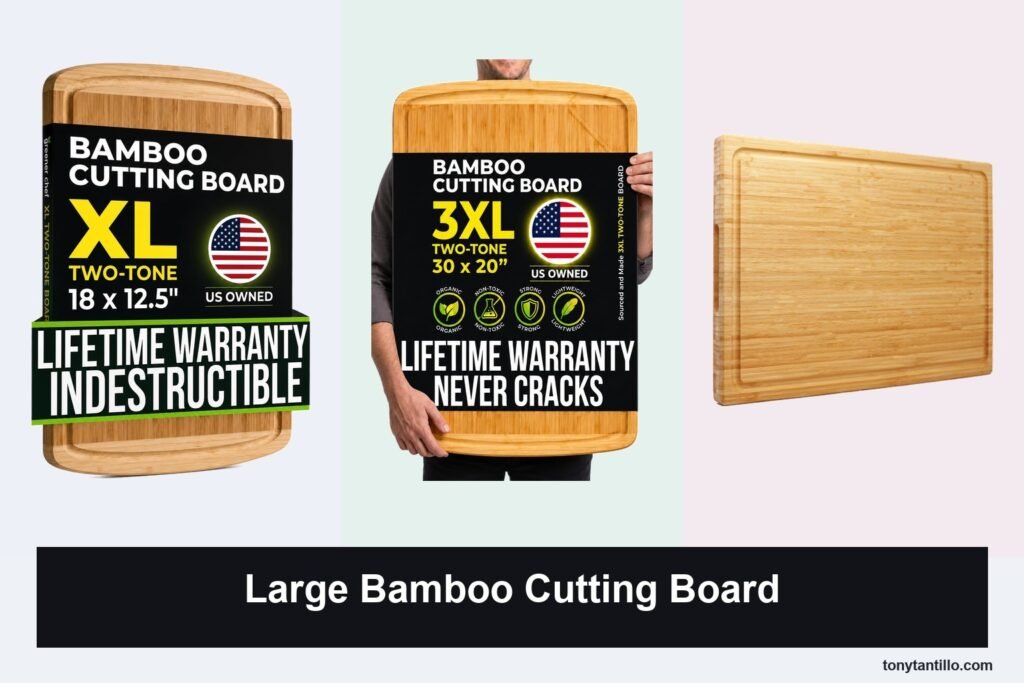
A large bamboo cutting board has to do more than look good on the counter. It needs enough surface area for real prep work, enough mass to stay useful, and enough care features to survive repeated washing and daily knife contact without becoming a hassle. For buyers replacing a cramped board or looking for a serving surface that can also handle carving, the differences between oversized bamboo boards are practical, not cosmetic.
The strongest options in this category balance size, thickness, weight, juice control, and handling features in different ways. Some prioritize a broad work zone for roasts and vegetables. Others lean toward lighter everyday use or dual-purpose serving. The best choice depends on how much counter space you have, whether you carve messy meats, and how often you want to move the board from prep area to table.
Top Large Bamboo Cutting Board on the Market

Greener Chef 18-Inch Bamboo Board
Best Everyday XL Board
- 18 x 12.5-inch surface
- 0.6-inch thin profile
- Juice groove on one side
- Reversible design
- FSC-certified Moso bamboo

Greener Chef 30 x 20 Board
Best For Carving
- 30 x 20-inch surface
- 0.75-inch thick board
- Corner juice reservoir
- Built-in handle
- Lifetime replacements
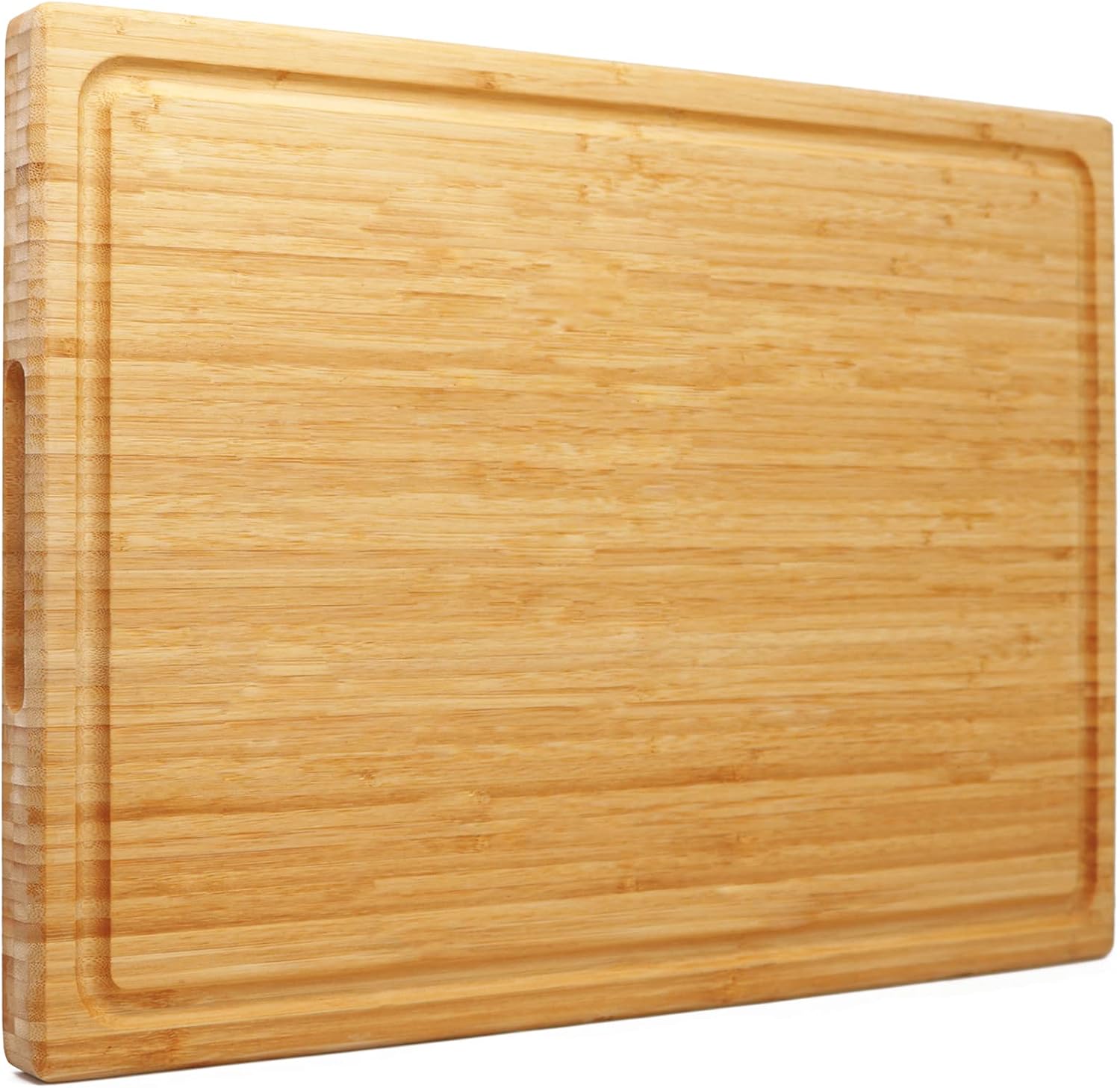
Utoplike 24 x 16 Bamboo Board
Best Thick Bamboo Board
- 24 x 16-inch surface
- 1.25-inch thick board
- Double-side juice grooves
- Hidden side handles
- 1-year manufacturer warranty

Empune 17.6-Inch Bamboo Board
Best Budget Pick
- 17.6 x 12-inch size
- Built-in juice groove
- Side handles
- 16-ounce weight
- Hand-wash care

Empune 20-Inch Bamboo Board
Best Value XL Board
- 20 x 14-inch size
- 0.71-inch thickness
- Built-in juice groove
- Built-in side handles
- 4.6-pound weight
Large Bamboo Cutting Board Reviews
Greener Chef 18-Inch Bamboo Board
ADVANTAGES
LIMITATIONS
This Greener Chef board makes the most sense for buyers who want a genuinely large prep surface without moving into butcher-block territory. The 18 x 12.5-inch footprint gives enough room for vegetables, bread, fruit, and smaller roasts without constant pileup at the edges. Its reversible layout matters because one side includes a juice groove while the other stays flat. That split use makes it easier to switch between carving and dry prep on the same board.
The thin 0.6-inch profile and 3.5-pound weight keep it easy to lift, rinse, and store. That lighter build also means it is less of a permanent counter fixture than thicker boards, which helps in smaller kitchens. Care is straightforward but not optional. It calls for hand washing, air drying, and periodic oiling. The practical tradeoff is clear: you get easier handling and a friendlier everyday size, but you do not get the dense heft of a heavy carving block.
Against the larger boards in this roundup, this one is the most approachable for routine use. It is not the right pick if you regularly break down large turkeys or briskets, and it is smaller than the oversized premium options. But that is exactly why many buyers will prefer it. The balance of size, low weight, reversible use, and lifetime replacement coverage makes it the most sensible all-around choice for a busy kitchen. I would recommend it as the best everyday XL board.
Greener Chef 30 x 20 Board
ADVANTAGES
LIMITATIONS
This is the board for cooks who repeatedly run out of space on standard cutting surfaces. The 30 x 20-inch size is large enough to manage brisket trimming, turkey carving, and heavy vegetable prep without forcing ingredients off the edge. The corner juice reservoir with pour spout is especially useful for carving jobs because it helps contain runoff and makes cleanup less awkward. The built-in handle also matters here because a board this large needs a practical way to move.
The 0.75-inch thickness and 11-pound weight give it a very different feel from lighter bamboo boards. It is still called lightweight in the marketing language, but in practice this is a substantial work surface, not a quick-grab prep board. That extra mass helps it stay planted during messy jobs. It can also bridge over a stove, sink, or toaster oven, which effectively expands usable counter space. The care routine remains simple, with hand washing and regular oiling.
Compared with the other boards here, this one is the clear specialist. It is bigger than anything else in the group and more suited to serious carving or serving than to casual daily chopping. If your main problem is board crowding during large meals, this is the most decisive solution. It is not the easiest option to store, and it is overkill for compact kitchens. For anyone who wants maximum surface area and a carving-focused layout, it is the strongest pick.
Utoplike 24 x 16 Bamboo Board
ADVANTAGES
LIMITATIONS
The Utoplike board sits in the middle of the category in a way that will appeal to buyers who want a larger, sturdier work surface without going all the way up to a massive serving block. At 24 x 16 inches, it is large enough for meat, fish, fruit, vegetables, and bread. The 1.25-inch thickness is the standout here because it changes the whole feel of the board. It is not just a prep mat. It reads more like a serious kitchen block with better stability.
Double-side juice grooves are a meaningful detail for wet ingredients. They help contain liquid on either face, so you do not have to keep track of which side is the carving side. Hidden side handles add another layer of convenience because they make the board easier to lift and repurpose as a tray. The bamboo material is also presented as resistant to stains and odors, and hand washing with monthly oil treatment is the recommended maintenance path. That is a reasonable upkeep load for a thicker bamboo board.
This model is the best match for buyers who want a thicker board than the lighter everyday options but do not need the sheer footprint of the 30 x 20-inch board. It is heavier than the slim 18-inch board and more substantial in hand, yet still more versatile than a giant carving slab. The one-year manufacturer warranty is modest next to lifetime replacement coverage elsewhere, but the board itself has a strong physical argument. I would choose it for buyers prioritizing thickness, stability, and dual-sided juice control.
Empune 17.6-Inch Bamboo Board
ADVANTAGES
LIMITATIONS
This Empune board is aimed at buyers who want a bamboo cutting board that stays light, simple, and inexpensive enough to use every day without much hesitation. The 17.6 x 12-inch size is still roomy for kitchen basics such as vegetables, bread, cheese, and smaller meat prep. A built-in juice groove adds the kind of spill control that many bargain boards skip, so you are not giving up a useful feature just because the price is low. The side handles also extend its usefulness beyond cutting.
At 16 ounces, this is dramatically easier to carry than the heavier oversized boards in the group. That makes a difference if you want a board you can move to the sink, serve from, or store in a tight cabinet. The tradeoff is obvious. Light weight is convenient, but it usually means less planted feel than thicker blocks. Hand wash care and monthly oiling keep it in the normal bamboo maintenance lane, and the board’s appeal is strongest when low strain matters more than maximum heft.
Compared with the thicker and larger premium boards here, this one is the simplest answer for a kitchen that needs a functional board without a large commitment. It will not replace a butcher-block-style surface for major carving jobs, and it is not the most substantial-feeling option. Still, for everyday cutting and occasional serving, it is the most affordable path into a large bamboo board. That makes it the best budget pick for practical users who value size and convenience over prestige.
Empune 20-Inch Bamboo Board
ADVANTAGES
LIMITATIONS
This Empune 20-inch board sits between the compact budget option and the much larger premium boards, which is exactly why it has broad appeal. The 20 x 14-inch surface gives you more workable room than a standard prep board without demanding the storage space of a giant butcher block. The bamboo construction keeps it in the familiar knife-friendly bamboo category, and the built-in juice groove gives it a practical edge for meat, fruit, and anything that leaks while you cut.
The 0.71-inch thickness and 4.6-pound weight put this board in a useful middle ground. It feels more anchored than the lightest option here, but it is still manageable to lift and clean without much effort. Side handles matter more at this size than many buyers expect because they improve grip when the board is wet or loaded. Hand washing is the required care routine, so the maintenance burden remains low as long as you accept that bamboo boards need occasional oil treatment.
Compared with the 17.6-inch Empune board, this one gives you more usable area and a sturdier feel for a modest price increase. Compared with the oversized premium boards, it is easier to store and far less expensive. That makes it the sweet spot for many households. If you want a larger bamboo board that feels like a real step up without becoming unwieldy, this is the most balanced option in the lineup. I would choose it as the best value XL board.
How to Choose a Large Bamboo Cutting Board
The right large bamboo board depends on how you cook, how much space you have, and whether you want a true prep platform or a board that also serves at the table. Bamboo is popular because it stays relatively light for its size and can be easier to maintain than many hardwood alternatives, but the category still varies widely in thickness, handling, and spill control. Focus on the board’s footprint first, then weigh how much mass you want, because those two factors shape almost every other decision.
Size and Work Area
Start with the kind of prep you actually do. A board that is large enough for vegetables and bread can still feel cramped when you are trimming meat or carving a roast. Bigger surfaces reduce the need to transfer chopped ingredients into bowls as often, which keeps the workflow smoother and the counter cleaner. If you cook family meals or entertain often, a larger board usually feels more efficient because it creates a real staging area instead of a narrow cutting strip.
Thickness and Stability
Thickness changes how the board behaves under a knife and when you carry it to the sink. A thinner board is easier to store and move, but it can feel less anchored during heavier prep. A thicker board usually feels more substantial and can be more reassuring for carving, though it takes up more cabinet space and weighs more. Choose thickness based on whether you value quick handling or a more planted work surface.
Juice Control
If you cut meat, tomatoes, citrus, or juicy fruit, juice management should matter as much as size. A groove around the edge helps contain liquid and reduces the chance of runoff reaching the counter. Some boards use a groove on only one side, while others route both sides for flexibility. A dedicated juice feature is especially valuable if you carve at the table or prep in a tight kitchen where mess spreads quickly.
Weight and Handling
Weight is not just a transport issue. It also affects how easy the board is to rotate, rinse, and store after use. Very light boards are convenient if you move them often or have limited wrist strength. Heavier boards can feel steadier while cutting, but they demand more effort every time you lift them. Think about the full routine, not just chopping. If a board is too heavy to clean comfortably, you may end up using it less often.
Care and Maintenance
Bamboo boards usually need hand washing, prompt drying, and occasional oiling. That routine matters because excess moisture can shorten the board’s useful life, and dry bamboo can look dull or rough over time. If you want a low-fuss kitchen tool, look for a board you will actually be willing to maintain. The best board is not the one with the most claims. It is the one you can keep in good condition without resenting the upkeep.
Dual Use and Storage
Many large bamboo boards double as serving trays or presentation boards, and that flexibility is worth considering if you host regularly. Handles make it easier to carry a loaded board, while a reversible surface can separate wet and dry tasks. Storage matters too, because an oversized board can be awkward in smaller kitchens. Measure the cabinet, not just the counter, before you buy. A board that fits your space is always more practical than one that merely looks impressive.
Large Board Comparison Table
| Product | Best For | Size | Weight | Material | Warranty | Color |
|---|---|---|---|---|---|---|
| Greener Chef 18-Inch Bamboo Board | Best Everyday XL Board | 18″L x 12.5″W | 3 pounds | Bamboo | Lifetime | Two-Tone |
| Greener Chef 30 x 20 Board | Best For Carving | 30″L x 20″W | 11 pounds | Bamboo Wood | Lifetime | Two-Tone |
| Utoplike 24 x 16 Bamboo Board | Best Thick Bamboo Board | 24″L x 16″W | 5.5 kg | Bamboo | Manufacturer Warranty | Bamboo |
| Empune 17.6-Inch Bamboo Board | Best Budget Pick | 17.6″L x 12″W | 16 ounces | Bamboo | [LI]Limited | Brown |
| Empune 20-Inch Bamboo Board | Best Value XL Board | 20″L x 14″W | 4.6 pounds | Bamboo | Not Specified | Brown |
How We Tested & Analyzed Large Bamboo Cutting Board
This roundup emphasized category-level differences that affect everyday use. Size, thickness, weight, juice control, handling, and care requirements were compared because those traits determine whether a board feels convenient, stable, or burdensome in a real kitchen. The analysis also considered whether each board was better suited to routine prep, carving, or serving, since oversized bamboo boards often succeed or fail based on that practical role rather than a single headline dimension.
Value was assessed by balancing physical size against maintenance demands and functional extras such as grooves, handles, reversible layouts, and warranty coverage. A lower price only mattered when the board still offered enough working area and usability to justify the purchase. Likewise, larger boards were favored only when the extra footprint created a real operational advantage, not just a bigger number on the page. That approach keeps the recommendations grounded in use, not simple feature counting.
Because bamboo boards can vary in weight, thickness, and intended role, the final comparisons focused on tradeoffs a buyer can actually feel. A very large board may be ideal for carving but awkward to store. A thinner board may be easier to handle but less stable for heavy prep. The goal was to separate the boards by the decision they solve best, so a reader can choose based on kitchen habits instead of chasing the biggest size alone.
Frequently Asked Questions
Why choose bamboo over other cutting-board materials?
Bamboo is a practical middle ground for many kitchens. It is typically lighter than dense hardwood blocks and can be easier to handle day to day. It also works well for buyers who want a large surface without moving into a very heavy, permanent-style board. The main tradeoff is that it still needs regular care, especially hand washing and drying.
Is a thicker board always better?
Not always. Thickness usually improves stability, but it also increases weight and storage demands. If you carve large roasts or want a board that feels planted under a knife, extra thickness is useful. If you clean and move the board often, a slimmer option may be more convenient. The right choice depends on whether stability or handling matters more.
Do juice grooves really matter?
They matter a lot if you prep meat, fruit, tomatoes, or anything that releases liquid. A groove helps keep the mess on the board instead of the counter, which reduces cleanup and makes carving less stressful. If you mainly chop dry ingredients, it is less critical. For mixed cooking, it is one of the most useful features on a large board.
How should a large bamboo board be maintained?
Most large bamboo boards should be hand washed, dried promptly, and conditioned occasionally with oil. That keeps the surface from drying out and helps preserve the finish. Dishwasher use is generally a bad idea for bamboo because heat and prolonged moisture can shorten its life. Good maintenance is simple, but it needs to be consistent.
Final Thoughts
A large bamboo cutting board should make your kitchen feel more capable, not more crowded or complicated. The best choice depends on whether you need a roomy everyday prep surface, a more stable carving block, or a budget-friendly board that still feels useful. Once you decide how much size, weight, and spill control you really need, the category becomes much easier to narrow down.
For most buyers, the smartest move is to match the board to the cooking jobs you repeat most often. Light, manageable boards are better for quick prep and serving. Thicker, heavier boards are better for carving and high-volume work. If you choose with those tradeoffs in mind, a bamboo board can be one of the most practical tools in the kitchen and a better long-term fit than a flashy oversized purchase.