
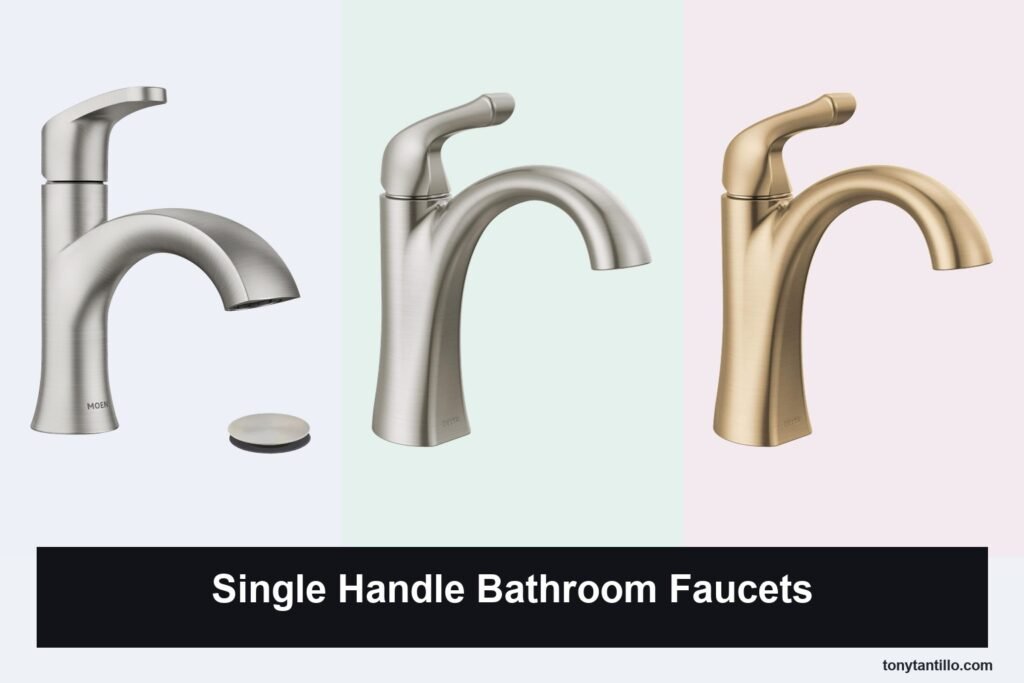
A single-handle bathroom faucet needs to do more than look clean on the sink. It has to control temperature without fuss, fit the hole pattern you already have, and hold up to daily use without turning into a maintenance job. The best choices make everyday tasks easier while avoiding installation surprises and finish problems that show up after a few months.
This roundup focuses on the details that matter most in a real bathroom. That means mounting flexibility, flow behavior, finish durability, valve quality, and whether a faucet suits a compact vanity or a more open sink deck. Some options lean toward value, others toward long-term durability, and a few add features like pull-down spray or broader installation support. The right pick depends on how much flexibility you need and how polished you want the finished sink to feel.
Top Single Handle Bathroom Faucets on the Market

Moen Karis Brushed Nickel Faucet
Best for clean, simple installs
- Spot Resist finish
- Single-hole or deck plate use
- 1.2 gpm flow rate
- Brass construction
- Limited lifetime warranty

Delta Arvo Brushed Nickel Faucet
Best durability pick
- 1 or 3-hole fit
- Push-pop drain included
- 500,000-use ceramic valve
- SpotShield finish
- Lifetime limited warranty

Delta Arvo Champagne Bronze Faucet
Best for warm finishes
- Champagne Bronze finish
- 1 or 3-hole fit
- 500,000-use ceramic valve
- Gooseneck high arc
- Lifetime limited warranty

Delta Arvo Chrome Faucet
Best classic finish
- Chrome polished finish
- 1 or 3-hole fit
- 500,000-use ceramic valve
- High-arc spout
- Lifetime limited warranty

RNDIOZD Matte Black Waterfall Faucet
Best budget statement piece
- Waterfall spout
- 304 stainless steel
- NSF and cUPC certified
- 3-hole or single-hole fit
- Pop-up drain included

Delta Arvo Pull-Down Faucet
Best for sink cleanup
- Pull-down sprayer
- MagnaTite docking
- 1 or 3-hole fit
- SpotShield finish
- Push-pop drain included
Single Handle Bathroom Faucets Reviews
Moen Karis Brushed Nickel Faucet
ADVANTAGES
LIMITATIONS
This is a strong fit for a homeowner who wants a straightforward bathroom faucet that still feels finished and durable. The single-handle lever keeps daily temperature changes simple, and the Spot Resist brushed nickel finish helps the sink area look cleaner between wipe-downs.
Its single-hole setup is the main installation advantage, but the optional deck plate matters if you are replacing a wider faucet cutout. The 1.2 gpm flow rate suits routine handwashing and toothbrushing without feeling wasteful, and the aerated stream keeps the sink from splashing as easily in compact spaces.
Compared with the more feature-heavy options in this group, this one stays focused on dependable basics. It is less about visual drama and more about a controlled, tidy install that should age well in a busy bath. Choose it if you want a balanced, low-risk buy and a finish that is built to stay presentable.
Delta Arvo Brushed Nickel Faucet
ADVANTAGES
LIMITATIONS
This is the pick for buyers who care more about long-term mechanical confidence than novelty. The ceramic disc valve cartridge is built for repeated use, and the SpotShield finish is aimed at reducing the upkeep that often comes with a bright, exposed bathroom faucet.
Installation is easier to plan around because it supports both single-hole and wider 3-hole 4-inch setups with the included deck plate. That flexibility helps when you are replacing an older sink faucet and do not want to rework the countertop. The push-pop drain also keeps cleanup simple, which matters in a vanity that sees hair, soap residue, and daily splashes.
Against the rest of the lineup, this is one of the safest all-around choices for durability and finish resilience. It does not chase extra features, but it does the core job with a strong compatibility story. Buy it if you want a polished faucet that emphasizes reliability over bells and whistles.
Delta Arvo Champagne Bronze Faucet
ADVANTAGES
LIMITATIONS
This version makes sense when the faucet is part of the room’s visual plan, not just a utility piece. The Champagne Bronze finish gives the sink a warmer tone, and the gooseneck high-arc spout adds a more elevated profile that reads well on a vanity.
Functionally, it follows the same installation logic as the nickel version, so it is still adaptable to single-hole or 3-hole layouts with the included deck plate. That makes the design choice mostly about appearance, not added complexity. The ceramic valve and 1.2 gpm flow keep the operating feel controlled and predictable.
Compared with the brushed nickel and chrome alternatives, this one is the strongest style-first choice in the group. It is not the cheapest path to a bathroom update, but it delivers a more decorative look without giving up the core hardware quality. Choose it if finish color is part of the design statement you are trying to make.
Delta Arvo Chrome Faucet
ADVANTAGES
LIMITATIONS
This is the straightforward choice for a bathroom that needs a bright, familiar faucet finish. The chrome finish gives it the most traditional look in the lineup, and the high-arc spout helps the sink feel less crowded while keeping handwashing comfortable.
The installation story stays practical. You still get support for single-hole or wider 3-hole 4-inch layouts with the included deck plate, so it works well for both upgrades and replacements. The push-pop drain keeps the deck cleaner than a traditional lift rod setup, which is useful when you want a simpler basin surface.
Against the other Arvo variants, this is the cleanest no-frills option and usually the easiest finish to match with existing bath hardware. It does not stand out as much as the bronze version, but it offers the most conventional look. Pick it if you want a safe visual choice with proven compatibility.
RNDIOZD Matte Black Waterfall Faucet
ADVANTAGES
LIMITATIONS
This is the most style-driven option in the group, and it is aimed at buyers who want a sink faucet that changes the room’s character immediately. The waterfall spout creates a different water presentation from the standard aerated stream, and the matte black finish gives it a modern contrast that stands out quickly.
Its strongest practical advantage is material and certification coverage. Stainless steel construction and the listed compliance marks make it more appealing for a budget-oriented faucet that still needs to feel legitimate in daily use. The included deck plate and supply hoses also reduce the amount of separate parts you need to source for a basic installation.
Compared with the Delta and Moen choices, this one trades long-term brand pedigree for a lower entry cost and a bolder look. It is the best fit for a reader who wants a design-forward faucet without spending much. Choose it when appearance and package completeness matter more than a conservative mainstream finish.
Delta Arvo Pull-Down Faucet
ADVANTAGES
LIMITATIONS
This is the most practical faucet in the set for people who expect more from the sink than basic handwashing. The pull-down sprayer makes it easier to rinse the basin and clear away toothpaste, while MagnaTite Docking helps the wand return cleanly to place instead of hanging loose.
That added function comes with a bit more hardware to live with, so it is best on a vanity where you will actually use the spray feature. The single-hole design and included deck plate still give you installation flexibility, and the SpotShield finish is a good match for households that want less visible spotting on the faucet body.
Against the simpler faucets here, this one is the clear upgrade if utility matters more than minimalism. It costs more than the basic Arvo models, but the extra functionality is real and not cosmetic. Pick it if you want one faucet to handle both standard use and occasional cleanup work.
How to Choose Single Handle Bathroom Faucets
A good single-handle bathroom faucet should simplify the sink, not complicate it. The right choice depends on how your vanity is drilled, how much finish maintenance you are willing to do, and whether you want a simple everyday faucet or one that adds extra cleaning reach or visual presence.
Sink Hole Fit
Start with the number of holes in your sink or countertop. A faucet that matches the existing cutout avoids extra work and reduces the chance of awkward gaps or visible hardware issues. If your sink has an older 3-hole layout, a model that includes a deck plate gives you more flexibility and a cleaner finished look.
Handle Control
Single-handle faucets are popular because they make temperature changes fast and intuitive. That matters in a small bathroom where you do not want to fine-tune two separate handles every time you wash your hands. A smooth lever action also helps when the sink is used by kids or guests who need simple operation.
Finish and Maintenance
Finish choice affects how often you will wipe the faucet down. Brushed and spot-resistant finishes are usually better if you want fewer visible fingerprints and water marks. Chrome gives a brighter, more traditional look, while darker finishes can create more contrast but may show lint or residue more clearly depending on lighting.
Spout Style
The spout shape changes both the look and the way water lands in the sink. A high-arc spout gives more room for handwashing and can make basin cleanup easier. A waterfall design is more decorative and creates a softer water presentation, but it is a style choice as much as a utility choice.
Flow and Use
Flow rate influences how the faucet feels during everyday tasks. Lower-flow options are usually plenty for brushing teeth and washing hands, while a pull-down sprayer adds reach for rinsing the bowl or clearing debris. If you expect to clean the sink often, extra spray function can be worth the added complexity.
Durability Signals
Construction details matter when you want a faucet to hold up over time. Metal bodies, ceramic disc valves, and strong warranty coverage are all reassuring signs, especially in a busy family bath. A good faucet should feel stable at the handle, resist finish wear, and keep working smoothly without demanding frequent attention.
Bathroom Faucet Comparison Table
| Product | Best For | Flow | Mounting | Handles | Material | Warranty |
|---|---|---|---|---|---|---|
| Moen Karis Brushed Nickel Faucet | Best for clean, simple installs | 1.2 gpm | Deck Mount | 1 | Brass | Limited Lifetime Warranty |
| Delta Arvo Brushed Nickel Faucet | Best durability pick | 1.2 gpm | Deck Mount | 1 | Brass | Lifetime Faucet and Finish Lifetime Limited Warranty |
| Delta Arvo Champagne Bronze Faucet | Best for warm finishes | 1.2 gpm | Deck Mount | 1 | Brass | Lifetime Faucet and Finish Lifetime Limited Warranty |
| Delta Arvo Chrome Faucet | Best classic finish | 1.2 gpm | Deck Mount | 1 | Brass | Lifetime Faucet and Finish Lifetime Limited Warranty |
| RNDIOZD Matte Black Waterfall Faucet | Best budget statement piece | Not Specified | Deck Mount | 1 | Stainless Steel | Not Specified |
| Delta Arvo Pull-Down Faucet | Best for sink cleanup | Not Specified | Deck Mount | 1 | Brass | Limited Lifetime Warranty |
How We Tested & Analyzed Single Handle Bathroom Faucets
The analysis prioritized fit, day-to-day control, finish behavior, and installation flexibility because those are the factors that most often determine whether a bathroom faucet feels like an upgrade or a compromise. A single-handle model can be visually simple, but the underlying mounting pattern, spout shape, and valve design determine how easy it is to live with after installation.
Meaningful differences were compared across practical buyer criteria rather than cosmetic details alone. That includes whether a faucet works with one-hole or multi-hole layouts, whether it adds a spray function, how much maintenance the finish is likely to demand, and whether the hardware choices suggest dependable long-term use. These differences matter because two faucets can look similar at a glance while serving very different buyers.
Readers should keep in mind that bathroom faucet purchases are often constrained by existing sink drilling, deck space, and personal finish preferences. A faucet can be excellent in one bathroom and inconvenient in another if the mounting and spout geometry do not match the sink. That is why the recommendations focus on compatibility, operating feel, and the tradeoff between simplicity and added function.
Frequently Asked Questions
What makes a single-handle bathroom faucet easier to use?
A single handle lets you control temperature and flow with one motion. That is especially helpful when you want quick adjustments during everyday handwashing.
Should I choose a faucet with a deck plate?
Choose a deck plate if your sink has extra holes or if you want more installation flexibility. It can also help the finished sink look more unified.
Is a higher spout always better?
Not always. A higher spout gives more clearance for washing hands and cleaning the basin, but it may not suit a very compact vanity or a shallow sink.
How important is the finish?
Very important. The finish affects both appearance and upkeep, so it is worth choosing one that matches your bathroom style and your tolerance for fingerprints or water spots.
Final Thoughts
The best single-handle bathroom faucet is the one that fits your sink cleanly and matches how you actually use the space. If you want the safest all-around path, look for a straightforward installation, a dependable valve, and a finish that will not demand constant cleaning. If your sink is used heavily, a model with a better spout shape or added spray reach can be worth the extra cost.
Style matters too, but it should come after fit and function. Once the hole pattern, handle feel, and maintenance level line up with your bathroom, the remaining choice is mostly about the look you want to live with every day. Choose the faucet that makes the sink easier to use now and easier to keep presentable later.