
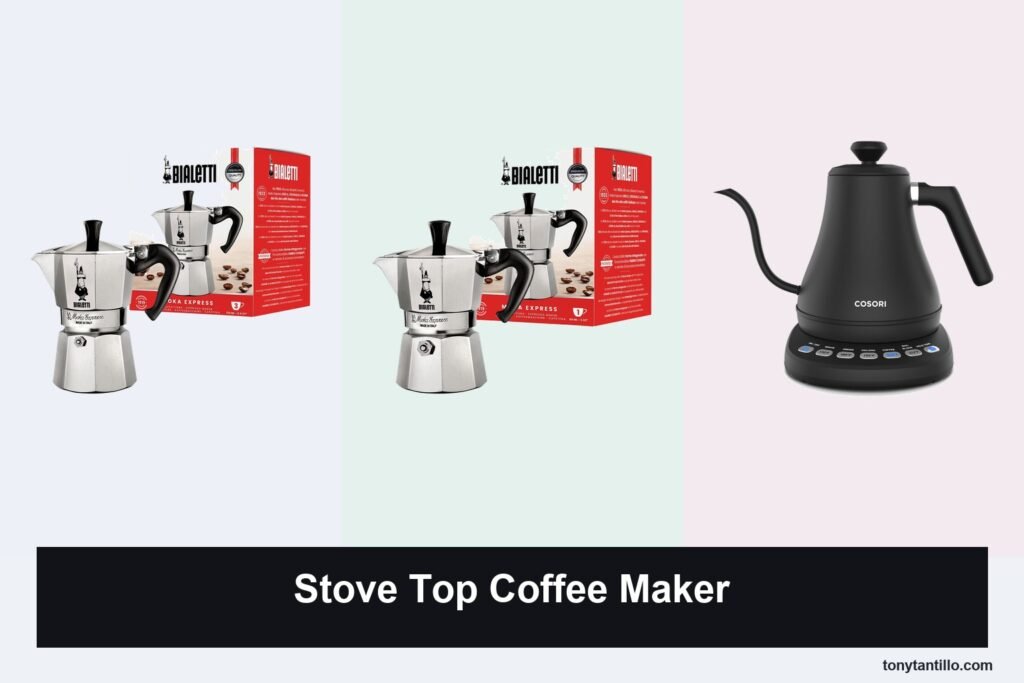
A good stove top coffee maker solves a specific problem well. It gives you a compact way to brew strong coffee without a large machine, a countertop footprint, or disposable pods. For many buyers, that means fewer parts to maintain and a more deliberate brewing routine. It also means you need to care about compatibility, batch size, and how much control you want over heat and extraction.
The four picks below span the most practical ways people approach stovetop and stovetop-adjacent coffee. Two are classic moka pots for people who want compact, manual brewing. One electric gooseneck kettle suits pour-over users who want precise water control. One automatic brewer covers households that need single cups and full pots from the same machine. The right choice depends on how much coffee you make, how much control you want, and whether you prefer a simple ritual or a more automated workflow.
Top Stove Top Coffee Maker on the Market

Bialetti Moka Express 3-Cup Moka Pot
Best Classic Moka
- 3 espresso shots
- 130 ml capacity
- Aluminum body
- Gas, electric, induction compatible

Bialetti Moka Express 1-Cup Pot
Best Solo Moka
- Single-cup brew
- 60 ml capacity
- Manual operation
- Silicone gasket included

Cosori 0.8L Gooseneck Kettle
Best Precision Kettle
- 5 temperature presets
- 0.8L capacity
- 1200W heating
- 304 stainless steel

Hamilton Beach 2-Way Brewer
Best Flexible Brewer
- Single cup or 12 cups
- Programmable brewing
- AutoPause & Pour
- Reusable filter
Stove Top Coffee Maker Reviews
Bialetti Moka Express 3-Cup Moka Pot
ADVANTAGES
LIMITATIONS
The Moka Express is the most recognizable choice here for buyers who want a compact, manual brew with a clear identity. Its 130 ml capacity and three-espresso-shot output make it a better fit for a focused serving than for filling a large mug repeatedly. The aluminum build keeps the pot light at 1 pounds, and the classic form factor matters because this is as much about the brew style as the result. It is a straightforward answer for anyone who wants a traditional stovetop espresso routine without extra electronics or consumables.
The practical appeal is that the process stays simple. You fill to the safety valve, add ground coffee without pressing, and stop the heat when the pot starts to gurgle. That sequence keeps the workflow short and predictable. Compatibility is another useful point. It works with gas, electric, and induction when paired with the induction adapter plate. The main tradeoff is that induction users need that extra accessory, and the small capacity means this is not the right tool for serving a group in one go.
Against the other picks, this one stands out for being the purest stovetop option. It is far more compact than the 12-cup machine and far more direct than the electric kettle, but it is also more limited in output. That makes it the strongest choice for a solo drinker or anyone who wants a ritualized, repeatable moka cup with minimal clutter. Choose it if you value tradition, portability, and a durable manual brew path over volume and automation.
Bialetti Moka Express 1-Cup Pot
ADVANTAGES
LIMITATIONS
This version of the Moka Express targets the buyer who wants a true solo serving and nothing more. The 2 fluid ounces capacity is the headline, and that matters because it keeps the brew intentionally concentrated. The moka format gives you a reusable, ground-coffee setup, while the included coffee filter and silicone gasket add useful basics for maintenance and replacement planning. It is a focused tool for one cup at a time, not a scaled-down compromise pretending to serve a crowd.
Operation stays close to the classic moka process, but the tiny size changes how you think about it. The pot is only about 2 inches deep, so heat management and dose discipline matter more than they would in larger brewers. The stainless steel safety valve is a meaningful quality point because it simplifies cleaning around a critical component. It is also marketed for home and outdoor use, so the compact body and manual mode suit travel-friendly brewing better than a machine that depends on a counter and an outlet.
Compared with the 3-cup Moka Express, this one is more specialized and less flexible. You give up serving size, but you gain a tighter fit for espresso-style coffee for one person. Compared with the electric kettle and programmable drip machine, it has the fewest moving parts and the least complexity. That is exactly why it belongs to a buyer who wants a concentrated cup, a small footprint, and a low-consumable routine. For a true solo moka setup, this is the most disciplined pick in the group.
Cosori 0.8L Gooseneck Kettle
ADVANTAGES
LIMITATIONS
This kettle belongs in the conversation because stove top coffee often lives or dies on water control. The 5 one-touch presets and 1200 watts of power make it a practical brewing tool for pour-over drinkers who want repeatable water temperature instead of guessing at the stove. Its 0.8-liter size is large enough for a few servings but still compact enough to feel purpose-built rather than oversized. The black stainless steel finish gives it a more durable, less delicate feel than many small brewing accessories.
The operational advantage is precision. The kettle is designed to keep water within 5°F of the target temperature, and the hold function can maintain that setting for up to an hour. That matters if you brew slowly or make multiple cups in sequence. The gooseneck spout and counter-balanced handle are also relevant because they translate into steadier pouring, which is what pour-over coffee demands. Hand-wash care is a limitation, but it is not unusual for a kettle built around beverage precision rather than heavy automation.
Against the moka pots, this is the control choice rather than the extraction choice. It does not make coffee by itself, but it improves consistency for anyone who pairs hot water with a pour-over brewer. Against the automatic drip machine, it demands more involvement but gives you finer control over how water enters the bed of coffee. That makes it the right recommendation for someone who cares more about precision brewing than convenience. If your coffee routine starts with measured water, this is the best supporting tool in the lineup.
Hamilton Beach 2-Way Brewer
ADVANTAGES
LIMITATIONS
This brewer is the most versatile option in the set because it covers two very different use cases in one machine. You can brew up to 14 ounces for a mug or travel cup, or make up to 12 cups in the carafe. That flexibility matters in real kitchens because not every day calls for the same volume. The 12-cup carafe and the single-serve side make it a practical fit for households that alternate between solitary mornings and shared pots. The programmable controls add another layer of convenience for planned routines.
The setup is more involved than a moka pot, but the payoff is scale and convenience. Separate water reservoirs keep the single-serve and carafe sides easier to manage, and the water windows help you avoid waste. The machine works with ground coffee and a reusable filter, which reduces dependence on pods. The AutoPause & Pour feature also matters because it lets you pour before the full brew cycle ends. That is a real quality-of-life advantage for busy mornings when waiting for the whole pot is not realistic.
Compared with the stovetop pots, this is the least romantic but the most adaptable choice. It does more than the moka pots and requires more counter space and upkeep in return. Compared with the gooseneck kettle, it is the stronger pick for people who want a self-contained coffee solution rather than a brewing accessory. Choose it if your priority is household flexibility, scheduled brewing, and the ability to shift between one cup and many without changing machines. It is the most practical all-rounder here.
How to Choose a Stove Top Coffee Maker
The right coffee maker depends less on brand hype than on how you actually drink coffee. A stovetop brewer rewards buyers who want simplicity, but simplicity comes in different forms. Some people want a true moka cup with no electronics at all. Others want a tool that pairs with pour-over brewing. Others still need one machine that can handle both a quick mug and a full pot. The best choice is the one that matches your daily volume, heat source, and tolerance for manual involvement.
Brew Style
Start by deciding what kind of cup you want, not what kind of machine looks appealing. Moka-style brewers produce a concentrated, espresso-like result that works well for short drinks or layered milk drinks. A gooseneck kettle supports pour-over brewing, which is slower but gives you more control over extraction. A programmable drip brewer is the least manual and the most versatile, but it does not mimic stovetop extraction. If you choose the wrong brew style first, every other feature becomes secondary.
Capacity Needs
Capacity is where many buyers misjudge a coffee maker. A one-cup stovetop brewer is excellent for solo use, but it can become tedious if you make several rounds every morning. A larger moka pot or a multi-cup machine reduces repetition, though it usually adds size and may change the flavor concentration. Think about your most common weekday use, not the rare weekend scenario. If you routinely make coffee for two or more people, output matters more than countertop charm.
Heat Source Fit
Compatibility with your stove matters more than many shoppers expect. Some stovetop coffee makers work best on gas or standard electric burners, while induction can require a specific adapter or a different brewer entirely. If you use a travel stove, camp burner, or apartment induction cooktop, confirm that the brewer matches that setup before you buy. A coffee maker that works beautifully on one heat source but poorly on another is a daily frustration, not a bargain.
Control and Skill
Manual brewers reward attention. With a moka pot, you manage water level, coffee dose, and heat timing. That gives you a lot of control, but it also means the result depends on your routine. Electric brewers reduce that effort by controlling temperature, timing, or both. Choose manual gear if you enjoy the process and want a compact setup. Choose automated gear if you want predictable results with less involvement and fewer variables to manage each morning.
Cleaning and Materials
Cleaning is one of the biggest long-term ownership differences. A simple stovetop pot usually has fewer parts, but it may need careful rinsing and basic maintenance to preserve flavor. Electric machines add reservoirs, baskets, and internal plumbing that can increase cleanup time. Materials matter too. Aluminum moka pots are light and classic, while stainless steel components tend to feel more robust in daily use. If easy upkeep is a priority, look for reusable filters and a design that does not rely on disposable consumables.
Size and Counter Space
Small brewers are easier to store, but tiny size can limit usefulness if you need more than one serving. Larger brewers reduce repetition and may add timers or dual-brew flexibility, though they take up more space and usually stay on the counter. This is especially important in kitchens where the coffee station shares space with other appliances. Measure the area you realistically have available, then choose the brewer that fits that footprint without crowding the rest of your routine.
Coffee Maker Comparison Table
| Product | Best For | Capacity | Power | Material | Warranty | Weight |
|---|---|---|---|---|---|---|
| Bialetti Moka Express 3-Cup Moka Pot | Best Classic Moka | 130 ml | Not Specified | Aluminum | 1 year manufacturer | 1 pounds |
| Bialetti Moka Express 1-Cup Pot | Best Solo Moka | 2 fluid ounces | 230 watts | Aluminum | 1 year manufacturer | 1.5 pounds |
| Cosori 0.8L Gooseneck Kettle | Best Precision Kettle | 0.8 liters | 1200 watts | Stainless Steel | 1 year warranty + optional 2-year warranty, lifetime customer service support | 3.5 pounds |
| Hamilton Beach 2-Way Brewer | Best Flexible Brewer | 14 ounces | 950 watts | Stainless Steel | One(1) Year Warranty | 7.4 pounds |
How We Tested & Analyzed Stove Top Coffee Maker
The analysis centered on buyer-impacting traits rather than headline labels. Capacity, brewing mode, heat-source compatibility, control method, materials, cleaning expectations, and warranty coverage were weighted because those factors change how a coffee maker behaves in daily use. A compact manual moka pot is not evaluated by the same standards as a programmable drip brewer, so each option was judged by how well its design solves its intended coffee problem and what tradeoffs come with that solution.
Differences were compared in practical terms. Small-capacity stovetop brewers were assessed for portability and routine simplicity. The electric kettle was considered for temperature precision and support for pour-over workflows. The two-way automatic brewer was evaluated for household flexibility, scheduled brewing, and how well it reduces friction for mixed-use kitchens. When a product had a narrower specialty, that specialization was treated as a strength only when it clearly improved the buyer experience.
Limitations in the records shaped what could be responsibly said. When a feature was not clearly specified, it was left out rather than inferred. Claims about taste, durability beyond the stated materials, or long-term performance were not extended past the evidence. That keeps the recommendations grounded in what each product is built to do, while still translating technical details into the practical consequences a buyer actually needs to consider.
Frequently Asked Questions
What makes a stovetop coffee maker different from drip coffee makers?
A stovetop coffee maker usually produces a more concentrated brew through direct heat and pressure from steam, while drip coffee makers use gravity and paper or reusable filtration to make a larger, milder batch. The right choice depends on whether you want a stronger, smaller serving or a fuller pot with less hands-on brewing.
Do stovetop coffee makers work on induction cooktops?
Some do, but not all. Aluminum moka pots often need an induction adapter plate, while stainless steel or induction-ready designs may work directly. Always confirm the brewer’s compatibility before buying, especially if your kitchen uses induction as the primary heat source.
How much coffee should I expect from a moka pot?
Moka pot sizes are usually measured in espresso-style cups rather than standard mug servings. That means a small unit may be perfect for one person, while larger versions are better when you want to share. If you drink from a full-size mug, check the stated capacity carefully so you do not end up with less coffee than you expect.
What should I prioritize if I want the easiest daily routine?
Prioritize the fewest steps and the least cleanup. Manual stovetop brewers are simple in hardware, but they require more attention during brewing. Electric options can reduce guesswork, and a reusable filter system can lower waste and recurring cost. The easiest routine is usually the one that matches your habits instead of forcing a new one.
Final Thoughts
The best stove top coffee maker is the one that matches your brewing style and your daily volume. If you want a classic manual cup, a moka pot is the most direct route. If you want more control over water temperature, a gooseneck kettle supports a different kind of precision. If your household needs one machine to do several jobs, a dual-brew drip brewer is the most flexible answer. Each of these solves a different coffee problem, which is why the right choice is mostly about fit.
Choose for the way you actually make coffee, not for the broadest feature list. That approach will keep you from buying too much machine or too little capacity. Once you settle on brew style, heat source, and cleanup tolerance, the best option usually becomes clear. A good coffee maker should make your morning easier and your coffee more consistent. The right one will do exactly that without asking you to compromise on the parts of the routine that matter most.