
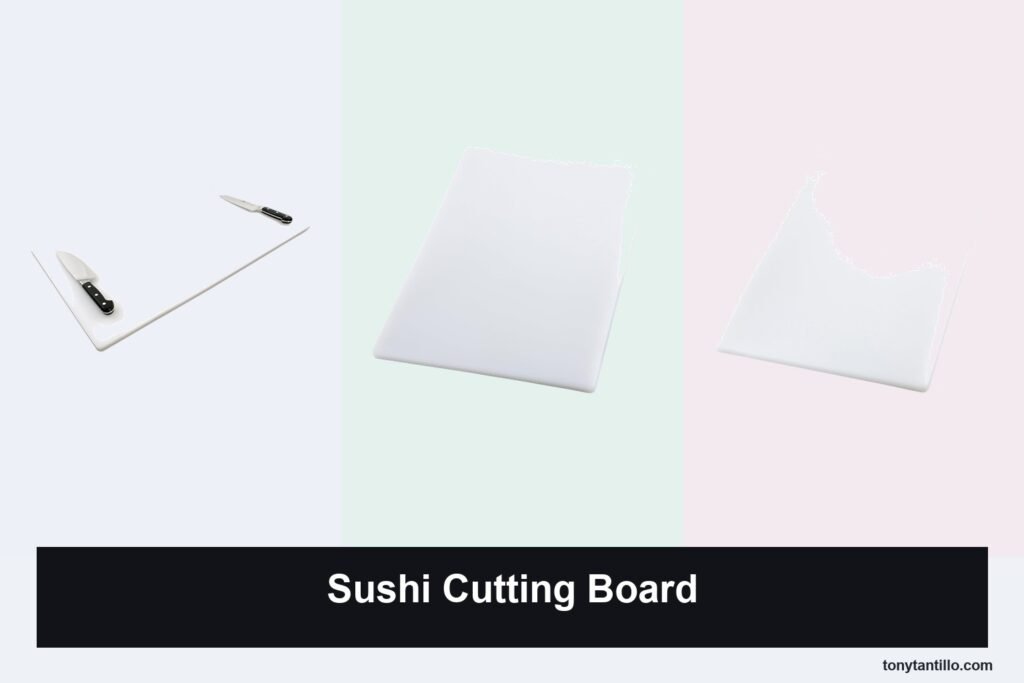
A good sushi cutting board has to do more than give you room to slice fish. It needs a surface that stays stable, cleans up easily, resists staining, and keeps delicate knives from turning dull too quickly. For sushi prep, size matters as much as hygiene, because clean cuts and tidy ingredient staging are harder on cramped boards that slide around or trap liquid.
The six boards below are all practical for fish, vegetables, and general kitchen prep, but they serve different buyers. Some lean toward commercial durability, some toward compact home use, and some toward easier handling or mess control. The right choice depends on how much space you have, how often you prep seafood, whether you want a reversible surface, and how much board weight you are willing to manage day to day.
Top Sushi Cutting Board on the Market

Thirteen Chefs Extra Large HDPP Board
Best for large prep
- 30 x 18 inch work surface
- 1/2 inch thick HDPP
- NSF certified for food service
- Dishwasher safe up to 200F

Winco 12 x 18 Heavy-Duty Board
Best balanced commercial pick
- 12 x 18 inch size
- 0.75 inch thick
- NSF certified
- HACCP color coding

Winco 12 x 18 x 1 Board
Best for heat tolerance
- 12 x 18 inch size
- 1 inch thick
- Polyethylene plastic
- Temperature range 176 to 196

Thirteen Chefs 18 x 12 HDPP Board
Best compact pro board
- 18 x 12 inch size
- 1/2 inch thick
- HDPP plastic
- NSF stamped
Farberware 11 x 14 Grip Board
Best budget handle board
- 11 x 14 inch size
- Reversible design
- Built-in hand hole
- Dishwasher safe

OXO Good Grips Utility Board
Best for neat prep
- 10.39 x 14.78 inch size
- Double-sided surfaces
- Integrated drip-catcher
- Non-slip feet
Sushi Cutting Board Reviews
Thirteen Chefs Extra Large HDPP Board
ADVANTAGES
LIMITATIONS
This is the board for cooks who need serious working room. The 30 x 18 inch surface gives fish, garnish, and knife work enough separation that ingredients do not crowd each other, and the 1/2 inch thickness adds the mass that helps a board feel planted during heavier slicing. That scale makes sense for sushi prep when you are handling multiple items at once, or when you also break down meats and vegetables on the same station. It is clearly aimed at high-volume use rather than casual countertop snacking.
The tradeoff is size and handling. At 8 pounds, it is not the sort of board you casually move between sink and counter, and the product notes make the storage issue explicit because it may not fit smaller sinks or dishwashers. That matters more in a home kitchen than a restaurant setup, where the broad surface and dishwasher tolerance up to 200F are more useful than portability. The HDPP construction is also meant to resist warping, cracking, and stains, which is exactly what matters when a board sees repeated wet fish prep.
Compared with the smaller boards in this group, this one wins on capacity and confidence, not convenience. It is the strongest pick when your priority is keeping a large sushi prep area organized or when you want one board that can also handle carving, game, and food-service volume. The limitation is straightforward: if you do not have the counter space, it will become annoying fast. For buyers who can accommodate it, this is the most purposefully commercial option here and the safest recommendation for oversized prep needs.
Winco 12 x 18 Heavy-Duty Board
ADVANTAGES
LIMITATIONS
This Winco board lands in a useful middle ground for sushi prep. The 12 x 18 inch work area gives you enough room for fish, rice-side prep, and vegetable trimming without taking over the whole counter, and the 0.75 inch thickness gives it a sturdier feel than thinner utility boards. That combination is especially attractive if you want something that feels commercial without going all the way to oversized restaurant scale. It also helps explain why so many serious home cooks gravitate toward this format.
The material and finish are tuned for repeat use. The high-density plastic is designed to resist cracking, warping, rot, and staining, while the non-porous surface helps prevent liquid absorption. The board is dishwasher safe and NSF certified, which gives it a practical edge for anyone who wants food-service standards in a home kitchen. The HACCP color-coding compatibility is also useful if you separate seafood from produce or raw proteins, because that system supports cleaner workstation organization.
Against the larger Thirteen Chefs board, this one is easier to live with. Against the compact options, it gives you more room to work without feeling unwieldy. The 1-year manufacturer warranty is a modest but real reassurance, and the copolymer design is intended to reduce knife dulling, which matters if you use fine blades for sushi work. The main limitation is that it still favors utility over specialty sushi features. Even so, it is the most balanced choice for buyers who want a dependable commercial-style board without unnecessary bulk.
Winco 12 x 18 x 1 Board
ADVANTAGES
LIMITATIONS
This version of the Winco board is for buyers who want a thicker, more substantial prep platform. The 1 inch thickness gives it the most solid profile among the medium-sized boards here, and the 12 x 18 inch footprint is large enough for sushi ingredients without moving into oversized territory. That extra thickness can make a difference if you dislike flex during slicing or want a board that feels more anchored while you work. For repeated prep sessions, that matters as much as raw surface area.
A notable detail is its temperature range from 176 to 196, which points to a board built with commercial cleaning conditions in mind. The non-porous surface is designed not to stain or absorb juices, and the board is dishwasher safe and NSF certified. It is also described as microwave safe in the care instructions, though in normal sushi prep the more relevant takeaway is that it is made to tolerate demanding kitchen routines rather than delicate hand-washing habits. The polyethylene construction is a straightforward, serviceable choice for daily food prep.
Compared with the 0.75-inch Winco board, this one trades a bit of handling ease for a more solid feel. Compared with the thinner home options, it is less about convenience and more about durability under heavier use. That makes it a good fit for buyers who want one board that can support seafood, vegetables, and general prep without feeling flimsy. If you want commercial-minded durability in a familiar size, this is the one to consider first. The limitation is that it does not bring much beyond sturdiness and sanitation, so value here depends on whether that is what you need most.
Thirteen Chefs 18 x 12 HDPP Board
ADVANTAGES
LIMITATIONS
This board is a strong fit for home cooks who want a professional feel without the footprint of a full restaurant slab. The 18 x 12 inch size gives enough room for chopping fish and vegetables with control, while the 3 pound weight keeps it manageable when you need to move it from counter to sink or storage. That combination makes it especially practical for sushi prep in kitchens where space is real but a tiny board would feel restrictive. It sits in the sweet spot between capacity and everyday handling.
The HDPP material is one of the main reasons to take it seriously. It is described as durable, warp resistant, and BPA free, and the board can tolerate dishwasher temperatures up to 200F. The NSF stamp matters too, because it signals suitability for food-service settings and helps support the kind of hygiene-conscious workflow many seafood buyers want. The board’s white color also works well for mixed prep because it keeps the surface visually simple and easy to read. On the downside, the product notes warn that serrated knives and cleavers can scar the surface, so it still asks for proper knife choices.
Against the other large boards, this one is the more comfortable everyday compromise. It does not offer the massive staging area of the extra-large Thirteen Chefs model, but it is easier to store and handle. Against the budget boards, it brings a more commercial construction story without a lot of extra bulk. That makes it the best recommendation for buyers who want one board for fish, vegetables, and general prep in a normal home kitchen. It is the option I would choose when space is limited but performance still matters.
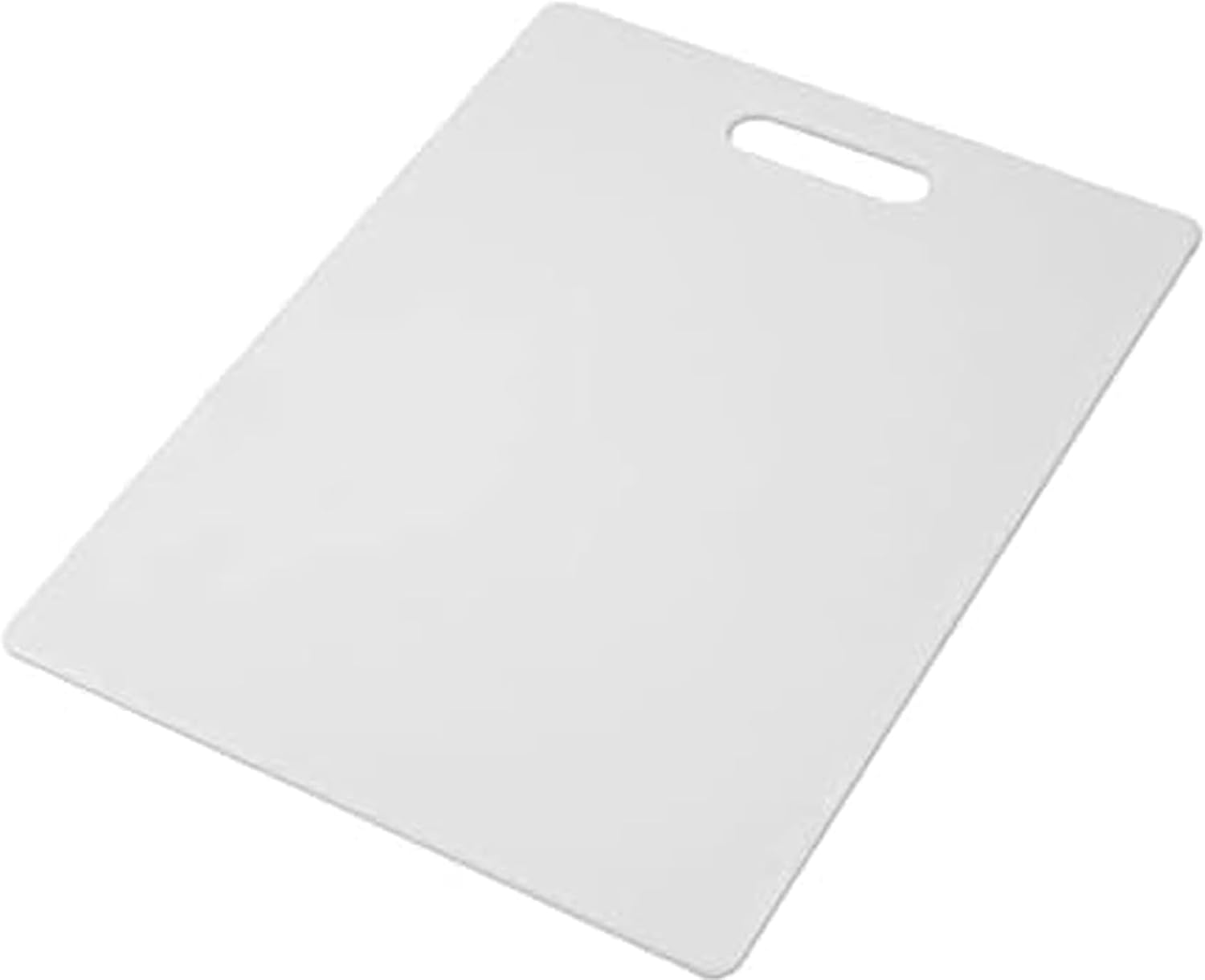
Farberware 11 x 14 Grip Board
ADVANTAGES
LIMITATIONS
This is the most approachable board in the lineup for casual sushi prep and everyday slicing. The 11 x 14 inch size gives enough room for a fish fillet or vegetable trimming without demanding much counter space, and the built-in hand hole makes it easier to lift, tilt, and reposition during fast prep sessions. Its 0.25 inch thickness also keeps storage simple. If you want a lightweight board that feels easy to grab and put away, this is where the value starts to show.
The polypropylene construction is nonporous, nonabsorbent, and described as gentle on knives, which matters if you use sharper blades and want less surface resistance during clean cuts. It is reversible, so you effectively get two working faces, and it is dishwasher safe for low-effort cleanup. Those traits make it useful for a home kitchen where one board may need to cover fish, produce, and basic serving tasks. The limitation is obvious, though: the thinner profile will not feel as planted as the heavier commercial boards, especially when working quickly with wet ingredients.
Against the more substantial boards above it, this Farberware model is the convenience play. It gives up heft, thickness, and food-service credentials in exchange for low cost, simple handling, and easy storage. That tradeoff is attractive for someone who wants a dedicated sushi prep board without committing much money or cabinet space. It is not the best choice if you expect restaurant-style volume or constant heavy use, but for occasional home prep it is an easy recommendation. If your priority is inexpensive practicality, this is the board most likely to make sense immediately.
OXO Good Grips Utility Board
ADVANTAGES
LIMITATIONS
This OXO board is the best fit for cooks who care as much about control and cleanup as they do about raw surface area. The 10.39 x 14.78 inch size is large enough for most sushi prep tasks, and the non-slip feet help keep the board from wandering when you are making precise cuts. The integrated drip-catcher is especially useful with fish, cucumber, and other juicy ingredients because it reduces the chance of liquid spreading across the counter. Those details make the board feel intentionally designed for tidy, careful prep.
The double-sided, non-porous surfaces resist odors and are meant to be easy on knives. That is a meaningful combination for anyone who alternates between seafood and vegetables, because it supports a cleaner workflow and helps reduce flavor carryover. The soft tapered edges also serve as handles, which improves carrying comfort when you need to move the board full of ingredients. At 695 g, it is not the heaviest board here, but it still feels substantial enough for controlled use. Dishwasher-safe care keeps the maintenance side simple.
Compared with the more commercial boards, this one is less about raw thickness and more about ergonomics. Compared with the budget Farberware board, it offers better stability and better liquid management. That makes it the best recommendation for buyers who want a practical sushi prep board that keeps mess under control without taking up a huge footprint. The limitation is that it is not the biggest surface in the set, so it is not the board for marathon prep sessions. Still, for neatness and day-to-day convenience, it is one of the smartest picks here.
How to Choose a Sushi Cutting Board
Choosing a sushi cutting board is mostly about balancing surface area, cleanliness, and handling. Sushi prep rewards a board that stays put, resists odor and staining, and gives you enough room to separate fish from vegetables without crowding the knife path. The best choice is not always the thickest or biggest board. It is the one that fits your kitchen, your knife habits, and how often you actually prep seafood.
Size and Workspace
Start with the amount of counter space you can spare. A larger board makes fish trimming and ingredient staging easier, but it can also be awkward to wash, dry, and store. Smaller boards are simpler to live with, yet they can force you to work in stages, which slows prep and increases clutter. For sushi work, enough uninterrupted surface usually matters more than decorative features.
Surface Hygiene
A non-porous board is a major advantage when you handle fish, rice-side prep, or ingredients with strong aromas. It helps reduce liquid absorption and makes cleanup more predictable. That matters because sushi prep often moves quickly from one ingredient to another. If a board stains easily or holds odor, it becomes harder to keep the kitchen feeling fresh and organized.
Thickness and Stability
Thickness influences how solid the board feels under the knife. Thicker boards usually resist flex and stay calmer during heavier cutting, while thinner boards are easier to move and store. Stability is especially important with wet ingredients, where a sliding board can create more mess and less control. If you chop often or work with larger fish portions, a sturdier profile pays off quickly.
Knife Friendliness
A sushi cutting board should support clean slices rather than fight them. Materials that are gentle on knife edges reduce premature dulling and help your blades stay sharper longer. That is important whether you use a general kitchen knife or a more specialized fish knife. A board that is too abrasive or too hard can cost you in edge retention and make precise work less satisfying.
Cleanup and Storage
Think beyond the cutting moment and consider the whole routine. Dishwasher-safe care simplifies sanitation, which is valuable when seafood is part of the workflow. At the same time, a board that is too large for your sink or dishwasher may become irritating in everyday use. If you have limited storage, a lighter board can be the more practical choice even if it gives up some working area.
Safety and Workflow
Small design details can make a real difference in how calm the prep process feels. Non-slip feet, handles, drip-catchers, and reversible surfaces all support better control or cleaner separation of tasks. Those features do not replace good technique, but they can reduce counter mess and make the board easier to manage. For sushi prep at home, that kind of efficiency often matters just as much as raw size.
Comparison Table
| Product | Best For | Weight | Material | Care | Warranty | Color |
|---|---|---|---|---|---|---|
| Thirteen Chefs Extra Large HDPP Board | Best for large prep | 8 pounds | High Density Polypropylene (HDPP) | Dishwasher Safe | Not Specified | White |
| Winco 12 x 18 Heavy-Duty Board | Best balanced commercial pick | 5.1 pounds | Plastic | Dishwasher Safe | 1 Year Manufacturer’s Warranty Against Defects in Workmanship | White |
| Winco 12 x 18 x 1 Board | Best for heat tolerance | 1.6 ounces | Synthetic | Microwave Safe | 1 Year Manufacturer’s Warranty Against Defects in Workmanship | White |
| Thirteen Chefs 18 x 12 HDPP Board | Best compact pro board | 3 pounds | High Density Polypropylene (HDPP) | Dishwasher Safe | Not Specified | White |
| Farberware 11 x 14 Grip Board | Best budget handle board | 1.1 pounds | synthetic | Dishwasher Safe | Lifetime Brands Limited Warranty | White |
| OXO Good Grips Utility Board | Best for neat prep | 695 g | Plastic | Dishwasher Safe | Not Specified | Clear |
How We Tested & Analyzed Sushi Cutting Board
This roundup focused on category-level decision factors that matter most for sushi-oriented prep boards. The analysis emphasized surface size, thickness, material behavior, dishwasher compatibility, stability, and practical handling. Those traits influence how comfortably you can trim fish, stage garnishes, and keep the work area clean. Features that did not change day-to-day performance were treated as secondary, while construction details with direct effects on hygiene, storage, and knife use received more weight.
The products were compared by looking at how their verified dimensions, materials, and care instructions would affect real kitchen use. Boards with commercial credentials, thicker profiles, or stability aids were weighed against lighter, easier-to-store options. Special attention went to tradeoffs, because the best board for a large prep station is not automatically the best board for a compact home kitchen. The goal was to identify the most sensible fit for different workflows rather than crown a single universal winner.
A final pass checked for gaps, limitations, and compatibility concerns that a buyer would need to know before choosing. Large boards were evaluated for handling burden. Thin boards were judged on storage and stability. Non-porous construction, NSF certification, reversible surfaces, and dishwasher safety were considered when they clearly changed maintenance or sanitation expectations. Where a product excelled in one area but gave up another, the recommendation reflects that tradeoff directly instead of smoothing it over.
Frequently Asked Questions
What matters most in a sushi cutting board?
Surface hygiene and control matter most. You want a board that resists odor and staining, gives you enough room to work cleanly, and stays stable when the knife is moving quickly. After that, thickness and storage convenience become the main tradeoffs.
Is a thicker board always better?
Not always. Thicker boards usually feel steadier and can reduce flex during cutting, but they also add weight and make cleanup more cumbersome. If your kitchen is small or you need to move the board often, a thinner board may be the more practical choice.
Do I need NSF certification for home use?
No, but it can be a useful sign of food-service-minded construction. For home cooks who prep seafood often, NSF certification can offer extra confidence that the board is built for hygienic, repeated use. It is helpful, but not mandatory for good performance.
Should sushi prep boards be dishwasher safe?
Dishwasher safety is a strong convenience feature because it simplifies sanitation after fish and other strong ingredients. It is not the only thing that matters, though. A board still needs to fit your sink, dishwasher, and storage space, or the cleanup advantage may be limited.
Final Thoughts
The best sushi cutting board is the one that fits your space and your workflow without making cleanup harder than the prep itself. Large commercial boards excel when you want room to spread out and work fast. Smaller, lighter boards make more sense when storage, sink size, or budget matters more. The right answer depends on whether you value staging space, portability, or handling comfort.
For most buyers, the smart decision is to match the board to how often you prep seafood and how much room your kitchen really has. If you want maximum capacity, choose the largest commercial option. If you want a balanced everyday board, pick a medium-size NSF-safe model. If convenience and price matter most, a compact reversible board can still do the job well. The key is choosing a surface that keeps sushi prep orderly, safe, and easy to repeat.