
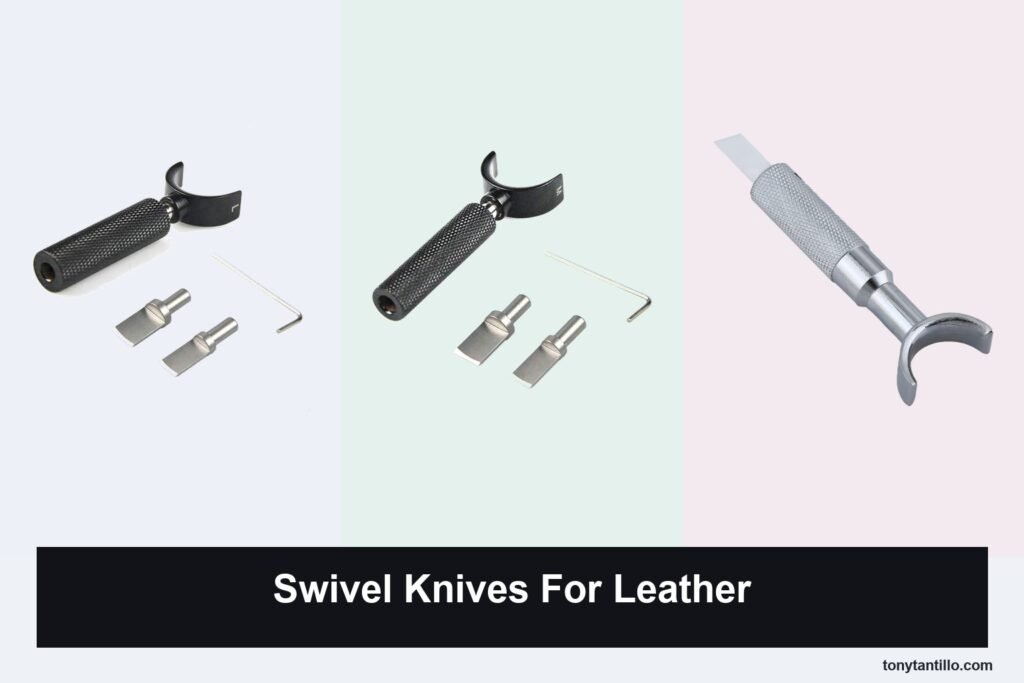
Choosing a swivel knife is less about novelty and more about control. In leather carving, the knife determines how cleanly you can start a cut, how comfortably you can steer curves, and how confidently you can switch between broad outlines and tight detail work. A good pick should match your hand size, feel stable through long sessions, and hold up to repeated sharpening or blade changes without becoming awkward to manage.
The four options here cover two different buying paths. Three are dedicated swivel knives, with two handle sizes in the same design family and one budget-minded tool with a different blade construction. The fourth is a full leathercraft kit for buyers who want more than a single cutter. The most useful differences are in handle diameter, blade material, adjustability, and whether you are buying a focused carving tool or a broader starter set.
Top Swivel Knives For Leather on the Market

OWDEN L Swivel Knife
Best for larger hands
- 13 mm handle diameter
- Two blade sizes included
- Adjustable handle height
- Brass handle construction
- Ambidextrous swivel blade

OWDEN M Swivel Knife
Best all-around grip
- 11.5 mm handle diameter
- Two blade sizes included
- Adjustable handle height
- Brass handle construction
- Ambidextrous swivel blade

Mtsooning Rotary Swivel Knife
Best budget cutter
- Ceramic and steel blades
- Adjustable knife height
- 7 mm inclined head
- 8-inch tool length
- Single knife included

KLLsmDesign Leather Tool Kit
Best starter kit
- 65-piece leathercraft kit
- Includes swivel knife
- Alphabet and number stamps
- Tracing pens included
- Carrying package included
Swivel Knives For Leather Reviews
OWDEN L Swivel Knife
ADVANTAGES
LIMITATIONS
The OWDEN L version is the most hand-focused choice in this group. Its 13 mm handle diameter gives it a fuller grip than the medium version, so it is easier to settle into the palm if you prefer a more substantial tool. The brass handle also gives the knife a solid feel, while the stainless steel blade material points to a setup meant for repeated carving rather than a disposable cutter. For buyers who spend time on detailed leatherwork, that combination matters because steadiness in the grip usually translates into cleaner line control.
Two blade widths are included, with a 10 mm blade for general carving and an 8 mm blade for more precise detail work. That gives the knife more range than a single-blade tool, especially when a project moves from broad outlines to tighter shaping. The adjustable handle height is another practical advantage because it lets you tune the tool to your preferred wrist angle. The ambidextrous orientation broadens the fit for different users, and the shank compatibility with 5.5 mm blade ends adds flexibility if you later want to keep the same handle while changing blades.
Compared with the medium OWDEN version, this one is the better fit for larger palms and anyone who finds slimmer handles fatiguing. It is not the lightest or most minimal option here, but that extra substance is part of its appeal. Against the ceramic-and-steel budget knife, it looks more like a refined carving instrument than a compromise tool. Choose this model if you want a dedicated swivel knife with a larger grip and a more adjustable feel, and skip it only if you know you want a smaller handle or a broader all-in-one leathercraft kit.
OWDEN M Swivel Knife
ADVANTAGES
LIMITATIONS
The medium OWDEN version is the most balanced option in the lineup. Its 11.5 mm handle diameter sits between compact and oversized, which makes it a sensible starting point for many adult users who want control without a bulky grip. The brass handle and stainless steel blade material again point to a durable, purpose-built carving tool rather than a casual hobby knife. With the same adjustable-height design, it can be tuned to match how you anchor your hand over long cuts, which is especially useful when consistency matters more than speed.
The two included blades serve different stages of carving. The 10 mm blade is better suited to broader lines, while the 8 mm blade gives you a tighter cutting edge for detail work. That mix reduces the need to switch tools mid-project, and the ambidextrous orientation keeps the knife accessible for either hand. The black finish and adult-oriented size language do not change performance directly, but they do reinforce that this is aimed at a dedicated leatherworker rather than a toy-like starter implement. The fact that it uses a 5.5 mm blade-end shank adds another layer of practical compatibility.
This version is the safest recommendation when you do not know whether you need the larger L grip or something slimmer. It is easier to justify than the oversized model if you have average hands, and it is more focused than the kit if your goal is specifically cutting and carving. The ceramic-and-steel budget option undercuts it on price, but it does not match the same sense of refinement in handle build. Buy this one if you want the most universally usable grip in the group and a straightforward path into better leather carving control.
Mtsooning Rotary Swivel Knife
ADVANTAGES
LIMITATIONS
The Mtsooning knife is the most economical dedicated cutter in this group, and its appeal starts with its different blade mix. It uses ceramic, high carbon steel, and stainless steel in the blade materials, which separates it from the all-steel OWDEN options. The tool length is listed at 8 inches, and the handle is metal with a non-retractable design. That combination suggests a simple, straightforward hand tool for buyers who want to get into leather carving without paying for a more polished handle system.
Its 7 mm inclined knife head gives it a distinct cutting profile, and the adjustable height matters because it lets the user adapt the knife to hand position and cutting angle. Those details are especially relevant for people who are still learning how much blade angle changes the look of a cut. The package contains one swivel knife only, so the value here is in keeping the purchase narrow and affordable rather than in adding extras. The product notes also indicate that sharpening may be needed before use, which is an important practical consideration for a buyer who expects a ready-to-cut edge out of the box.
Against the two OWDEN knives, this model trades finish and handle refinement for a lower entry price. It is the most direct choice for budget-conscious users who mainly want a functional swivel knife and do not need multiple blade sizes. It also compares differently with the kit, which is broader but less focused on a single cutting tool. Choose this if you want a simple, lower-cost way to start leather carving and are comfortable handling the sharpening and setup yourself. If you value a more finished grip and included blade variety, the OWDEN pair is stronger.
KLLsmDesign Leather Tool Kit
ADVANTAGES
LIMITATIONS
The KLLsmDesign kit is less about a single perfect swivel knife and more about giving a new leatherworker a broad starting bench. With 65 pieces, it includes a carving hammer, a rotating knife, tracing pens, and a large collection of stamping tools. That scope matters if you want to practice more than one leathercraft task without buying each item separately. The 2.09-pound weight and 9.09 x 6.54 x 2.01-inch package dimensions also suggest a portable but complete set that can be stored together rather than scattered across a workspace.
The most useful part of the kit is its range of pattern tools. It includes 19 pattern specifications, 26 letters, and 10 numbers, so you can build decorative motifs as well as custom names or labels. The rotating knife is described as alloy steel and suitable for damp leather, with angle changes possible during cutting. That makes the kit more versatile than a standalone swivel knife if your projects include stamping, lettering, and layout work. The tracing pens add another layer of detail work, which helps the set serve as a workshop foundation rather than only a cutter bundle.
This is the broadest option in the group, but breadth also changes the decision. The dedicated OWDEN knives are better if your priority is a cleaner, more focused swivel-knife experience and a more carefully sized grip. The Mtsooning option is better if your main concern is keeping cost down on a single cutter. This kit is the strongest recommendation for beginners who want one purchase that covers multiple leathercraft tasks and do not yet know which specialty tools they will use most often. It is the least specialized option here, but that is exactly why it earns a place.
How to Choose Swivel Knives for Leather
The right swivel knife should feel controllable before it ever touches leather. Handle shape, blade material, and adjustability all affect how easily you can follow curves and how much fatigue builds during longer sessions. The category also splits between dedicated carving knives and larger leathercraft kits, so your best choice depends on whether you want one dependable cutter or a broader tool collection.
Handle Fit
Grip size is one of the most important factors because it affects leverage, wrist position, and long-session comfort. A larger handle can feel steadier in bigger hands, while a slimmer grip may be easier to control for detail work or smaller palms. The best choice is the one that lets you keep a relaxed hand without over-clenching, since tension in the grip usually shows up as rougher curves and less predictable cuts.
Blade Construction
Blade material matters because it influences edge retention, sharpening behavior, and how the tool feels during repeated cuts. Stainless steel is a familiar choice for a dedicated carving knife, while mixed-material blades can be a practical compromise for buyers trying to balance cost and durability. If a tool may need sharpening before first use, treat that as part of ownership rather than a flaw. Some crafters are comfortable with setup work, while others want something closer to ready out of the box.
Adjustability
Adjustable handle height is more useful than it may sound. Small changes in height can change how your fingers clear the leather and how easily you can rotate the knife through a curve. That matters when you move from broad contour cuts to tighter detail lines. If you carve often, adjustability is worth paying for because it lets you fine-tune the tool to your technique instead of forcing your hand to adapt to a fixed shape.
Single Tool or Kit
A standalone swivel knife is the better purchase when your main goal is cleaner carving control and a simpler workflow. A broader leathercraft kit makes sense when you are starting from scratch or want stamping, tracing, and lettering tools in the same purchase. The tradeoff is focus. A kit can be cost-effective for beginners, but a dedicated cutter is usually easier to evaluate on its own because you are not paying for extra pieces you may not use often.
Compatibility and Use
Look at blade-end compatibility, hand orientation, and the kind of leatherwork you plan to do. A knife that accepts common blade-end sizing can be easier to maintain over time, and ambidextrous design is useful if the tool may be shared or if you switch hands for certain tasks. Also consider whether your projects lean toward general carving or fine detail work. A knife that can switch between broader and narrower blades is more versatile when one project demands both.
Swivel Knife Comparison Table
| Product | Best For | Handle Size | Blade Material | Handle Material | Length | Color |
|---|---|---|---|---|---|---|
| OWDEN L Swivel Knife | Best for larger hands | 0.4″ | Stainless Steel | Brass | 0.51 inches | BLACK |
| OWDEN M Swivel Knife | Best all-around grip | M | Stainless Steel | Brass | 0.45 inches | BLACK |
| Mtsooning Rotary Swivel Knife | Best budget cutter | Not Specified | Ceramic, High Carbon Steel, Stainless Steel | Metal | 8 inches | Grey |
| KLLsmDesign Leather Tool Kit | Best starter kit | Not Specified | Not Specified | Not Specified | Not Specified | Not Specified |
How We Tested & Analyzed Swivel Knives for Leather
The analysis centered on the buyer-facing traits that most directly affect carving control, comfort, and maintenance. Handle diameter, blade material, blade variety, and adjustability were weighed first because these factors shape daily use more than marketing language does. I also considered whether each product was a focused swivel knife or part of a broader leathercraft set, since that determines whether the value comes from specialization or from one purchase covering multiple tasks.
Comparison logic favored practical tradeoffs rather than raw feature count. A larger grip was treated as a real advantage only when it improved hand fit, and a kit was treated as worthwhile only when it clearly expanded what a beginner could do. Where a product carried a limitation, such as sharpening needs or lack of accessory breadth, that limitation was judged in relation to the likely buyer and the purpose of the tool. That keeps the recommendations grounded in use, not in specs alone.
Because the category includes both narrow and broad options, the analysis avoided forcing a single best pick for every shopper. Some buyers need a refined dedicated cutter, while others need an economical first tool or a multi-piece starter set. The final recommendations therefore emphasize fit, confidence, and workflow. The goal is to help a reader choose the swivel knife or kit that best matches how they actually plan to work leather, not merely the one with the longest feature list.
Frequently Asked Questions
What makes a swivel knife useful for leather carving?
A swivel knife is designed to follow curves and create controlled cuts in leather. The rotating handle lets your fingers guide the blade while the tool pivots more naturally than a fixed knife. That makes it especially useful for outlines, decorative carving, and detail work where smooth direction changes matter.
Should I choose a larger or smaller handle?
Choose the handle size that lets you relax your grip. Larger hands often do better with a fuller handle because it feels more stable, while smaller or average hands may prefer a slimmer grip for finer control. If you will carve for long periods, comfort matters as much as precision.
Is an adjustable handle height worth it?
Yes, especially if you care about control. Adjustability lets you tune how the knife sits in your hand and how the blade meets the leather. That can reduce awkward wrist angles and make it easier to move from broad cuts to tighter detail lines without fighting the tool.
Do beginners need a full leathercraft kit?
Not always. A full kit is helpful if you want to explore stamping, tracing, and lettering in addition to carving. If your main goal is learning clean cuts with a swivel knife, a dedicated tool is often simpler and easier to understand. The better choice depends on whether you want one skill or several at once.
Final Thoughts
A good swivel knife should make leather carving feel controlled, not forced. The strongest choices in this group succeed for different reasons. Two are focused carving knives with different handle sizes, one is a lower-cost single cutter, and one is a broader kit for people who want more than just a blade. That spread is useful because the right purchase depends on hand fit, how much adjustability you want, and whether you are building a full leathercraft setup or just refining one tool.
For most buyers, the deciding question is simple: do you want specialization or breadth? If you want a dedicated carving instrument, the OWDEN pair is the most polished path. If price is the main concern, the Mtsooning knife keeps the purchase narrow. If you are starting from scratch and want multiple tools in one package, the KLLsmDesign kit has the widest reach. Choose the one that matches your workflow now, and it will be easier to use well later.