
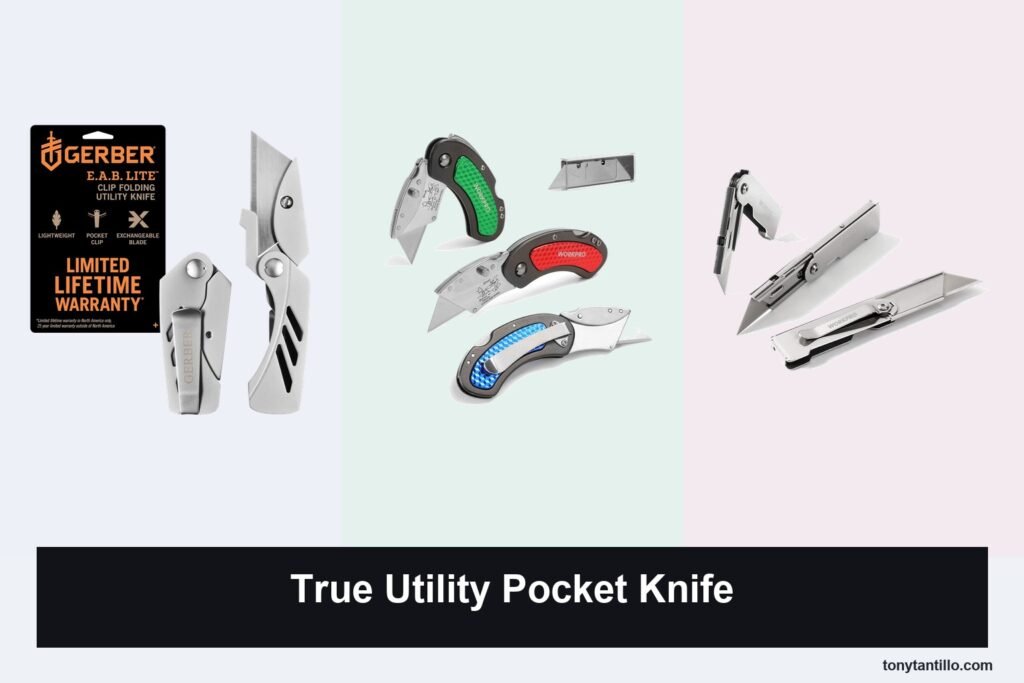
A true utility pocket knife has to do more than cut cardboard. It needs to ride comfortably in a pocket, open quickly, lock securely, and stay useful when the task changes from boxes to rope to scraping paint or adhesive. That is why the best options in this category are not judged only by blade shape. Carry size, blade-changing convenience, locking security, and how much control the handle gives you matter just as much as sharpness.
The four picks here cover distinct versions of the same job. Some lean hard into everyday carry simplicity, some prioritize blade changes and packable size, and one adds scraper functionality for tougher jobsite cleanup. The right choice depends on whether you value absolute compactness, extra versatility, or a more task-specific tool for trade work. The reviews below focus on those real-world tradeoffs, then the buying guide explains how to sort the category for yourself.
Top True Utility Pocket Knife on the Market

Gerber EAB Lite Pocket Razor Knife
Best EDC carry
- Replaceable contractor-grade blade
- Integrated money clip
- 5.1-inch overall length
- 2.24-ounce weight
- Limited lifetime warranty

WORKPRO 3-Piece Folding Utility Set
Best value set
- Three-piece set
- Back-lock mechanism
- Quick blade change
- Aluminum grip handle
- 3.35-inch closed length

WORKPRO 3-Piece Quick Change Pocket Knife Set
Best ultra-compact set
- Three-piece set
- Quick-change blade mechanism
- All standard blades
- 1.66-ounce weight
- 3-inch closed length

Klein Tools 2-in-1 FLICKBLADE
Best for scraping
- Knife and scraper
- Dual locking positions
- Built-in blade storage
- Three carbon steel blades
- Aluminum body
True Utility Pocket Knife Reviews
Gerber EAB Lite Pocket Razor Knife
ADVANTAGES
LIMITATIONS
The Gerber EAB Lite is the most pocket-minded option in this group. Its integrated money clip and slim stainless steel build let it disappear into daily carry better than bulkier utility knives, while the 2.25-inch blade keeps it useful for routine package work without feeling oversized. That combination suits buyers who want a cutter that can ride in the pocket all day and still feel like a normal accessory rather than a dedicated jobsite tool.
The practical advantage of this design is that it keeps the knife simple. The replaceable utility blade means you do not have to treat edge retention like a permanent commitment, and the liner lock adds a necessary layer of control when the knife is open. At 5.1 inches long and 2.24 ounces, it remains compact enough for everyday carry, but the stainless steel handle and blade also suggest a straightforward, low-fuss tool rather than something with extra moving parts to manage.
Against the rest of this group, the EAB Lite is the best fit for someone who wants utility without bulk. It is less specialized than the Klein and less pack-oriented than the WORKPRO three-piece set, but that is exactly why it stands out for commuting, light jobsite tasks, and ordinary household use. The money clip adds another layer of practicality, and the limited lifetime warranty strengthens the case for buyers who want one pocket tool they can keep for years. Choose this one if carry comfort matters more than added functions.
WORKPRO 3-Piece Folding Utility Set
ADVANTAGES
LIMITATIONS
This WORKPRO set is the strongest choice for buyers who want multiple compact cutters instead of one premium pocket knife. The 3-count set changes the value equation immediately, because it lets you spread tools across a shop, office, or home without moving one knife around. The folding format and belt clip make each one easy to keep nearby, and the aluminum handle adds more structure than a flimsy disposable box cutter.
The back-lock mechanism matters because utility knives are often used in awkward positions where blade security is not optional. A knife that locks firmly can feel calmer and more controllable when you are opening cartons, trimming materials, or making repeated cuts. At 3.35 inches closed and 0.18 lb, each knife stays small enough for everyday carry, but the compact egg-shaped body also means the grip will feel different from a longer folding utility knife. That is a sensible tradeoff if you value portability over a full-size handle.
Compared with the Gerber and the other WORKPRO option, this set is more about coverage than singular refinement. The blade-change system keeps maintenance simple, and the three colors help different users or tasks stay organized. It is not the most sophisticated tool here, and the compact body will not appeal to everyone, but it is the most practical bundle for mixed-use households or teams that need dependable cutters in more than one place. Buy it when quantity, convenience, and easy replacement matter more than premium pocket-knife styling.
WORKPRO 3-Piece Quick Change Pocket Knife Set
ADVANTAGES
LIMITATIONS
The appeal of this WORKPRO set is how small it stays without giving up real utility-knife function. At just 1.66 ounces and about 3 inches closed, it is one of the easiest options here to forget in a pocket until you need it. That makes it especially useful for people who already carry keys, a phone, and other gear and do not want a cutter that adds noticeable bulk.
Its all-stainless construction gives it a sturdier feel than many tiny folders, and that matters because compact knives can otherwise feel slippery or fragile in hand. The quick-change mechanism is another practical strength. Being able to swap blades without tools makes the knife easier to maintain in a car, bag, or desk drawer. Because it accepts standard and pro-grade utility blades, you are not locked into a narrow blade format when it is time to restock.
Among the four picks, this is the most compact multi-knife choice and the easiest recommendation for people who prize pocket invisibility over all else. It does not bring the scraper function of the Klein or the integrated money clip of the Gerber, but it is lighter than the other WORKPRO set and still comes as a three-piece bundle. That combination makes it a smart buy for EDC users who want several tiny cutters rather than a single more specialized tool.
Klein Tools 2-in-1 FLICKBLADE
ADVANTAGES
LIMITATIONS
The Klein FLICKBLADE is the most task-specific tool in this group, and that is its advantage. The 2-in-1 design turns it into both a utility knife and a scraper, which is a meaningful upgrade for anyone who regularly deals with adhesive residue, paint, labels, or other cleanup work. The dual locking positions further support that role by giving you a standard cutting mode and an angled mode for more deliberate scraping or detailed tasks.
This is also the most substantial knife here. At 5.92 ounces and 7.53 inches long, it will not disappear in a pocket the way the smaller folders do, but that size is part of why it feels better suited to serious work. Built-in blade storage adds real convenience on the job, because replacement blades stay with the tool instead of living loose in a bag. The aluminum body and included triple-ground carbon steel blades complete the picture of a tool built for repeat use rather than casual carry.
Against the Gerber and both WORKPRO sets, the Klein is the clear choice when scraping matters as much as cutting. It is heavier and less discreet, so it is not the most natural everyday carry option. Still, the combination of scraper functionality, blade storage, and universal blade compatibility makes it unusually versatile for trade work and renovation cleanup. If you need one folding tool that can cut, scrape, and carry its own spares, this is the strongest recommendation in the lineup.
How to Choose a True Utility Pocket Knife
The best utility pocket knife is the one you will actually keep on you and use confidently. That usually means balancing size, opening feel, blade security, and how much cutting variety you really need. Some buyers want the smallest possible pocket profile. Others want a knife that can change blades quickly or do more than one job. Once you know whether your priority is carry comfort, jobsite durability, or task flexibility, the category becomes much easier to sort.
Carry Size
Pocket knives in this category live or die by how often you are willing to carry them. A slimmer knife with a shorter closed length is easier to keep in a front pocket, bag organizer, or glove box without becoming annoying. That matters because a utility knife only helps when it is present at the moment you need to open a box or trim material. A bulky tool can be excellent on paper and still get left behind.
Locking Security
A utility knife should feel stable when the blade is open. Locking systems reduce wobble and help the knife stay composed during push cuts, controlled slices, or repetitive package work. For a pocket tool, that is not a luxury feature. It is part of safe operation. If you expect to use the knife one-handed or in quick bursts, look for a mechanism that clearly holds the blade in place rather than relying on tension alone.
Blade Changes
Replaceable utility blades are one of the biggest advantages in this category because they keep the knife useful after the edge dulls. Tool-free blade changes are especially convenient if you will use the knife across a week of jobs or want to swap blades in a car, office, or workshop without extra tools. Buyers who use knives often should prioritize the simplest replacement system available, since convenience directly affects whether the tool stays sharp and ready.
Handle Feel
Handle shape affects both comfort and control. Compact knives are easier to pocket, but very small bodies can feel cramped during heavier cuts. A more substantial handle can give you a steadier grip, while a smoother body may be gentler on clothing when carried loose. The right balance depends on whether you expect light daily opening tasks or more demanding cutting and scraping. If the knife will see frequent use, ergonomics matter more than flashy styling.
Multi-function Use
Some buyers need more than a plain cutter. A scraper function, blade storage, or an integrated carry feature can turn a simple pocket knife into a more complete work tool. Those extras are useful when they remove another item from your pocket or bag. The tradeoff is usually size or weight. Choose multi-function features when they solve a real task you do often, not just because they sound useful in theory.
Utility Knife Comparison Table
| Product | Best For | Weight | Length | Construction | Warranty | Blade Material |
|---|---|---|---|---|---|---|
| Gerber EAB Lite Pocket Razor Knife | Best EDC carry | 2.24 ounces | 5.1 inches | Stainless Steel | Limited Lifetime Warranty | Stainless Steel |
| WORKPRO 3-Piece Folding Utility Set | Best value set | 148 g | 6.5 inches | Stainless Steel | Not Specified | Stainless Steel |
| WORKPRO 3-Piece Quick Change Pocket Knife Set | Best ultra-compact set | 1.66 ounces | 5.5 inches | Metal,Stainless,Steel | Not Specified | Metal |
| Klein Tools 2-in-1 FLICKBLADE | Best for scraping | 5.92 ounces | 7.53 inches | Stainless Steel | Call vendor for warranty | Aluminum |
How We Tested & Analyzed True Utility Pocket Knife
This roundup emphasizes practical category decisions that affect daily use: portability, blade security, blade replacement convenience, handle comfort, and task versatility. Those are the factors that separate a knife that simply exists from one that becomes part of a routine. Special attention went to how each design would behave in actual carry situations, since the best utility pocket knife is not the most feature-rich one on paper. It is the one that balances size and function in a way the buyer can live with.
The comparison also weighs construction and operational tradeoffs. Heavier tools can feel more authoritative, but they are less likely to disappear into a pocket. Smaller knives are easier to carry, but they may sacrifice grip surface or leverage. Multi-function options solve more problems, though they usually ask for a little more bulk. Rather than treating those traits as isolated specifications, the analysis considers how they interact and which type of user benefits from each arrangement.
Limitations matter here because utility knives often look similar at first glance. A reader could easily overvalue a color, a set count, or a compact shape without thinking through what it changes in use. This analysis therefore focuses on meaningful differences that affect safety, maintenance, carry comfort, and workflow. It avoids overstating blade claims or pretending that one layout is universally best, because the right answer depends on the tasks the knife will actually handle.
Frequently Asked Questions
What makes a utility pocket knife different from a regular pocket knife?
A utility pocket knife is usually built around replaceable blades or a box-cutter style cutting system. That means the edge can be renewed quickly instead of sharpened repeatedly. For buyers, the main advantage is predictable cutting performance and easier maintenance. It is often the better choice for cardboard, packaging, and routine work tasks.
Should I prioritize size or grip comfort?
For everyday carry, size determines whether you will actually keep the knife with you. For frequent use, grip comfort becomes more important because it affects control and fatigue. The best balance depends on your routine. Light users can lean smaller, while people who cut often should be willing to accept a little more bulk for a steadier hold.
Are blade storage and quick-change systems worth paying for?
They are worth it if you use the knife regularly. Quick-change systems reduce downtime, and built-in storage keeps replacement blades from getting lost. Those features matter most when the knife is part of your workday rather than a backup tool. Occasional users may not need them, but active users usually notice the convenience immediately.
What should I look for in a pocket-carry utility knife?
Focus on closed length, weight, lock quality, and how the knife sits in the pocket. A smooth or rounded body is easier to carry, while a secure clip or integrated carry feature can help keep it in place. Also consider whether the knife is intended for simple cutting or for cutting plus scraping, since that changes both size and usefulness.
Final Thoughts
A good true utility pocket knife should make everyday cutting easier without turning into a burden to carry. That is why the best choice is rarely the same for every buyer. Some people need the smallest possible tool. Others need a knife that can swap blades fast or handle scraping duties in addition to cutting. The right answer comes from matching the knife’s shape and functions to the work you actually do.
If your priority is all-day carry, lean toward the most compact and unobtrusive option. If you want a shop-friendly bundle, a multi-piece set makes more sense. And if your tasks include cleanup as well as cutting, a 2-in-1 model is the most capable pick. Choose the design that solves the most real problems for you, and you will end up with a pocket knife that earns its space instead of competing with it.