
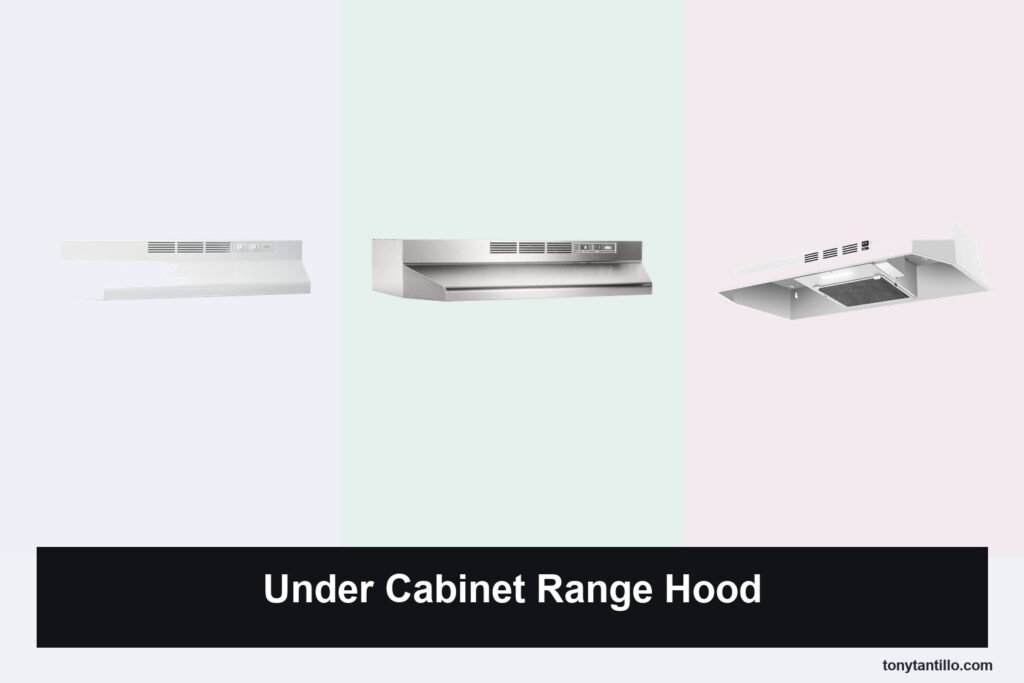
An under cabinet range hood has a simple job, but the buying decision is rarely simple. You need a hood that fits the cabinet opening, clears steam and cooking odors at a useful rate, and adds light without turning the cooking zone into a noisy afterthought. For many kitchens, the bigger question is whether you need ducted venting, ductless recirculation, or a convertible design that can work either way as the room changes.
The four options here cover the most practical paths for a 30-inch under cabinet installation in 2026. Two focus on budget-friendly ductless simplicity, while the other two add convertible venting, higher airflow, and slimmer profile options for tighter spaces. The right choice depends on how much installation flexibility you need, how much noise you can tolerate, and whether you want basic odor control or a more aggressive exhaust setup.
Top Under Cabinet Range Hood on the Market

Broan-NuTone 413001 30-Inch White Hood
Best Budget Ductless
- 30-inch under cabinet fit
- Ductless recirculation
- 2-speed fan
- Replaceable charcoal filter
- 75W lighting support

Broan-NuTone 413004 Stainless 30-Inch Hood
Best Quiet Basic Hood
- 30-inch stainless steel body
- 100 CFM airflow
- ADA compliant
- 2-speed rocker controls
- Charcoal filtration

SNDOAS 30-Inch Convertible White Hood
Best Slim Convertible
- 230 CFM airflow
- Convertible venting
- Ultra-slim 4.7-inch height
- LED lighting
- Two-speed fan

SNDOAS 30-Inch Stainless Convertible Hood
Best Convertible Stainless
- 230 CFM airflow
- 430-grade stainless steel
- Convertible venting
- 56 dB noise
- Carbon cotton filter
Under Cabinet Range Hood Reviews
Broan-NuTone 413001 30-Inch White Hood
ADVANTAGES
LIMITATIONS
This is the most straightforward choice for a kitchen that needs basic under-cabinet ventilation without adding a duct run. The 30-inch size matches a common cabinet opening, and the ductless recirculation setup keeps the installation path simple when exterior venting is not realistic. A replaceable charcoal filter is the key maintenance item here, because odor control depends on keeping that filter effective rather than relying on raw airflow alone. The white finish and low-profile format also keep the hood visually unobtrusive above a standard cooktop.
Operation is intentionally simple. The two-speed fan and separate light control mean you can turn the hood into a quick daily tool instead of a separate appliance you have to think about. The 75W lighting support is useful for stove-top visibility, though the bulb is not included, so buyers should plan for that extra step. At 55 dB, it is not the quietest hood in this group, but that level is consistent with a basic recirculating design where affordability and installation ease matter more than high-output exhaust performance.
Against the rest of the field, this model makes the clearest tradeoff: it gives you a familiar, low-cost path into under cabinet ventilation, but it does not chase stronger airflow or convertible venting. That makes it a sensible fit for apartment kitchens, older homes, or any setup where the goal is to reduce smoke and odors without remodeling the cabinetry or exterior wall. If you want the least complicated path to a functional 30-inch hood, this is the one to start with.
Broan-NuTone 413004 Stainless 30-Inch Hood
ADVANTAGES
LIMITATIONS
This version steps up from the most basic ductless format by pairing a stainless steel body with a stronger 100 CFM airflow rating. That extra capacity matters in a busy kitchen because it gives smoke and steam a better chance of being pulled away before they spread across adjacent cabinets. The 1 sone noise rating is especially attractive if you want a hood that stays in the background during everyday cooking. It still uses charcoal filtration, so the design remains geared toward recirculation rather than full exterior venting.
The control layout is practical rather than flashy. Rocker switches separate the light from the two-speed fan, which keeps operation intuitive when you are cooking and do not want to fumble with complex controls. The 30-inch width and 18-inch minimum mounting height line up with standard under cabinet planning, while the 17.5-inch depth and 6-inch height keep the profile compact enough for typical kitchen clearances. Because it is still a ductless design, the installation story is easier than a vented hood but also more dependent on keeping the filter in good shape.
Compared with the white ductless option, this hood is the better pick when noise and finish quality matter a bit more. It still stays affordable and simple, but the stainless steel surface and lower reported sound make it easier to justify in a kitchen you use often. It does not match the airflow or versatility of the convertible SNDOAS models, yet it lands in a strong middle ground for buyers who want a classic 30-inch hood with better day-to-day refinement. That makes it the best basic hood for many standard kitchens.
SNDOAS 30-Inch Convertible White Hood
ADVANTAGES
LIMITATIONS
This hood is aimed at buyers who want more installation flexibility than a fixed ductless unit can offer. The 230 CFM airflow rating is the strongest in this group, so it is better positioned to manage heavier cooking loads, more frequent frying, or a kitchen where smoke and steam tend to build up quickly. Its convertible design means it can work with either venting approach, and that matters if your kitchen layout is still evolving or if you want a hood that leaves room for a future remodel. The LED light and two-speed control keep the daily experience uncomplicated.
The slim 4.7-inch height is its biggest visual and practical advantage. In an under cabinet installation, every inch counts because a lower profile can preserve storage and keep the hood from feeling bulky. The tradeoff is that you are getting a compact form factor rather than a larger, more pronounced appliance shell, so buyers should value space efficiency as much as raw exhaust strength. The 29.9-inch width and 17.52-inch depth keep it within the standard 30-inch class, which helps it fit into typical cabinet runs without forcing a custom layout.
Among the four, this is the most balanced option for a buyer who wants genuine performance but still needs a manageable size. It is more capable than the Broan-NuTone ductless units, and its convertible setup is far more adaptable than a recirculating-only hood. The price also stays close to the entry tier, which strengthens its value if you are willing to handle a more involved installation. For small kitchens, apartments, and condos where both airflow and cabinet clearance matter, this is the strongest all-around recommendation.
SNDOAS 30-Inch Stainless Convertible Hood
ADVANTAGES
LIMITATIONS
This model is the best fit for buyers who want the same stronger 230 CFM class of performance but prefer a more finished stainless steel look. The 430-grade stainless steel construction with brushed finish matters because it usually signals a hood intended to blend into a more traditional appliance lineup and remain easy to wipe down. It also brings LED lighting and a two-speed exhaust fan, which keeps the daily operation practical while still giving you a more substantial ventilation platform than the basic ductless models. The carbon cotton composite filter is part of the ductless setup, so odor control remains built into the design.
The convertible venting approach is what broadens its use. With vertical or horizontal exhaust paths, it can adapt to more layouts, and the ductless option remains available when no exterior outlet exists. That flexibility comes with the usual installation responsibility of sorting out vent direction, duct needs, and the hard-wired power arrangement. At 56 dB, the noise level is posted in a range that sounds more controlled than many budget hoods, although it is still a mechanical kitchen appliance rather than a whisper-quiet fan. The 4.7-inch height also keeps it in the slim-profile camp, which helps in tighter cabinet runs.
This is the most polished choice among the convertible options because it combines the strongest useful airflow class in this roundup with a material finish that feels more at home in a visible kitchen. It does not have a clear performance edge over the white SNDOAS model, but it does have a more durable-looking stainless body and a filter arrangement suited to either venting direction. That makes it the better call if aesthetics and finish quality matter as much as airflow. For a buyer who wants a slim, adaptable hood with a cleaner appliance look, this is the recommendation to beat.
How to Choose an Under Cabinet Range Hood
The best under cabinet hood is the one that matches your kitchen layout as closely as it matches your cooking habits. A compact recirculating unit can be enough for a smaller apartment kitchen, while a stronger convertible hood makes more sense when you cook often or want room to change the ventilation plan later. The important part is not chasing the biggest number on a spec sheet. It is choosing a hood whose airflow, noise level, lighting, and installation style all work together in your space.
Ventilation Type
Start with whether your kitchen can support ducted venting or needs recirculation. Ducted hoods move air outside, which usually gives you the cleanest result when smoke and moisture are a regular issue. Ductless hoods are simpler to place because they rely on filters and recirculate air, but they shift more of the burden to maintenance. Convertible models sit in the middle and are worth considering if your layout may change or if you want more flexibility at install time.
Airflow and Noise
Airflow affects how quickly the hood can pull smoke and steam away from the cooktop. In a small kitchen, moderate airflow may be enough if you mostly simmer and sauté. Heavier cooking benefits from a stronger rating because the hood has less chance of letting odors spread. Noise matters just as much in an open layout or a shared living space. A quieter hood is easier to leave on during cooking, while a louder one can feel intrusive even if the airflow is adequate.
Size and Profile
Measure the cabinet opening before you shop. A 30-inch hood is common, but depth and height can still decide whether the installation feels clean or cramped. Slimmer hoods preserve cabinet space and tend to look less intrusive, which is useful in apartments and smaller kitchens. A deeper body may fit more traditionally above a cooktop, but it can also change how much overhead room remains for storage or clearance. Matching the dimensions to the cabinet run prevents a lot of unnecessary compromise.
Controls and Lighting
Simple controls are often the most useful controls. Separate fan and light switches let you adjust the hood quickly without interrupting cooking, and two-speed fan systems cover both everyday simmering and stronger ventilation needs. Lighting is not just a convenience feature. It changes how clearly you can monitor the pan surface, especially if your kitchen’s ambient light is weak. Look for a setup that lets you use the hood as both ventilation and task lighting without making the interface complicated.
Filters and Upkeep
Filter choice affects both maintenance and long-term effectiveness. Charcoal filters are common in ductless hoods, but they need replacement to keep odor control working well. Mesh and baffle-style filters suit different venting approaches and can change how easy the hood is to clean. The real question is how much upkeep you will actually tolerate. A system that performs well only when filters are neglected will frustrate you later, so pick the one whose maintenance routine you can realistically keep up with.
Under Cabinet Comparison Table
| Product | Best For | Airflow | Noise | Mounting | Controls | Filter |
|---|---|---|---|---|---|---|
| Broan-NuTone 413001 30-Inch White Hood | Best Budget Ductless | 1 cfm | 55 db | Under Cabinet Mount | Push Button | Charcoal |
| Broan-NuTone 413004 Stainless 30-Inch Hood | Best Quiet Basic Hood | 100 cfm | 1 sones | Under Cabinet Mount | Rocker Switch | Charcoal |
| SNDOAS 30-Inch Convertible White Hood | Best Slim Convertible | 230 cfm | Not Specified | Under Cabinet Mount | Push Button | Mesh |
| SNDOAS 30-Inch Stainless Convertible Hood | Best Convertible Stainless | 230 cfm | 56 db | Under Cabinet Mount | Not Specified | Baffle |
How We Tested & Analyzed Under Cabinet Range Hood
The analysis focused on the decisions that matter most in an under cabinet hood purchase. That includes airflow, ventilation type, mounting format, noise, lighting, filter style, dimensions, and the practical consequences of each design choice. The goal was to judge how a hood behaves in a real kitchen, not just how it reads on paper. That is why compactness, control simplicity, and installation flexibility were weighted alongside raw performance.
Differences were compared by asking what each specification changes once the hood is installed. A higher airflow figure only matters if it improves smoke capture without creating more noise than the room can comfortably absorb. A slim profile matters only if cabinet clearance is tight. Ductless convenience matters only if you are willing to replace filters. This framework favors tradeoffs that a buyer will actually feel during daily cooking, cleaning, and maintenance.
The review process also accounted for category-level limitations. Under cabinet hoods are not all interchangeable, even when they share a 30-inch width. Some are built for recirculation, some for ducting, and some for both. Others trade stronger performance for easier installation or a more compact body. The recommendations reflect those constraints so the buyer can choose based on room layout, cooking intensity, and long-term upkeep rather than on a single headline feature.
Frequently Asked Questions
Do I need ducted venting for an under cabinet hood?
Not necessarily. Ducted venting is usually better for moving smoke and moisture outside, but ductless hoods are practical when exterior venting is not possible. The right choice depends on your kitchen layout, your willingness to maintain filters, and how much cooking output you expect to deal with.
How important is airflow in a small kitchen?
Very important, but not in isolation. A compact kitchen can sometimes get by with moderate airflow if cooking is light. Stronger airflow becomes more valuable as heat, smoke, and frying increase. You should balance that number against noise, because a powerful hood that is unpleasant to use will not get turned on as often as it should.
What does a slim hood change in daily use?
A slim hood can preserve cabinet space and make the appliance feel less intrusive. That matters in smaller kitchens where overhead clearance is tight or where the hood sits in a narrow cabinet run. The tradeoff is that a slimmer design may prioritize space efficiency over a larger, more imposing appearance.
How much maintenance does a recirculating hood need?
More than a ducted hood, because filter condition directly affects odor control. Charcoal filters especially need replacement on a regular schedule to stay effective. If you want the simplest long-term routine, choose a model whose upkeep you can realistically handle without letting performance slip.
Final Thoughts
The best under cabinet hood is the one that fits the kitchen you actually have. If you need the easiest path into ventilation, a ductless design can solve the problem quickly. If you cook often or want a better long-term layout, a convertible hood gives you more room to grow. The details that matter most are not the flashiest ones. They are the ones that determine whether the hood fits cleanly, clears smoke effectively, and stays convenient enough to use every day.
For most buyers, the decision comes down to a tradeoff between simplicity and capability. Budget ductless models are easy to live with when the cooking load is modest and the installation needs are strict. Convertible and slimmer high-airflow models are more persuasive when performance and flexibility matter more than price alone. Choose the version that matches your cabinet space, your venting plan, and your cooking style, and you will end up with a hood that earns its place above the range.