
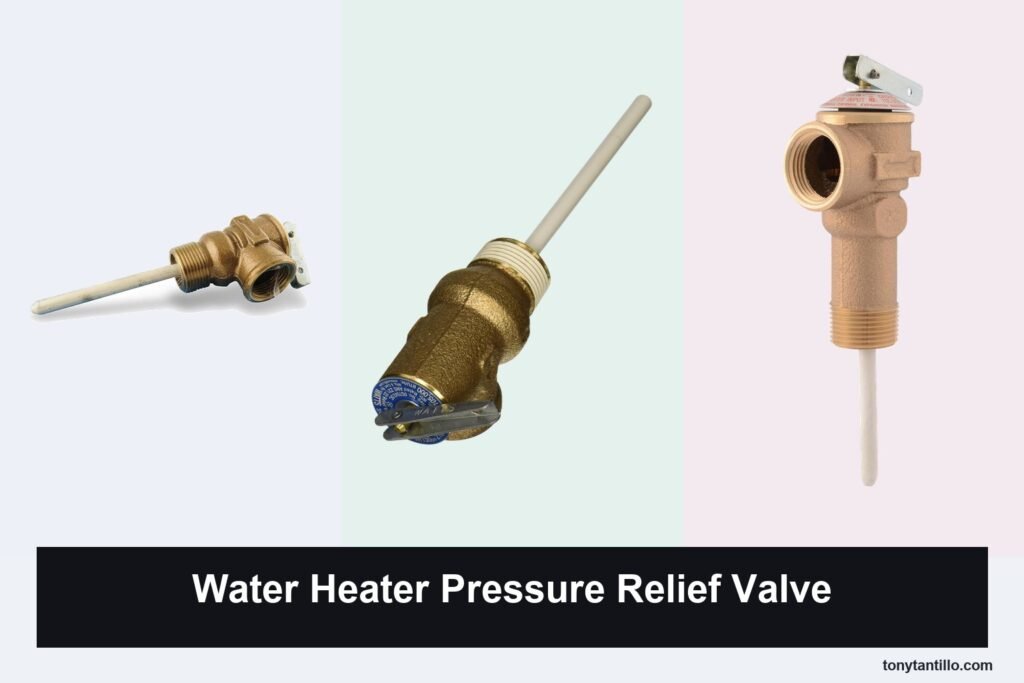
A water heater pressure relief valve is not a cosmetic replacement part. It is a critical safety component that has to open at the right point, seal reliably the rest of the time, and fit the tank without creating installation headaches. The right choice depends on more than thread size. You also need to match temperature and pressure settings, body length, connector type, and the materials that will live in hot water day after day.
The five valves below cover the main decision points buyers face in this category. Some are straightforward brass-and-stainless replacements with classic NPT connections. Others use bronze bodies, push-to-connect inlet styles, or longer shanks that matter on specific tanks. I focus on what each valve changes in real use, where it fits best, and which tradeoff matters most so you can choose the safest practical option for your heater.
Top Water Heater Pressure Relief Valve on the Market

Camco 10473 T&P Relief Valve
Best All-Around Pick
- 3/4-inch NPT connection
- 4-inch extension probe
- All brass body
- Stainless steel spring
- CSA certified

Rheem SP12574 Small Relief Valve
Best OEM Option
- 3/4-inch NPT threads
- 210°F / 150 PSI
- 7-1/4-inch overall length
- 105,000 BTU/HR capacity
- One-year limited warranty
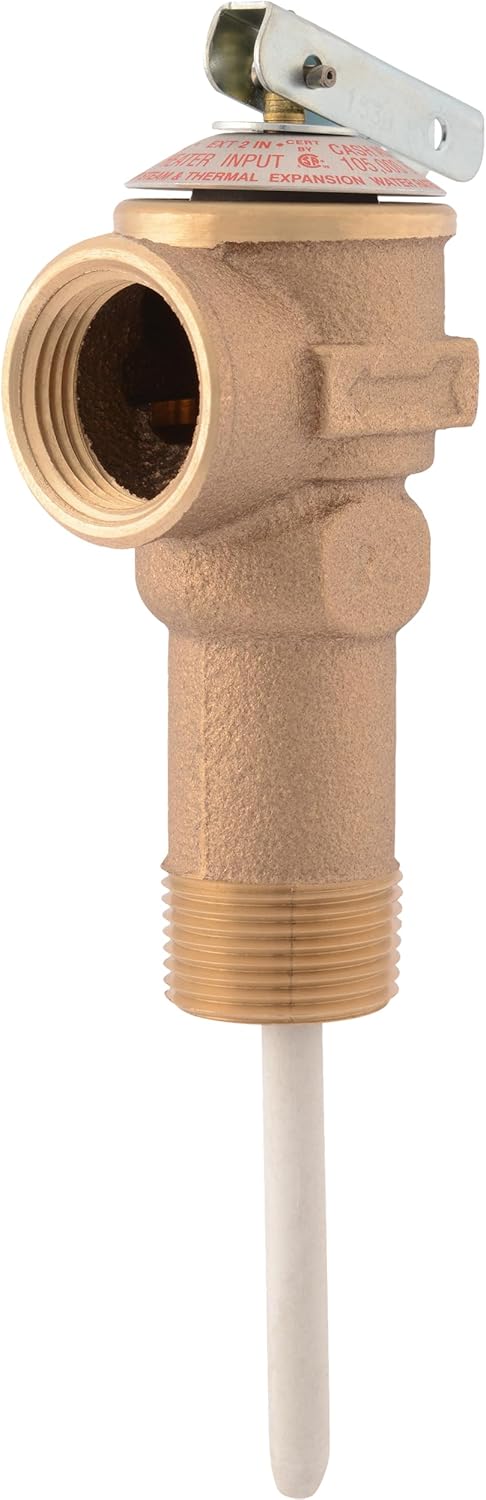
Cash Acme NCLX-5L Valve
Best Premium Standard
- Cast bronze body
- 2-3/32-inch shank
- Lead-free certification
- 150 PSI / 210°F
- NSF and CSA compliant

Cash Acme NCLX-5LX Valve
Best Connection Flexibility
- Push-to-connect inlet
- Bronze and brass body
- 150 PSI / 210°F
- Lead-free certified
- Compact 1 x 1.5 x 6.5 inches

Rheem SP8346 NPT Relief Valve
Best Simple Replacement
- 3/4-inch NPT threads
- 210°F / 150 PSI
- 3-inch sensor length
- 7-1/4-inch overall length
- Small size
Water Heater Pressure Relief Valve Reviews
Camco 10473 T&P Relief Valve
ADVANTAGES
LIMITATIONS
Camco’s 10473 is the most straightforward choice for buyers who want a conventional replacement valve with clearly defined safety settings and common heater compatibility. The 3/4-inch NPT connection keeps it aligned with many RV and home water heater setups, while the 150 PSI factory setting matches the standard relief point used across this category. That combination matters because a replacement valve should solve a fit problem without creating a calibration concern. The 4-inch probe also gives it the reach needed for tanks that depend on an extended sensing element rather than a short-body design.
The construction is practical rather than flashy. An all brass body and stainless steel pressure spring are paired with an epoxy-coated extension probe, which reduces the chances of corrosion buildup in a high-heat, moisture-heavy environment. The valve is CSA certified to ANSI Z21.22, and that code compliance is a meaningful checkmark for a safety part that should never be chosen on appearance alone. The limited 1-year warranty is modest, but in this category the more important point is that the materials and certification align with the valve’s safety role.
Compared with the more specialized options in this roundup, Camco lands in the middle of the pack on price and complexity. It is not the most compact valve, and it does not use the push-to-connect convenience of some alternatives. What it does offer is a balanced set of basic features that fit many common replacement scenarios without pushing the budget. That makes it the sensible recommendation for general-purpose replacements on RV or home heaters where standard threads and classic valve construction are exactly what you want.
Rheem SP12574 Small Relief Valve
ADVANTAGES
LIMITATIONS
Rheem’s SP12574 is built for buyers who want a replacement that stays close to the original equipment path. The small size, 3/4-inch NPT inlet and outlet threads, and factory settings of 210°F and 150 PSI make it easy to line up with many standard water heater service jobs. That matters because a relief valve is one of the few parts where correct fit is more important than broad versatility. Its 105,000 BTU/HR capacity also signals that it is sized for a substantial residential heating load rather than a light-duty application.
The valve’s stainless steel exterior finish and brass material type give it a familiar serviceable profile for a pressure part exposed to heat and moisture. Overall length is 7-1/4 inches, with a 3-1/4-inch body length and a 4-inch sensor length, so the physical footprint is long enough to require attention in tighter access spaces. That is not a flaw, but it is a real installation consideration. The valve is CSA compliant, and the one-year limited warranty keeps the ownership profile consistent with a replacement part that is expected to work correctly from day one.
Against the other valves here, this Rheem stands out less for unusual materials than for direct compatibility with Rheem water heaters and a familiar, orthodox layout. It is not the cheapest option, and it does not add special corrosion-isolation features or push-to-connect flexibility. Instead, it offers a clean, conventional path for buyers who value a parts-match approach over experimentation. If you are replacing a Rheem heater valve and want a model that reads like a direct service part, this is the most obvious choice.
Cash Acme NCLX-5L Valve
ADVANTAGES
LIMITATIONS
Cash Acme’s NCLX-5L is the most reassuring choice in the group for buyers who care about materials, code compliance, and long-term service confidence. The cast bronze body is paired with brass and stainless steel internal parts, a silicone seat disc, and a stainless steel pressure spring. That layered construction matters because this is a safety valve that should resist wear where hot water, mineral content, and repeated cycling all try to shorten service life. The 2-3/32-inch shank length also gives it a specific compatibility advantage on tanks that need a slightly extended profile.
The valve is factory calibrated to 150 PSI and 210°F, which keeps it aligned with standard T&P expectations. More importantly, it is certified lead-free to NSF/ANSI/CAN 372 and compliant with ASSE 1003 and CSA B356. Those marks are more than paperwork in this category. They indicate that the valve is intended for residential water-heater safety use and has been built to a recognized standard. At 9.92 ounces and 8 x 2 x 1.5 inches, it is compact enough to fit neatly while still carrying the heft you expect from bronze construction.
Versus the Camco and Rheem options, this Cash Acme model feels more substantial and more narrowly engineered for code-conscious buyers. It is also the only choice here with this particular combination of bronze body, silicone seat, and explicit lead-free certification. The tradeoff is price, which is higher than the most basic alternatives. That premium is justified for buyers who want the strongest materials story and a valve that looks ready for a serious, long-term replacement rather than a quick stopgap. It is the best pick when compliance and durability matter as much as simple fit.
Cash Acme NCLX-5LX Valve
ADVANTAGES
LIMITATIONS
The NCLX-5LX is the most installation-focused valve in this group. Its push-to-connect inlet changes the setup equation for buyers working with compatible copper or CPVC plumbing, because it reduces the need to rely on a conventional threaded connection at the inlet. That can save time and simplify a replacement where access is limited. The valve still keeps the familiar 150 PSI and 210°F factory settings, so the installation convenience does not come at the expense of standard relief behavior. For many buyers, that is the right balance between modern connection style and old-school safety requirements.
The material package is strong as well. The valve combines bronze, brass, and stainless steel, and it uses an inert thermal element coating intended to isolate mineral deposits and galvanic corrosion. That detail matters in hard-water conditions because scale buildup can affect long-term movement and reliability. With a compact 1 x 1.5 x 6.5-inch footprint, the valve is also easier to place in tighter mechanical spaces than longer-bodied alternatives. It is lead-free certified and compliant with CSA, NSF, and ANSI standards, which reinforces its suitability as a safety component rather than a generic plumbing fitting.
Relative to the other valves here, this one is the best fit when the connection method is the deciding factor. The Camco and Rheem models are more traditional threaded replacements, while the Cash Acme NCLX-5L is aimed at a buyer who wants broad compatibility with newer connection styles and a compact body. The tradeoff is that its design is more specialized, so it is not the first pick when you simply need a standard threaded swap. Choose this model when the inlet style and corrosion protection matter enough to justify a slightly more technical replacement.
Rheem SP8346 NPT Relief Valve
ADVANTAGES
LIMITATIONS
Rheem’s SP8346 is the cleanest no-nonsense replacement in the group for a standard heater service task. It uses 3/4-inch NPT threads, a small size designation, and the familiar 150 PSI maximum pressure setting with a 210°F temperature rating. That combination keeps it squarely in the mainstream of water heater relief valve replacements. The appeal here is not novelty. It is predictability. When you need the part to mirror a common configuration without forcing a rethink of the installation, this is the kind of valve that keeps the job straightforward.
Its physical dimensions matter more than they first appear. The overall length is 7-1/4 inches, with a 4-1/4-inch body length and a 3-inch sensor length. That shorter sensor length can be useful in tighter layouts where a longer probe would complicate clearance or alignment. The stainless steel exterior finish and metal material type do not add flashy selling points, but they do keep the part aligned with the job’s demands. CSA-related capacity is listed at 105,000 BTU/HR, which indicates it is sized for a meaningful residential heating application rather than a small auxiliary system.
Compared with the Camco and the two Cash Acme valves, this Rheem model is less about material story and more about plain compatibility. It does not bring bronze construction, corrosion-isolation coating, or push-to-connect convenience. What it does bring is a familiar threaded format and a short, serviceable profile that can be easier to place when space is tight. The best buyer is someone who wants a conventional replacement for a compatible Rheem heater and values a direct mechanical fit over extra features. For that use case, it is a strong, uncomplicated choice.
How to Choose a Water Heater Pressure Relief Valve
Choosing a replacement relief valve is mostly about getting three things right at the same time: the relief set point, the physical fit, and the connection style. If any of those is off, the part can be hard to install or inappropriate for the heater it is protecting. Because this is a safety device, the best purchase is usually the one that matches the tank cleanly and carries clear code compliance rather than the one with the longest feature list.
Thread and Connection Fit
The first decision is whether the valve matches the heater’s inlet and outlet style. A standard 3/4-inch NPT connection works for many replacements, but push-to-connect options are only useful when the plumbing around the tank is built for them. A mismatch here can turn a simple service task into a piping project. Measure before you buy, and treat the connection type as a hard requirement rather than a preference.
Pressure and Temperature Set Point
Most water heater relief valves in this category are factory set to 150 PSI and 210°F. That consistency is intentional, because the valve must open before the tank is stressed beyond safe limits. You should not try to choose a higher setting for extra margin. The correct relief point is defined by the system and code requirements, not by convenience. What matters is that the valve is clearly rated for the heater it protects.
Body Length and Clearance
Physical dimensions matter more than many buyers expect. A longer shank or sensor can improve compatibility with some tanks, but it can also create clearance issues near walls, straps, or nearby piping. Compact valves are easier to place in tight spaces, while longer-body designs can be better when the tank needs a deeper probe. Check the available space around the opening before you order so the handle, outlet, and sensor all have room to function.
Materials and Durability
The body material affects more than corrosion resistance. Brass, bronze, stainless steel, and coatings such as epoxy all influence how the valve handles heat, water quality, and long-term cycling. Bronze-bodied valves often feel more robust, while brass and stainless combinations are common in conventional replacements. If your water is aggressive or mineral-heavy, a design that addresses corrosion and scaling can be worth paying for because a relief valve has to move freely when it matters most.
Code Compliance
Relief valves should be chosen with certification in mind. Marks such as CSA, NSF, ASSE, or lead-free compliance are useful because they show the valve is intended for potable-water safety use and recognized plumbing applications. For a part that protects a water heater, code alignment is not an optional bonus. It is part of the purchase decision. When two valves look similar, the one with clearer compliance documentation is usually the safer buy.
Relief Valve Comparison Table
| Product | Best For | Pressure | Size | Threads | Material | Warranty |
|---|---|---|---|---|---|---|
| Camco 10473 T&P Relief Valve | Best All-Around Pick | 150 psi | One Size | 0.75 inches | Brass, Stainless Steel, Epoxy | Limited 1 Year |
| Rheem SP12574 Small Relief Valve | Best OEM Option | 150 psi | Small | 3/4″ NPT | Brass | One Year Limited Warranty from Date of Purchase |
| Cash Acme NCLX-5L Valve | Best Premium Standard | 290 bar | 3/4 in. | 0.75 inches | Bronze | No Warranty |
| Cash Acme NCLX-5LX Valve | Best Connection Flexibility | 150 psi | 2.25 x 2.5 x 3 inches | 3/4 Inch | Brass, Bronze, Stainless Steel | Not Specified |
| Rheem SP8346 NPT Relief Valve | Best Simple Replacement | 150 psi | Small | 3/4 inches | Metal | Not Specified |
How We Tested & Analyzed Water Heater Pressure Relief Valve
This category was evaluated by focusing on the factors that matter most in a pressure relief valve: rated pressure and temperature, thread and connection compatibility, body length, material construction, and compliance markings. Those criteria determine whether a valve can be installed cleanly and whether it is suitable for the heater it protects. Price and warranty were considered as secondary signals of value, but only in relation to the mechanical and safety basics that come first for this kind of part.
Comparisons were made by looking for meaningful tradeoffs rather than superficial differences. A longer probe, a push-to-connect inlet, or a bronze body can each change the buying decision in a different way, so the analysis separates convenience, durability, and compatibility instead of treating them as the same thing. The goal is to help a reader identify the valve that best fits the tank, the plumbing around it, and the level of durability they want to pay for.
One limitation of this category is that many valves share the same core relief settings, which makes the real differences subtle. That means fit, construction, and certification matter more than headline specifications. Another limitation is that some products provide richer specification detail than others. Where information is sparse, the analysis stays conservative and avoids filling gaps with assumptions so the recommendations remain grounded and useful.
Frequently Asked Questions
What setting should a water heater relief valve use?
Most residential water heater relief valves are factory set to 150 PSI and 210°F. That is the standard reference point for this category. You should match the heater’s requirements and the replacement part’s rating, not look for a higher number. The valve’s job is to open at a safe threshold, so consistency matters more than chasing a different set point.
Why does thread size matter so much?
Thread size and connection type determine whether the valve will physically fit the tank without adapters or rework. A 3/4-inch NPT connection is common, but not every heater uses the same arrangement. Getting this wrong can delay the repair or create leak risk. Always verify both the connection style and the available clearance around the opening.
Do material differences really matter on a safety valve?
Yes. Brass, bronze, stainless steel, and protective coatings affect corrosion resistance, durability, and how well the valve tolerates hot water and mineral buildup. Since the valve may sit in place for years before it is needed, the internal materials matter. A stronger construction can improve confidence that the valve will move properly when pressure rises.
Is certification important for a replacement valve?
It is very important. Certifications such as CSA, NSF, ASSE, and lead-free compliance help show that the valve is intended for potable-water safety use. For a part that protects a water heater, certification is part of the value proposition, not an extra. If two valves appear similar, the one with clearer compliance is usually the better buying decision.
Final Thoughts
A good water heater pressure relief valve is the one that disappears into the system after installation and does its job quietly for years. That means correct threads, the right relief settings, suitable body length, and construction that can survive heat and mineral exposure. Once those basics are aligned, the rest of the decision becomes a matter of whether you want a simple threaded replacement, a more robust bronze-bodied design, or a connection style that shortens installation time.
The safest way to choose is to start with fit and code compliance, then weigh durability and convenience. A standard threaded valve is often the most practical answer, but specialized plumbing layouts can justify a push-to-connect or extended-shank model. Pick the valve that matches the heater cleanly and the installation will usually be straightforward. Pick the one that also matches the environment around the tank, and you are more likely to get a replacement that lasts as well as it protects.