
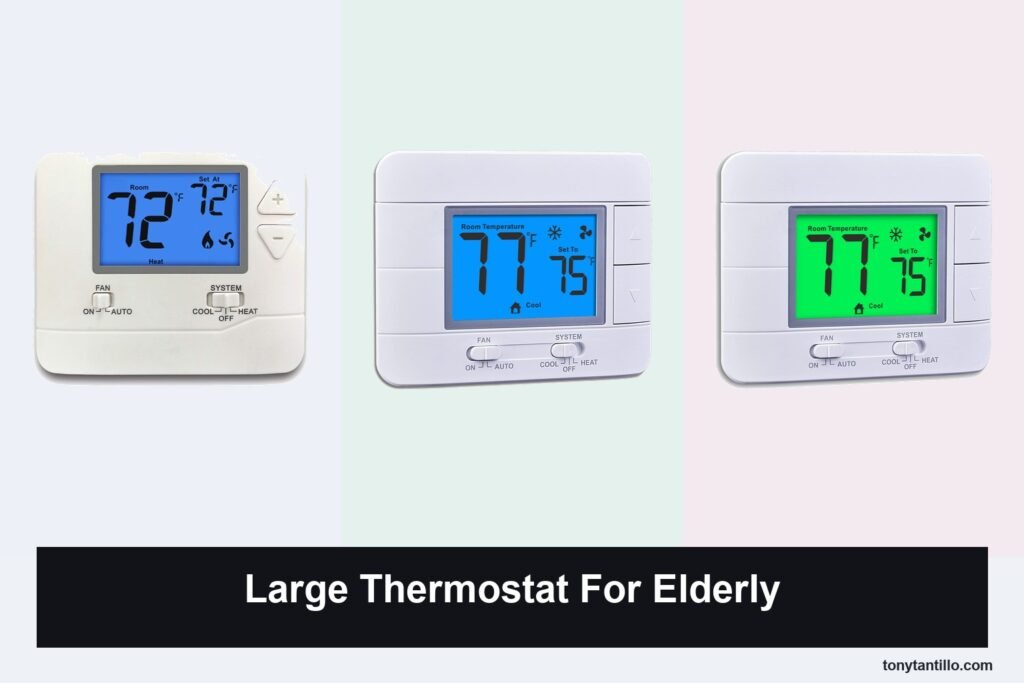
A thermostat can be one of the easiest parts of a home climate system to use, or one of the most frustrating. For older adults, the difference often comes down to legibility, button size, and how much thinking the device demands before a temperature change can happen. The best options in this category keep the interface simple while still giving you accurate control, clear feedback, and a display that can be read without leaning in close.
This roundup focuses on straightforward non-programmable models that prioritize visible characters, backlighting, and simple push-button operation. Compatibility matters just as much as readability, because many of these thermostats are limited to single-stage systems and may not work with heat pumps, multistage equipment, or line-voltage baseboard setups. The right choice is the one that fits the wiring and the heating or cooling system first, then matches the user’s comfort with the controls.
Top Large Thermostat For Elderly on the Market

ELECTECK Big LCD Thermostat
Best Simple Display
- 4.5 sq. in. display
- Large separate buttons
- 24VAC or AAA power
- No C-wire required
- Single-stage 1 heat/1 cool

Garystat Blue LCD Thermostat
Best Feature Set
- 5-inch display
- Humidity monitor included
- Blue backlight
- 2 AAA or 24VAC power
- 2-year warranty

Garystat Green LCD Thermostat
Best Readability Balance
- Green backlit display
- Humidity and temperature monitor
- 2 AAA or 24VAC power
- No C-wire required
- 2-year manufacturer warranty

Suuwer Green Backlight Thermostat
Best Retrofit Fit
- Large green backlit display
- 2 to 5 wire compatibility
- 0.2°F to 2°F swing
- No C-wire needed
- 2-year warranty

White-Rodgers 70 Series Thermostat
Best Heat-Only Option
- Digital backlit display
- Heat-only single-stage
- 3 AAA batteries included
- 5-year limited warranty
- Vertical profile
Large Thermostat For Elderly Reviews
ELECTECK Big LCD Thermostat
ADVANTAGES
LIMITATIONS
The ELECTECK thermostat is built around clarity, which is the main reason it suits a senior-friendly home. Its 4.5 sq. In. Display and large characters reduce the strain of checking temperature at a glance, while the big separate buttons make routine adjustments less fussy than compact touch interfaces. Because it is non-programmable, there is no schedule to manage, so the user is dealing with one straightforward task instead of menus and time blocks. That simplicity matters when the goal is quick, repeatable temperature changes without confusion.
Setup is also easier than many wired thermostats because it can run on 24VAC power or two AAA batteries, and a C-wire is not required. That broadens compatibility for older homes that may not have the ideal wiring setup for a more advanced controller. The single-stage design keeps the scope narrow, which is good for conventional one heat, one cool systems, but it also means this is not the right pick for multistage, mini-split, or line-voltage electric heat applications. The five-minute compressor delay protection adds a useful layer of system protection without adding any extra complexity for the user.
Against the other options here, this model stands out for being uncomplicated rather than feature-heavy. It does not add humidity monitoring or extra display modes, and that restraint can be an advantage for buyers who want the fewest distractions possible. The readable screen, large buttons, and flexible power setup make it a strong match for households that value plain operation over added information. If the system is compatible, this is one of the clearest and most approachable choices in the group.
Garystat Blue LCD Thermostat
ADVANTAGES
LIMITATIONS
Garystat takes the same easy-control idea and adds more information on screen, which can be helpful when someone wants to see more than temperature alone. The large characters and blue backlight are designed for easy reading, and the separate buttons keep setpoint changes direct. Its 5-inch display is slightly larger than several alternatives here, which can make a difference for users who prefer a bigger visual target. The humidity monitor is the main upgrade, since it adds a second environmental cue without turning the thermostat into a complicated smart device.
That extra readout is useful only if the home actually benefits from knowing humidity. In a dry winter or a muggy summer, a visible humidity number can help the household understand why the room feels uncomfortable even when the thermostat setting has not changed. This model also runs on 24VAC or two AAA batteries, and it does not require a C-wire. The downside is that compatibility remains narrow. It is still limited to single-stage systems and does not work with heat pumps with auxiliary heat, multistage systems, or 120/240V electric baseboard heat.
Compared with the most basic thermostats in this roundup, this one asks for only a little more attention while giving back a little more information. That makes it a sensible middle ground for buyers who want clarity, but not a stripped-down display that tells them nothing beyond room temperature. The two-year warranty adds another practical point in its favor. Choose this one when a large screen matters, humidity awareness is useful, and the home uses a standard compatible system.
Garystat Green LCD Thermostat
ADVANTAGES
LIMITATIONS
This Garystat version follows the same single-stage, non-programmable concept but swaps in a green backlight and a slightly different display size, which gives buyers another readability-oriented option. The clear characters and separate buttons are the main usability strengths. For someone who wants a thermostat that can be checked quickly without navigating programming menus, that matters more than decorative extras. The humidity and temperature monitor adds another layer of awareness, so the user can judge comfort more fully than with a temperature-only display.
Installation remains relatively accessible. It supports 24VAC power or two AAA batteries, and C-wire-free operation helps when the existing wiring is limited. The model is intended for gas, oil, electric furnace, and central heating and cooling setups, but it explicitly excludes heat pumps, auxiliary heat, multistage systems, and electric baseboard or line-voltage applications. That means the benefit is not universal convenience. It is convenience within a fairly tight compatibility window, which is exactly what some older homes need.
Among the thermostats in this roundup, this one is best understood as a practical readability-first option with a few comfort extras. It does not try to be the most minimal model, and it does not try to be a full smart controller either. The balance of a large illuminated display, humidity monitoring, and broad standard-system support makes it a strong candidate for households that want visual ease without sacrificing basic environmental awareness. It is a good recommendation when the existing system fits its limits and the user benefits from a slightly richer screen.
Suuwer Green Backlight Thermostat
ADVANTAGES
LIMITATIONS
Suuwer is the most compatibility-conscious option in this group. It is designed for single-stage heating and cooling systems and specifically notes support for existing bases with 2 to 5 wires. That makes it worth considering in older homes where the wiring is limited but still conventional. The large green backlit display with clear numbers is especially useful for elderly users who want a thermostat that can be read without effort. Its temperature control is also precise at ±1°F temperature control, which helps keep room conditions steady rather than drifting more than necessary.
The practical value here is retrofit friendliness. Dual power through 24VAC or two AAA batteries means the lack of a C-wire will not automatically rule it out for many homes. It also includes 5-minute compressor delay protection and a low battery indicator, both of which reduce the odds of avoidable system stress or surprise maintenance issues. The tradeoff is that the compatibility rules are strict. It will not suit multistage systems, heat pumps, PTAC units, 3-wire hydronic heat, dual fuel or hybrid systems, mini-splits, or 120/240V line-voltage equipment.
Relative to the rest of the field, Suuwer is strongest where older wiring and clarity intersect. It is not the most minimal thermostat, and it is not the most feature-rich, but it does cover a useful middle ground for standard systems that need an easier replacement path. The 2-year warranty adds confidence for buyers who want some after-sale support without moving into a more expensive control platform. This is the best choice when wiring compatibility and screen legibility matter at the same time.
White-Rodgers 70 Series Thermostat
ADVANTAGES
LIMITATIONS
White-Rodgers is the most specialized thermostat in the group because it is built for heat-only single-stage systems. That focus can be an advantage for homes that do not need cooling control and want a simple, dedicated heating thermostat. The easy-to-read digital display with backlight is the central usability feature, and its precision control of plus or minus 1 degree adds confidence that room temperature changes will be small and predictable. Its heat only systems focus narrows the use case, but that narrowness is exactly what makes it appropriate for the right home.
The physical profile is also different from the flatter digital styles in the roundup. Its vertical shape and modest footprint can work well where wall space is limited or where the old controller left a similar footprint. It runs on 24-volt and millivolt systems, and the three AAA batteries are included, which removes one small setup step. The main limitation is straightforward: it is not compatible with electric baseboard heat and some other system types, so it is not a universal replacement. That makes system identification essential before purchase.
Compared with the broader 1 heat/1 cool choices here, this thermostat gives up cooling and general-purpose flexibility in exchange for a focused heating solution. That tradeoff is sensible for an older adult who mainly wants an easy, readable thermostat for a heating-only space. The 5-year limited warranty is also notable in this field and adds some long-term reassurance. Choose it when the system is heat-only, the display needs to be easy to read, and simplicity matters more than multi-function support.
How to Choose a Large Thermostat for Elderly Use
The best thermostat for an older adult is usually not the one with the most features. It is the one that reduces reading strain, avoids confusing programming steps, and works with the home’s existing wiring. A large display helps only if the characters are clear, the buttons are distinct, and the controls respond in a predictable way. Compatibility matters just as much. A thermostat that is easy to see but wrong for the system is still the wrong purchase.
Display Legibility
Start with the screen, because this is what the user will interact with most often. Large characters, strong contrast, and backlighting matter more than decorative styling. A display that looks modern in photos can still be difficult to read across a room if the numbers are too small or the light is too dim. For elderly users, the goal is to make temperature checks quick and low-effort, not to encourage menu navigation or guesswork.
Button Simplicity
Physical buttons usually suit this use case better than app-first or menu-heavy controls. Separate up and down controls reduce the chance of accidental changes and make temperature adjustment intuitive. That simplicity matters when the thermostat is used by multiple household members or by someone who does not want to remember a sequence of taps. A clean, direct control layout also makes it easier to explain the device to a caregiver or visiting family member.
System Compatibility
The most important technical filter is whether the thermostat matches the heating and cooling system. Many large-display thermostats in this category are limited to single-stage conventional systems. Some will not work with heat pumps, auxiliary heat, multistage equipment, or 120/240V electric baseboard systems. Before buying, identify the current system type and confirm the wire count and voltage. A readable thermostat is only useful if it can actually be installed and operate safely on the existing setup.
Power and Wiring
Dual-power designs can be especially helpful in older homes. If a thermostat can run on 24VAC or batteries, it may avoid the need for a C-wire, which is a common obstacle in retrofit projects. That does not make installation automatic, but it often broadens the number of homes that can use the product. Battery indication is also worth having, because a low-battery warning is easier to manage than waiting until the display becomes unreliable or the control becomes sluggish.
Extra Readouts
Temperature is usually the main concern, but humidity can be a meaningful extra if the home tends to feel dry or muggy. A humidity readout can help explain comfort problems that are not caused by temperature alone. That said, extra information is only valuable when it is easy to understand. A cluttered screen can be worse than a simpler one if the user mainly wants a quick adjustment. Choose additional readings only when they add clarity rather than visual noise.
Durability and Support
Warranty length and delay-protection features are worth considering because they reduce the practical risk of ownership. Compressor delay protection helps protect equipment from rapid restarts, while a stronger warranty can matter if the thermostat is being installed in a home where reliability is more important than experimentation. For an elderly user, dependable operation and low-maintenance behavior matter more than advanced customization. Favor the thermostat that minimizes service calls, surprises, and complicated recovery steps.
Thermostat Comparison Table
| Product | Best For | Display | Screen Size | Power | Control Type | Color |
|---|---|---|---|---|---|---|
| ELECTECK Big LCD Thermostat | Best Simple Display | LCD | 4.5 inches | 24 volts | Single Stage 1 Heating and 1 Cooling | White |
| Garystat Blue LCD Thermostat | Best Feature Set | LCD | 5 inches | 24 | Manual | Blue |
| Garystat Green LCD Thermostat | Best Readability Balance | LCD | 9.49 centimeters | 24 | Manual | Green |
| Suuwer Green Backlight Thermostat | Best Retrofit Fit | LCD | Not Specified | 24 volts_of_alternating_current | Single Stage 1 Heating and 1 Cooling | Green Backlight |
| White-Rodgers 70 Series Thermostat | Best Heat-Only Option | Digital | Not Specified | 24 volts | manual | White |
How We Tested & Analyzed Large Thermostat for Elderly
This category was evaluated through the lens of readability, control simplicity, wiring compatibility, and system fit. Those factors matter most when the thermostat will be used by an older adult who needs quick temperature changes without small text, hidden menus, or unnecessary complexity. Clear displays, button layout, backlighting, and the presence or absence of a C-wire requirement all influence the real ownership experience. Technical limits such as single-stage support or line-voltage exclusions were treated as decisive, not minor fine print.
The comparison also weighed practical installation consequences. Thermostats that support battery backup or dual-power operation are easier to place in older homes where wiring may be incomplete. Models with humidity readouts or compressor delay protection were considered for the added value they bring without forcing a more complicated user interface. Where products overlapped in basic function, the analysis focused on which one solved the clearest day-to-day problem with the least friction, rather than which one had the longest feature list.
Finally, the recommendations were shaped by tradeoffs that matter in a senior-friendly household. A dedicated heat-only thermostat can be the right answer when the home only needs heating control. A larger screen may be less useful if the controls are crowded or the compatibility requirements are too narrow. The best options here are the ones that balance legibility, reliability, and straightforward operation while staying honest about what systems they cannot support.
Frequently Asked Questions
What makes a thermostat easier for older adults to use?
The biggest factors are a large, high-contrast display, backlighting, and separate buttons for temperature adjustment. A thermostat becomes easier to use when the user can read it from normal standing distance and make changes without navigating menus. Simpler controls usually matter more than advanced scheduling or app features.
Do large-display thermostats work with every heating system?
No. Many are limited to conventional single-stage systems and will not work with heat pumps, multistage equipment, RV systems, or 120/240V line-voltage heat. Always confirm the system type and voltage before buying. Compatibility is the first check because a readable thermostat is still the wrong choice if it cannot operate the equipment.
Is a C-wire required for these thermostats?
Not always. Several models in this category can run on batteries or 24VAC power, which can remove the need for a C-wire in many homes. That can make replacement easier in older properties, but you still need to verify the wiring and the system type before installation.
Is humidity monitoring useful in a simple thermostat?
It can be, especially if the room often feels too dry or too humid even when the temperature is correct. A humidity readout adds context and can explain comfort complaints that temperature alone does not show. If the user only wants the simplest possible display, though, the extra reading is optional rather than essential.
Final Thoughts
A good large thermostat for elderly use should feel obvious the moment it is seen. That means readable numbers, clear buttons, and a control path that does not depend on memory or app navigation. Once those basics are in place, the next question is system fit. The most attractive display in the world will not help if the thermostat cannot handle the wiring, voltage, or heating type already in the home.
For most buyers, the best choice will be the one that matches the system cleanly and keeps the interface calm. If the home uses standard single-stage equipment, several of these thermostats can work well. If the home is heat-only, the dedicated option is more sensible. The right pick is the one that reduces friction for the person who will use it every day, not the one that looks most technical on paper.