
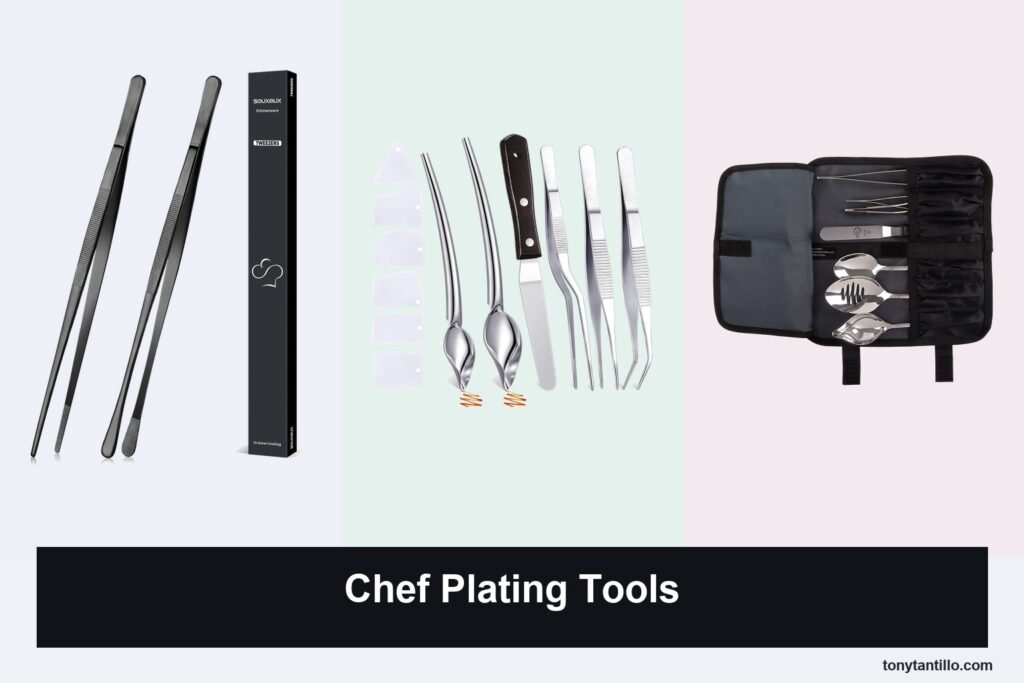
Chef plating tools matter when presentation needs to be as controlled as the cooking itself. The right set helps you place delicate components cleanly, move fragile garnishes without crushing them, and keep your hands farther from heat during finishing work. For cooks who plate often, the main decision is not whether to buy tweezers or spoons. It is whether you need a simple, durable pair of precision tools, a multi-piece decorating kit, or a more complete professional set with enough variety to handle both plated entrées and finer garnish work.
This roundup focuses on the practical differences that change results at the pass: grip, reach, material, tool variety, and how much setup each option demands. Some buyers only need a dependable pair of long tweezers for precise placement. Others want a broad kit with drizzling tools and scrapers for desserts and decorative sauces. A third group will value a more dedicated plating set built for control and balance. The best choice depends on how often you plate, how much variety you need, and whether you want a compact tool or a more complete workstation.
Top Chef Plating Tools on the Market

SouxMux 12-Inch Cooking Tweezers
Best Budget Precision Pair
- 2-piece tweezers set
- 12-inch reach
- Serrated precision tips
- Stainless steel construction
- Grooved no-slip handle

Patelai 12-Piece Plating Tool Set
Best Starter Variety
- 12-piece assortment
- Two drizzle spoon sizes
- Three tweezers included
- Dishwasher-safe cleaning
- Plastic scrapers hook together
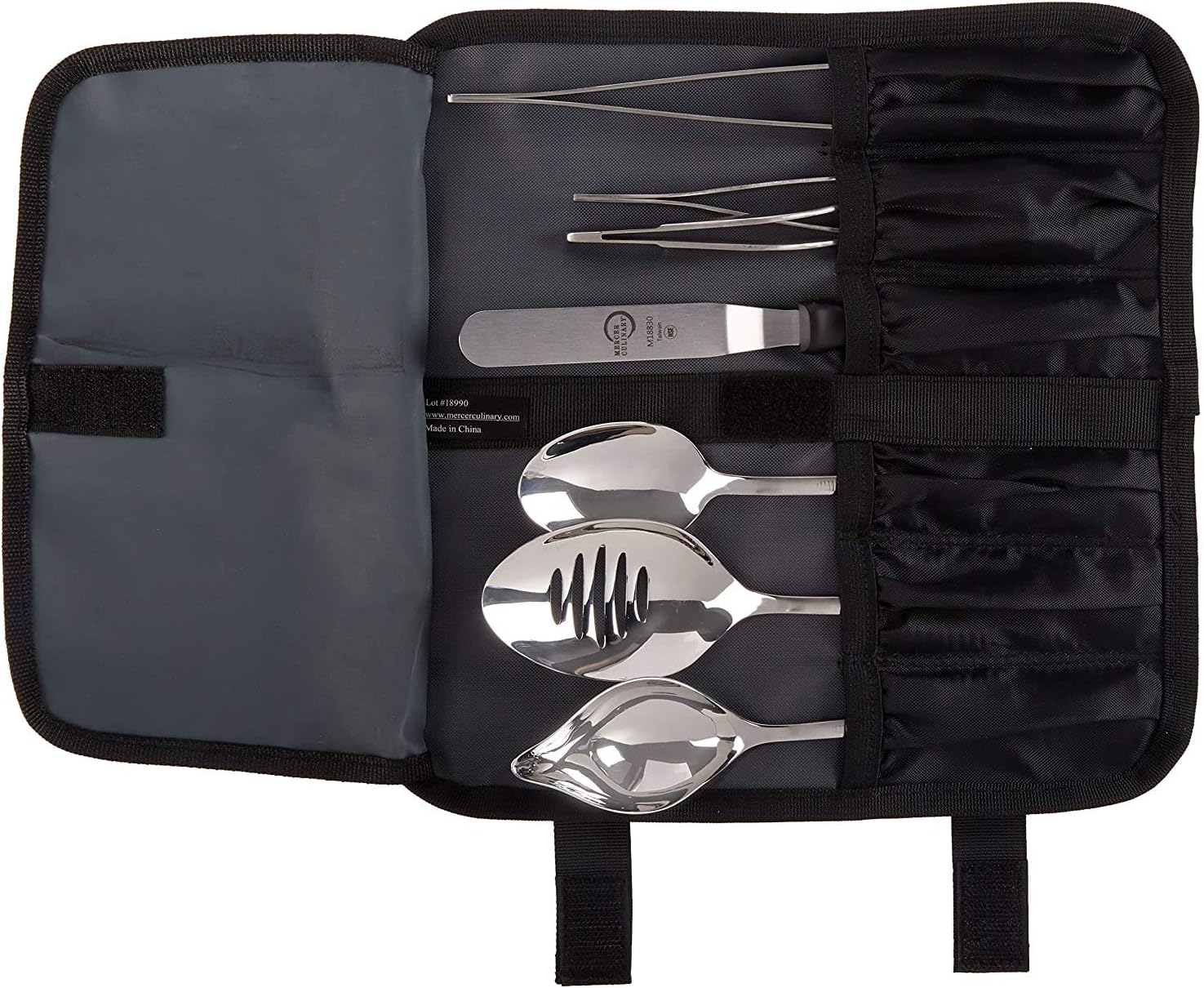
Mercer Culinary 8-Piece Plating Kit
Best Professional Kit
- 8-piece professional kit
- 18-8 stainless steel
- Micro-serrated handles
- Three precision tongs
- Included tool roll
Chef Plating Tools Reviews
SouxMux 12-Inch Cooking Tweezers
ADVANTAGES
LIMITATIONS
This pair is aimed at cooks who want a straightforward precision tool rather than a full plating kit. The 12-inch reach gives you more separation from heat and makes it easier to work over hot pans or a busy pass. The two-tweezer approach also matters because each style serves a different job. One tip is blunt enough for secure handling, while the finer tip is better suited to delicate placement. For a compact starter option, that combination covers more real plating tasks than a single generic tong shape.
The stainless steel build and serrated precision tips are the most important functional details here. Serration helps stabilize small items so they do not skate out of the tool when you are moving herbs, vegetables, or bite-size garnishes. The grooved handle adds confidence when your hands are greasy or warm, and the rounded tip design is meant to reduce scratching on pans. At 180 grams for the pair, they have enough substance to feel steady without becoming bulky, which matters when you need repetitive control rather than brute force.
Against the more elaborate kits in this roundup, this set is the leanest and easiest to keep at the ready. It does not try to replace a spoon, spatula, or scraper system. Instead, it concentrates on a job that many cooks use constantly. That focus makes it the best fit for buyers who primarily need reliable placement and serving control. If you want precision tweezers first and extra accessories second, this is the most direct recommendation in the group.
Patelai 12-Piece Plating Tool Set
ADVANTAGES
LIMITATIONS
This set is built for cooks who need more than precision tweezers alone. The value is in the spread of tools. You get 12 pieces overall, including multiple tweezers, drizzle spoons, scrapers, and a spatula. That mix makes it easier to handle plating, dessert decoration, and sauce work without assembling separate specialty tools. The two spoon sizes are especially useful because they support both thin lines and thicker dots, which gives you more control over garnish patterns and dessert finishing.
The material split is practical rather than flashy. Stainless steel is used for the tweezers and drizzle spoons, while the scrapers are plastic and the spatula uses a wood handle. That combination keeps the set relatively light and easy to grip. The smooth surfaces and dishwasher-safe cleaning are important if you expect frequent use. The scraper pieces also include a corner hole so they can be hooked together, which reduces drawer clutter and keeps the smaller parts from wandering off between uses.
Compared with the simpler tweezer pair, this set is more versatile but less specialized. It is not the most refined precision option, yet it covers more plating scenarios for a lower price than a professional kit with heavier-duty tools. That makes it a strong choice for home cooks, dessert decorators, and beginners who want to experiment without committing to single-purpose equipment. If you want the broadest starter assortment for plating and decorating, this is the easiest recommendation to justify.
Mercer Culinary 8-Piece Plating Kit
ADVANTAGES
LIMITATIONS
This is the most purpose-built option in the group for cooks who plate regularly and want a more complete working kit. The 18-8 stainless steel construction signals a heavier-duty approach than the lighter mixed-material sets, and the balance-focused design matters when small adjustments need to feel predictable. The tool mix is also more serious. You get several precision tongs, plating spoons, an offset spatula, and a saucier spoon with a spout, so the set supports both placement and sauce work without improvising with the wrong utensil.
The micro-serrated handles are a useful detail because grip is often what separates a comfortable plating session from a frustrating one. That matters most when your hands are moving quickly or when a tool has to stay steady during tiny corrections. The care requirement is also stricter than the easier-cleaning sets here. Hand washing with mild soap is the intended routine, and dishwasher use is discouraged. That tradeoff is common in more specialized tools, where finish and longevity often take priority over convenience.
Against the other two products, this kit is the most complete and the least casual. It is not the cheapest path to chef plating tools, and it asks for more careful maintenance. In return, it delivers the broadest professional toolkit and the strongest sense of control. For serious home cooks, culinary students, or working kitchens that want a plated-presentation set rather than a few useful utensils, this is the clear top recommendation. It is the set that best justifies itself when plating is part of the routine, not an occasional extra.
How to Choose Chef Plating Tools
The best chef plating tools are the ones that match the kind of presentation work you actually do. A fine-tipped tweezer can be perfect for herbs and small garnishes, while a spoon-and-spatula set is better when sauces, dots, and clean edges matter more. Materials also matter more than many buyers expect. Stainless steel usually means better durability and grip, but mixed-material kits can be easier to clean and more affordable. The right answer depends on whether you want one highly controlled tool or a broader collection for more complex finishing work.
Tool Type
Start with the task you need to repeat most often. Tweezers are the right category when you are placing microgreens, herbs, or bite-size components with precision. Plating spoons are better when you shape sauces or move soft items without crushing them. Spatulas become important when you need to nudge, lift, or smooth. If you plate both savory dishes and desserts, a mixed kit is often more practical than buying one category at a time.
Reach and Control
Length changes how safely and confidently you work. Longer tools keep your hand farther from heat and create more clearance over pans and platters. Shorter tools can feel quicker in tight dessert work, but they place your hand closer to the action. Control also depends on the tip shape and handle texture. A good plating tool should let you move small items precisely without pinching so hard that delicate food gets damaged.
Material Choices
Stainless steel is the safest default when you want durability and a crisp, dependable feel. It is usually the better pick for frequent kitchen use because it holds its shape and stands up well to repeated handling. Mixed-material sets can still be useful when they combine stainless steel with lighter pieces for cleaning or storage convenience. The tradeoff is usually between long-term ruggedness and everyday ease. If the tool will live in active service, construction quality matters more than extra accessories.
Set Size
A larger set is not automatically better. It becomes worthwhile when you regularly plate different foods and want dedicated tools for sauce work, garnish placement, and smoothing or scraping. Smaller sets make sense when you mainly need one precise motion done well. Think about how many stations you really need. If one person handles every plate, a compact pair may be enough. If you build desserts, sauces, and savory plates in the same service window, more variety saves time and friction.
Cleaning and Storage
Look closely at how the tools are meant to be cleaned and stored. Dishwasher-safe pieces can save time in a busy kitchen, while hand-wash-only stainless tools may require a little more care but sometimes reward you with a more specialized build. Storage matters too, especially for small or multiple-piece sets. Hookable parts, included rolls, and compact footprints keep tools organized and ready. If your workspace is tight, storage convenience can be just as important as the plating performance itself.
Plating Tools Comparison Table
| Product | Best For | Count | Material | Weight | Length | Color |
|---|---|---|---|---|---|---|
| SouxMux 12-Inch Cooking Tweezers | Best Budget Precision Pair | 2 | Stainless Steel | 180 g | 12.4″L x 1.4″W | Black |
| Patelai 12-Piece Plating Tool Set | Best Starter Variety | 12 | Plastic, Stainless Steel, Wood | 0.22 kg | 7.8″L x 1.4″W | as the picture shows |
| Mercer Culinary 8-Piece Plating Kit | Best Professional Kit | Not Specified | Not Specified | Not Specified | Not Specified | Not Specified |
How We Tested & Analyzed Chef Plating Tools
This guide was built around the decisions that matter most when buying plating tools: precision, reach, material quality, tool variety, cleaning burden, and how those choices affect real kitchen workflow. The goal was to compare practical usefulness rather than isolate a single technical detail. A tool that looks impressive on paper can still be awkward in use if it lacks control or requires more maintenance than a buyer wants. That is why the analysis emphasizes how each feature changes handling, speed, and confidence at the plate.
Comparison also focused on category fit. Some buyers need a narrow tool for delicate placement. Others need a broader kit that covers garnish work, dessert finishing, and sauce application. Those different needs demand different tradeoffs, so the article separates specialization from versatility instead of treating them as interchangeable virtues. Material construction and care instructions were weighed alongside tool count because plating tools are only useful if they remain convenient enough to keep in regular rotation.
A final filter was evidence quality. Only clearly supported facts were used, and each one was translated into a buying consequence rather than restated as a bare specification. That approach keeps the recommendations grounded in what the tools are designed to do and what they ask of the user. Where a product offered a broader kit, the guidance reflects that breadth. Where it was simpler and more focused, the recommendation explains why that narrowness can be an advantage.
Frequently Asked Questions
Do I need tweezers or a plating spoon first?
Tweezers are the better first buy if you mainly place herbs, garnishes, or small components with precision. A plating spoon becomes more useful when sauces, dots, and sweeping shapes are central to your presentation. Many cooks eventually use both, but the right starting point depends on whether your work is more about picking up and placing, or shaping and finishing.
What material is best for plating tools?
Stainless steel is usually the best all-around choice because it is durable, easy to handle, and suited to regular kitchen use. It is especially useful when you want a tool that feels stable and holds up over time. Mixed-material sets can be convenient, but stainless steel is the strongest default when long-term reliability matters most.
How important is tool length?
Length matters more than many buyers realize. Longer tools improve reach and keep your hand farther from heat, which is useful for stovetop work and busy service. Shorter tools can feel more nimble for dessert decoration and tight plating spaces. The best length is the one that matches your most common working distance and the type of food you handle.
Is a large set worth it?
A larger set is worth it when you regularly perform several plating tasks and want dedicated tools for different jobs. If you mostly need one precise motion, a smaller set is often easier to manage and store. The best value comes from buying only as much variety as your workflow will actually use, not the biggest kit available.
Final Thoughts
Chef plating tools are worth buying when presentation has become part of your cooking routine, not an afterthought. The right choice depends on whether you need focused precision, broader dessert-decorating coverage, or a more complete professional kit. A compact pair of tweezers can be the smartest purchase for simple control. A multi-piece set is better when you want more creative range. A full plating kit earns its place when you need repeatable, polished results with minimal compromise.
The safest way to choose is to match the tool set to the work you repeat most often. Look at length, grip, material, cleaning burden, and how much variety you will actually use. That keeps you from overbuying a large kit you never open or underbuying a tool that cannot keep up with your plating style. Pick for your workflow, and you will end up with tools that improve both speed and presentation every time you cook.