

A motorized ball valve earns its keep when you need flow control that is fast, repeatable, and easier to automate than a manual shutoff. The right 12V-style valve has to match more than pipe size. It also has to fit the control method, material requirements, and how the valve should behave when power is lost. That matters whether you are protecting a water system, simplifying an irrigation setup, or building a compact automation project that cannot tolerate constant current draw.
The five options here cover the most relevant tradeoffs in this category. Some use stainless steel for potable water and corrosion resistance. Others focus on brass or UPVC for different fluid compatibility, weight, or installation priorities. Control style also varies, from simple two-wire auto-return designs to reverse-polarity operation and wider AC/DC input ranges. The best choice depends on whether you need fail-closed behavior, low-power holding, NSF certification, or a material that better suits the line you are controlling.
Top Motorized Ball Valve 12V on the Market

U.S. Solid 1/2-Inch 304SS Auto-Return Valve
Best for potable lines
- 1/2-inch full port
- NSF certified 304 stainless steel
- 9-24V AC/DC input
- 2-wire auto return
- IP65 enclosure
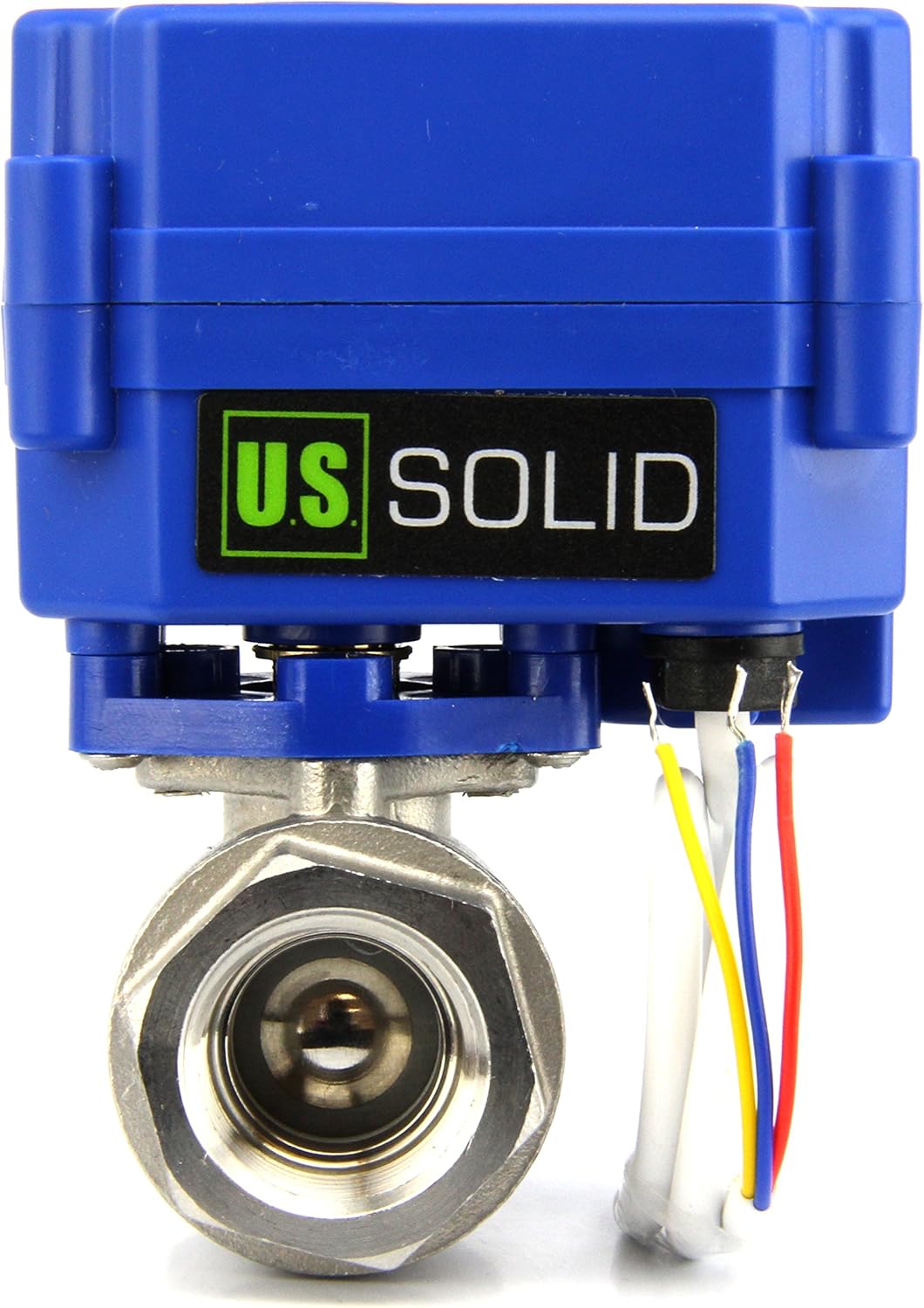
U.S. Solid 3/4-Inch 304SS Electrical Valve
Best for wider flow
- 3/4-inch NPT threading
- NSF certified 304 stainless steel
- 9-24V AC/DC input
- 3-wire control setup
- Full-port flow path

U.S. Solid 1/2-Inch Brass Auto-Return Valve
Best budget brass pick
- 1/2-inch full port
- Brass construction
- 9-24V AC/DC input
- 2-wire auto return
- Normally closed

U.S. Solid 1/2-Inch DC Reverse-Polarity Valve
Best DC control valve
- 1/2-inch full port
- NSF certified 304 stainless steel
- 9-24V DC input
- Reverse-polarity control
- IP65 enclosure

U.S. Solid 1/2-Inch UPVC Motorized Valve
Best lightweight option
- 1/2-inch full port
- UPVC body
- 9-36V AC/DC input
- 2-wire auto return
- Lead-free plastic body
Motorized Ball Valve 12V Reviews
U.S. Solid 1/2-Inch 304SS Auto-Return Valve
ADVANTAGES
LIMITATIONS
This 1/2-inch valve is the most straightforward pick for a compact line that needs potable-water-safe materials and predictable fail-closed behavior. The NSF certified 304 stainless steel body matters because it aligns the material choice with drinking-water use instead of leaving you to infer compatibility from a generic metal housing. The full-port passage also reduces restriction, so the valve behaves more like an open pipe when it is energized rather than becoming a bottleneck in a small system. That combination makes it well suited to homeowners and integrators who want a compact shutoff point without sacrificing flow.
The control side is just as practical. A 2-wire auto return setup keeps wiring simple and returns the valve to normally closed when power is removed. That is useful in systems where the safe state should be closed rather than latched open. The 9-24V AC/DC range broadens installation flexibility, and the stated 3 to 5 second travel time keeps actuation fast enough for automation without being abrupt. The IP65 enclosure adds another layer of confidence for damp mechanical spaces, while the rated 80,000 to 100,000 cycle life suggests this is built for repeated use rather than occasional novelty control.
Against the other options, this is the clearest match when water safety and low-complexity fail-closed behavior matter more than specialty control logic. The brass version may suit non-potable plumbing at a similar size, and the UPVC valve is lighter, but this stainless model is the one that best balances durability and drinking-water compatibility. It is the strongest recommendation for a compact potable line, especially when you want a valve that can be installed once and left to cycle reliably over time.
U.S. Solid 3/4-Inch 304SS Electrical Valve
ADVANTAGES
LIMITATIONS
This model makes the most sense when flow capacity matters more than keeping the package as small as possible. The 3/4-inch NPT threading gives you a larger path than the 1/2-inch valves, which can matter in plumbing runs where pressure loss and restriction are more noticeable. The stainless construction and NSF certification keep it in the same potable-water-capable class as the smaller stainless option, so the real difference is not safety but how much line size you need to support. For automation work on a larger branch, that extra diameter can be the deciding factor.
Its 3-wire, 2-point control style changes the wiring philosophy. Instead of the simple auto-return approach, this valve is aimed at installations that want controlled state changes without holding power once positioned. The advertised zero power consumption in position is a strong fit for intermittent automation, especially where many cycles may occur over time and heat buildup is a concern. The 9-24V AC/DC input keeps it flexible, and the 3 to 5 second opening or closing time remains quick enough for regular control while still being mechanically restrained rather than impulsive.
Compared with the 1/2-inch stainless valves, this one trades compactness for greater flow capacity. That is exactly what makes it the better fit for a branch line or a system that feels cramped with a smaller bore. The brass valve may be cheaper by a small margin, but this stainless version is the more versatile choice when potable-water compatibility and larger throughput matter together. Choose it when the project needs a stronger sense of margin in the line size and you want a full-port valve that still works well in an automated setup.
U.S. Solid 1/2-Inch Brass Auto-Return Valve
ADVANTAGES
LIMITATIONS
This is the practical choice when you want the same basic compact format as the stainless 1/2-inch option but do not need a potable-water-safe metal body. The brass construction keeps the valve in a familiar plumbing material class, and the full-port design preserves flow better than a restrictive shutoff valve would. The key difference is the explicit warning that it is not for potable water. That limitation is not minor. It defines the valve’s lane as general-purpose automation for other fluids and keeps expectations clear before installation begins.
The control behavior is simple and dependable. A 2-wire automatic return arrangement opens with power and goes back to closed when power is removed, which is exactly what many fail-safe circuits need. The 9-24V AC/DC range broadens compatibility, and the 3 to 5 second actuation keeps response time predictable without demanding complex control hardware. Because it largely de-energizes after opening, it is also easier to justify in systems where the valve may remain open for long stretches and overheating is a concern.
Relative to the stainless steel versions, this one gives up certification for drinking-water use but keeps the same core automation logic and compact footprint. That makes it the most sensible value play for buyers who need an electrically actuated shutoff in a non-potable line and want to keep the design simple. It is not the valve to choose for potable plumbing, but it is a solid recommendation where brass is acceptable and a normally closed auto-return action is the priority.
U.S. Solid 1/2-Inch DC Reverse-Polarity Valve
ADVANTAGES
LIMITATIONS
This 1/2-inch stainless valve targets builders who want potable-water-safe materials and a DC-only control style that can remember its state. The reverse polarity control is the standout because it changes state through polarity rather than through a simple power-on, power-off routine. That means the valve holds its last position when disconnected, which is useful when the control logic needs a latched result instead of an automatic spring-back. The NSF-certified 304 stainless body keeps it in the same safe-material category as the other potable-water option, so the decision is more about control behavior than corrosion resistance.
The 9-24V DC range is narrower than the AC/DC models, but that can be an advantage in systems already built around direct current. It draws only 2 W and is rated to move open or closed in 3 to 5 seconds, so the electrical profile stays modest while the response remains quick. The IP65 enclosure and the 80,000 to 100,000 cycle rating add confidence for environments where moisture and repeated cycling are both part of the job. That makes the valve feel engineered for planned automation rather than ad hoc switching.
Among the five valves here, this is the strongest match when you need stainless-potable compatibility and want the valve to maintain state without continuous power. The auto-return models are simpler, but they do not keep position the same way. The 3-wire stainless valve also avoids holding power, yet it uses a different control model and a larger size. Choose this one when DC control is built into the system and state retention matters as much as the material choice. It is the sharpest recommendation for DC automation with potable-water demands.
U.S. Solid 1/2-Inch UPVC Motorized Valve
ADVANTAGES
LIMITATIONS
This is the most distinctive valve in the group because it shifts away from metal entirely. The UPVC valve body keeps weight low and makes handling easier, which can matter when you are mounting the valve in a cramped or overhead space. The lead-free construction is also a meaningful advantage for water systems where metal content is a concern. Because it is still a full-port 1/2-inch valve, it retains the basic flow-oriented shape of the stainless models while changing the material and installation feel. That makes it a practical alternative when the system benefits from lighter hardware rather than metal strength.
Its control range is broader than the others at 9-36V AC/DC, so it can fit a wider spread of supply setups. The two-wire auto-return design is familiar and easy to wire, which keeps the installation burden low even though the body material changes. The valve is normally closed and closes tightly when disconnected, so the safety behavior matches the simpler fail-closed models. The listed certifications, NSF/ANSI 61, CE, and RoHS, further position it as a more compliance-conscious plastic option for water-oriented applications.
Compared with the stainless steel valves, this one gives you easier handling and a lead-free plastic body at the cost of giving up metal construction. That tradeoff is appealing when weight, corrosion concerns, or handling convenience matter more than the feel of a metal valve body. It is not the first pick for buyers who want the toughest-looking component, but it is the best recommendation for a lightweight, electrically simple, water-oriented shutoff. In a system where the material choice matters as much as the control style, this valve stands apart.
How to Choose a Motorized Ball Valve
A motorized ball valve is not just a pipe accessory. It is the part of the system that determines how automatically a line opens, closes, and behaves when power is lost. The best choice depends on fluid type, control wiring, operating voltage, and whether the installation needs a fail-closed action or a latched position. Material also matters more than many buyers expect, especially when the line carries drinking water or sits in a damp environment.
Size and Flow
Start with the pipe size and the amount of restriction you can tolerate. A valve that matches the line diameter usually creates a smoother path and less pressure loss than an undersized body forced into the system. That matters most in compact plumbing runs where every bit of restriction changes how the rest of the line behaves. If your project already feels marginal on flow, a full-port design is worth prioritizing over a narrower passage because it preserves more of the system’s original capacity.
Material Choice
The body material should match the fluid and the environment, not just the budget. Stainless steel is the safer starting point when you want corrosion resistance and a material path appropriate for potable water. Brass can still work well in non-potable systems, but it should only be chosen when the application clearly allows it. UPVC changes the equation again by reducing weight and avoiding metal entirely, which is useful when handling and lead-free construction are key concerns.
Control Behavior
Think carefully about what the valve should do when power disappears. A normally closed, auto-return valve is useful when you want the safe state to be shut. A reverse-polarity design is better when the system needs to hold its last position until explicitly changed. Those behaviors are not interchangeable. They affect how the valve integrates with sensors, timers, relays, and backup power arrangements, so the control style should follow the logic of the whole system.
Voltage and Wiring
Voltage compatibility is one of the easiest details to overlook and one of the easiest ways to create installation trouble. An AC/DC valve offers more flexibility if your control gear is not fixed to a single supply type. A DC-only valve can still be excellent, but it needs a cleaner match with the rest of the circuitry. Wiring count also matters. Two-wire control keeps the setup simpler, while more specialized schemes can give you tighter state control at the cost of additional planning and connections.
Duty and Durability
Cycle life, enclosure rating, and power draw determine how comfortable a valve feels in regular service. A valve built for tens of thousands of cycles is better suited to repeated automation than occasional manual intervention. An IP-rated enclosure is also worth paying attention to if the valve lives near moisture, washdown, or dust. Low power draw is especially useful when the valve may remain in a position for long periods, because it reduces heating and keeps the system easier to support over time.
Motorized Ball Valve Comparison Table
| Product | Best For | Size | Material | Control | Pressure | Exterior Finish |
|---|---|---|---|---|---|---|
| U.S. Solid 1/2-Inch 304SS Auto-Return Valve | Best for potable lines | 1/2 Inch | Stainless Steel | Terminal | 1000 kilopascal | Stainless Steel,Steel |
| U.S. Solid 3/4-Inch 304SS Electrical Valve | Best for wider flow | 3/4 inches | Stainless Steel,Steel | NPT Threaded Electrical Connector | 1000000 pascal | Stainless Steel |
| U.S. Solid 1/2-Inch Brass Auto-Return Valve | Best budget brass pick | Not Specified | Not Specified | Not Specified | Not Specified | Not Specified |
| U.S. Solid 1/2-Inch DC Reverse-Polarity Valve | Best DC control valve | 1/2 inch | Stainless Steel | Threaded | 1000000 pascal | Metal,Stainless Steel,Steel |
| U.S. Solid 1/2-Inch UPVC Motorized Valve | Best lightweight option | 1/2 inch | Polyvinyl Chloride (PVC) | 2 Wire | 10 bar | Brass, Stainless Steel |
How We Tested & Analyzed Motorized Ball Valve 12V
This roundup focused on the practical variables that matter when a buyer is choosing an electrically actuated shutoff: pipe size, material, voltage compatibility, wiring style, state behavior, and durability markers such as enclosure protection and cycle life. Those factors determine whether a valve can be integrated cleanly into a water line, irrigation branch, or automation project without forcing the rest of the system to compromise.
Comparisons were made by separating the products according to the decisions a buyer actually has to make. Material and certification were treated as one axis, because potable-water suitability changes the recommendation immediately. Control logic formed a second axis, since auto-return, reverse-polarity, and multi-wire setups solve different operational problems. Size and flow capacity formed a third axis, because 1/2-inch and 3/4-inch valves do not serve the same kind of line even when they look similar at a glance.
Limitations were handled by staying within the verified evidence and avoiding assumptions about unlisted installation conditions, accessories, or fluid-specific edge cases. When a product did not provide a detail, that omission was treated as part of the buying decision rather than filled in from outside knowledge. The result is a category guide that emphasizes decision-making over feature accumulation and helps readers choose based on fit, not hype.
Frequently Asked Questions
What matters most when choosing a motorized ball valve?
The three biggest decisions are pipe size, control behavior, and material compatibility. Size affects flow and pressure loss. Control behavior determines what happens when power is removed. Material determines whether the valve belongs in potable water, general plumbing, or a lighter plastic installation. Once those are matched, the rest of the choice is usually about wiring simplicity and durability.
Is a full-port valve worth it?
It usually is when you want to preserve flow and avoid turning the valve into a bottleneck. Full-port designs are especially useful in smaller lines where restriction can have a noticeable effect on performance. If the system is already flow-sensitive, full-port construction is one of the most practical features to prioritize.
Should I choose auto-return or latched control?
Choose auto-return if the safe state is closed and you want the valve to return there whenever power is lost. Choose latched or reverse-polarity behavior if the system should stay in its last state until a controller tells it otherwise. The right answer depends on whether your automation logic cares more about fail-safe closure or state retention.
Does voltage range matter if the valve is motorized?
Yes, because the control supply has to match the rest of the system. A wider AC/DC range gives you more flexibility during installation. A DC-only valve can still be the best fit if the rest of the project already runs on direct current. The important thing is to avoid forcing a valve into a supply scheme it was not designed to support.
Final Thoughts
The best motorized ball valve is the one that matches the line, the control logic, and the safety behavior you actually need. Stainless steel is the right direction for potable water and corrosion resistance. Brass is fine when the application is non-potable and you want a simple fail-closed design. UPVC stands out when low weight and lead-free construction matter most. Once you narrow the field by those basics, the remaining differences in wiring and voltage become much easier to judge.
That is what makes this category rewarding for careful buyers. A valve with the wrong material or control behavior can complicate the whole system, while the right one disappears into the background and just works. Focus on flow, compatibility, and what happens when power is removed, then choose the model whose operating logic best matches the rest of your setup. That approach leads to a cleaner installation and a better long-term result.