
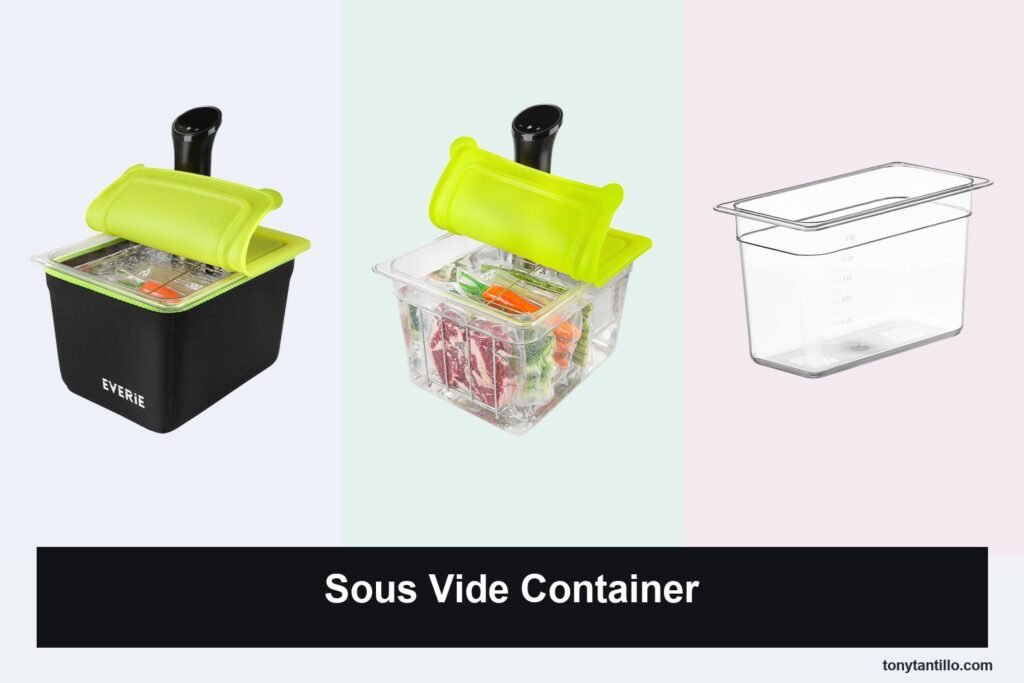
A good sous vide container does more than hold water. It shapes how steadily the bath holds temperature, how well the bags stay separated, and how much attention you need to give the cook once it starts. The right choice can reduce heat loss, limit evaporation, and make it easier to batch-cook without crowding circulation around the food.
The four options here cover different buyer priorities. Two are 12-quart kits built for a more complete setup, one is a compact container focused on smaller households, and one is a bare-bones container for shoppers who already own the accessories they want. The differences that matter most are insulation, divider design, compatibility, capacity, and how much convenience is bundled into the purchase.
Top Sous Vide Container on the Market
EVERIE 12Qt Sous Vide Kit
Best for long cooks
- 12-quart container
- Insulating neoprene sleeve
- Lock-in divider rack
- Collapsible lid access

EVERIE 12Qt Divider Rack Set
Best bag organization
- 12-quart container set
- Lock-in divider rack
- Seven-divider layout
- Fold-open lid

LIPAVI C5 Sous Vide Container
Best compact container
- 1.75-gallon capacity
- 12.7 x 7 x 8 inches
- Clear polycarbonate body
- Heat range -40 to 210 F

homenote 12Qt Sous Vide Kit
Best starter bundle
- 12-quart container
- 304 stainless steel rack
- Neoprene insulating sleeve
- Pre-cut lid holes
Sous Vide Container Reviews
EVERIE 12Qt Sous Vide Kit
ADVANTAGES
LIMITATIONS
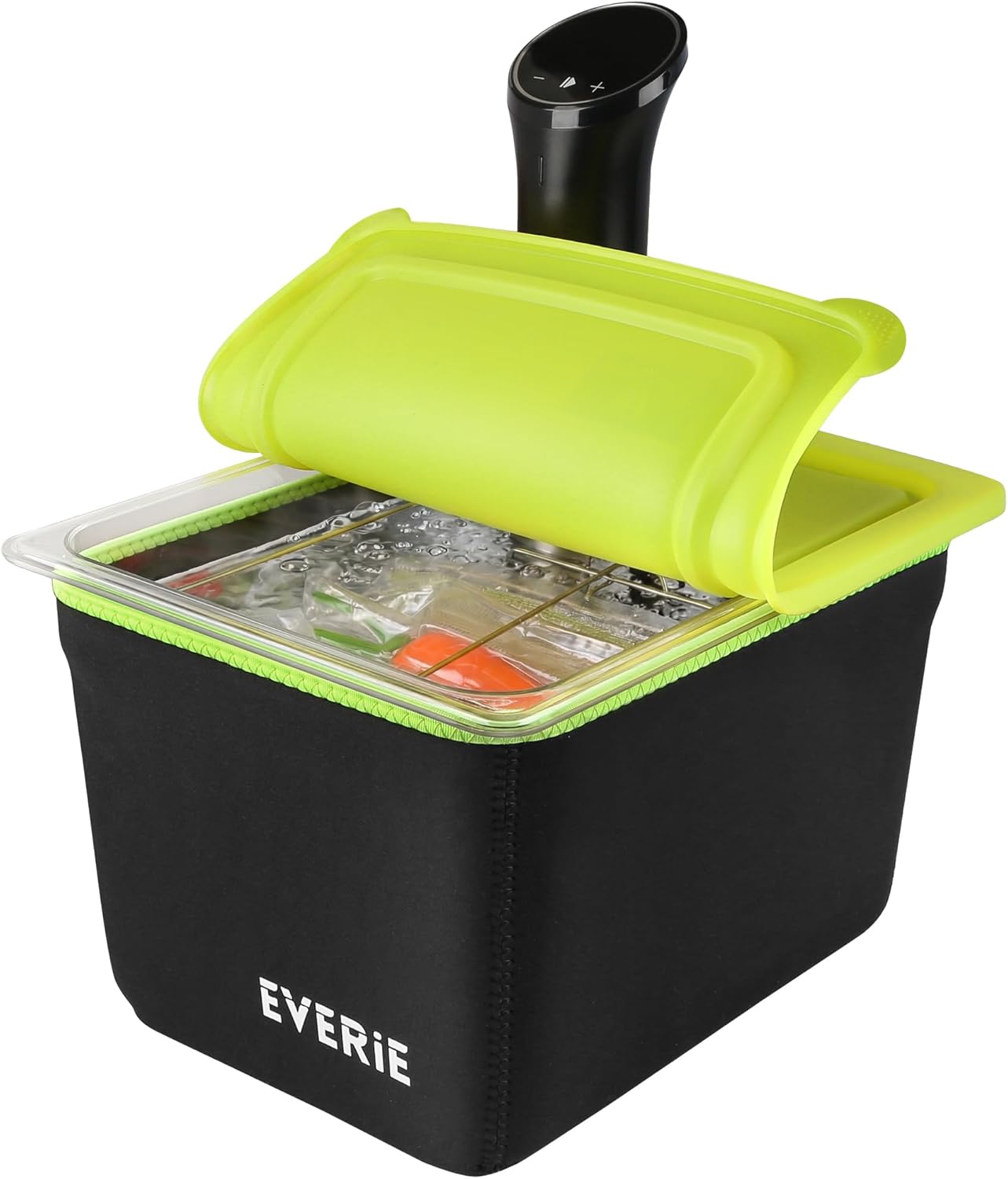
This kit is built for buyers who want a complete bath that stays organized through long sessions. The 12-quart capacity gives you enough room for a practical family batch, and the included divider system matters if you regularly cook multiple bags at once. The insulating sleeve helps limit heat exchange through the sides, while the collapsible lid makes it easier to refill or add ingredients without tearing down the whole setup. That combination makes the unit feel less like a single container and more like a managed cooking station.
The structure is aimed at stability as much as capacity. The lock-in divider rack uses a food-grade nylon clip rail, which is useful because loose dividers can shift when circulation starts moving water around the bath. The five removable and two built-in dividers create a flexible layout for different portion sizes, so thicker cuts do not have to fight for space beside smaller bags. The container is transparent, rectangular, and made from food-grade materials, and the dishwasher-safe care note simplifies cleanup after a long cook.
Compared with the simpler container-only option in this group, this one is the more polished choice for someone who expects to use sous vide often. It costs more than the plain container, but that extra spend buys insulation, better separation, and less day-to-day fuss. It also makes more sense than a compact household-focused container when you need room for multiple proteins or meal prep. The best buyer is someone who values convenience and consistency more than the lowest entry price, and this is the easiest kit to recommend for that use case.
EVERIE 12Qt Divider Rack Set
ADVANTAGES
LIMITATIONS
This set is the strongest fit for buyers who care most about bag control inside the bath. The 12-quart format gives it the same practical capacity class as other full-size containers, but the real value comes from the rack system. The lock-in divider rack is designed to keep spacing stable, and the seven-divider layout gives you enough flexibility to separate thicker cuts, smaller portions, or mixed meals without crowding. That makes it a better organizer than a plain container when the cook includes several bags.
The operational benefit is smoother circulation. The rack is intended to prevent bags from floating together or drifting into one another, which matters because clumped bags can disrupt even heating. The fold-open lid is another useful detail for real kitchen use, since it lets you add water or ingredients without removing the whole top assembly. This set is listed as compact and round, with a snap closure, so the handling feel is a little different from the more rectangular kits. The lighter weight also makes it easier to move when empty or partially filled.
Against the other 12-quart option, this one is for buyers who already care about bag management and do not need the extra insulating sleeve as much. It is the cleaner choice when your priority is spacing and submerged positioning rather than maximum heat retention. Compared with the compact LIPAVI container, it offers a much fuller setup for larger batches. If you want a purpose-built organization system and do not mind skipping the sleeve, this is the most focused choice in the group.
LIPAVI C5 Sous Vide Container
ADVANTAGES
LIMITATIONS
This is the most space-conscious choice in the lineup, and that matters if you cook for one or two people or simply do not want a large bath taking over the counter. The 1.75-gallon capacity is much smaller than the 12-quart kits, but that smaller footprint can be an advantage for daily use in a tight kitchen. The 8-inch height is a useful fit point for immersion circulators, and the clear polycarbonate body lets you watch the water level and food without lifting the lid. It feels more targeted than the larger bundled kits because it is designed around modest-scale cooking rather than batching.
The dimensions, 12.7 by 7 by 8 inches, reinforce that small-household identity. It takes up less surface area, which can make a real difference on crowded counters or in kitchens where storage matters as much as cooking performance. The listed temperature tolerance from -40 to 210 F adds flexibility beyond a single hot-water use, so the container is not boxed into one narrow task. Hand-wash care is the tradeoff here, and the model also arrives without the matching rack and lids, which means the buyer has to plan accessories separately if separation or a tailored lid matters.
Compared with the two 12-quart kits, this container is less ambitious but easier to live with when you do not need large-volume cooking. It is also the least expensive option here, which leaves budget room for a rack or lid system chosen separately. That makes it a smart buy for smaller households, people with limited storage, or anyone who wants to build a setup piece by piece. If your priority is compactness and flexibility, this is the most sensible starting point in the group.
homenote 12Qt Sous Vide Kit
ADVANTAGES
LIMITATIONS
This bundle is aimed at someone who wants to begin sous vide cooking with fewer add-ons to chase later. The 12-quart capacity gives you the same practical batch size as the other full-size kits, but the included rack, sleeve, and cookbook make the setup feel more complete out of the box. The 304 stainless steel rack matters because the material choice supports durability in a wet environment, and the neoprene insulating sleeve helps reduce sidewall heat loss during longer cooks. Together, those pieces make the bath easier to keep efficient.
The lid has pre-cut holes and a middle-mount arrangement, so compatibility becomes a real consideration. The product notes mention testing with Anova and ChefSteps machines, which is useful if you already own one of those circulators, but the fit should still be checked against the hole size before buying. The transparent polycarbonate body helps you monitor the bath without removing the cover, and the lightweight build keeps the container manageable when it is empty. The rack design also adds circulation space below the bags, which can support more even heating when you are cooking several items at once.
Against the other 12-quart choices, this one wins on getting you started with fewer missing pieces. It is not as explicitly focused on divider locking as the EVERIE options, but it does combine insulation, organization, and a recipe guide in one purchase. Compared with the LIPAVI container, it offers a more ready-to-use setup, though at a much larger size. It is the right pick for a first sous vide setup or for buyers who want a bundled path to operation rather than assembling parts one by one.
How to Choose a Sous Vide Container
A sous vide container looks simple, but the details determine how steady your bath stays and how much convenience you get during a long cook. Capacity, insulation, lid design, and accessory fit all affect whether the setup feels effortless or fussy. The best choice is rarely the biggest one. It is the one that matches your batch size, your circulator, and how often you cook this way.
Capacity and Footprint
Start with the amount of food you actually cook at one time. A larger container makes sense for meal prep, several proteins, or longer sessions with multiple bags. A smaller bath can be better for one or two servings because it uses less water, occupies less counter space, and is usually easier to store. Size also affects heat-up time and how much water you need to keep on hand, so bigger is not automatically better.
Lid Fit and Access
The lid matters because it helps limit evaporation and keeps the bath more stable over time. A good opening for the circulator should fit cleanly, and you should also think about how often you will need to refill water or add ingredients mid-cook. A fold-open or removable design can save time on longer cooks. If you expect to leave food unattended for hours, a better-fitting lid becomes more valuable than an attractive container shape.
Insulation and Heat Retention
Insulation is one of the clearest separators in this category. A sleeve or insulated wall reduces heat loss through the sides, which can help the circulator work less often and can make overnight cooking more efficient. That matters most in cooler kitchens or when you cook for long stretches. If you usually run short cooks and do not mind a little extra energy use, insulation is less critical. For frequent or extended use, it is worth paying attention to.
Racks and Separation
A rack is not just an accessory. It changes how water moves around the food. Bags that float together can block circulation and cook unevenly, especially when the bath is crowded. Divider systems are useful if you batch-cook, portion meals, or use foods of different sizes in the same run. The best rack is the one that holds spacing securely without constant adjustment. If your cooking style is simple and single-batch, a basic container may be enough.
Materials and Care
Most sous vide containers use polycarbonate or similar food-safe materials because they handle hot water well and let you see what is happening inside. That transparency is genuinely useful when you want to check water level or monitor a bag without lifting the lid. Care instructions also matter more than many buyers expect. Dishwasher-safe parts reduce cleanup friction, while hand-wash requirements may be fine if you cook often enough to make the routine feel normal. Choose the material and care level you will actually maintain.
Sous Vide Comparison Table
| Product | Best For | Capacity | Material | Weight | Closure | Shape |
|---|---|---|---|---|---|---|
| EVERIE 12Qt Sous Vide Kit | Best for long cooks | 12 quarts | Polycarbonate (PC), Silicone, Stainless Steel | 1.91 kg | Not Specified | Rectangular |
| EVERIE 12Qt Divider Rack Set | Best bag organization | Not Specified | Stainless Steel Polycarbonate | 1.66 kg | Snap | Not Specified |
| LIPAVI C5 Sous Vide Container | Best compact container | 1.75 gallons | Plastic, Polycarbonate (PC) | Not Specified | Not Specified | Rectangular |
| homenote 12Qt Sous Vide Kit | Best starter bundle | 12 quarts | Polycarbonate, Stainless Steel | 1.9 kg | Snap | Not Specified |
How We Tested & Analyzed Sous Vide Container
This comparison focused on the factors that change real sous vide use rather than cosmetic differences. Capacity, dimensions, lid design, insulation, material choice, rack design, and care instructions were weighed for their operational effect on heat stability, evaporation control, bag separation, and kitchen convenience. The goal was to distinguish containers that merely hold water from those that help the cooking process run more predictably.
When products shared similar capacity, the analysis shifted to the details that create meaningful separation in daily use. That included whether the container is sold as a bare vessel or a complete kit, whether the rack is fixed or adjustable, how clearly the lid supports the circulator opening, and whether the structure encourages stable circulation around multiple bags. Differences in price were considered only in relation to those practical gains, not as a stand-alone score.
The final recommendations reflect buyer intent. A compact household setup, a starter bundle, and a higher-convenience full kit solve different problems, so the ranking favors fit over abstract feature count. Limitations were treated as part of the decision, especially when a product required separate accessories, demanded more care, or traded insulation for lower cost. The result is meant to help you choose the right container for the way you cook now.
Frequently Asked Questions
How big should a sous vide container be?
Choose the smallest container that still fits your usual batch size and circulator comfortably. Smaller baths are easier to store and often more efficient for one or two servings. Larger containers help when you cook multiple bags or want extra room for circulation, but they also take up more counter space and use more water.
Do I need an insulated sleeve?
You do not always need one, but it becomes more useful as cook time increases. An insulated sleeve helps reduce heat loss through the sides, which can support steadier temperature control during long or overnight cooks. If you only cook occasionally or for short periods, it is less essential than a good lid and proper capacity.
Is a rack really necessary?
A rack is helpful when you cook more than one bag at a time or want more even circulation around the food. It keeps bags separated and helps reduce floating or drifting that can block water flow. For single-bag cooking, it is less critical, but for batch cooking it can make a noticeable difference in consistency.
What material is best for a sous vide container?
Polycarbonate is the most common practical choice because it is clear, lightweight, and handles hot water well. Transparency makes it easier to monitor water level and food placement without removing the lid. If care convenience matters, check whether the parts are dishwasher safe. The best material is the one you will clean and use regularly without friction.
Final Thoughts
The best sous vide container is the one that fits your cooking pattern, not just your counter space. If you cook long batches, insulation and a secure rack become worth paying for. If you are building a smaller setup, a compact container can be easier to store and more efficient to run. The right choice should make the bath steadier, not more complicated.
Once you know how much food you cook, how long your sessions usually run, and whether you need a bundled kit or just a vessel, the decision becomes much clearer. Look for the container that gives you enough room, the right lid fit, and the level of organization you will actually use. That combination will matter far more than a generic all-purpose pick.