
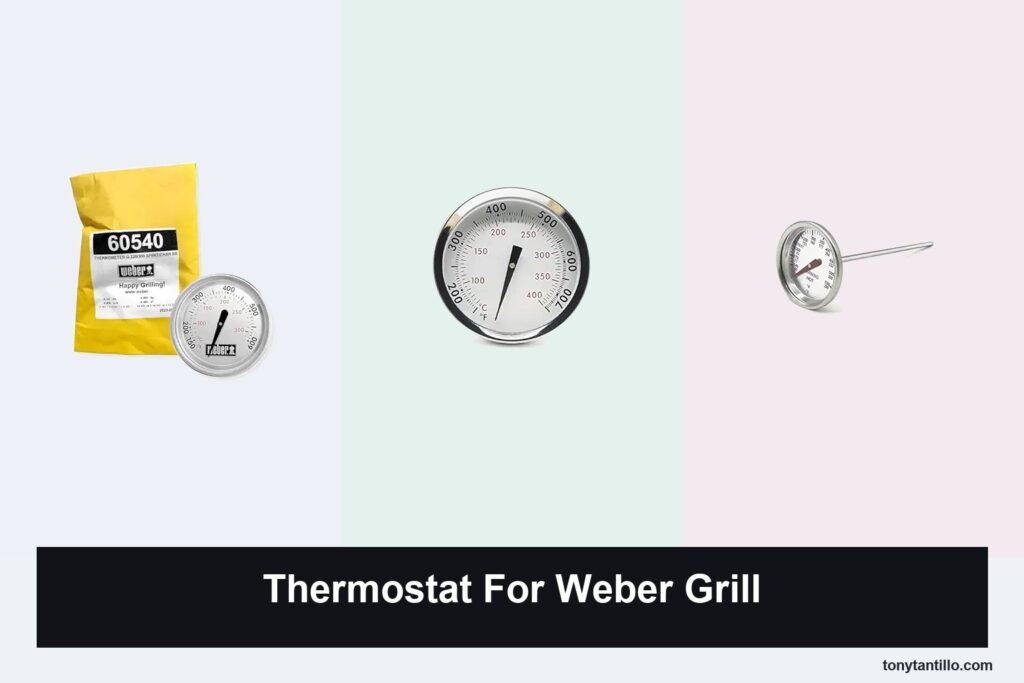
A grill thermometer is not a decorative accessory. It is the part that tells you whether a cook is trending toward steady heat, runaway heat, or a temperature zone that will change how the food finishes. For Weber owners, the harder problem is not choosing any gauge at all. It is choosing one that matches the lid, probe length, and mounting style of the grill already in service. The right replacement avoids guesswork, restores a readable dial, and keeps the cook focused on temperature instead of lid lifting.
That is why this roundup centers on exact fit, readable temperature ranges, probe length, material durability, and ease of installation. Some replacement gauges are built for classic round kettle lids. Others are made for later Genesis and Summit lids that use a specific mounting tab. A good buyer decision depends on matching the thermometer to the grill family first and the display style second. The three options below cover different Weber generations and different installation patterns, so the practical question is not which thermometer is strongest in the abstract. It is which one restores the right lid reading on the right grill with the fewest surprises.
Top Thermostat For Weber Grill on the Market

Weber 60540 Replacement Thermometer
Best OEM Match
- 1-13/16 inch diameter
- 1-1/2 inch probe
- Fits Q, Spirit, charcoal grills
- Analog dial display
- Waterproof metal build

WEMEIKIT 67088 Center-Mount Thermometer
Best High-Heat Range
- 2-3/8 inch dial face
- 1-1/2 inch prong
- Fits Genesis II and Summit
- 150 to 700 Fahrenheit range
- Wing nut included

WEMEIKIT 9815 Long-Probe Thermometer
Best for Long Probes
- 5 inch prong
- Fits Genesis 1000-5500
- 140 to 550 Fahrenheit range
- Stainless steel body
- Analog dial display
Thermostat For Weber Grill Reviews
Weber 60540 Replacement Thermometer
ADVANTAGES
LIMITATIONS
This is the most straightforward choice for owners who want an original Weber replacement with a familiar look and layout. The 1-13/16 inch diameter face and 1-1/2 inch probe keep the part aligned with the compact lid openings used on the supported Weber Q, Spirit, and charcoal models. Because it is an OEM replacement part, the main value is not novelty. It is confidence that the gauge belongs in the grill family it was designed for. That matters when a failed thermometer is blocking normal use and you want the lid reading restored without improvising a workaround.
The analog display keeps operation simple and avoids any dependency on batteries or electronics. The metal construction and waterproof claim are practical in outdoor use, especially on a part that lives near grease, heat, and weather changes. Cleanup is also uncomplicated because the care instructions call for wipe-clean maintenance. The specification set points to a quick-read gauge with a 500 millisecond response time, so the temperature reading is meant to keep up with changes in lid conditions rather than lag behind them. That combination suits routine grilling more than precision lab-style measurement, and that is exactly the point for a replacement lid thermometer.
Compared with the other two options here, this one is the least complicated and the most specific to older Weber-compatible lids. It does not try to cover the broadest possible temperature range or the longest probe length. Instead, it focuses on matching the original form factor for a known set of grills. That makes it the strongest recommendation for buyers restoring a compatible Q, Spirit, or charcoal grill and wanting the safest path back to a working lid gauge. If your model match is confirmed, this is the one to buy first.
WEMEIKIT 67088 Center-Mount Thermometer
ADVANTAGES
LIMITATIONS
This replacement is aimed at owners of later Genesis and Summit grills who need the center-mount style with a locking tab. The 2-3/8 inch diameter face is larger than the compact Weber unit above, which makes the gauge easier to read from a standing position. The 150 to 700 Fahrenheit range also gives it broader cooking coverage than many basic lid thermometers. That wider span matters if you move between low, medium, and high heat more often than you stay in one narrow temperature band. It is a practical fit for grills that see varied cooking styles and need a more visible dial.
Installation depends on the correct bezel setup because the back tab locks into place and the wing nut secures the gauge. The bezel is not included, so the part is best viewed as a replacement thermometer rather than a full mounting kit. The stainless steel body and thermostable construction are the durability story here, while the wipe-clean care instructions keep maintenance simple. The 500 millisecond response time suggests quick visual feedback when the lid heat changes. That is useful during preheating and when you are adjusting vent or burner settings, because slow gauges can make temperature control feel less precise than it really is.
Against the other two selections, this is the more specialized and more feature-rich option for compatible Genesis and Summit lids. It is not the right answer for Spirit models, and it is not trying to be universal. What it does offer is a better fit for owners who need the tabbed center-mount format and want a bigger dial with a broad scale. That makes it the strongest pick for the right generation of grill. If your lid uses this mounting style, this is the thermometer that best balances visibility, range, and fit confidence.
WEMEIKIT 9815 Long-Probe Thermometer
ADVANTAGES
LIMITATIONS
This thermometer is built for older Weber grills that use the longer probe format, including Genesis Gold and Silver models and the Genesis 1000 through 5500 series. The 5 inch prong is the key detail because probe length determines whether the gauge reads correctly in the lid opening. When that dimension matches the grill, the thermometer sits where it should and measures the chamber rather than floating awkwardly in the wrong position. The 140 to 550 Fahrenheit scale is broad enough for everyday grilling and direct heat cooking, while still staying focused on the temperature bands many home cooks use most often.
The stainless steel body and dedicated bimetallic probe point to a mechanical, battery-free design that stays simple to live with. It is also meant to be wiped clean rather than soaked, which fits a part that spends its life in heat and grease. The response time is listed at 500 milliseconds, so the reading is intended to keep up as conditions change after opening the lid or adjusting the fire. Because the product is outdoor-oriented and reusable, it is aimed at long-term replacement duty rather than occasional novelty use. That makes it a sensible maintenance part for aging grills that still cook well but need a dependable gauge again.
This is the most specialized of the three choices because the 5-inch probe narrows the fit to specific older lid designs. In return, it solves a problem the shorter gauges cannot solve. If the original thermometer used this longer reach, a shorter replacement can compromise accuracy and installation. Compared with the center-mount Genesis II and Summit option, this one is less about large-face visibility and more about matching legacy geometry. That is why it is the best recommendation for owners of compatible older Genesis and Silver or Gold grills who need the correct probe length more than anything else.
How to Choose a Weber Grill Thermometer
The best replacement thermometer is the one that physically belongs in your lid and reads the temperature band you actually cook in. Start with fit, not with price or dial style. Weber grills have used different face diameters, probe lengths, and mounting methods across generations, so the wrong part can look close while still refusing to install correctly. Once the geometry matches, the next questions are visibility, temperature span, and how much weather exposure the gauge can tolerate.
Fit First
A grill thermometer is only useful if it seats correctly in the lid opening. That means checking the face diameter, the probe length, and whether the back of the head uses a mounting tab or a simpler slip-in design. A part can appear compatible in a photo and still fail at the bezel or opening once it arrives. The safest approach is to compare the old gauge to the replacement before buying, because fit determines both installation success and the accuracy of the reading.
Readability Matters
Dial size affects how easily you can read the temperature from a normal grilling stance. A larger face is easier to glance at during a cook, especially when smoke, sun, or distance makes small markings harder to read. Scale range matters too. A narrower range can still be perfectly adequate for standard grilling, while a broader range is better when you switch between low-and-slow cooking and hotter searing. Pick the display that matches the way you cook, not just the one with the largest numbers.
Probe Length and Placement
Probe length is not a minor detail. It determines where the sensor sits inside the lid and how representative the reading is of the cooking chamber. A short probe used in a long-probe lid can leave the gauge positioned incorrectly. A long probe in the wrong opening can create the same problem in the other direction. For a replacement thermometer, matching that dimension is often more important than the label on the front, because the right length is what keeps the gauge anchored where it belongs.
Materials and Care
Outdoor thermometers live in a harsh environment. Heat, grease, moisture, and cleaning all matter, so stainless steel or other metal construction is a strong sign of long-term durability. Waterproof or splash-resistant claims can also matter, but they should be paired with realistic care habits. Many grill thermometers are meant to be wiped clean rather than soaked. That is not a drawback so much as a maintenance rule. Treat the gauge as a heat instrument, not a washable kitchen utensil, and it will usually last longer.
Temperature Range
A thermometer’s range should match the style of cooking you do most often. If you mostly grill at moderate heat, an extremely broad scale is unnecessary. If you frequently preheat hot for searing or use lower indirect heat for longer cooks, a wider span is more useful. A good range also helps the dial stay readable where you cook most often instead of crowding the marks into the narrow middle of the scale. Choose the span that gives you useful resolution in your normal cooking zone.
Replacement Scope
Some thermometers are simple gauge swaps. Others include a wing nut or lock into the bezel through a dedicated tab. That difference affects how complete the replacement feels when the original part has worn out or gone missing. If your current setup still has the mounting hardware and bezel in place, a direct replacement may be enough. If the mounting system is damaged, verify what comes in the box before you order. Matching the part to the hardware you actually have prevents extra delay and rework.
Weber Thermometer Comparison Table
| Product | Best For | Diameter | Probe Length | Display | Top Range | Material |
|---|---|---|---|---|---|---|
| Weber 60540 Replacement Thermometer | Best OEM Match | 1.81 inches | 1.5 inches | Analog | Not Specified | Metal |
| WEMEIKIT 67088 Center-Mount Thermometer | Best High-Heat Range | 2.37 inches | 1.5 inches | Dial | 400 °C | Stainless Steel |
| WEMEIKIT 9815 Long-Probe Thermometer | Best for Long Probes | 5 inches | 5 inches | Analog | 550 °F | Stainless Steel |
How We Tested & Analyzed Thermostat for Weber Grill
This analysis focused on the factors that matter when a grill thermometer is replacing a failed or hard-to-read factory gauge. Fit, probe length, mounting style, display size, temperature range, material construction, and weather tolerance all carry real consequences for installation and daily use. Those are the details that determine whether a part restores normal operation or creates a new compatibility problem. The goal was to separate basic lid-read accuracy from marketing language and center the decision on geometry and usability.
The comparison also weighed how each option handles a different class of Weber grill. Some gauges are meant for older, longer-probe lids. Others are built around center-mount tabbed designs. A few are direct OEM-style replacements for compact kettle, Spirit, or Q lids. Those differences matter more than broad claims about accuracy because a thermometer that cannot seat correctly is not a meaningful upgrade. Where temperature ranges and response times were available, they were treated as practical clues about how the gauge behaves during preheat and active cooking.
Limitations are important in this category. A replacement thermometer is not a universal accessory, and close-looking parts can still be incompatible. Bezel inclusion, lock-tab design, and probe length are especially easy to miss if you only compare front-face appearance. The guidance here therefore favors parts that are easy to place in a real purchase scenario: match the old part, confirm the grill series, and use temperature range and display style as the final filters rather than the starting point.
Frequently Asked Questions
How do I know which Weber thermometer fits my grill?
Start with the old thermometer’s physical dimensions and mounting style. Measure the face diameter and probe length, and check whether the head uses a locking tab or a simpler mount. Then confirm the grill family and generation. On Weber lids, those details matter more than appearance because two parts can look similar while fitting different openings.
Does a bigger thermometer face improve performance?
A larger face mainly improves readability. It can be easier to glance at during a cook, especially from a standing position or in bright light. Bigger does not automatically mean more accurate. The more important question is whether the dial range and probe length match the grill, because proper fit is what supports reliable lid readings.
Why does probe length matter so much?
Probe length determines where the sensor sits inside the lid and how well it reflects cooking conditions. If the length is wrong, the gauge may not seat correctly or may sit in a position that skews the reading. For replacement parts, the probe dimension is often the deciding factor between a correct install and an irritating mismatch.
Are these thermometers suitable for weather exposure?
They are designed for outdoor use, but they still benefit from basic care. Metal and stainless steel bodies are helpful, and splash resistance can matter, yet many grill thermometers are not meant to be soaked or left to take repeated rain exposure. Wiping the gauge clean and protecting it from unnecessary moisture is the safer long-term habit.
Final Thoughts
A Weber grill thermometer looks like a small part, but it governs the quality of the whole cooking experience. When the gauge matches the lid, the grill becomes easier to preheat, easier to hold at a target temperature, and easier to trust during a long cook. The best choice is not the one with the most claims. It is the one that fits the exact grill generation, uses the right probe length, and gives you a readable scale for the temperatures you actually use.
For most buyers, the decision comes down to restoring the correct geometry first and then choosing the display style that suits the grill. Older lids need longer probes. Later Genesis and Summit lids may need a tabbed center-mount design. Compact Weber Q, Spirit, and charcoal models need a different form factor altogether. Once you confirm that match, the remaining choice is straightforward. Pick the thermometer that fits cleanly, reads clearly, and puts control back in your hands instead of making you guess at the heat.