
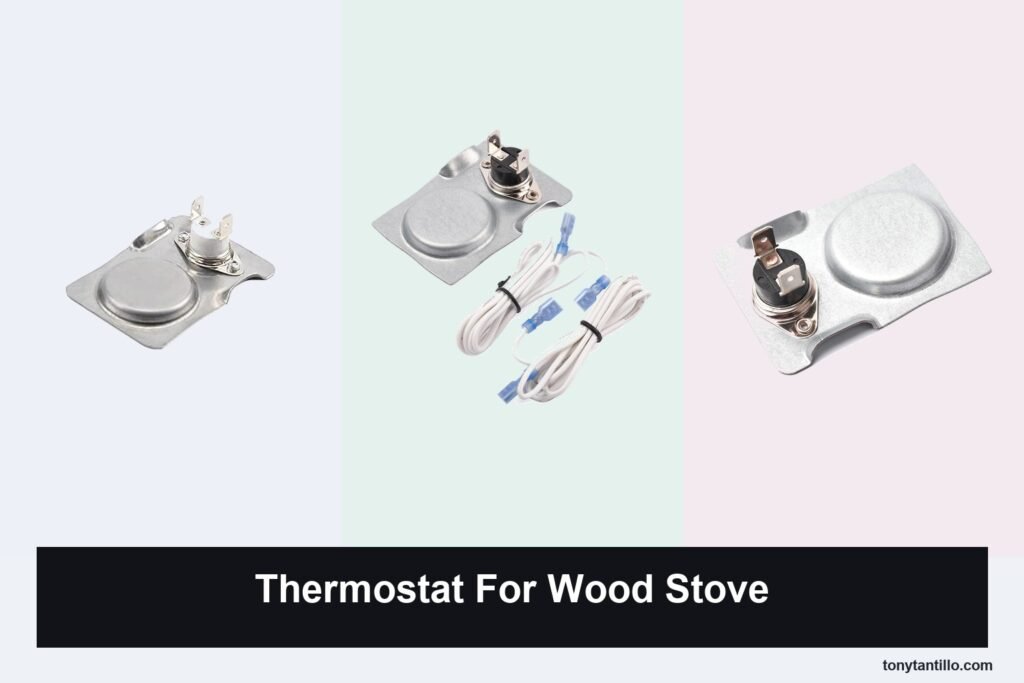
A wood stove can deliver steady heat, but the blower that moves that heat into the room needs the right trigger. A thermostat switch is a small part, yet it decides when the fan starts, when it stops, and how quietly the stove transitions from cold start to usable heat. For buyers replacing a worn switch or building a blower setup from scratch, the real question is not whether a magnetic thermostat exists. It is whether the switch will mount cleanly, respond at the right temperatures, and hold up near high heat without adding installation friction.
The best choices in this category are simple on paper and more revealing in practice. Mounting style matters because a magnetic sensor is far easier to place than a part that needs drilling or hardware. Temperature behavior matters because a blower that starts too early can push cool air, while one that starts too late leaves heat trapped around the stove. Durability, connector style, and compatibility with fireplace blower kits also shape the decision. The three switches below differ mainly in how much installation convenience, material quality, and accessory support they bring to that basic job.
Top Thermostat For Wood Stove on the Market

Durablow Magnetic Ceramic Thermostat Switch
Best Overall
- Magnetic mounting
- 120°F on, 90°F off
- Stainless steel and ceramic
- 2-year warranty

Criditpid Thermostat With Wire
Best for Easy Setup
- Magnetic mount
- High-temperature wire included
- 120°F on, 90°F off
- 2.5 x 1.75 x 1 inches
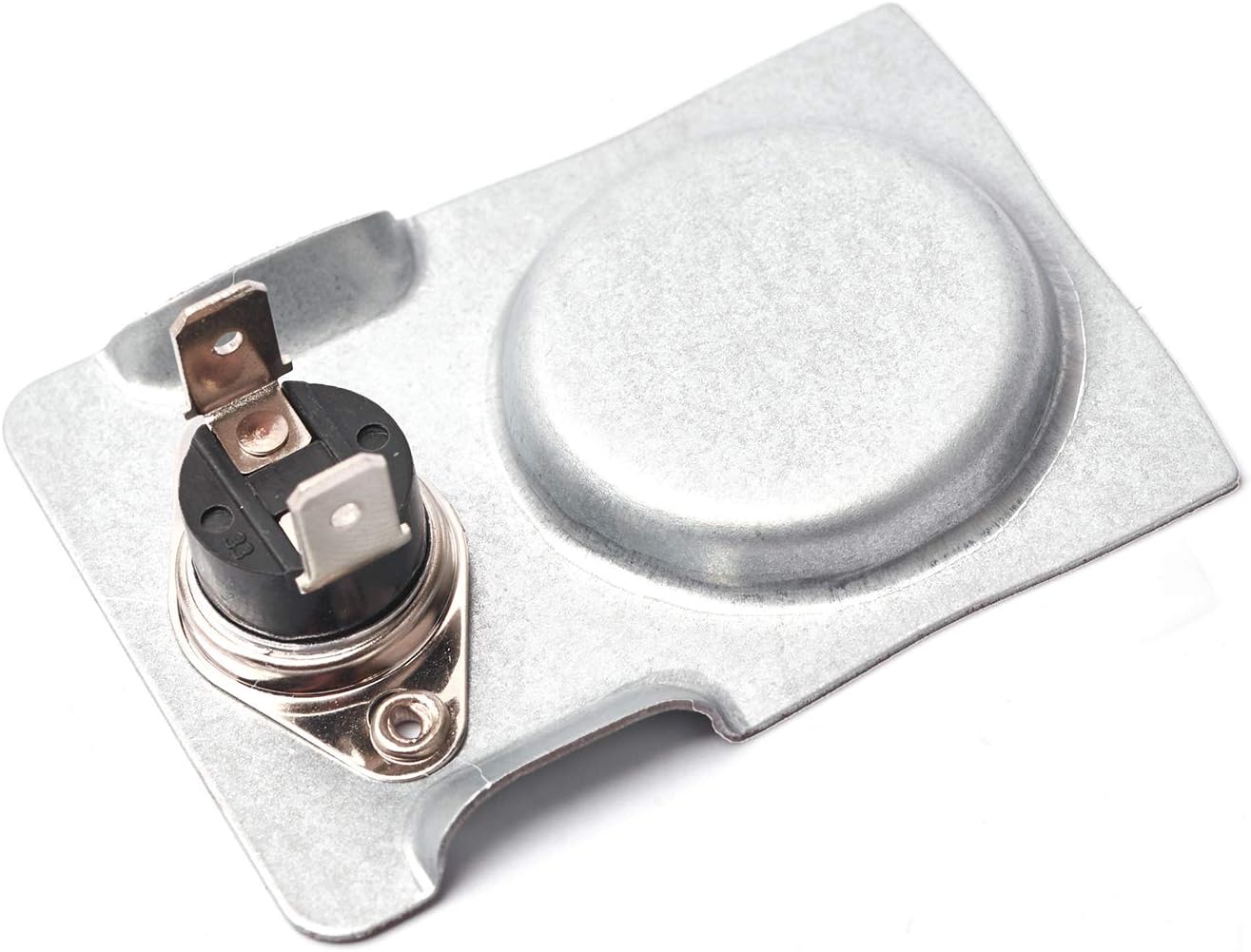
Criditpid Magnetic Stove Switch
Best Budget Pick
- Magnetic mount
- 120°F on, 90°F off
- 2.5-inch length
- Universal blower kit use
Thermostat For Wood Stove Reviews
Durablow Magnetic Ceramic Thermostat Switch
ADVANTAGES
LIMITATIONS
The Durablow switch is the most straightforward option for a buyer who wants a compact, purpose-built control for a fireplace blower. Its Magnetic thermostat design avoids screws and nuts, which lowers the barrier to replacement work and makes the part easier to place on a stove surface. The temperature behavior is equally practical. It turns on at about 120°F and shuts off at about 90°F, so the blower waits for usable heat before starting and then stops before the stove cools too far. That is the right pattern for someone who wants a fan to work with the stove, not against it.
Material choice is where this model separates itself from the bare minimum. The thermostat uses stainless steel #430 with a high-heat resistant ceramic sensor block, and that combination is meant to survive the hotter environment around a stove better than a simple lightweight switch assembly. At 2.7 x 2 x 0.8 inches, it is also small enough to stay unobtrusive once installed. The 75-watt rating and 2-year warranty add practical context for a part that is expected to cycle repeatedly instead of just sit in place. Buyers replacing a failed blower switch will appreciate that this is designed as a direct, compact control rather than a complicated assembly.
Against the two Criditpid options, the Durablow stands out for material confidence rather than accessory extras. It does not advertise extra wire or a broader kit, but that can be an advantage if you already have the needed wiring and simply want a sturdier switch body. The tradeoff is that the installation package is leaner than the more accessory-heavy alternative. For a wood stove owner who values a cleaner replacement part, a magnetic mount, and a longer warranty over bundled pieces, this is the one I would choose first.
Criditpid Thermostat With Wire
ADVANTAGES
LIMITATIONS
This Criditpid switch is the most installation-friendly option in the group because it bundles the thermostat with high-temperature resistant wire. That matters when the project is more than a simple swap. A buyer wiring a fireplace blower fan, wood stove, or gas log fireplace can reduce the number of separate parts to source, and the magnetic mount removes the need for drilled holes or mechanical fasteners. The switch activates at about 120°F and shuts off around 90°F, which keeps the blower tied to actual stove heat rather than to a timer or manual guesswork. For someone who wants a practical retrofit, that combination is appealing.
The accessory wire is not just a convenience item. The built-in enameled copper and PVC jacket are meant to add protection, and the female connectors on both ends simplify the path from thermostat to fan kit. The sensor itself is compact at 2 1/2 inches by 1 3/4 inches, so it is easier to place where space is tight or where drilling would be awkward. The strong magnet also helps in those awkward installation spots because the switch can be moved without committing to a permanent mount. That flexibility is useful on stoves where access is limited or the best sensor location is not obvious at first.
Among the three picks, this one is the strongest match for buyers who want the fewest missing pieces in the box. It does not have the Durablow model’s 2-year warranty, but it answers a different priority by including the wire and connectors you would otherwise have to match separately. Compared with the other Criditpid switch, it is the more complete kit and the more sensible choice when you are setting up a blower from scratch or repairing a partially missing harness. If convenience and compatibility matter more than a slightly lower purchase price, this is the better buy.
Criditpid Magnetic Stove Switch
ADVANTAGES
LIMITATIONS
This is the simplest and cheapest route into automatic blower control, and that is exactly where its value lies. The switch uses a magnetic mount and turns the blower on at about 120°F before shutting it off at about 90°F, so it follows the same basic heat-driven logic as the more expensive options. For a wood stove owner who wants the fan to come alive only after the stove body is warm, that behavior is the essential requirement. The compact 2.5-inch length also keeps the part easy to position without adding bulk near the firebox.
Installation is stripped down in a way that some buyers will appreciate. The strong magnet allows the sensor to attach to the underside of the firebox, which avoids screws and nuts and keeps the job closer to a tool-light replacement than a full hardware project. That said, the model is less complete than the wired Criditpid version because it does not include the same accessory support. The specifications also point to a more basic construction profile, so this is best understood as a no-frills control rather than a premium assembly. For a straightforward replacement, though, simplicity is often the attraction.
Relative to the Durablow switch, this one trades away the ceramic sensor block and warranty language for a lower price. Relative to the wired Criditpid option, it sacrifices some setup convenience because the package is not as fully outfitted. That makes it the most price-conscious recommendation in the group, especially for buyers who only need a magnetic thermostat and already have the rest of the blower setup sorted out. If your priority is getting automatic fan control working with the least cash outlay, this is the one to start with.
How to Choose a Wood Stove Thermostat
A thermostat for a wood stove is a small control with an outsized effect on comfort. The right one should start the blower when the stove is genuinely ready, stop it when the stove cools, and fit the physical layout of the appliance without turning the installation into a hardware project. Because the category is narrow, most buyers end up choosing between convenience, durability, and completeness rather than wildly different technologies. The sections below focus on the factors that actually change daily use.
Mounting Style
Magnetic mounting is the most forgiving format in this category because it lets you place the sensor without drilling or permanent fasteners. That matters on stove bodies where access is awkward or where you would rather avoid modifying the surface. A magnetic sensor is also easier to reposition if the first placement does not trigger at the right time. Buyers who expect to fine-tune blower behavior after installation usually benefit from that flexibility more than from a fixed attachment method.
Temperature Response
The useful question is not just whether the switch turns on automatically. It is whether its trigger points match the way your stove actually heats. A blower that starts near 120°F avoids pushing cool air while the fire is still building, and a shutoff around 90°F helps the fan stop before it is just recycling weak heat. If the start point is too low, the fan can feel premature. If it is too high, you lose usable warmth from the stove body.
Wiring and Connectors
Some thermostat switches are sold as bare controls, while others include wire and connectors. The difference is important because a ready-to-install harness can save time and reduce the chance of mismatched parts. Female connectors, quick-connect terminals, and pre-attached high-temperature wire make the install more predictable. If you are replacing only one failed part in an existing setup, a simple switch may be enough. If you are building or repairing a blower circuit, the accessory bundle can be the cleaner choice.
Heat-safe Materials
A thermostat mounted near a stove has to survive repeated exposure to heat, so the material mix is not cosmetic. Stainless steel, ceramic sensor blocks, and high-temperature insulated wire all point to better tolerance of the environment around a firebox. The practical effect is longer service life and less worry about the switch body deforming or the sensor losing consistency. When durability matters more than the lowest initial price, look closely at the materials used in the sensing surface and the contact parts.
Compatibility Range
Wood stoves are not the only devices that use these controls. Many switches in this category also work with fireplace blower fans and gas log fireplaces, but compatibility should still be treated carefully. A part may fit the heating application while still differing in connector style, mounting clearance, or accessory needs. The safest approach is to compare the physical dimensions and the wiring format first, then check whether the blower kit expects a bare switch or an included lead.
Value Versus Completeness
The lowest price is not always the best value if it leaves you buying extra parts. A more complete thermostat kit can be the better buy when it includes the wire and connectors needed to finish the job. On the other hand, a simpler switch can be the right answer when you already have an intact harness and only need the control itself. The best value is the one that minimizes both extra cost and extra troubleshooting after installation.
Thermostat Switch Comparison Table
| Product | Best For | Mounting | Start Temp | Color | Contact Material | Control Method |
|---|---|---|---|---|---|---|
| Durablow Magnetic Ceramic Thermostat Switch | Best Overall | Ceiling Mount | 90 °F | Silver | Stainless Steel | Sensor |
| Criditpid Thermostat With Wire | Best for Easy Setup | Magnetic Mount | 90 °F | Silver | Copper | Touch |
| Criditpid Magnetic Stove Switch | Best Budget Pick | Magnetic Mount | 90 °F | Silver | Metal | Remote |
How We Tested & Analyzed Thermostat for Wood Stove
This roundup focused on the details that affect a wood-stove thermostat in actual use: mounting method, trigger temperature, connector style, material choice, and whether the part is a bare switch or a more complete kit. Those factors matter because they determine how easily the control can be installed, how reliably it responds to stove heat, and how well it handles the thermal environment around a firebox. The analysis prioritized practical consequences over cosmetic differences.
Comparisons were made by weighing the available specification set for each option against the needs of a typical blower setup. A magnetic mount was treated as a major convenience feature. Temperature thresholds were judged by their ability to delay fan startup until the stove was warm enough to benefit from airflow. Material and accessory differences were then used to separate premium replacement parts from low-cost, no-frills options. That approach keeps the guidance tied to purchase decisions rather than to abstract product descriptions.
One limitation of category analysis is that many thermostat switches look similar at first glance. Small differences in wiring, sensor size, and included hardware can matter more than broad compatibility claims. For that reason, the recommendations emphasize installation consequences and ownership tradeoffs instead of broad promises. Where a product record did not clearly support a claim, that point was left out rather than inferred. The result is a narrower but more dependable buying guide for this specific use case.
Frequently Asked Questions
What temperature should a wood stove blower thermostat use?
A common and useful pattern is a switch that turns on around 120°F and turns off around 90°F. That range helps the blower wait until the stove is producing meaningful heat, then stop before the stove cools too much. Exact behavior can vary, so matching the switch to your stove’s heat pattern is still important.
Is a magnetic thermostat easier to install?
Yes. A magnetic mount is usually easier because it avoids drilling and permanent hardware. That makes placement faster and gives you room to reposition the sensor if the first location does not respond the way you want. It is especially helpful on stoves with limited access around the firebox.
Do I need wire included with the thermostat?
Not always. If you already have a working harness, a bare switch may be enough. If you are repairing a blower kit from scratch or replacing missing parts, included high-temperature wire and connectors can save time and reduce compatibility headaches. The right choice depends on how complete your current setup already is.
What matters more, price or materials?
It depends on how heavily the part will be used and how close it sits to heat. Lower price is appealing for a simple replacement, but materials such as stainless steel, ceramic sensor blocks, and high-temperature wire can improve durability. If the thermostat is hard to reach after installation, paying more for sturdier construction can be worthwhile.
Final Thoughts
A wood stove thermostat switch is one of those small purchases that changes the feel of the whole heating setup. The best choice is the one that matches your installation style, triggers at a useful temperature, and fits how complete your blower system already is. A magnetic mount simplifies the job. Better heat-resistant materials can improve confidence near the firebox. A bundled wire kit can save you from hunting for extra parts after the fact.
For most buyers, the decision comes down to whether you want the cleanest replacement part, the most complete installation package, or the lowest upfront cost. Any of the three can automate blower control, but they do not solve the same problem in the same way. Choose the one that aligns with your wiring, your tolerance for setup work, and how much durability you want to build into a part that will cycle with every hot fire.