
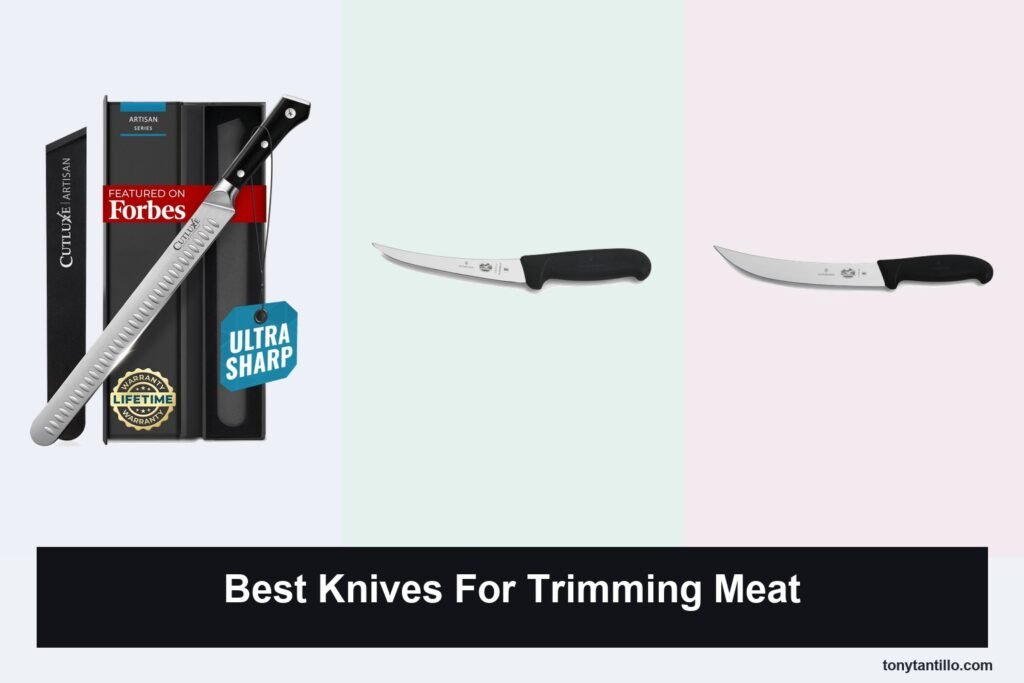
Choosing a knife for trimming meat is less about brand loyalty and more about matching blade shape to the job in front of you. A brisket, a roast, a rack of ribs, and a boneless chicken thigh all reward different geometry, different edge behavior, and different handle control. The wrong knife can drag through connective tissue, tear the grain, or force your wrist into awkward angles that make clean work harder than it needs to be.
The four knives here split the category into two broad approaches. Two are long carving tools built for smooth slices across larger cuts. Two are shorter boning and breaking knives that matter more when you need to work close to bone or separate smaller portions with accuracy. The right choice depends on whether you trim from big roasts and barbecue cuts or spend more time shaping, deboning, and portioning. This guide focuses on the practical consequences of blade length, edge style, handle security, and steel choice so you can buy the tool that actually fits your kitchen.
Top Knives For Trimming Meat on the Market

Cutluxe 12-Inch Brisket Knife
Best For Long Brisket Slices
- 12-inch blade
- 14–16 degree edge
- Forged German steel
- Pakkawood handle
- Sheath included

Victorinox Fibrox 6-Inch Boning Knife
Best For Close Trimming
- 6-inch flexible blade
- Curved blade shape
- Slip-resistant Fibrox handle
- NSF approved
- Lightweight 3.2 ounces

Victorinox Fibrox 8-Inch Breaking Knife
Best For Butcher Breakdown
- 8-inch curved blade
- High-carbon stainless edge
- Non-slip Fibrox handle
- NSF approved
- Dishwasher safe

HOSHANHO 12-Inch Carving Knife
Best Premium Slicer
- 12-inch blade
- 15 degree edge
- Japanese high-carbon steel
- Pakkawood handle
- Forged construction
Knives For Trimming Meat Reviews
Cutluxe 12-Inch Brisket Knife
ADVANTAGES
LIMITATIONS
The Cutluxe brisket knife is built for the kind of trimming and slicing work where a long, steady stroke matters more than fine-tip maneuvering. Its 12-inch blade gives enough length to move through brisket, turkey, roast, ribs, and prosciutto without frequent sawing. The high-carbon German steel construction and forged build point toward durability and a more substantial cutting feel. For buyers who regularly portion larger cooked meats, that combination is a practical advantage because it supports cleaner slices with less disruption to the grain.
Edge geometry is a major part of the appeal here. The hand-sharpened 14 to 16 degree edge is relatively fine for a carving knife, so the knife is tuned for smooth separation rather than brute force. The hollow blade edge also helps reduce sticking while you move through broad surfaces of meat. The full tang design and triple-riveted pakkawood handle matter during longer slicing sessions because they stabilize the knife in hand and improve control when the blade is loaded with a long cut. The included sheath is a useful storage detail for a knife of this length, especially in a crowded drawer.
Against the shorter boning and breaking knives in this group, this is the most straightforward choice for big, clean cuts on cooked meat. It is less nimble around joints and close trim work, but that tradeoff is exactly why it performs well on brisket and roast slicing. The 9.6-ounce weight is moderate enough to stay manageable, and the lifetime warranty adds confidence for a tool that is likely to see regular kitchen and barbecue use. Choose it if your main concern is long, controlled slicing rather than detailed butchery, and it deserves strong consideration first.
Victorinox Fibrox 6-Inch Boning Knife
ADVANTAGES
LIMITATIONS
The Victorinox Fibrox 6-inch curved boning knife is the most specialized trimming tool in this group. Its 6-inch flexible blade is designed to work close to bone, which makes it especially useful when you need to remove meat from chicken, fish, or smaller cuts with more delicate structure. The curved profile improves the working angle around joints and contours, so the knife tracks where a straighter blade would feel awkward. For anyone whose trimming work is detailed rather than broad, that geometry matters more than raw blade length.
The handle is one of the strongest practical reasons to consider it. The patented Fibrox grip is textured, slip resistant, and ergonomic, and the knife is NSF approved. Those details matter in a meat-trimming role because the work often involves moisture, fat, and repeated hand repositioning. At 3.2 ounces, it is also noticeably light, which can reduce fatigue during careful deboning or filleting tasks. The stamped stainless steel construction will not feel as heavy as a forged carving knife, but that lighter feel is part of the control-oriented design.
Compared with the longer slicing knives here, this is not the tool for wide brisket cuts or long barbecue slices. It is the knife for precision, close-contact work where the blade needs to move around bone and maintain a secure grip. That makes it the most logical option if your trimming routine includes poultry breakdown, fish preparation, or any job where accuracy outranks presentation slicing. The lifetime guarantee strengthens its case further, especially for buyers who want a professional-leaning utility knife rather than a specialty showpiece. It is the best recommendation when close trimming is the priority.
Victorinox Fibrox 8-Inch Breaking Knife
ADVANTAGES
LIMITATIONS
The Victorinox Fibrox 8-inch curved breaking knife sits between a trimming specialist and a general slicing knife. Its 8-inch curved blade gives more reach than a boning knife while still staying compact enough for work that involves sectioning meat into smaller roasts and pieces. The wider blade adds a sense of stability during cuts, which helps prevent tearing when you are moving through denser meat. If your trimming often turns into breakdown work, this is a useful middle ground because it is shaped for control without giving up too much reach.
The knife’s high-carbon stainless steel edge and stamped construction keep the focus on practicality rather than weighty refinement. At 4.16 ounces, it is still light, but the extra blade width changes how it behaves on the board. The textured Fibrox Pro handle is non-slip even when wet, and the ergonomic shape helps reduce wrist tension during repetitive cuts. NSF approval and dishwasher-safe construction add convenience for kitchens that prioritize sanitation and fast turnaround. That combination makes it easier to manage after messy butchery sessions where fat and moisture are unavoidable.
Relative to the 6-inch boning knife, this model gives you more blade to work with and more room for controlled slicing through larger pieces. Relative to the 12-inch carving knife, it gives up long, elegant roast slicing in exchange for better maneuverability when turning raw meat into portions. That is the decisive tradeoff. It is the best fit for buyers who want one knife that leans toward butcher work but is still comfortable in an everyday kitchen. If you trim meat often enough to value control, yet not so exclusively that you need a dedicated boning blade, this is an easy recommendation.
HOSHANHO 12-Inch Carving Knife
ADVANTAGES
LIMITATIONS
The HOSHANHO carving knife is the premium-leaning slicer in this group, and its strongest case starts with the blade. The 12-inch blade is paired with a 15 degree edge, which is deliberately tuned for low cutting resistance through brisket, barbecue, and other large meat cuts. The Japanese high-carbon steel construction and sub-zero treatment point to a knife built for edge stability and prolonged sharpness. For buyers who care about a refined slicing feel as much as performance, that combination is the main draw.
The forged build and wood handle create a different handling profile from the lighter stamped options. A forged knife tends to feel more substantial, and the ergonomic handle is meant to support long sessions with less hand pressure. The knife is also described as suitable for larger fruit like watermelon, which suggests a broad utility beyond meat trimming, though its core strength remains slicing substantial portions cleanly. That versatility can matter in a kitchen where a barbecue knife might also see prep-board duty for produce. The 11.6-inch length is worth noting because it gives the knife a slightly shorter listed measurement than some other 12-inch slicers.
Against the other long slicers here, this one is the most refined but also the most expensive. That means the right buyer is not simply someone who needs a long blade, but someone who values premium steel, a forged feel, and a very sharp slicing angle enough to justify the extra cost. It is less specialized than a boning knife and less modestly priced than the Cutluxe alternative, so the recommendation hinges on how much you value the materials and edge treatment. If your trimming work centers on brisket and large cuts and you want the most premium-feeling knife in the set, this is the strongest upscale pick.
How to Choose Meat Trimming Knives
The best trimming knife is the one that matches the cut, the amount of meat you process, and how much control your hand needs. Big barbecue slices reward length and edge consistency. Close work around bone rewards a shorter blade that turns easily and stays secure in wet conditions. There is no single shape that wins every task, which is why it helps to think in terms of motion first and branding second.
Blade Length
Length changes the way the knife travels through meat. A longer blade is usually better for brisket, roast slicing, and other cuts where you want to draw through in one continuous motion. That can produce cleaner slices and fewer jagged edges. Shorter blades are easier to place accurately around joints, bone, and narrow spaces, which matters when the goal is separation rather than presentation. Choose the length that matches the dominant motion you perform most often, not the one that sounds most impressive on paper.
Blade Shape
Shape determines whether the knife is built for surface slicing or close-contact trimming. A curved or flexible profile helps the edge follow bone and contour, which is valuable for poultry, fish, and precision butchery. A straighter, longer profile is usually better when you want smooth slicing across a broad cut. If you handle mixed jobs, think about which task frustrates you more. The right shape should reduce wrist adjustments and let the blade do the work instead of forcing your hand to compensate.
Edge Geometry
A fine edge can make a trimming knife feel dramatically more efficient, but only when it is matched to the job. Narrow edge angles tend to slice more easily through soft or cooked meat, while more robust edges may tolerate rougher work better. What matters most is whether the edge is designed for clean cutting rather than heavy chopping. For meat trimming, the goal is usually smooth separation with minimal tearing, so prioritize a knife that signals sharpness and edge control over raw intimidation.
Handle Security
A secure handle matters more in meat trimming than in many other kitchen tasks because fat, moisture, and repeated repositioning are part of the work. Textured or non-slip grips can reduce the chance of a poor hold when your hands are wet. Ergonomic shapes also help if you trim for long stretches, since wrist tension builds faster than many buyers expect. Look for a handle that feels stable when you imagine making repeated slicing passes, not just one clean demonstration cut.
Material and Weight
Steel type and overall weight shape how the knife feels during longer sessions. A lighter knife is easier to maneuver for delicate work and reduces fatigue, while a heavier knife can feel more planted on bigger cuts. Material choices also affect edge retention, cleaning, and the way the knife balances in hand. The best move is to choose the weight you can control with confidence, then favor a steel and build style that match how often you plan to sharpen and maintain the edge.
Sanitation and Storage
Meat trimming tools are easier to live with when they are simple to clean and store safely. NSF approval, dishwasher-safe construction, or a sheath can all matter depending on how your kitchen is organized and how often the knife is used. Sanitation is especially important if the knife will move between raw meat prep and other tasks. Storage is equally practical because longer blades need a secure place where the edge stays protected and the knife remains safe to handle after use.
Meat Trimming Comparison Table
| Product | Best For | Blade Length | Blade Material | Handle Material | Weight | Build Type |
|---|---|---|---|---|---|---|
| Cutluxe 12-Inch Brisket Knife | Best For Long Brisket Slices | 12 inches | High Carbon Stainless Steel | Pakkawood | 9.6 ounces | Forged |
| Victorinox Fibrox 6-Inch Boning Knife | Best For Close Trimming | 6 inches | Stainless Steel | Thermoplastic Rubber | 3.2 ounces | Stamped |
| Victorinox Fibrox 8-Inch Breaking Knife | Best For Butcher Breakdown | 8 inches | High Carbon Stainless Steel | Fibrox Pro | 4.16 ounces | Stamped |
| HOSHANHO 12-Inch Carving Knife | Best Premium Slicer | 11.6 inches | High Carbon Stainless Steel | Wood | Not Specified | Forged |
How We Tested & Analyzed Knives for Trimming Meat
This roundup was built around category-level decisions that matter in real meat-trimming work. Blade length, profile, edge angle, handle security, weight, sanitation cues, and storage practicality were the main factors because they directly affect how cleanly a knife moves through meat and how comfortably it behaves in repeated use. The goal was not to reward the most technical description, but to identify which tools solve specific trimming problems with the least friction.
The comparison also weighed how a knife changes the actual workflow. A long slicing knife is not automatically better than a shorter boning or breaking knife. The question is whether the blade helps you maintain control, preserve the meat’s structure, and reduce awkward hand movement. That is why the analysis separates knives intended for broad slicing from knives intended for close work around bone and smaller portions. The tradeoffs matter more than any single specification in isolation.
Value was considered as part of the decision, but only in relation to capability. A lower price is not a better result if the blade shape is wrong for the task. A premium steel or forged build is only meaningful when it produces a real advantage in edge behavior, control, or durability. The result is a practical buying guide that favors function, comfort, and fit for task over generic feature counting.
Frequently Asked Questions
What knife shape is best for trimming meat?
The best shape depends on the cut. Long, straight carving blades excel at brisket and large roasts because they create smooth slices. Curved boning or breaking knives are better when you need to move close to bone or work through smaller sections with more control. Most buyers do best by choosing the blade shape that matches their most common trimming task.
Should I choose a flexible or rigid blade?
Flexible blades are useful when the knife needs to follow contours, especially around bone or delicate meat. Rigid blades usually feel steadier during long slicing passes and can be better for larger cuts. If your work is mostly deboning or detail trimming, flexibility helps. If you mainly portion cooked roasts or barbecue cuts, a stiffer blade often feels more predictable.
How important is handle grip for meat knives?
Very important. Meat trimming often means wet hands, slippery surfaces, and repeated cutting motions. A textured or non-slip handle improves confidence and reduces wasted effort from constant readjustment. Ergonomic shaping also matters if you cut for long periods, because a secure grip can reduce wrist strain and make the knife feel easier to control.
Do I need a dedicated meat trimming knife?
If you trim meat only occasionally, a versatile slicing or boning knife may be enough. If you process brisket, roasts, poultry, or fish with any regularity, a dedicated trimming knife usually pays off in cleaner cuts and better control. The right specialized blade reduces tearing and helps you work faster without forcing awkward knife angles.
Final Thoughts
The best knife for trimming meat is the one that matches your cuts before it matches your preferences. Long carving knives are the right tool for broad, clean slices. Boning and breaking knives are better when control, contour work, and close trimming matter more. Once you decide which motion dominates your kitchen, the rest of the choice becomes much simpler.
From there, focus on the details that change daily use: handle security, blade geometry, weight, and how much sharpening or storage convenience you want to deal with. A well-chosen knife will feel calmer in the hand and more efficient on the board. Buy for the work you actually do, and you will end up with a tool that earns its place every time meat comes out of the fridge or off the smoker.